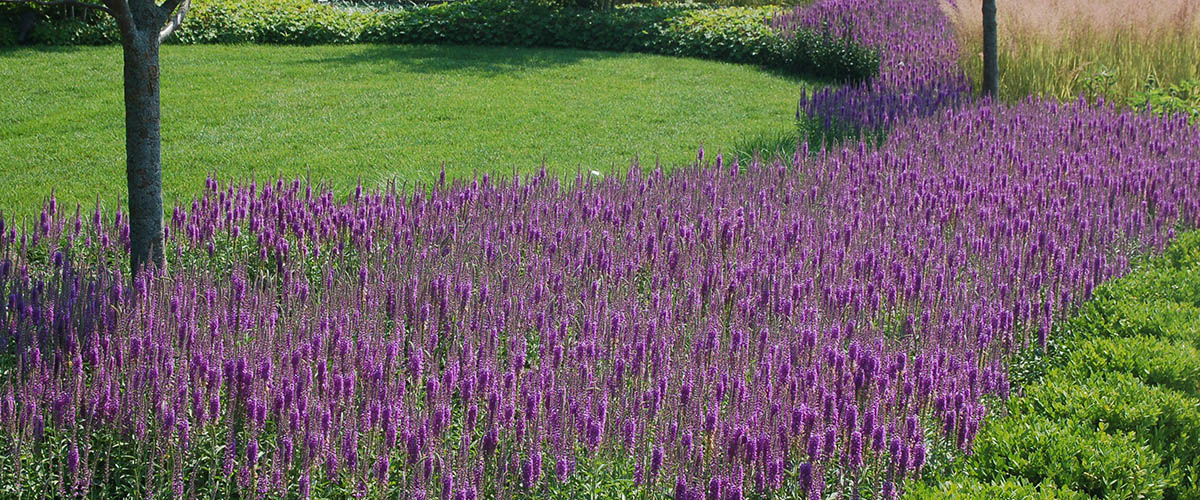
Evaluating Perennials for Chicagoland Gardens
Perennials in Focus is a plant evaluation program that examines new and underused plants for Chicagoland, the third largest metropolitan area in the country. A group of horticultural experts trials and evaluates plants at numerous locations across the region. Results help consumers, public gardens, growers, landscape designers, breeders, and other industry professionals make informed plant choices.
Trialing Salvia Nemorosa Rebloom After a Midseason Shear
Salvia nemorosa is valued for its upright flower spikes, compact habit and reliable colour, yet its first flush is only part of the story. A midseason shear can encourage fresh basal growth and a second display, but the result varies considerably between cultivars, sites and seasons. Trialling this response gives growers a clearer picture of whether a plant offers a brief spring spectacle or a useful extended performance.
For gardeners in Australia, findings from the Chicagoland region provide valuable evidence, though they need careful interpretation. A salvia that rebounds strongly after an early-summer cutback in Illinois may respond differently in a dry Melbourne garden, a humid Sydney border or a frost-prone Canberra yard. The useful question is how consistently each selection produces new shoots, flower stems and a tidy habit after flowering has been removed.
Why A Midseason Shear Is Worth Testing
The first flowering period of Salvia nemorosa commonly peaks in late spring or early summer, depending on the local climate and cultivar. Once the spikes fade, plants can look tired, with brown stems and a rounded mound of foliage. Removing spent flower stems and cutting the plant back encourages energy towards new shoots rather than allowing seed to develop.
A proper trial needs to distinguish a cosmetic tidy-up from a genuine rebloom response. A light trim may leave enough stem and foliage for rapid recovery, while a harder shear can delay the next flush or expose plants to heat and drought stress. Recording the cut height, date and weather conditions makes the result much more useful than simply noting that a plant was “cut back”.
The best performers usually show fresh growth from the crown within a few weeks, followed by evenly distributed stems rather than a scattering of weak flowers. Rebloom should be assessed for timing, intensity and presentation, not just the presence of one late spike.
Building A Reliable Chicagoland Trial
A multi-site evaluation is important because a single garden can flatter or penalise a plant. Soil type, drainage, irrigation, exposure and surrounding vegetation all influence how quickly salvia recovers after shearing. Perennials in Focus uses repeated observations across gardens and seasons to build a more dependable picture of plant performance; readers can explore the programme’s plant trial findings for a broader understanding of this approach.
Plants should be established before the first assessment, with similar container sizes, planting dates and spacing wherever possible. The midseason cut should be applied when the initial bloom has clearly passed, rather than on an arbitrary calendar date. A consistent shear height, clean equipment and a written record of irrigation help separate genetic differences from management effects.
The Chicagoland setting adds another layer of value. Plants face cold winters, warm summers and sometimes abrupt changes in moisture, so a successful selection must recover quickly without becoming floppy. Observing several years also helps identify whether rebloom is dependable or was simply the result of a particularly favourable season.
What To Measure After The Cutback
The first measurement is recovery time: how many days pass before new shoots are visible and when the plant regains a useful shape. Height and spread should be recorded before shearing and again at the second flush. This reveals whether a cultivar remains compact or becomes too open for front-of-border planting.
Flowering data should include the date of the first rebloom, the length of the flowering period and the proportion of the clump carrying flowers. Flower colour may change slightly in hot weather or under lower light, so notes should describe both colour and density. A plant with fewer but well-held spikes may be more attractive in a formal landscape than one producing a larger, untidy flush.
Disease, lodging and foliage quality also matter. Fresh leaves that remain clean after summer rain improve the overall display, while stems that collapse under wind or irrigation reduce retail and garden value. Photographs taken from the same angle can support written scores and show whether the plant actually fills out again.
Reading The Results In Australian Gardens
Chicagoland results should be treated as a strong reference point rather than a direct planting prescription for Australia. In southern states, summer heat can arrive while plants are still trying to rebuild after the first flush. In Perth, free-draining sandy soil and dry winds may demand irrigation immediately after a shear. In Sydney, humidity and heavy rain can affect foliage quality and flower longevity.
Australian gardeners also speak in practical terms about a plant’s “summer performance” and whether it earns its space in a low-maintenance border. A salvia that reblooms neatly in Adelaide’s dry climate may be more valuable than one that flowers heavily only with regular feeding and water. In Canberra, a late second flush may be vulnerable to early frosts, while Melbourne gardeners may see a longer autumn display in a sheltered position.
The in the garden guidance can help translate trial observations into planting decisions. The key is to match the evidence with local exposure, soil and water availability instead of assuming that every reblooming selection behaves identically across the country.
Implications For Growers And Retailers
A midseason shear trial can improve how plants are presented and sold. A cultivar that quickly produces a second flush may deserve a point-of-sale description highlighting repeat flowering, pollinator value and suitability for mixed borders. Retailers can also explain that spent stems should be removed after the first display, giving customers a simple maintenance action with a visible reward.
For Australian nurseries, the market is influenced by both specialist plant centres and large chain retailers, where shoppers often want compact, colourful plants that look good at purchase time. A cultivar with a strong first flush but poor recovery may sell well in spring yet disappoint later. Trial data helps growers select lines that retain value beyond the initial flowering window.
Propagation and production timing should be considered as well. Plants must be sufficiently established to withstand a trim, and excessive nitrogen can produce soft foliage rather than sturdy flowering stems. Clear cultivar comparisons allow growers to plan inventory around realistic garden performance instead of relying solely on catalogue descriptions.
Turning Observations Into A Planting Decision
The strongest candidate is not necessarily the one with the tallest second flush. A balanced selection combines rapid recovery, a dense habit, strong stems, clean foliage and a rebloom period long enough to matter in the landscape. Flower colour and height still influence placement, particularly when salvia is used beside grasses, roses or low edging plants.
A simple scoring system can make the assessment more transparent. Recovery speed might be rated alongside rebloom coverage, habit, foliage health and maintenance needs. These scores should be supported by notes about site conditions, because a plant that ranks highly under irrigated trial conditions may need a different recommendation for a waterwise Australian garden.
| Performance trait | Strong result after shearing | Practical garden value |
|---|---|---|
| Recovery speed | New shoots appear promptly and form a balanced clump | Reduces the gap between flowering cycles |
| Rebloom coverage | Many stems flower across the plant | Creates a fuller, more reliable display |
| Stem strength | Spikes remain upright in wind and rain | Keeps borders looking tidy |
| Foliage quality | Leaves stay dense and clean through summer | Extends ornamental interest |
| Water response | Recovers without excessive irrigation | Improves suitability for Australian conditions |
| Habit | Plant remains compact rather than collapsing outward | Supports edging, pots and small borders |
Use the results to choose cultivars according to purpose. A highly compact plant may suit a courtyard pot or narrow front border, while a taller selection could work among ornamental grasses. When the trial data, local climate and intended planting style align, a midseason shear becomes a predictable maintenance step rather than an experiment.
For growers, designers and home gardeners, documenting this response is a practical way to make better perennial choices. Trial Salvia nemorosa selections under consistent conditions, record the second flush honestly and share observations with local nurseries and gardening networks so reliable performers become easier to find.
In the Garden
Evaluator gardens are located across the Chicagoland area, representing a range of growing conditions. Visit our retail and wholesale partners to find trialled perennials for your own garden.
Retail & Wholesale: Hinsdale Nurseries (Willowbrook, IL), Mariani Nurseries (Kenosha, WI & Garden Prairie, IL), Northwind Perennials (Burlington, WI), The Growing Place (Aurora, IL).
Wholesale Only: Hinsdale Nurseries (Plano, IL), Intrinsic Perennial Gardens (Hebron, IL).
Our Evaluation Program
The 2017–2020 evaluation cycle included Agastache 'Blue Boa', Allium senescens 'Blue Eddy', Amsonia ciliata var. filifolia 'Georgia Pancake', Astilbe 'Chocolate Shogun', Boltonia astroides 'James Crocket', Brunnera 'Alexander's Great', and Geranium cinereum 'Jolly Jewel Purple'. Completed evaluations include Amsonia 'Blue Ice' (2004–07).
On April 10, 2020, the program published snapshot profiles for Vernonia lettermanii 'Iron Butterfly', Stokesia laevis 'Elf', Stachys officinalis 'Pink Cotton Candy', Lobelia 'Monet Moment', Helleborus 'Winter Thrillers', Geum 'Mai Tai', Geranium soboliferum 'Butterfly Kisses', Gentiana x intermedia 'True Blue', Eurybia divaricata, Asparagus 'Purple Passion', and Agastache 'Bolero'.
Browse the full collection of snapshots organized alphabetically — from A–D, E–H, I–Q, and R–Z — to find detailed performance data on perennials trialled across Chicagoland.