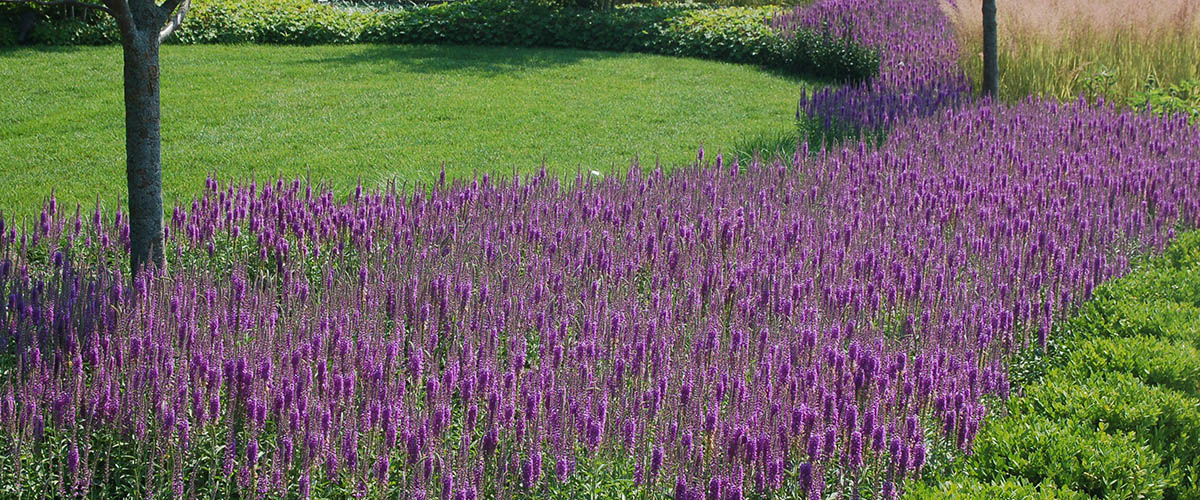
Evaluating Perennials for Chicagoland Gardens
Perennials in Focus is a plant evaluation program that examines new and underused plants for Chicagoland, the third largest metropolitan area in the country. A group of horticultural experts trials and evaluates plants at numerous locations across the region. Results help consumers, public gardens, growers, landscape designers, breeders, and other industry professionals make informed plant choices.
Trialing Dicentra Eximia for Periodically Wet Shade Gardens
The collaborative evaluation work carried out by Perennials in Focus brings together growers, designers, and public garden staff to test how lesser-known perennials cope with the specific soils, microclimates, and seasonal rhythms of the upper Midwest of the United States. While the core trials take place in the Chicago region, the program's findings often resonate with gardeners elsewhere who manage shaded corners that swing between dry spells and saturated conditions. Dicentra eximia, the fringed bleeding heart, is one such candidate that has earned closer attention for gardens where moisture is intermittent rather than constant.
Australian gardeners face a mirror-image calendar, with winter rainfall in the south and humid summers shaping how shade beds behave. The same qualities that make this species appealing in a North American woodland, including extended flowering, finely cut foliage, and tolerance for fluctuating moisture, translate usefully into a range of Australian settings, from cool Hobart courtyards to sheltered Brisbane courtyards where heavy rain can pool under tree canopies. This piece walks through what the multi-season trials revealed about plant performance, foliage integrity, and landscape fit, while flagging the considerations relevant to growers south of the equator.
Plant background and why it was selected
Dicentra eximia belongs to the poppy family and is sometimes listed under the older name Fumaria eximia. The species ranges across the Appalachian Mountains and parts of the eastern United States, where it colonises rocky slopes and stream banks under deciduous canopy. Unlike its showier cousin Lamprocapnos spectabilis, the fringed bleeding heart carries smaller, more numerous blooms and a longer flowering window. Breeders have produced several named forms in coral, rose, and pure white, expanding the design options for damp, shaded plantings.
For the Perennials in Focus trials, the species was chosen because it promised three qualities that the program specifically looks for: an early-to-mid-season floral display, attractive basal foliage that remains present after flowering, and an ability to tolerate the wet-dry swings common to shade gardens under mature trees. Plants that meet these criteria tend to fill a genuine gap for home gardeners and landscape professionals alike, who often struggle to find colour and texture for spots that are neither reliably moist nor truly dry.
Trial setup and growing conditions
The evaluation plots were established in four partner gardens representing different shade exposures and soil profiles. Two sites offered deep shade beneath established maple and oak canopies, while a third provided dappled light with a slightly raised bed, and the fourth mimicked a periodically saturated low spot near a drainage swale. Soil tests confirmed a near-neutral pH and a high organic matter content at the deeper shade locations, with the lower-lying site showing intermittent waterlogging after heavy rain events.
Plugs of Dicentra eximia, along with several named cultivars, were transplanted in early autumn and allowed to establish through one full growing season before data collection began. Plants received only natural rainfall during the evaluation period, with no supplemental irrigation provided. This approach tested the species under realistic conditions where garden beds may dry out for several weeks before being soaked again, similar to the experience of many Australian gardeners whose shade gardens rely on rainfall alone outside designated watering days under local water authority restrictions.
Bloom period, flower form, and seasonal stamina
Across all four sites, flowering commenced in late spring and continued sporadically into midsummer, with a noticeable secondary flush in early autumn during a cooler, moister year. The dangling, heart-shaped blooms clustered along slender stems well above the foliage mound, ranging in colour from soft pink to deeper rose depending on cultivar. Floriferousness varied between sites, with the dappled-shade garden producing the highest flower count per stem and the wettest plot showing somewhat reduced bloom output but healthier overall foliage.
Heights typically settled between 35 and 45 centimetres, with spreads of 40 to 50 centimetres after the second year. Plants in the lower-lying, periodically saturated bed demonstrated slightly more vigorous lateral expansion, suggesting that moisture pulses encourage the rhizomatous growth habit characteristic of the species. Flowering stems generally held their position without staking, even after rain, which is a notable advantage in mixed plantings where taller neighbours might otherwise cause flopping.
Foliage quality and off-season interest
The finely divided, fern-like blue-green leaves form a tidy basal rosette that remains attractive well after the final blooms fade. In trials, foliage persisted through summer without significant scorching, even in the brighter dappled location, although leaves naturally yellowed and died back by late autumn as plants entered dormancy. This clean die-back pattern, rather than a slow decline, helped maintain visual order in mixed borders and avoided the untidy residue seen in some coarser perennials.
For gardeners seeking multi-season structure, the foliage offers valuable texture contrast when paired with bold-leaved companions such as hostas, bergenia, or the Australian-grown Lomandra varieties that tolerate similar shade. The cool blue-green tone also reads well against dark mulch or stone, providing a calm counterpoint to brighter blooms elsewhere in the bed. During the winter dormancy window, marking plant locations with small stakes prevented accidental disturbance from mulch applications or nearby bulb planting.
Resilience to pests, disease, and weather
Dicentra eximia showed few significant pest or disease issues across the trial period. Slug damage was minor and largely confined to the wettest plot, while no instances of powdery mildew or foliar fungal disease were recorded despite the humidity spikes common in dense shade. The species appears to carry natural resistance to most of the ailments that trouble related genera, which simplifies maintenance for gardeners seeking low-intervention plantings.
Weather resilience was particularly tested during an unusually hot, dry stretch in the second summer of evaluation, with temperatures exceeding 35 degrees Celsius for several consecutive days. Plants in deeper shade weathered this period with minimal stress, while those in the brighter dappled bed showed mild leaf margin burn that recovered quickly once cooler conditions returned. This suggests the species suits the milder summer extremes of southern Australia, including coastal Tasmania and the higher elevations of the Great Dividing Range, while growers in Brisbane or Darwin should provide substantial afternoon shade and consistent moisture to compensate for more intense summer conditions.
Suitability for Australian gardens and local realities
Australian gardeners should note that Dicentra eximia is sold as a dormant rhizome or potted plant in the cooler months, opposite to the Northern Hemisphere timing of the trials. Autumn planting in April or May gives roots a chance to establish before summer heat arrives, and mulching with coarse bark or leaf litter mimics the woodland duff of its native habitat. Gardeners in states with strict biosecurity regulations should source plants from reputable Australian nurseries rather than importing material, both to comply with interstate plant movement rules and to avoid introducing pests or pathogens.
Water availability remains a defining feature of Australian gardening, particularly in regions governed by restrictions from authorities such as Sydney Water or Melbourne Water. In shaded beds beneath mature gum trees or evergreen shrubs, natural rainfall and dew often provide sufficient moisture for established plants, especially where organic mulch buffers the root zone. For gardeners designing new shade gardens, grouping Dicentra eximia with other moisture-tolerant species, such as native Lomandra, hardy bleeding heart relatives in the Corydalis genus, or shade-loving grasses, creates resilient communities that share similar water needs and reduce overall irrigation demand.
Companion plantings and design applications
In a layered shade planting, Dicentra eximia works effectively as a mid-height anchor between groundcovers and taller structural plants. Australian designers have begun pairing it with clivias, native violets, and the strappy leaves of Dianella for a foliage-driven scheme that requires minimal summer water once established. The pink-toned blooms harmonise with the purple spikes of ajuga or the white bells of summer-flowering campanulas, providing a long arc of colour from late spring through to the cooler shoulder seasons.
For public gardens and larger landscape projects, mass plantings of a single cultivar create a soft, undulating carpet that suppresses weeds and unifies awkward shade transitions. Retailers stocking the species should highlight its deer and rabbit resistance, which matters less in Australia but reassures landscape clients familiar with international plant literature. Whether used as a specimen in a small courtyard or as a drift beneath established trees, the plant delivers reliable performance in the shifting moisture conditions that define many shaded Australian gardens.
Readers keen to dig into the full evaluation dataset, including detailed ratings for flower quantity, foliage retention, and winter hardiness across all four trial sites, will find the published findings and downloadable reports at Perennials in Focus. The team welcomes notes from growers trialling the same species in different climates and updates the plant notes each season as new data comes in.
In the Garden
Evaluator gardens are located across the Chicagoland area, representing a range of growing conditions. Visit our retail and wholesale partners to find trialled perennials for your own garden.
Retail & Wholesale: Hinsdale Nurseries (Willowbrook, IL), Mariani Nurseries (Kenosha, WI & Garden Prairie, IL), Northwind Perennials (Burlington, WI), The Growing Place (Aurora, IL).
Wholesale Only: Hinsdale Nurseries (Plano, IL), Intrinsic Perennial Gardens (Hebron, IL).
Our Evaluation Program
The 2017–2020 evaluation cycle included Agastache 'Blue Boa', Allium senescens 'Blue Eddy', Amsonia ciliata var. filifolia 'Georgia Pancake', Astilbe 'Chocolate Shogun', Boltonia astroides 'James Crocket', Brunnera 'Alexander's Great', and Geranium cinereum 'Jolly Jewel Purple'. Completed evaluations include Amsonia 'Blue Ice' (2004–07).
On April 10, 2020, the program published snapshot profiles for Vernonia lettermanii 'Iron Butterfly', Stokesia laevis 'Elf', Stachys officinalis 'Pink Cotton Candy', Lobelia 'Monet Moment', Helleborus 'Winter Thrillers', Geum 'Mai Tai', Geranium soboliferum 'Butterfly Kisses', Gentiana x intermedia 'True Blue', Eurybia divaricata, Asparagus 'Purple Passion', and Agastache 'Bolero'.
Browse the full collection of snapshots organized alphabetically — from A–D, E–H, I–Q, and R–Z — to find detailed performance data on perennials trialled across Chicagoland.