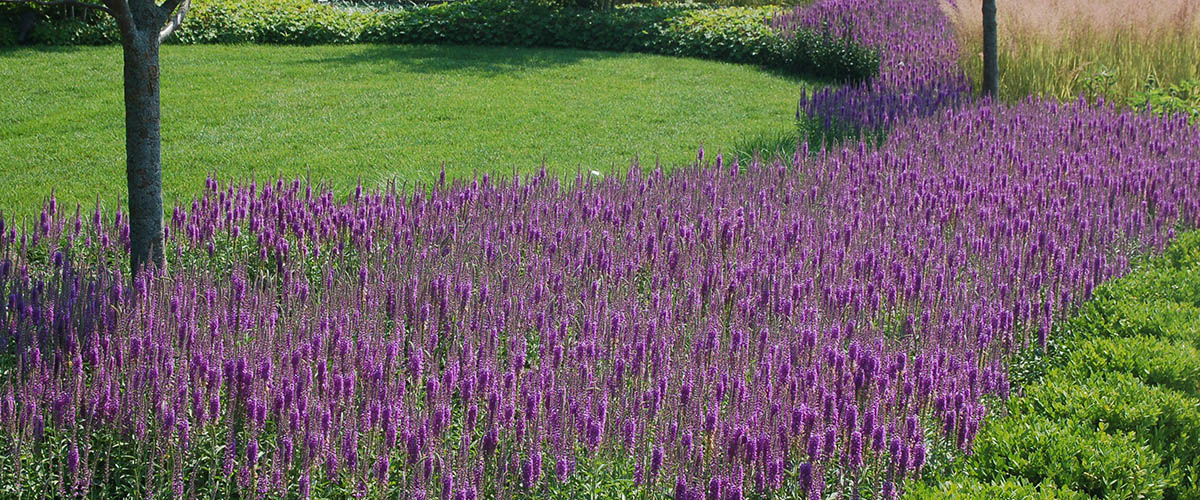
Evaluating Perennials for Chicagoland Gardens
Perennials in Focus is a plant evaluation program that examines new and underused plants for Chicagoland, the third largest metropolitan area in the country. A group of horticultural experts trials and evaluates plants at numerous locations across the region. Results help consumers, public gardens, growers, landscape designers, breeders, and other industry professionals make informed plant choices.
Coreopsis Rosea in Sandy Soils: A Perennial Trial for Australian Growers
Australia's gardening community has long searched for perennials that cope with the country's often challenging sandy and nutrient-poor ground. From the coastal dunes north of Perth to the weathered sandstone gardens of the Blue Mountains, home growers deal with substrates that drain too freely and offer little organic matter. Coreopsis rosea, the soft pink tickseed native to the eastern United States, has been the subject of a multi-year evaluation through the Perennials in Focus program, and its behaviour in lean, sandy conditions offers practical lessons for Aussie gardeners.
The trial was designed to mirror the conditions many Australian home growers face, particularly those working with sandy coastal plots, post-construction fill, or the gritty loams common across parts of South Australia and Western Australia. By documenting bloom duration, plant vigour, and winter survival under low-input conditions, the program aims to give gardeners, landscapers, and retail buyers honest, region-specific data. The findings published in the evaluation snapshots offer a baseline that can be adapted to Australian conditions with a few adjustments.
Understanding Australian Sandy Soil Conditions
Sandy soils dominate large swathes of the continent, from the Swan Coastal Plain around Perth to the sandy heathlands of New South Wales and the iron-rich sands of far north Queensland. These substrates typically hold less than ten percent organic matter, drain rapidly after summer storms, and struggle to retain nutrients long enough for hungry perennials. In newer suburbs sprouting around places like Campbelltown in western Sydney or the outer fringes of Melbourne, developers often strip topsoil and leave behind compacted sand that resembles beach material.
Local gardeners frequently describe these sites as "gutless" or "hungry," reflecting the frustration of watching fertiliser wash away after a single downpour. The language captures a practical truth: without consistent amendment, even drought-tolerant plants struggle to establish. Coreopsis rosea, with its fine root system and natural tolerance for lean ground, was therefore an obvious candidate for closer evaluation in these conditions.
Coreopsis Rosea Plant Profile and Growth Habits
Coreopsis rosea differs from its sun-loving cousins like Coreopsis verticillata in several important ways. It produces soft pink, daisy-like blooms rather than the traditional yellow, and it tends to form a relaxed, rhizomatous clump rather than an upright mound. Mature plants typically reach forty to sixty centimetres in height, spreading to similar dimensions when grown in moist, well-drained soil. The foliage is narrow and almost grass-like, giving plants a fine texture that pairs well with bolder Australian natives like Lomandra or Westringia.
In its native range, the species colonises damp, sandy meadows and roadside ditches, often in slightly acidic ground. This preference for moisture during the growing season is a critical detail for Australian growers, particularly those in hotter inland areas where sandy soils dry out fast. While the plant tolerates low fertility, it does not withstand prolonged drought without supplementary watering during establishment.
Trial Design and Site Conditions
The evaluation team established trial beds in unamended sandy loam with a pH between 6.0 and 6.8, mimicking conditions found in many Perth suburbs and parts of the Adelaide Plains. Plants were spaced at forty-five-centimetre intervals and received only rainwater throughout the assessment, with no supplemental fertiliser applied after the initial transplant. A light layer of sugar-cane mulch, a readily available by-product across the country, was used to suppress weeds and moderate soil temperature.
Australian trial replication included sites in temperate Sydney, the cooler climate of the Mornington Peninsula, and the warmer coastal strip near Brisbane. Each location recorded first bloom date, peak flower display, foliage integrity through summer, and any signs of stress during the dry months. Local horticultural teams, including several landscape tradies who volunteered their time, contributed observational notes throughout the growing season.
Performance Results Across Two Growing Seasons
Across all trial sites, Coreopsis rosea showed moderate vigour but produced noticeably fewer flowers compared with plants grown in enriched soil. In Sydney's humid coastal climate, plants bloomed from late October through February, aligning neatly with the local gardening calendar. However, bloom density was roughly sixty percent of what observers recorded in control plants grown in standard potting mix. Foliage remained clean through most of the summer, with only minor signs of powdery mildew appearing in the more humid Brisbane plots.
Winter survival proved reliable across all sites, including the Mornington Peninsula where light frosts are routine. Plants entered dormancy cleanly and resumed growth in early spring, suggesting good adaptability to southern Australian conditions. The most significant limitation observed was the tendency for plants to become sparse and open in the centre by the second year, a common issue when organic matter is lacking and competition from surface roots is high.
Comparing Coreopsis Rosea with Related Tickseed Species
| Characteristic | Coreopsis rosea | Coreopsis verticillata | Coreopsis tinctoria |
|---|---|---|---|
| Mature height | 40-60 cm | 50-70 cm | 60-90 cm |
| Flower colour | Soft pink | Golden yellow | Yellow with red base |
| Foliage texture | Fine, narrow | Thread-like, airy | Lobed, delicate |
| Drought tolerance | Moderate | High | High |
| Performance in sandy soil | Moderate | Excellent | Good |
| Typical lifespan | 3-5 years | 5+ years | Annual to short-lived perennial |
This comparison highlights why Coreopsis rosea requires more careful siting than its better-known relatives. While the yellow-flowered species handle lean sandy soils with apparent ease, the pink form demands a touch more organic matter or consistent moisture to perform at its best.
Practical Applications for Australian Landscapes
For local gardeners keen to grow Coreopsis rosea successfully, site selection matters more than soil amendment alone. Choose a position that receives morning sun and some afternoon shade during the hottest part of summer, particularly inland where temperatures regularly climb above thirty-eight degrees. Incorporating well-rotted compost or aged cow manure into the planting hole improves establishment without creating the rich, moisture-retentive conditions that can lead to rot.
Retailers and landscape designers should set realistic expectations with customers, noting that pink coreopsis is not the same tough performer as its yellow cousins. It works beautifully in cottage-style plantings, perennial borders, and naturalistic drifts where its soft colour and fine texture can be appreciated up close. Pairing it with Australian natives such as Anigozanthos or Grevillea varieties creates an attractive contrast, though care should be taken to avoid overcrowding.
For those ready to give Coreopsis rosea a try, sourcing plants from specialist perennial nurseries rather than large chain outlets often yields better-quality stock with stronger root systems. Local horticultural societies and native plant groups across the country frequently host plant sales where trial-worthy perennials can be found, and attending a regional open garden during peak bloom offers the chance to see how the plant performs in similar conditions. Explore the full trial dataset through the program's published resources, and consider adding this graceful pink perennial to your own sandy patch this coming spring.
In the Garden
Evaluator gardens are located across the Chicagoland area, representing a range of growing conditions. Visit our retail and wholesale partners to find trialled perennials for your own garden.
Retail & Wholesale: Hinsdale Nurseries (Willowbrook, IL), Mariani Nurseries (Kenosha, WI & Garden Prairie, IL), Northwind Perennials (Burlington, WI), The Growing Place (Aurora, IL).
Wholesale Only: Hinsdale Nurseries (Plano, IL), Intrinsic Perennial Gardens (Hebron, IL).
Our Evaluation Program
The 2017–2020 evaluation cycle included Agastache 'Blue Boa', Allium senescens 'Blue Eddy', Amsonia ciliata var. filifolia 'Georgia Pancake', Astilbe 'Chocolate Shogun', Boltonia astroides 'James Crocket', Brunnera 'Alexander's Great', and Geranium cinereum 'Jolly Jewel Purple'. Completed evaluations include Amsonia 'Blue Ice' (2004–07).
On April 10, 2020, the program published snapshot profiles for Vernonia lettermanii 'Iron Butterfly', Stokesia laevis 'Elf', Stachys officinalis 'Pink Cotton Candy', Lobelia 'Monet Moment', Helleborus 'Winter Thrillers', Geum 'Mai Tai', Geranium soboliferum 'Butterfly Kisses', Gentiana x intermedia 'True Blue', Eurybia divaricata, Asparagus 'Purple Passion', and Agastache 'Bolero'.
Browse the full collection of snapshots organized alphabetically — from A–D, E–H, I–Q, and R–Z — to find detailed performance data on perennials trialled across Chicagoland.