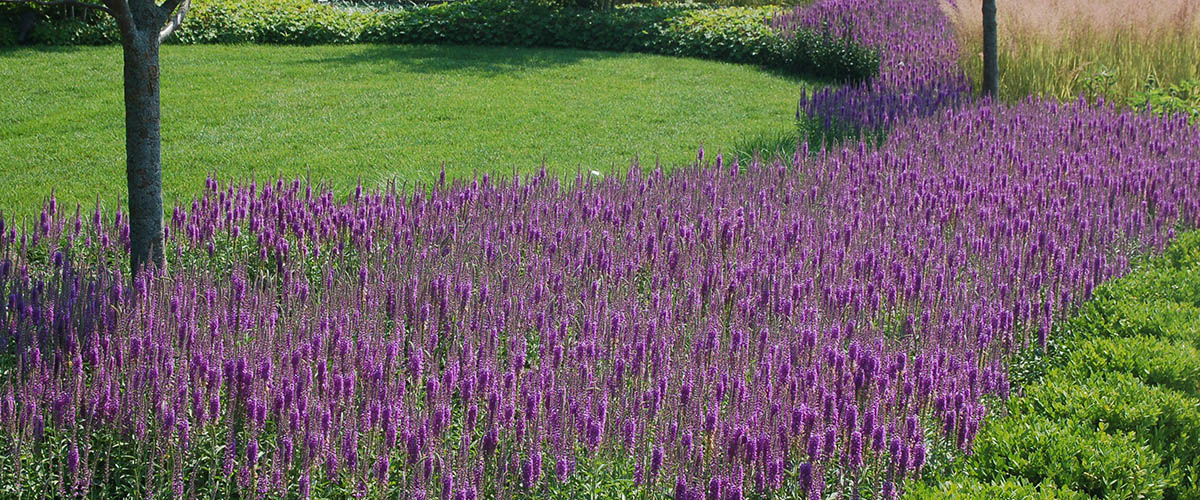
Evaluating Perennials for Chicagoland Gardens
Perennials in Focus is a plant evaluation program that examines new and underused plants for Chicagoland, the third largest metropolitan area in the country. A group of horticultural experts trials and evaluates plants at numerous locations across the region. Results help consumers, public gardens, growers, landscape designers, breeders, and other industry professionals make informed plant choices.
What Three Dry Weeks Reveal About Purple Coneflower Recovery
Echinacea purpurea, commonly called purple coneflower, is often recommended for sunny perennial borders because it establishes a substantial root system and continues flowering through summer. Yet “drought tolerant” does not mean that a plant can be ignored immediately after planting, or that every cultivar will recover equally well from prolonged dryness.
A controlled assessment of drought recovery can provide more useful information than a simple survival score. For gardeners in Australia, the key question is whether a plant resumes growth, rebuilds flowering capacity and maintains an attractive form after water is withheld. That is the practical value of regional plant trials, including the regional perennial trials conducted through Perennials in Focus.
| Assessment point | What to record | Why it matters in Australia |
|---|---|---|
| Before drying | Height, spread, leaf colour and flower count | Establishes a fair baseline between plants |
| During three dry weeks | Wilting, leaf loss, stem strength and soil moisture | Shows visible stress and water-use response |
| Seven to fourteen days after rewatering | New leaves, upright stems and flower-bud development | Measures recovery rather than simple survival |
| Later in the season | Flowering continuity, crown health and winter preparation | Reveals whether stress caused lasting damage |
Why Echinacea Is A Useful Trial Plant
Purple coneflower is a strong candidate for a water-stress study because it combines ornamental value with a reputation for resilience. Mature plants usually produce upright stems, coarse green foliage and daisy-like flowers with raised central cones. The flowers attract bees and other pollinators, while the seedheads can provide late-season structure.
Its performance is also easy to observe. Wilting, scorched foliage, bent stems and reduced flowering are visible without specialised equipment. However, visual appearance alone can be misleading. A plant may look tired during a dry period yet recover rapidly after irrigation, while another may remain upright but suffer crown damage or lose its ability to flower later.
The cultivar, plant age and soil type all influence the result. A recently divided plant in sandy soil should not be compared directly with a mature specimen in deep loam. A reliable trial therefore needs repeated observations across several plants, rather than a judgement based on a single pot or garden bed.
Building A Fair Three-Week Dry Period
The trial should begin when plants are actively growing and have reached a similar size. Record height, width, number of flowering stems, bud count and general foliage colour. Photographing each plant from the same angle can make changes easier to assess than memory alone.
“Without water” should mean no supplementary irrigation, not necessarily a complete absence of moisture. Outdoor plots still receive rainfall, so the trial log should include rainfall totals, temperature, wind and the type of soil. In a container study, the potting mix, container size and drainage need to be consistent. Plants should not be placed where one receives runoff from a roof or a nearby hose.
Three weeks is long enough to reveal meaningful stress in many summer conditions, especially when temperatures are high and humidity is low. It is not a universal drought simulation, however. A cool, cloudy Melbourne period will create less demand than a hot spell in Adelaide or western Sydney. Recording weather alongside plant condition keeps the result useful and honest.
Measuring Recovery After Rewatering
Rewatering should be gradual when the soil has become extremely dry. Apply enough water to moisten the root zone thoroughly, then allow drainage. A sudden shallow splash may wet the surface while leaving the deeper roots dry, producing an inaccurate impression of poor recovery.
Assess the plants at 24 hours, seven days and fourteen days after water is restored. Useful observations include the return of leaf firmness, the emergence of new foliage, the recovery of upright stems and the development of flower buds. Note whether damaged leaves remain discoloured, drop away or are replaced by healthy growth.
A simple recovery rating can combine survival and appearance. For example, a plant could receive a score for crown survival, foliage recovery, stem stability and renewed flowering. It is important to keep the original stress record beside the recovery score: a plant that suffered severe wilting but recovered fully may have greater drought resilience than one that showed little stress because it was naturally smaller.
Reading Results For Australian Gardens
Australian gardeners should interpret a Chicagoland trial as valuable evidence, not a direct promise of performance in every local climate. Chicago has cold winters, humid summers and a different pattern of rainfall from Brisbane, Perth or Canberra. The trial still helps identify traits worth seeking, such as deep rooting, sturdy stems and the ability to resume growth after moisture returns.
Local conditions can change the outcome dramatically. In Perth, sandy soils may drain quickly and require careful establishment watering. In Adelaide, hot northerly winds can intensify moisture loss from leaves. Gardeners in Sydney may contend with humid periods followed by sudden heat, while Melbourne’s variable summer weather can alternate between dry spells and cool rain.
Water restrictions and local watering rules also matter. Councils may limit irrigation hours, particularly during hot weather, and many households already favour early-morning watering to reduce evaporation. A plant that can recover after a missed watering cycle is useful in these settings, but it still needs deep watering while establishing. Mulch, adequate spacing and improved soil organic matter can reduce the frequency of irrigation without keeping the root zone permanently wet.
Applying Findings To Plant Selection
The most useful outcome is a profile rather than a single winner. A resilient Echinacea purpurea may show moderate wilting, retain a healthy crown and produce new leaves soon after rewatering. Another selection may remain visually attractive throughout the dry period but flower less later. These differences matter to home gardeners, landscape contractors, retailers and public gardens choosing plants for low-water displays.
When buying plants, look for a well-rooted crown, firm foliage and no signs of chronic pot stress. Avoid treating a nursery label such as “drought hardy” as a guarantee that the plant can be planted and abandoned. In Australia’s retail market, availability varies by state, season and nursery supply, so trial results can help growers decide which selections deserve wider propagation.
The evaluation team approach is particularly useful because observations made by several horticultural professionals are less dependent on one garden’s soil or one person’s expectations. Repeated records across seasons can reveal whether drought recovery is consistent, whether flowering returns reliably and whether plants remain attractive after stress.
For landscapers, the findings can inform plant palettes for verges, civic gardens and water-conscious residential designs. For household gardeners, they support a more realistic maintenance plan: establish plants carefully, mulch the soil, monitor heat stress and use deep irrigation when needed rather than frequent light sprinkling.
A three-week dry period is therefore best understood as a stress test, not a recommendation for neglect. By recording conditions before, during and after water deprivation, growers can separate temporary wilting from lasting injury and identify Echinacea purpurea selections that provide dependable performance.
Use these observations to compare cultivars, refine irrigation schedules and choose plants suited to your local Australian conditions. Follow regional trial findings, share consistent garden records with growers and treat drought recovery as a measurable horticultural trait rather than a vague marketing claim.
In the Garden
Evaluator gardens are located across the Chicagoland area, representing a range of growing conditions. Visit our retail and wholesale partners to find trialled perennials for your own garden.
Retail & Wholesale: Hinsdale Nurseries (Willowbrook, IL), Mariani Nurseries (Kenosha, WI & Garden Prairie, IL), Northwind Perennials (Burlington, WI), The Growing Place (Aurora, IL).
Wholesale Only: Hinsdale Nurseries (Plano, IL), Intrinsic Perennial Gardens (Hebron, IL).
Our Evaluation Program
The 2017–2020 evaluation cycle included Agastache 'Blue Boa', Allium senescens 'Blue Eddy', Amsonia ciliata var. filifolia 'Georgia Pancake', Astilbe 'Chocolate Shogun', Boltonia astroides 'James Crocket', Brunnera 'Alexander's Great', and Geranium cinereum 'Jolly Jewel Purple'. Completed evaluations include Amsonia 'Blue Ice' (2004–07).
On April 10, 2020, the program published snapshot profiles for Vernonia lettermanii 'Iron Butterfly', Stokesia laevis 'Elf', Stachys officinalis 'Pink Cotton Candy', Lobelia 'Monet Moment', Helleborus 'Winter Thrillers', Geum 'Mai Tai', Geranium soboliferum 'Butterfly Kisses', Gentiana x intermedia 'True Blue', Eurybia divaricata, Asparagus 'Purple Passion', and Agastache 'Bolero'.
Browse the full collection of snapshots organized alphabetically — from A–D, E–H, I–Q, and R–Z — to find detailed performance data on perennials trialled across Chicagoland.