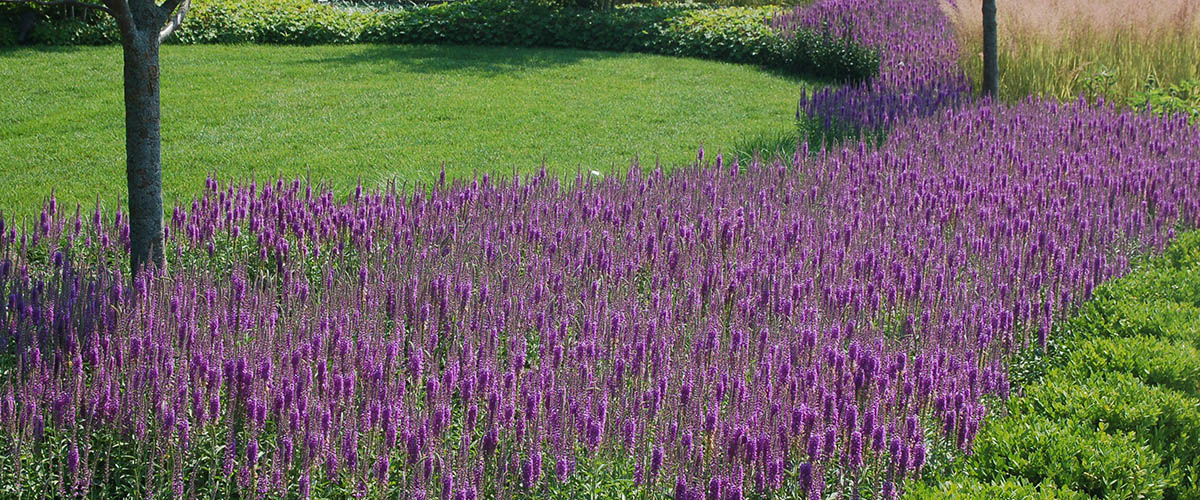
Evaluating Perennials for Chicagoland Gardens
Perennials in Focus is a plant evaluation program that examines new and underused plants for Chicagoland, the third largest metropolitan area in the country. A group of horticultural experts trials and evaluates plants at numerous locations across the region. Results help consumers, public gardens, growers, landscape designers, breeders, and other industry professionals make informed plant choices.
Trialing Cold Stratification In Asclepias Tuberosa Seed
Asclepias tuberosa, commonly called butterfly weed, is a North American perennial valued for vivid orange flower clusters, upright stems and its role as a larval food plant for monarch butterflies. Its seed can be less predictable than its mature appearance suggests, particularly when it is sown without the seasonal cues that would normally break dormancy.
A controlled trial can separate genuine cold-stratification effects from problems caused by old seed, unsuitable moisture, poor air exchange or incorrect sowing temperature. This matters in the Chicagoland region, where the plant must establish before winter, and in Australia, where natural winter conditions differ sharply between Melbourne, Canberra, Sydney, Adelaide and Brisbane.
For Perennials in Focus, the useful result is not simply the treatment with the highest percentage of germinated seeds. A strong evaluation records speed, uniformity, seedling health, transplant survival and first-season growth. Those details help growers and gardeners decide whether a treatment is practical, repeatable and worth adding to a production schedule.
Why Seed Dormancy Matters
Butterfly weed produces narrow, tufted seeds that are dispersed by wind. In nature, they may experience weeks of cool, moist conditions before spring warmth encourages germination. Cold, moist stratification imitates that sequence by holding seed in a damp medium at refrigerator temperatures before sowing.
The requirement is not always absolute. Some seed lots germinate without pretreatment, while others show slow or uneven emergence unless they receive a period of chilling. Age, storage history, moisture content and seed source can all influence the result. Treating one successful packet as proof that every lot behaves the same would weaken the trial.
The aim is therefore to identify a useful range rather than assume a single magic number. Treatments of zero, 30, 60 and 90 days can reveal whether germination rises gradually, reaches a plateau or declines when chilling is extended.
What The Trial Should Test
A reliable experiment changes one main factor at a time. Use seed from the same lot, the same sowing medium, identical containers and a common post-stratification temperature. Divide the seed into replicated groups so that one unusually good or poor tray does not determine the result.
The untreated control is essential. It shows how much germination occurs without a cold period and provides a baseline for judging every chilled treatment. A practical design might use four treatments with three or four replicates, placing an equal number of seeds in each container.
Record the date that each seed lot enters cold storage, the date it is sown and the date of first emergence. Also note final germination, mean emergence time, mould, abnormal seedlings and survival after potting. These observations often reveal a treatment that produces fewer seedlings but stronger plants.
Preparing Seeds And Sowing Media
For moist stratification, place seed between barely damp sheets of sterile paper, or mix it with a small quantity of lightly moistened, free-draining medium. Seal the material in a labelled bag or container and keep it around 1–5°C. A household refrigerator is suitable when it maintains a stable temperature, but seed should never be frozen.
Excess water is a common source of failure. The medium should feel cool and damp, not saturated. Inspect packets periodically for fungal growth, remove affected material and avoid opening several treatments with the same unclean tools.
After chilling, sow the seed on the surface or cover it very lightly. Butterfly weed needs moisture and warmth for germination, while a heavy covering can reduce emergence. Use a sterile, airy seed-raising mix and provide bright light after seedlings appear. Bottom watering can help keep the surface stable and reduce disturbance.
Building A Chicagoland Trial
Chicagoland trials should include a consistent protected germination phase followed by outdoor evaluation. A heated propagation area can provide the warm conditions needed after stratification, while later planting in the garden reveals whether early germination translates into useful perennial performance.
The field phase should record flowering time, flower colour, plant height, spread, stem strength and winter survival. Butterfly weed develops a substantial taproot, so seedlings that remain crowded in small cells may be damaged during transplanting. Potting on at an appropriate stage is part of the production test, not an afterthought.
Pollinator value can be documented alongside horticultural traits. Flowering duration, insect visits and the general structure of the planting provide useful context, especially when compared with other nectar-rich perennials. The native bee trials involving Pycnanthemum muticum demonstrate why observations of pollinator activity can add depth to a plant evaluation.
Translating Results For Australian Gardens
Australian growers should be cautious about copying a Chicagoland calendar. In Melbourne, Canberra and inland Tasmania, winter temperatures may provide some natural chilling, although pots kept in sheltered courtyards can remain warmer than expected. In Sydney and Adelaide, cool conditions may be shorter or interrupted by warm spells. Brisbane and other subtropical locations may need a refrigerator-based treatment to reproduce a dependable cold period.
Everyday gardening habits also affect the outcome. Many home growers sow seed in late winter, use a small refrigerator for household food and have limited room for labelled propagation containers. A treatment that performs marginally better but requires 90 days of careful monitoring may be less useful than a 30-day protocol with consistent results.
The Australian market adds another consideration. Garden centres often favour flowering-size plants and quick seasonal colour, while specialist seed suppliers serve gardeners seeking unusual perennials and pollinator plants. Clear labels stating whether seed has been stratified, and for how long, could reduce disappointing purchases and help retailers explain why a packet may need patience.
Importing seed requires attention to Australian biosecurity rules. Before ordering Asclepias tuberosa from overseas, growers should check the current Department of Agriculture, Fisheries and Forestry BICON conditions, including permitted form, packaging and documentation. State and territory weed or plant-sale rules may also apply, so a successful germination result does not automatically make a seed source legal to distribute.
Reading Germination And Establishment
Calculate germination as the number of normal seedlings divided by the number of viable seeds sown. Report each replicate as well as the average, since an average alone can hide large differences between trays. A simple emergence chart showing seedlings by day makes treatment speed easy to compare.
The best treatment may be the one that produces evenly sized seedlings rather than the absolute highest count. Fast, crowded emergence can lead to weak stems, while delayed emergence may cause seedlings to miss the preferred transplanting window. Include survival after potting and growth several weeks later before declaring a treatment successful.
Watch for dormancy that is being confused with poor seed quality. A low result in every treatment may indicate old seed, low viability or unsuitable storage. A strong result from the untreated group suggests that chilling is unnecessary for that lot. Repeating the test with another seed source is the most reliable way to separate genetic or storage differences from treatment effects.
Choosing A Practical Treatment
The following framework gives a useful starting point for a replicated trial. It is a comparison of test treatments, not a guarantee for every packet or Australian climate.
| Treatment | Suggested chilling period | What It Can Reveal | Practical Use |
|---|---|---|---|
| Untreated control | 0 days | Baseline dormancy and seed viability | Useful when seed is fresh or the grower has limited refrigeration |
| Short chill | About 30 days | Whether a modest winter cue improves speed and uniformity | Often convenient for small-scale propagation |
| Medium chill | About 60 days | Whether extended chilling gives a stronger response | Useful when 30 days produces uneven emergence |
| Long chill | About 90 days | Whether dormancy persists or extra chilling adds no benefit | Helps define the upper useful limit |
Once results are collected, select the shortest treatment that delivers dependable emergence and healthy, transplantable plants. Record the seed lot, refrigerator temperature, sowing date and post-sowing conditions so the protocol can be repeated next season.
For Australian production, it may be sensible to run the chosen treatment beside a naturally chilled batch in Melbourne or Canberra and a refrigerator-treated batch in warmer regions. That comparison can show whether outdoor winter exposure is sufficiently consistent for local use.
A clear trial record turns a difficult seed packet into actionable horticultural information. Growers can then schedule propagation, retailers can improve cultural notes and gardeners can give butterfly weed the seasonal signal it needs.
Use the treatment comparison as a starting point, test the seed lot you actually have, and record results through establishment rather than stopping at first emergence. Share reliable observations with local growers, public gardens and plant evaluation networks so that cold-stratification guidance becomes more useful for Australian conditions as well as the Chicagoland region.
In the Garden
Evaluator gardens are located across the Chicagoland area, representing a range of growing conditions. Visit our retail and wholesale partners to find trialled perennials for your own garden.
Retail & Wholesale: Hinsdale Nurseries (Willowbrook, IL), Mariani Nurseries (Kenosha, WI & Garden Prairie, IL), Northwind Perennials (Burlington, WI), The Growing Place (Aurora, IL).
Wholesale Only: Hinsdale Nurseries (Plano, IL), Intrinsic Perennial Gardens (Hebron, IL).
Our Evaluation Program
The 2017–2020 evaluation cycle included Agastache 'Blue Boa', Allium senescens 'Blue Eddy', Amsonia ciliata var. filifolia 'Georgia Pancake', Astilbe 'Chocolate Shogun', Boltonia astroides 'James Crocket', Brunnera 'Alexander's Great', and Geranium cinereum 'Jolly Jewel Purple'. Completed evaluations include Amsonia 'Blue Ice' (2004–07).
On April 10, 2020, the program published snapshot profiles for Vernonia lettermanii 'Iron Butterfly', Stokesia laevis 'Elf', Stachys officinalis 'Pink Cotton Candy', Lobelia 'Monet Moment', Helleborus 'Winter Thrillers', Geum 'Mai Tai', Geranium soboliferum 'Butterfly Kisses', Gentiana x intermedia 'True Blue', Eurybia divaricata, Asparagus 'Purple Passion', and Agastache 'Bolero'.
Browse the full collection of snapshots organized alphabetically — from A–D, E–H, I–Q, and R–Z — to find detailed performance data on perennials trialled across Chicagoland.