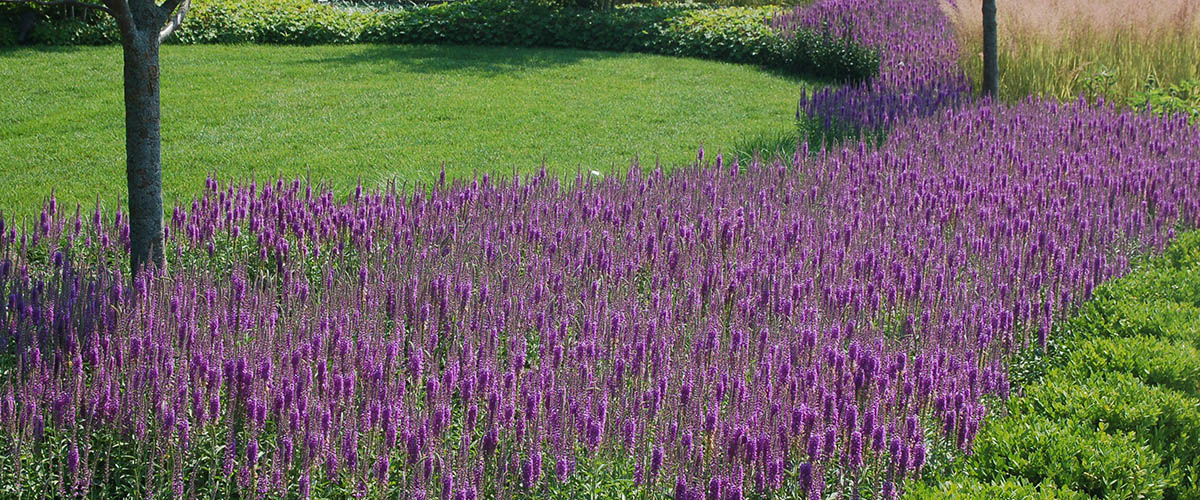
Evaluating Perennials for Chicagoland Gardens
Perennials in Focus is a plant evaluation program that examines new and underused plants for Chicagoland, the third largest metropolitan area in the country. A group of horticultural experts trials and evaluates plants at numerous locations across the region. Results help consumers, public gardens, growers, landscape designers, breeders, and other industry professionals make informed plant choices.
Finding Compact Hardy Hibiscus for Chicagoland Containers
Hardy hibiscus (Hibiscus moscheutos hybrids) bring dinner-plate flowers, strong summer color, and reliable cold tolerance to perennial gardens. Their large leaves and late-season blooms make them valuable focal plants, yet many cultivars develop broad crowns and tall stems that can overwhelm a patio pot or small urban garden.
Container production raises a different set of questions than traditional border planting. A promising hybrid must remain proportionate, flower freely in a restricted root zone, and recover from heat, wind, and fluctuating moisture. It also needs enough winter hardiness for the Chicagoland region, where a container exposes roots to colder conditions than open ground.
A regional trial of compact hardy hibiscus can reveal which plants truly balance ornamental impact with manageable size. Observations collected over several seasons give gardeners and the green industry a clearer basis for choosing plants than catalog descriptions alone.
Why compact hardy hibiscus matters
Compact growth is more than a short height rating. A container-friendly hibiscus should have sturdy stems, limited outward spread, and a well-branched habit that creates a full display without requiring a very large pot. A plant that stays short but flops outward may still occupy too much space on a balcony, terrace, or narrow walkway.
Root-zone volume also affects plant behavior. In a container, hibiscus may dry quickly during hot weather, while excess water can remain around the roots after heavy rain. Compact selections with moderate vigor can be easier to irrigate and maintain than very aggressive cultivars, especially when paired with a well-drained growing medium.
The goal is not to find the smallest possible plant. Extremely restrained growth may produce fewer flowering stems or a less impressive canopy. The strongest candidates combine a controlled silhouette with enough vigor to fill a container and produce a sustained summer display.
How regional trials evaluate container performance
A useful evaluation begins with consistent growing conditions. Trial managers can place plants in comparable containers, use a standardized substrate, and record watering and fertilization practices. Repeating the process across multiple gardens helps distinguish genetic performance from the effects of one site’s soil, exposure, or maintenance routine.
The evaluation team brings professional observation to traits that are difficult to judge from a plant tag. Measurements may include mature height, spread, branching, first bloom, flower count, flower color, foliage quality, and the length of the display. Notes on lodging, disease symptoms, insect damage, and recovery after stress add practical value.
Timing matters because hardy hibiscus emerges late in spring. A compact plant may look unimpressive in May and then gain substantial height before flowering. Recording weekly or biweekly changes shows whether a selection remains compact through the full season or simply starts slowly.
Traits that separate strong candidates
Flower size and color attract attention, but container performance depends on several traits working together. A plant with huge flowers may require staking if its stems cannot support the canopy. Another selection may produce slightly smaller blooms but offer better branching, cleaner foliage, and a longer sequence of flowers.
The comparison below illustrates the criteria that can guide a Chicagoland container trial. Actual ratings should come from repeated observations rather than assumptions based on cultivar reputation.
| Trait | What to record | Why it matters in containers |
|---|---|---|
| Mature height | Height at peak growth and bloom | Helps match the plant to pot scale and viewing distance |
| Mature spread | Width of stems and foliage | Prevents crowding on patios and in mixed displays |
| Branching | Number and strength of flowering stems | Supports fullness without excessive staking |
| Bloom period | First flower, peak display, and final flower | Measures seasonal impact and consistency |
| Flower color and size | Hue, diameter, and color stability | Determines visual value in a small planting |
| Moisture response | Recovery after drying or heavy rain | Indicates resilience under container conditions |
| Winter survival | Crown and root recovery the following spring | Helps assess suitability for the local climate |
Foliage quality deserves special attention. Yellowing leaves, premature defoliation, or persistent insect injury can reduce the appeal of a container specimen even when the flowers are excellent. Because a pot places the plant at eye level, weak foliage may be more noticeable than it would be in a large perennial border.
Reading results across sites and seasons
A single season can produce misleading results. An unusually cool spring may delay emergence, while a hot summer can expose differences in drought tolerance and flowering endurance. Multi-season evaluation shows whether a hybrid performs consistently or succeeds only under narrow weather conditions.
Site comparisons are equally important. A hibiscus grown in full sun beside a warm wall may bloom earlier than one in an exposed community garden. Plants in rain-fed locations may experience different moisture patterns from those under regular irrigation. When the same traits are tracked across several settings, recurring strengths become more meaningful.
Winter survival should be judged after the container experience, not just after plants grow in the ground. Roots in above-ground pots face rapid temperature swings, and a cultivar that survives easily in a border may need extra protection in a container. Trial notes can help separate genuinely hardy selections from those that require overwintering in an unheated shelter or protected location.
Practical recommendations for choosing and growing candidates
Trial findings can serve several audiences at once. Home gardeners may prioritize a compact outline and long bloom period, while retailers need dependable habit and clear cultural information. Landscape professionals may value uniformity across multiple containers, and breeders can use the observations to target better branching, stronger stems, or improved cold performance.
When selecting a hardy hibiscus for a pot, use these recommendations:
- Match the mature height and spread to the container’s location, allowing room for airflow around the foliage.
- Choose a substantial pot with drainage holes; larger volumes buffer moisture and temperature changes better than small decorative containers.
- Place the plant in full sun and use a moisture-retentive but well-drained medium to support vigorous summer growth.
- Track flowering, stem strength, and recovery from heat or drought instead of judging the plant by its first flush of blooms.
- Protect the container over winter or move it to a sheltered, unheated space when local conditions threaten root survival.
A well-chosen pot also improves the visual proportion of the planting. Compact hybrids often look most balanced in containers that are broad enough to support the canopy without making the plant appear top-heavy. Regular watering during bud formation and flowering helps prevent stress, while avoiding constantly saturated media protects the crown and roots.
Turning trial observations into better plant choices
The value of plant evaluation lies in translating measurements into dependable decisions. A recorded height, bloom window, and winter response can help a grower plan inventory, a public garden design an accessible seasonal display, or a homeowner select a hibiscus that will fit a balcony without repeated cutting back.
For Chicagoland gardeners, region-specific evidence is especially useful because local performance reflects the area’s late springs, humid summers, variable rainfall, and difficult winter transitions. Compact hardy hibiscus hybrids that perform across several trial gardens have a stronger case for containers than plants judged only in a distant climate or during one favorable season.
Use the published findings from Perennials in Focus to compare candidate plants, then apply those observations to container size, exposure, and maintenance capacity. Select hybrids with a balanced habit, document how they perform in your own setting, and give the most reliable compact performers a place in next season’s planting plans.
In the Garden
Evaluator gardens are located across the Chicagoland area, representing a range of growing conditions. Visit our retail and wholesale partners to find trialled perennials for your own garden.
Retail & Wholesale: Hinsdale Nurseries (Willowbrook, IL), Mariani Nurseries (Kenosha, WI & Garden Prairie, IL), Northwind Perennials (Burlington, WI), The Growing Place (Aurora, IL).
Wholesale Only: Hinsdale Nurseries (Plano, IL), Intrinsic Perennial Gardens (Hebron, IL).
Our Evaluation Program
The 2017–2020 evaluation cycle included Agastache 'Blue Boa', Allium senescens 'Blue Eddy', Amsonia ciliata var. filifolia 'Georgia Pancake', Astilbe 'Chocolate Shogun', Boltonia astroides 'James Crocket', Brunnera 'Alexander's Great', and Geranium cinereum 'Jolly Jewel Purple'. Completed evaluations include Amsonia 'Blue Ice' (2004–07).
On April 10, 2020, the program published snapshot profiles for Vernonia lettermanii 'Iron Butterfly', Stokesia laevis 'Elf', Stachys officinalis 'Pink Cotton Candy', Lobelia 'Monet Moment', Helleborus 'Winter Thrillers', Geum 'Mai Tai', Geranium soboliferum 'Butterfly Kisses', Gentiana x intermedia 'True Blue', Eurybia divaricata, Asparagus 'Purple Passion', and Agastache 'Bolero'.
Browse the full collection of snapshots organized alphabetically — from A–D, E–H, I–Q, and R–Z — to find detailed performance data on perennials trialled across Chicagoland.