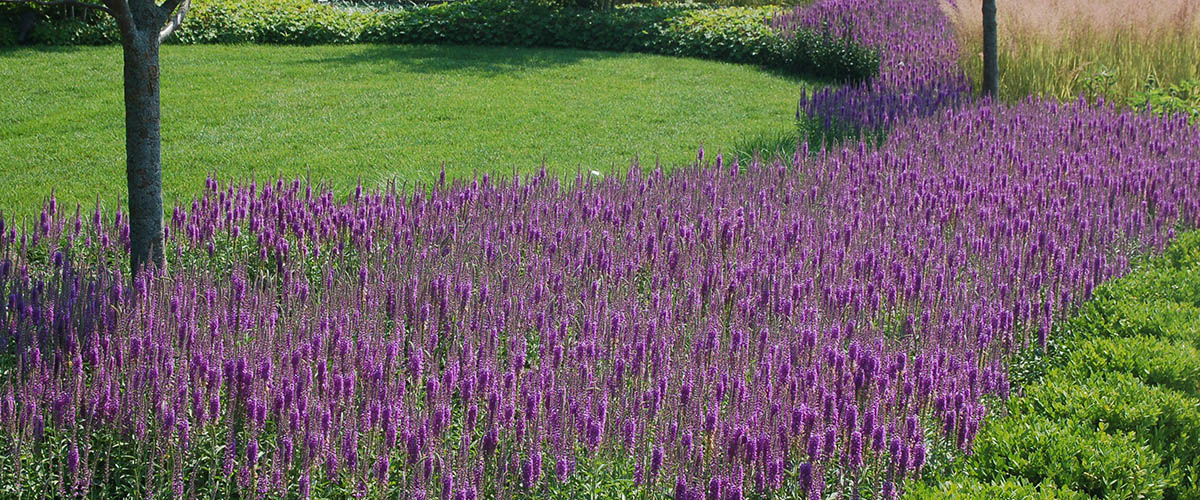
Evaluating Perennials for Chicagoland Gardens
Perennials in Focus is a plant evaluation program that examines new and underused plants for Chicagoland, the third largest metropolitan area in the country. A group of horticultural experts trials and evaluates plants at numerous locations across the region. Results help consumers, public gardens, growers, landscape designers, breeders, and other industry professionals make informed plant choices.
Five hardy perennials for cut flowers in Chicago
A productive cutting garden in the Chicagoland region must do more than produce attractive stems in summer. Plants need to tolerate winter cold, fluctuating temperatures, wet spring soil, and the occasional late frost. The best choices return reliably while offering useful stem length, vase life, and a succession of blooms.
Perennials in Focus evaluates plants under regional conditions, with horticultural professionals observing performance across multiple gardens and seasons. Those findings are especially valuable for gardeners selecting flowers that will thrive in Chicago rather than merely survive in a milder climate.
The five plants below combine ornamental value with dependable cutting potential. Their bloom times overlap enough to support bouquets from late spring through fall, while their different forms—rounded blooms, airy sprays, spikes, and daisy shapes—create variety in arrangements.
What makes a perennial useful for cutting
A strong cut-flower perennial usually has sturdy stems, a long flowering window, and blooms that remain attractive after harvest. It should also produce enough flowers to allow regular cutting without leaving the garden looking bare. Repeated harvesting can encourage some plants to branch and rebloom.
Winter hardiness matters just as much. In Chicago, a plant may face freezing temperatures followed by thaws, saturated soil, and drying winds. Plants with established root systems and suitable drainage generally overwinter more consistently than tender perennials treated as annuals.
Site preparation also influences performance. Most of these selections prefer full sun, fertile soil, and good air circulation. Avoid planting them where water pools in winter, and give each perennial enough space for mature spread. Healthy plants are more likely to deliver long, straight stems the following season.
Peony brings a luxurious early-season harvest
Garden peony (Paeonia lactiflora and hybrids) is one of the most reliable cold-hardy perennials for a cutting garden. It produces substantial flowers in late spring and early summer, when few other hardy plants offer such large, richly colored blooms. White, blush, pink, coral, and red cultivars can anchor formal or romantic arrangements.
Peonies are long-lived and routinely overwinter in the Chicago area when planted in well-drained soil. For the best flowering, position them in full sun and avoid burying the eyes too deeply. Harvest stems when the buds feel like a soft marshmallow, before the petals fully open indoors.
Their main limitation is timing: the harvest can be abundant but relatively brief. Cut only when the foliage can remain on the plant, since those leaves replenish the roots for next year. Ants on developing buds are common and do not indicate a serious problem; gently shake or rinse stems before bringing them inside.
Garden phlox extends color into midsummer
Garden phlox (Phlox paniculata) provides fragrant, rounded flower clusters on upright stems from midsummer into late summer. Cultivars range from white and pale pink to magenta, lavender, and deep purple. The flowers attract butterflies and add a strong vertical element to mixed bouquets.
This perennial is well suited to Chicago’s winter climate, especially in a sunny site with rich but well-drained soil. Taller cultivars may need support, particularly in exposed gardens or after heavy rain. Cutting stems as flowers begin to open can encourage a tidier plant and supply fresh material over an extended season.
Air circulation is important because humid weather can encourage powdery mildew on the foliage. Allow adequate spacing, water at the soil line, and remove crowded growth when necessary. For gardeners comparing regional performance, the regional garden findings from local evaluation work can help put cultivar behavior into a Chicagoland context.
Coneflower offers durable stems and a long season
Purple coneflower (Echinacea purpurea and related hybrids) is a dependable summer-to-fall performer with excellent value for pollinators. The classic form has pink-purple petals and a raised brown cone, while modern cultivars offer white, yellow, orange, and green tones. Its strong stems work well in casual bouquets and dried arrangements.
Coneflower tolerates heat and short dry periods once established, making it useful in lower-maintenance cutting gardens. It prefers full sun and average, well-drained soil. Excessive fertility can result in lush foliage and weaker stems, so avoid pushing growth with large amounts of nitrogen.
Harvest when the petals have opened and the central cone is still firm. Leaving some spent flower heads standing adds winter interest and provides seed for birds. Remove the remaining stalks in late winter or early spring rather than cutting everything down in fall, unless disease or garden cleanup requires otherwise.
| Perennial | Typical bloom period | Flower colors | Approximate height | Cutting strengths |
|---|---|---|---|---|
| Garden peony | Late spring to early summer | White, pink, coral, red | 24–36 inches | Large focal blooms, excellent vase presence |
| Garden phlox | Midsummer to late summer | White, pink, purple, magenta | 24–48 inches | Fragrance, sturdy flower clusters |
| Purple coneflower | Summer to fall | Pink, purple, white, yellow, orange | 24–48 inches | Long season, durable stems, good for drying |
| Bee balm | Early to midsummer | Red, pink, lavender, white | 24–48 inches | Colorful accents, pollinator value |
| Yarrow | Early summer to fall | Yellow, white, pink, red | 18–36 inches | Flat-topped clusters, excellent filler and drying |
Bee balm adds color, fragrance, and movement
Bee balm (Monarda species and hybrids) produces lively, shaggy flower heads on upright stems in early and midsummer. Red, pink, lavender, and white cultivars bring a less formal shape to arrangements, while the aromatic foliage adds interest when stems are handled. Bees, butterflies, and hummingbirds also make the planting active and attractive.
Established bee balm is hardy in the Chicago region, but it performs best with consistent moisture and good air movement. Plant it where morning sun and room for expansion can reduce prolonged leaf dampness. Some cultivars are more compact and mildew resistant than older forms, making them better choices for smaller gardens or humid sites.
Cut stems when the upper flowers are opening and strip foliage that would sit below the water line. Regular harvesting can help prevent the plant from becoming overly dense. Divide crowded clumps in spring if flowering declines or the center begins to thin.
Yarrow supplies dependable filler from summer into fall
Yarrow (Achillea millefolium hybrids) is valued for its flat-topped flower clusters, fernlike foliage, and exceptional tolerance of heat and dry soil. Yellow is especially useful in bright summer bouquets, while white, pink, peach, and red selections pair easily with grasses and other perennials.
This hardy plant returns reliably in Chicago when grown in full sun and sharply drained soil. Rich, damp conditions can produce floppy growth, so yarrow is often a better fit for lean borders, raised beds, or locations where irrigation is limited. Its stems are generally sturdy, though very tall plants may benefit from support in windy sites.
Harvest when most flowers in a cluster have opened. Yarrow also dries well, retaining much of its shape and color when cut before the flower heads fully age. Removing faded clusters encourages additional bloom and keeps the plant from scattering seed throughout the bed.
Build a cutting garden that keeps producing
These five perennials can be arranged to create a steady sequence rather than a single burst of flowers. Peony begins the main display, followed by bee balm and garden phlox, while coneflower and yarrow carry color toward fall. Adding annual fillers, ornamental grasses, or foliage plants can stretch bouquet options even further.
Plant in blocks or generous drifts instead of scattering individual specimens through an ornamental border. A dedicated cutting area makes harvesting easier and allows flowers to be picked regularly without disturbing the garden’s main composition. Mulch lightly after planting, keep weeds under control, and water deeply during the first growing season.
- Choose cultivars with sturdy stems and a mature height suited to your site.
- Plant in full sun with soil that drains freely through winter and spring.
- Harvest early in the morning when stems are hydrated and flowers are at the right stage.
- Remove foliage below the waterline and change vase water regularly.
- Leave healthy leaves in place after flowering so roots can store energy for winter.
Selecting regionally proven plants is a practical way to reduce guesswork in a demanding climate. Use these hardy bloomers as the foundation of a Chicago cutting garden, then track flowering dates, stem quality, and winter survival in your own space. Share those observations with local gardening communities and keep refining your perennial palette season by season.
In the Garden
Evaluator gardens are located across the Chicagoland area, representing a range of growing conditions. Visit our retail and wholesale partners to find trialled perennials for your own garden.
Retail & Wholesale: Hinsdale Nurseries (Willowbrook, IL), Mariani Nurseries (Kenosha, WI & Garden Prairie, IL), Northwind Perennials (Burlington, WI), The Growing Place (Aurora, IL).
Wholesale Only: Hinsdale Nurseries (Plano, IL), Intrinsic Perennial Gardens (Hebron, IL).
Our Evaluation Program
The 2017–2020 evaluation cycle included Agastache 'Blue Boa', Allium senescens 'Blue Eddy', Amsonia ciliata var. filifolia 'Georgia Pancake', Astilbe 'Chocolate Shogun', Boltonia astroides 'James Crocket', Brunnera 'Alexander's Great', and Geranium cinereum 'Jolly Jewel Purple'. Completed evaluations include Amsonia 'Blue Ice' (2004–07).
On April 10, 2020, the program published snapshot profiles for Vernonia lettermanii 'Iron Butterfly', Stokesia laevis 'Elf', Stachys officinalis 'Pink Cotton Candy', Lobelia 'Monet Moment', Helleborus 'Winter Thrillers', Geum 'Mai Tai', Geranium soboliferum 'Butterfly Kisses', Gentiana x intermedia 'True Blue', Eurybia divaricata, Asparagus 'Purple Passion', and Agastache 'Bolero'.
Browse the full collection of snapshots organized alphabetically — from A–D, E–H, I–Q, and R–Z — to find detailed performance data on perennials trialled across Chicagoland.