Evaluating Perennials for Chicagoland Gardens
Perennials in Focus is a plant evaluation program that examines new and underused plants for Chicagoland, the third largest metropolitan area in the country. A group of horticultural experts trials and evaluates plants at numerous locations across the region. Results help consumers, public gardens, growers, landscape designers, breeders, and other industry professionals make informed plant choices.
Native perennials for Chicagoland home gardeners
Chicagoland gardeners can grow a remarkable range of native perennial plants, from sunny prairie flowers to shade-loving woodland species. These plants evolved within the region or nearby ecosystems, so many are well adapted to cold winters, humid summers, seasonal flooding, clay soil, and periods of drought once established.
Native perennials also support a broader garden community. Their flowers provide nectar for bees, butterflies, and other pollinators, while their foliage, stems, seeds, and roots offer food or shelter for wildlife. Choosing plants with different bloom periods can keep a garden attractive and useful from spring through fall.
The five selections below combine ornamental value with dependable performance in residential landscapes. Site conditions still matter: a plant suited to a dry, sunny border may struggle in a wet, shaded corner. Regional trial results and observations from horticultural professionals, such as the evaluation team, can help gardeners compare plants beyond a single season or garden location.
What makes a native perennial a good choice
A successful perennial should match the growing conditions already present in the garden. Sun exposure, drainage, soil moisture, mature height, and available space are more important than a plant’s reputation alone. Many Illinois natives tolerate heavy clay, but that does not mean every species will thrive in compacted or poorly drained ground.
It is also useful to consider how a plant behaves after establishment. Some spread gradually and make excellent naturalistic groundcovers, while others form upright clumps that fit more formally designed beds. Leaving seedheads standing through winter can add structure and provide food for birds, although gardeners may remove them in spring if self-sowing becomes excessive.
Butterfly weed brings color and pollinator value
Butterfly weed (Asclepias tuberosa) is one of the most vivid native perennials for a sunny Chicagoland garden. Its flat clusters of orange flowers appear in summer above narrow, deep green leaves, creating a strong focal point in prairie borders, pollinator gardens, and mixed perennial beds. Plants commonly reach about 18 to 30 inches tall and usually remain fairly upright.
This milkweed prefers full sun and sharply drained soil. Once established, it handles heat and dry conditions well, making it useful for slopes, curbside gardens, and areas that are difficult to irrigate. Its deep root system means it resents frequent relocation, so choose the planting spot carefully. Monarch caterpillars use its foliage, while many insects visit the nectar-rich flowers.
Purple coneflower offers a long season of flowers
Purple coneflower (Echinacea purpurea) is a durable native perennial with a familiar form: pink-purple rays surrounding a raised, bronze central cone. Flowering generally begins in early or midsummer and can continue into early fall if spent blooms are removed selectively. The sturdy stems often reach 2 to 4 feet, depending on the cultivar and growing conditions.
Plant it in full sun to light shade with average, well-drained soil. Purple coneflower is adaptable, but consistently wet winter soil can weaken its roots. It works well in groups of three or more, where the flowers create visual rhythm and the seedheads add winter interest. Goldfinches and other seed-eating birds may visit after the petals fade.
Comparing five dependable regional choices
The best plant depends on the conditions of the intended planting area. Bloom timing, mature size, and moisture tolerance can guide combinations that provide continuous interest without overcrowding a small bed.
| Native perennial | Typical bloom period | Mature height | Best setting | Notable value |
|---|---|---|---|---|
| Butterfly weed | June–August | 18–30 inches | Full sun, dry to average soil | Monarch host plant and pollinator nectar |
| Purple coneflower | June–September | 2–4 feet | Full sun, average well-drained soil | Long bloom season and bird-friendly seedheads |
| Wild geranium | April–June | 1–2 feet | Part shade, average to moist soil | Early flowers and attractive foliage |
| Culver’s root | July–September | 4–6 feet | Full sun, moist to average soil | Vertical structure and pollinator flowers |
| New England aster | August–October | 3–6 feet | Full sun, average soil | Late-season nectar for bees and butterflies |
These dimensions are useful planning estimates rather than fixed limits. Cultivars may be shorter, fuller, or different in flower color, and garden performance changes with soil, weather, and maintenance. A regional plant evaluation program can reveal how selections behave across multiple gardens and seasons, which is especially helpful when choosing less familiar native plants.
Wild geranium suits woodland edges
Wild geranium (Geranium maculatum) is a valuable choice for dappled shade, woodland edges, and gardens beneath high-canopy trees. Its soft pink to lavender flowers appear in spring, often before many summer perennials reach their full size. The deeply divided foliage forms a rounded mound that can remain attractive after flowering.
This species prefers part shade and evenly moist, well-drained soil, though established plants can tolerate short dry periods. It typically grows 1 to 2 feet tall and may slowly form a broad clump. Wild geranium pairs well with ferns, sedges, Virginia bluebells, and other woodland plants. Cutting back tired foliage in midsummer can make room for nearby plants, but leaving some seedheads supports natural reseeding.
Culver’s root adds height without heavy maintenance
Culver’s root (Veronicastrum virginicum) provides a strong vertical accent for a rain garden, large border, or sunny native planting. Its upright stems carry whorled leaves and narrow spikes of white to pale lavender flowers in midsummer. At 4 to 6 feet tall, it gives structure behind shorter perennials without requiring staking when grown in suitable light and soil.
The plant performs best in full sun or light shade with average to moist soil. It can tolerate periods of dryness after establishment, but it looks most vigorous where moisture is reasonably consistent. Culver’s root is especially effective when planted in groups, allowing its repeated flower spikes to create a strong architectural effect. Because it is tall, place it toward the back or middle of a border rather than directly beside a path.
New England aster extends the garden into fall
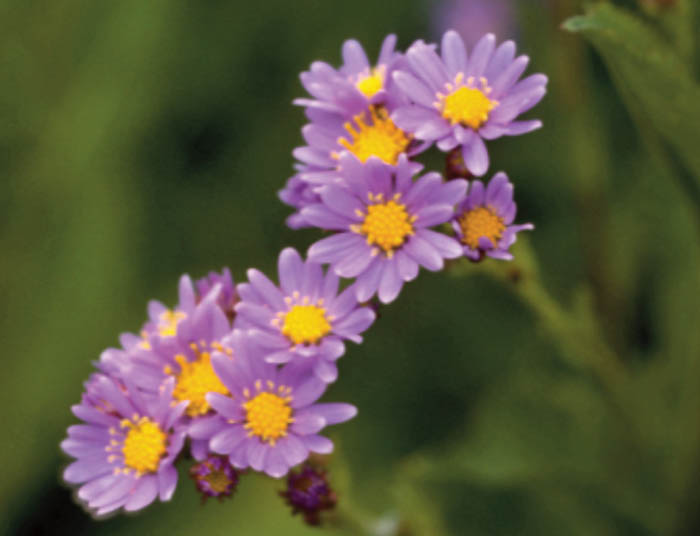
New England aster (Symphyotrichum novae-angliae) fills a seasonal gap when many summer perennials begin to decline. Its masses of purple, pink, or rose flowers open from late summer into fall and provide important late-season nectar. Depending on the selection, plants may grow from about 3 to 6 feet tall, although compact cultivars are available for smaller gardens.
Full sun encourages sturdy stems and abundant flowering. Average soil is usually sufficient, but plants benefit from consistent moisture during extended summer drought. Pinching the stems back once in late spring can create a shorter, bushier plant with more flowers. Good air circulation helps reduce foliar problems, so avoid crowding asters between larger plants.
Planting combinations that work in home gardens
A thoughtfully layered bed can include several of these species without looking overly wild. Butterfly weed and purple coneflower create a colorful sunny foreground, while New England aster supplies late-season height behind them. Culver’s root can occupy a moist section of the same border, provided it does not shade out shorter plants.
For a partly shaded garden, wild geranium can form the early-season foundation beneath shrubs or trees. Add native sedges or ferns for texture, then repeat a few flowering species rather than buying many unrelated plants. Repetition makes a small landscape feel intentional and also gives pollinators a more concentrated source of flowers.
When buying plants, choose nursery-propagated stock rather than collecting from natural areas. Confirm the mature dimensions, soil preferences, and light requirements on the plant label. The regional plant findings published by Perennials in Focus can add useful Chicagoland context when a general plant description does not explain how a selection performs locally.
Practical choices for a resilient native bed
- Match each species to its actual light and drainage conditions before planting.
- Use repeated groups of two or three plants to create cohesion and stronger flower displays.
- Water new perennials deeply during their first growing season while their roots develop.
- Leave selected stems and seedheads standing through winter for habitat and visual structure.
- Choose compact cultivars when mature height or spread would overwhelm a narrow border.
Native perennial gardening works best as an observation process. Watch which areas stay wet after rain, where summer heat dries the soil, and when each part of the garden receives direct sunlight. Adjusting plant placement over time is often more effective than trying to force one species to perform everywhere.
Begin with a small combination suited to your site, record bloom dates and growth through the seasons, and expand with plants that complement what already succeeds. By selecting regionally proven natives and giving them the right conditions, Chicagoland home gardeners can create beds with lasting color, wildlife value, and practical year-round structure.
In the Garden
Evaluator gardens are located across the Chicagoland area, representing a range of growing conditions. Visit our retail and wholesale partners to find trialled perennials for your own garden.
Retail & Wholesale: Hinsdale Nurseries (Willowbrook, IL), Mariani Nurseries (Kenosha, WI & Garden Prairie, IL), Northwind Perennials (Burlington, WI), The Growing Place (Aurora, IL).
Wholesale Only: Hinsdale Nurseries (Plano, IL), Intrinsic Perennial Gardens (Hebron, IL).
Our Evaluation Program
The 2017–2020 evaluation cycle included Agastache 'Blue Boa', Allium senescens 'Blue Eddy', Amsonia ciliata var. filifolia 'Georgia Pancake', Astilbe 'Chocolate Shogun', Boltonia astroides 'James Crocket', Brunnera 'Alexander's Great', and Geranium cinereum 'Jolly Jewel Purple'. Completed evaluations include Amsonia 'Blue Ice' (2004–07).
On April 10, 2020, the program published snapshot profiles for Vernonia lettermanii 'Iron Butterfly', Stokesia laevis 'Elf', Stachys officinalis 'Pink Cotton Candy', Lobelia 'Monet Moment', Helleborus 'Winter Thrillers', Geum 'Mai Tai', Geranium soboliferum 'Butterfly Kisses', Gentiana x intermedia 'True Blue', Eurybia divaricata, Asparagus 'Purple Passion', and Agastache 'Bolero'.
Browse the full collection of snapshots organized alphabetically — from A–D, E–H, I–Q, and R–Z — to find detailed performance data on perennials trialled across Chicagoland.