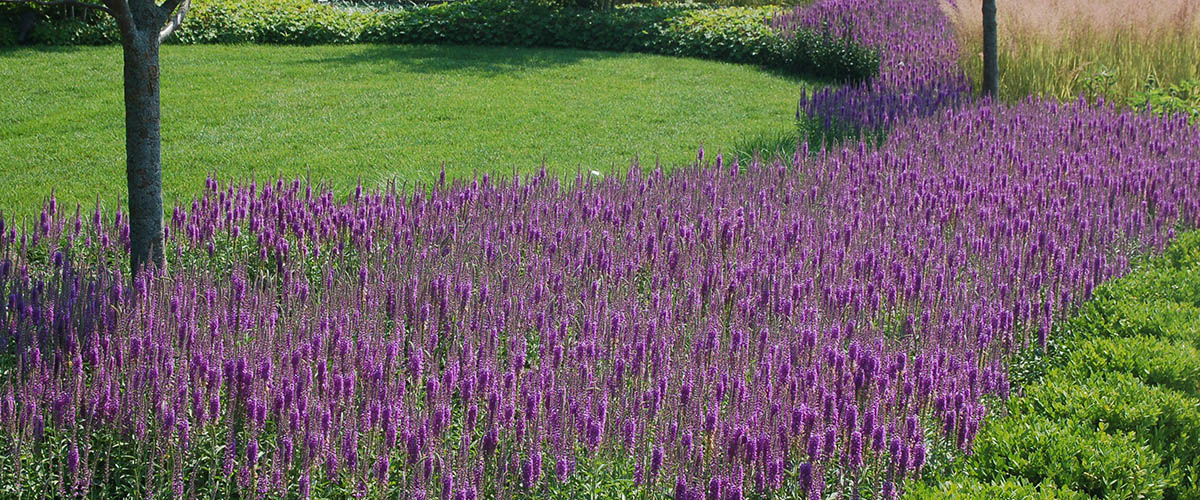
Evaluating Perennials for Chicagoland Gardens
Perennials in Focus is a plant evaluation program that examines new and underused plants for Chicagoland, the third largest metropolitan area in the country. A group of horticultural experts trials and evaluates plants at numerous locations across the region. Results help consumers, public gardens, growers, landscape designers, breeders, and other industry professionals make informed plant choices.
Perennials That Stand Up To Chicagoland Winters
Chicagoland gardens experience cold, fluctuating temperatures, snow cover, spring thaws, heavy clay soils, and occasional winter drought. A perennial that thrives in a mild climate may struggle here, especially when its crown is exposed to repeated freeze-and-thaw cycles. The strongest choices combine dependable cold hardiness with good performance through wet springs and humid summers.
For gardeners searching for the top 10 perennial plants that survive Chicagoland winters, winter survival is only the first measure. A useful plant should return consistently, maintain a pleasing habit, flower reliably, and tolerate the conditions found in an ordinary residential landscape.
The selections below represent durable plants for sunny and partly shaded sites. Exact results can vary by cultivar, soil drainage, exposure, snow cover, and planting time, so regional trial observations remain valuable when choosing among similar options.
Why Winter Performance Is More Than Survival
USDA hardiness zones provide a helpful starting point, but they do not describe every condition in a Chicago-area garden. A low spot that stays wet in March can damage roots even when winter temperatures remain within a plant’s expected range. Likewise, reflected heat from pavement can cause early growth that is later injured by frost.
A resilient perennial usually has several advantages: a well-established root system, a crown suited to cold conditions, and enough vigor to recover from weather stress. Plants with sturdy stems also provide useful winter structure, while those that retain basal foliage can help protect the crown from temperature swings.
Sun-Loving Perennials With Reliable Returns
Several classic prairie and cottage-garden plants perform particularly well in full sun. Purple coneflower (Echinacea purpurea) handles heat, moderate drought, and average soils once established. Its seed heads offer winter interest and food for birds, while its pink-purple flowers attract pollinators from summer into early fall.
Black-eyed Susan (Rudbeckia fulgida ‘Goldsturm’) is another dependable choice, producing golden flowers over a long season. Daylilies (Hemerocallis hybrids) are highly adaptable to different soils and light levels, and their dense roots help them return after harsh winters. Cultivar selection affects bloom time, height, and disease resistance, so plant descriptions should be checked before purchase.
For architectural form, switchgrass (Panicum virgatum) and little bluestem (Schizachyrium scoparium) are excellent cold-hardy ornamental grasses. Both offer upright stems and attractive seed heads after frost. Blue indigo (Baptisia australis) brings blue spring flowers and a substantial, shrub-like shape, while stonecrop (Hylotelephium ‘Herbstfreude’, commonly sold as ‘Autumn Joy’) flowers late and tolerates dry soil once rooted.
Shade Garden Survivors
A shady Chicagoland border can rely on hostas for dependable foliage and seasonal texture. Hosta cultivars generally return strongly in cold climates, although slugs, spring frost, and crown rot can affect performance. Their many leaf sizes and colors make them useful beneath trees, beside foundations, or along north-facing walks.
Wild geranium (Geranium maculatum) is a native woodland perennial with delicate spring flowers and attractive foliage. It adapts to part shade and can spread gradually without becoming difficult to manage. Solomon’s seal (Polygonatum biflorum) adds arching stems, white hanging flowers, and a graceful habit for woodland-style plantings. These shade plants appreciate soil enriched with organic matter but still need drainage around their crowns.
A Practical Comparison For Local Sites
The following overview compares mature size, seasonal interest, and preferred exposure. Heights and spreads are approximate because cultivars, soil fertility, and moisture can significantly change a plant’s final dimensions.
| Perennial | Typical Height | Typical Spread | Best Exposure | Main Season Of Interest |
|---|---|---|---|---|
| Purple coneflower | 2–4 ft | 1–2 ft | Full sun | Summer to fall |
| Black-eyed Susan | 2–3 ft | 1–2 ft | Full sun | Summer to fall |
| Daylily | 1–3 ft | 1–2 ft | Sun to part shade | Summer |
| Switchgrass | 3–6 ft | 2–3 ft | Full sun | Summer to winter |
| Little bluestem | 2–4 ft | 1–2 ft | Full sun | Summer to winter |
| Blue indigo | 3–4 ft | 3–4 ft | Full sun to light shade | Late spring |
| Stonecrop ‘Herbstfreude’ | 18–24 in | 18–24 in | Full sun | Late summer to fall |
| Hosta | 1–3 ft | 2–5 ft | Shade to part shade | Summer foliage |
| Wild geranium | 1–2 ft | 1–2 ft | Part shade | Spring to early summer |
| Solomon’s seal | 1–3 ft | 1–2 ft | Shade to part shade | Spring foliage and flowers |
Planting Choices That Improve Winter Survival
Even the most winter-hardy perennial can fail when planted too deeply or placed in unsuitable soil. Set crowns at the depth recommended on the plant tag, and avoid burying the center of clump-forming plants beneath thick layers of mulch. Heavy mulch directly against stems can hold moisture and encourage crown problems.
Site preparation should focus on drainage and long-term root growth rather than creating a small pocket of highly amended soil. Incorporate organic matter across the planting area, water new plants consistently through their first growing season, and keep competing weeds away from young crowns. Fall planting can work well, but plants need enough time to establish roots before the ground freezes.
Use the following guidelines when building a durable perennial border:
- Match moisture needs before combining plants in the same bed.
- Give prairie grasses and drought-tolerant flowers full sun and good drainage.
- Leave adequate spacing for mature width to improve air circulation.
- Apply a light, loose mulch layer after the soil cools, keeping it away from crowns.
- Avoid cutting every plant to the ground in autumn; seed heads and stems can protect wildlife and add winter structure.
Regional Trials Make Plant Selection More Precise
Plant tags often provide a hardiness range, but they cannot show how a specific selection behaves across several Chicagoland seasons. Regional evaluation programs record details such as bloom period, flower color, height, spread, habit, and seasonal durability. That information helps distinguish a perennial that merely survives from one that performs attractively and consistently.
The plant snapshots published by Perennials in Focus offer a useful way to examine individual plants and compare observed characteristics. Gardeners can use those records alongside local knowledge of soil, light, and exposure when narrowing a plant list.
A trial result should still be treated as guidance rather than a guarantee. A plant may perform differently in a windy urban yard, a protected suburban border, or a wet garden near a downspout. Looking for repeated performance across multiple gardens and seasons gives the most dependable basis for a purchase.
A well-planned Chicagoland planting combines several forms of resilience: deep-rooted prairie plants for sun, adaptable foliage plants for shade, and late-season perennials that provide food or structure after flowering. Selecting proven performers, preparing the soil carefully, and allowing plants to reach their mature size can turn winter survival into a garden that returns with strength each spring.
Explore practical planting observations through garden-focused resources, then use regional evidence to choose perennials suited to the exact conditions of your landscape. Start with a few reliable selections, observe how they perform through every season, and build the border around the plants that consistently earn their place.
In the Garden
Evaluator gardens are located across the Chicagoland area, representing a range of growing conditions. Visit our retail and wholesale partners to find trialled perennials for your own garden.
Retail & Wholesale: Hinsdale Nurseries (Willowbrook, IL), Mariani Nurseries (Kenosha, WI & Garden Prairie, IL), Northwind Perennials (Burlington, WI), The Growing Place (Aurora, IL).
Wholesale Only: Hinsdale Nurseries (Plano, IL), Intrinsic Perennial Gardens (Hebron, IL).
Our Evaluation Program
The 2017–2020 evaluation cycle included Agastache 'Blue Boa', Allium senescens 'Blue Eddy', Amsonia ciliata var. filifolia 'Georgia Pancake', Astilbe 'Chocolate Shogun', Boltonia astroides 'James Crocket', Brunnera 'Alexander's Great', and Geranium cinereum 'Jolly Jewel Purple'. Completed evaluations include Amsonia 'Blue Ice' (2004–07).
On April 10, 2020, the program published snapshot profiles for Vernonia lettermanii 'Iron Butterfly', Stokesia laevis 'Elf', Stachys officinalis 'Pink Cotton Candy', Lobelia 'Monet Moment', Helleborus 'Winter Thrillers', Geum 'Mai Tai', Geranium soboliferum 'Butterfly Kisses', Gentiana x intermedia 'True Blue', Eurybia divaricata, Asparagus 'Purple Passion', and Agastache 'Bolero'.
Browse the full collection of snapshots organized alphabetically — from A–D, E–H, I–Q, and R–Z — to find detailed performance data on perennials trialled across Chicagoland.