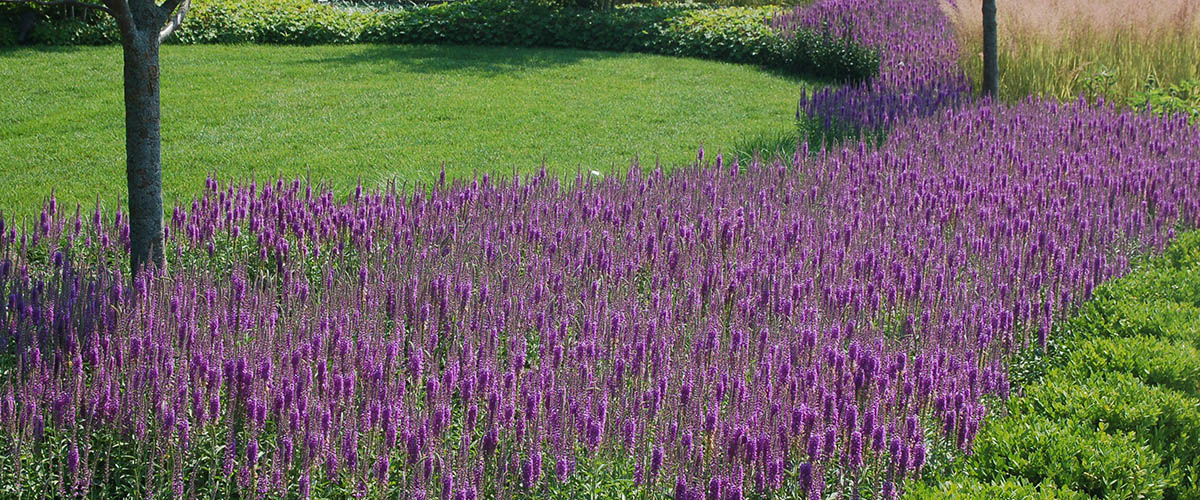
Evaluating Perennials for Chicagoland Gardens
Perennials in Focus is a plant evaluation program that examines new and underused plants for Chicagoland, the third largest metropolitan area in the country. A group of horticultural experts trials and evaluates plants at numerous locations across the region. Results help consumers, public gardens, growers, landscape designers, breeders, and other industry professionals make informed plant choices.
The Surprising Hardiness of Yucca in Chicagoland Gardens
Yucca may seem better suited to desert landscapes than to the cold, humid conditions of northern Illinois. Its rigid, sword-shaped leaves and bold architectural form suggest heat, drought, and sandy soil. Yet several yucca species can persist through Chicagoland winters and return reliably when they receive the right combination of sunlight, drainage, and space.
The best-known garden yucca, Adam’s needle (Yucca filamentosa), is a hardy perennial for much of the region. It forms an evergreen rosette, tolerates summer dryness, and produces a dramatic flower stalk in early to midsummer. Some selections also offer white filaments along the leaf margins, creating year-round texture even when other perennials have gone dormant.
Regional plant evaluation is especially valuable for understanding how these plants perform beyond a catalog description. Through its long-running history, Perennials in Focus has emphasized repeated observation across gardens and seasons, giving gardeners a more practical basis for plant selection in the Chicago area.
Why Yucca Can Succeed Here
Yucca’s hardiness comes from several physical adaptations. Its narrow leaves have a waxy surface that limits moisture loss, while the thick, fibrous foliage withstands wind, sun, and periods of drought. The plant also stores energy in a substantial crown and root system, allowing it to resume growth after winter damage to individual leaves.
Chicagoland’s summer conditions often suit yucca well. Hot sun and occasional dry spells are rarely a problem for an established plant. In fact, excessive irrigation can create more trouble than summer heat. Yucca generally declines when its crown remains wet for long periods, especially in heavy clay or areas where melting snow collects.
Winter cold is only part of the regional test. A plant may tolerate low temperatures yet fail in a poorly drained site. Freeze-thaw cycles, saturated soil, heavy snow cover, and late spring moisture can all affect survival. This explains why a yucca planted in a raised, gravelly bed may thrive while another in compacted lawn soil gradually disappears.
Choosing The Right Species
Yucca filamentosa is the most dependable starting point for Chicagoland gardens. It is commonly listed as hardy through USDA Zones 5 to 10, although actual performance depends on exposure and drainage. Mature plants typically spread about two to three feet, with flower stalks rising several feet above the foliage.
Yucca flaccida is closely related and often sold under names that overlap with Y. filamentosa. It may have somewhat softer, more flexible leaves and is available in several variegated forms. Cultivars with gold or cream markings can brighten a sunny border, though variegated plants sometimes grow more slowly than the species.
Less familiar yucca species deserve greater caution. Some are less reliable in wet Midwestern winters, while others may be marginal except in protected locations. Gardeners should distinguish cold hardiness from overall garden performance: a plant can survive a temperature minimum but still suffer repeated crown loss, leaf spotting, or poor flowering because of site conditions.
Site Conditions Matter Most
Full sun is essential for strong growth and flowering. Aim for at least six hours of direct sunlight, with additional afternoon exposure if possible. Yucca planted beneath dense trees or beside tall buildings may remain alive but produce fewer flowers and looser, less attractive foliage.
Drainage should be the primary consideration. Sandy or gravelly soil is ideal, but heavy clay can be improved by creating a raised planting area rather than simply mixing a small amount of sand into the existing soil. A modest berm, rock garden, or sloped bed helps rain and snowmelt move away from the crown.
Avoid locations near downspouts, irrigation overspray, and low spots that stay wet in spring. Mulch should be kept away from the center of the plant. A thick layer of organic mulch can hold moisture against the crown and encourage rot, especially during cool weather.
Flowers, Foliage, And Seasonal Character
Yucca’s foliage provides structure throughout the year. The rosette remains visible during winter, although leaves may bend, discolor, or develop ragged tips after exposure to snow and ice. These cosmetic effects do not necessarily indicate serious injury. Damaged leaves can be removed in spring once new growth begins.
Flowering is one of the plant’s most memorable features. Tall stalks emerge from the center of mature rosettes, carrying clusters of creamy white, bell-shaped flowers. Bloom time generally falls in early or midsummer, depending on spring temperatures and the plant’s age. Strong sunlight and limited competition often improve flowering.
After blooming, the spent stalk can be cut back to the base. Some plants eventually produce offsets around the original rosette, creating a colony. This spreading habit is useful in a dry border or foundation planting, though it may require occasional division when the clump becomes crowded.
Comparing Yucca With Common Border Choices
Yucca fills a different role from many familiar Chicagoland perennials. It contributes evergreen or semi-evergreen form, strong drought tolerance, and a distinctive vertical flower display. The comparison below focuses on broad garden behavior rather than exact cultivar performance.
| Plant | Winter Interest | Moisture Preference | Sun Requirement | Typical Garden Role |
|---|---|---|---|---|
| Yucca filamentosa | Strong, evergreen rosette | Dry to average, sharply drained | Full sun | Architectural accent or xeric border |
| Daylily | Low to moderate, foliage may flatten | Average moisture | Full sun to part shade | Mass planting and summer color |
| Sedum | Moderate, upright stems persist | Dry to average | Full sun | Pollinator border and late-season texture |
| Bearded iris | Moderate, fans remain partly visible | Average but well drained | Full sun | Spring display and structured edging |
| Ornamental grass | Moderate to strong, depending on species | Average to dry | Full sun | Movement, screening, and winter form |
This contrast also highlights why yucca should not be treated like a moisture-loving perennial. It may pair well with sedum, catmint, lavender, prairie plants, and other drought-tolerant companions. It is less compatible with plants that require frequent watering or rich, consistently damp soil.
Managing Winter And Spring Damage
There is rarely a need to wrap an established yucca for winter in a suitable site. Protective coverings can trap moisture, abrade leaves, and create a sheltered environment for rot. In exposed gardens, a temporary windbreak may help newly planted specimens, but improving drainage is usually more important than adding winter protection.
Planting time affects establishment. Early fall planting can work if roots have several weeks to settle before the ground freezes, but spring is often safer for marginal sites or small divisions. Water new plants thoroughly during the first growing season, then allow the soil to dry between irrigations.
In spring, remove dead leaves and inspect the crown for soft or discolored tissue. Healthy growth should feel firm and show signs of new leaves emerging from the center. If only the outer foliage is damaged, the plant may recover fully. Avoid cutting into the crown unless rot is clearly present.
Recommendations For A Reliable Planting
- Choose a full-sun site with sharply drained soil and no standing water.
- Plant the crown at the same depth as it was growing in its container.
- Use gravel, a raised bed, or a gentle slope to improve drainage in clay soil.
- Water regularly during establishment, then reduce irrigation once the plant is rooted.
- Combine yucca with other drought-tolerant perennials that will not crowd its rosette.
Yucca’s success in Chicagoland is a reminder that regional adaptation is more complex than a plant’s visual appearance. A desert-like silhouette does not automatically signal winter tenderness, and a cold-hardy label does not guarantee success in every garden. Matching the plant to a dry, sunny microclimate is the deciding step.
Use regional trial information, observe how established plants respond through several seasons, and select yucca for sites where its drainage needs can be met. With that foundation, this bold perennial can bring dependable foliage, striking flowers, and year-round structure to a Chicagoland landscape.
In the Garden
Evaluator gardens are located across the Chicagoland area, representing a range of growing conditions. Visit our retail and wholesale partners to find trialled perennials for your own garden.
Retail & Wholesale: Hinsdale Nurseries (Willowbrook, IL), Mariani Nurseries (Kenosha, WI & Garden Prairie, IL), Northwind Perennials (Burlington, WI), The Growing Place (Aurora, IL).
Wholesale Only: Hinsdale Nurseries (Plano, IL), Intrinsic Perennial Gardens (Hebron, IL).
Our Evaluation Program
The 2017–2020 evaluation cycle included Agastache 'Blue Boa', Allium senescens 'Blue Eddy', Amsonia ciliata var. filifolia 'Georgia Pancake', Astilbe 'Chocolate Shogun', Boltonia astroides 'James Crocket', Brunnera 'Alexander's Great', and Geranium cinereum 'Jolly Jewel Purple'. Completed evaluations include Amsonia 'Blue Ice' (2004–07).
On April 10, 2020, the program published snapshot profiles for Vernonia lettermanii 'Iron Butterfly', Stokesia laevis 'Elf', Stachys officinalis 'Pink Cotton Candy', Lobelia 'Monet Moment', Helleborus 'Winter Thrillers', Geum 'Mai Tai', Geranium soboliferum 'Butterfly Kisses', Gentiana x intermedia 'True Blue', Eurybia divaricata, Asparagus 'Purple Passion', and Agastache 'Bolero'.
Browse the full collection of snapshots organized alphabetically — from A–D, E–H, I–Q, and R–Z — to find detailed performance data on perennials trialled across Chicagoland.