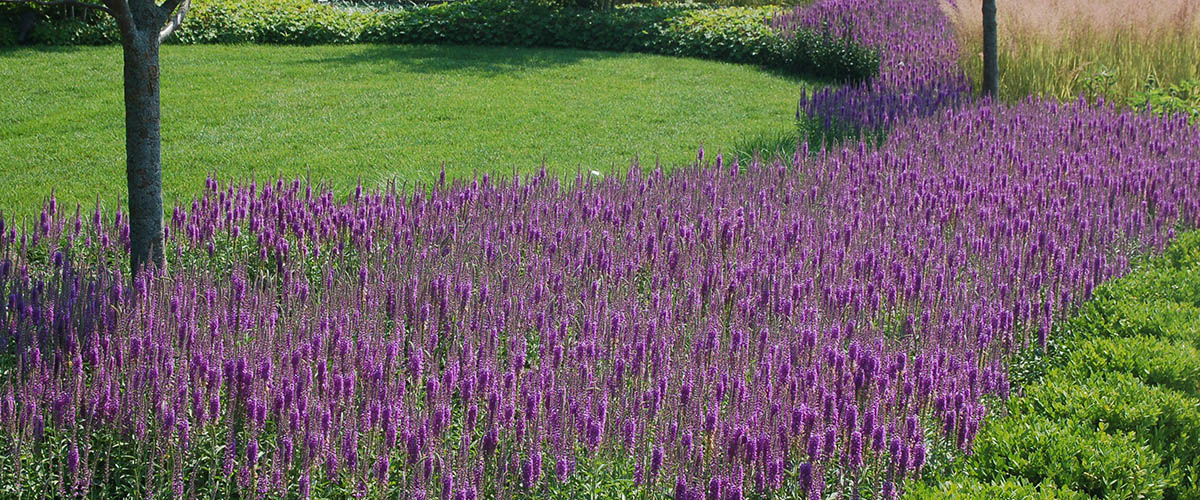
Evaluating Perennials for Chicagoland Gardens
Perennials in Focus is a plant evaluation program that examines new and underused plants for Chicagoland, the third largest metropolitan area in the country. A group of horticultural experts trials and evaluates plants at numerous locations across the region. Results help consumers, public gardens, growers, landscape designers, breeders, and other industry professionals make informed plant choices.
A Shade Garden Bloom Calendar for Chicagoland
Shade gardens in the Chicagoland region can offer flowers from the first mild days of April through the final weeks of October. The display changes gradually: hellebores and lungwort open the season, woodland perennials take over in May, and late-blooming anemones, toad lilies, and native asters carry color into fall.
This extended sequence depends on more than bloom dates. Moisture, soil, winter exposure, tree-root competition, and the amount of filtered light all influence how quickly plants emerge and how long they flower. A perennial that blooms in full shade at one trial garden may perform earlier or more heavily in a brighter site.
Regional evaluation is especially useful because national plant descriptions often provide broad bloom windows. Observations from multiple Chicagoland gardens reveal which plants maintain attractive foliage, tolerate local winters, and overlap effectively with neighboring species.
Reading the seasonal rhythm
A successful shade border usually relies on overlapping bloom periods rather than a single peak. Early flowers may last only a few weeks, yet they create a visual bridge to the larger flush of late spring. Foliage then becomes increasingly important as flowers fade, giving the planting structure during the middle of summer.
Filtered light beneath deciduous trees creates a distinctive opportunity. In April and early May, bare branches allow more sunlight to reach the ground, so woodland bulbs and early perennials can bloom before the canopy closes. By June, the same area may become considerably darker and drier, favoring plants with strong shade tolerance.
Bloom time also shifts with weather. A warm spring can bring several plants into flower together, while a cool season may stretch the sequence. Gardeners should treat monthly ranges as useful planning guides rather than fixed deadlines.
April and May bring the first layers of color
Hellebores are among the most dependable early performers, often flowering from late March into April. Their nodding blooms persist through cool weather, and their evergreen or semi-evergreen foliage gives the garden substance before other perennials emerge. Colors range from white and green to rose, purple, and near-black shades.
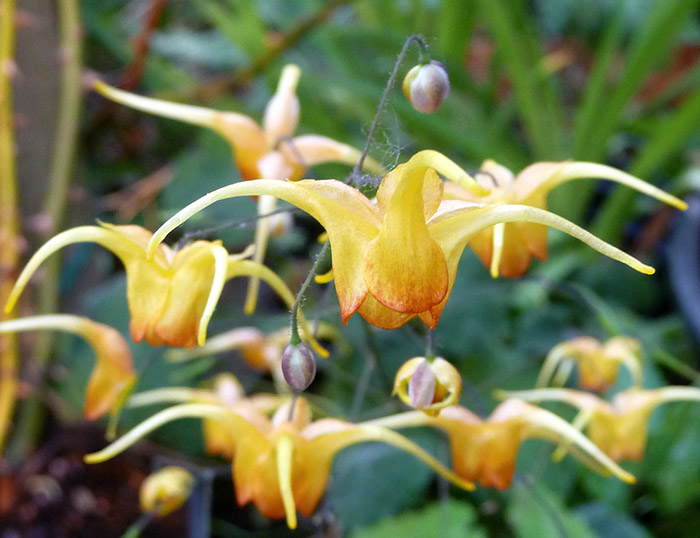
Lungwort, or Pulmonaria, follows closely with clusters of pink, blue, or violet flowers. Its spotted leaves remain valuable after flowering, especially in a garden viewed from paths or windows. Epimedium adds another graceful early display, with small flowers held above heart-shaped foliage. Many selections handle dry shade once established.
May brings a stronger woodland character. Columbine, foamflower, Jacob’s ladder, brunnera, and Solomon’s seal can overlap to create varied flower shapes and heights. Woodland phlox offers soft masses of color in suitable sites, while native sedges and emerging ferns fill spaces between flowering plants. This is also an important month for observing plant habit: some varieties stay compact, while others spread quickly through rhizomes or self-sowing.
June and July create the main display
By June, the shade garden usually shifts from delicate spring accents to fuller, more substantial plantings. Astilbe produces upright plumes in white, pink, red, or lavender, with bloom times that can extend into July depending on the cultivar. Rodgersia, goat’s beard, and certain ligularias contribute bold foliage and architectural scale in consistently moist soil.
Coral bells are valued for foliage color as much as for their slender flower spikes. Green, bronze, silver, caramel, and purple leaves can keep a border interesting when nearby plants are between bloom cycles. Foamflower and hardy geraniums may continue flowering, helping connect late spring plants with summer selections.
This period is also useful for supporting pollinators. Flowering perennials such as astilbe, mountain mint in brighter shade, bee balm in part shade, and native woodland plants can provide nectar for bees, butterflies, and other insects. Gardeners creating habitat near vegetables can draw on these beneficial insect plants when choosing companions for a productive garden.
| Season | Reliable shade performers | Main ornamental contribution | Site notes |
|---|---|---|---|
| April | Hellebore, lungwort, epimedium | Early flowers and fresh foliage | Good beneath deciduous trees before leaf-out |
| May | Columbine, brunnera, foamflower, woodland phlox | Woodland color and varied textures | Moist, well-drained soil supports stronger growth |
| June | Astilbe, coral bells, hardy geranium | Plumes, flower spikes, and colorful leaves | Water is important as tree competition increases |
| July | Ligularia, hosta, goatsbeard, bee balm in part shade | Bold foliage and midseason flowers | Avoid drought-prone locations for moisture lovers |
| August | Turtlehead, Japanese forest grass, late astilbe | Soft texture and late-summer accents | Part shade may be preferable to dense shade |
| September–October | Toad lily, anemone, monkshood, woodland aster | Long-lasting late color | Shelter helps extend flowering during cool weather |
Late summer depends on foliage and texture
August can be a transitional month in deep shade. Some spring plants have finished, while the strongest autumn bloomers are still developing buds. This is when foliage, seedheads, and plant form prevent the garden from looking empty. Hostas, ferns, Japanese forest grass, brunnera, and large-leaved ligularias provide dependable visual mass.
Turtlehead, or Chelone, is a valuable late-summer perennial for damp shade. Its snapdragon-like flowers often begin in August and continue into September. Toad lilies generally wait until late summer or early fall, producing intricate orchid-like flowers along arching stems. Their unusual markings reward close viewing in paths, courtyards, and sheltered borders.
Moisture management is critical during this part of the season. A plant listed for shade may still struggle beneath mature maples or oaks if the soil is dry and densely rooted. Compost, organic mulch, and supplemental watering during prolonged heat can improve establishment, though mulch should remain a few inches away from plant crowns.
September and October extend the garden’s value
Fall color in shade is often subtler than the bright display of a sunny perennial border, but it can be remarkably persistent. Japanese anemones produce open flowers in white, pink, or rose from late summer into autumn. They prefer even moisture and may take a few seasons to reach their mature height.
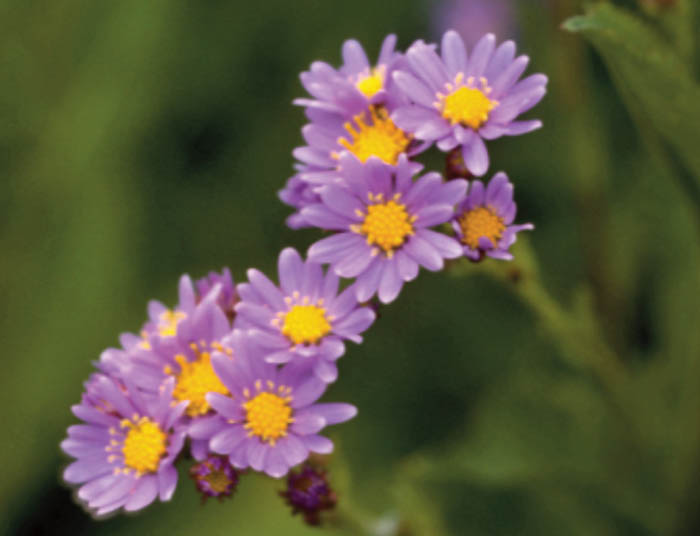
Toad lilies continue into October in protected locations, while monkshood offers deep blue or violet hooded flowers in cooler weather. Woodland asters and certain native goldenrods bring late nectar sources and can perform well in brighter woodland edges or dappled borders. Actaea, formerly grouped with Cimicifuga, contributes tall flower spikes with fragrance and dramatic foliage.
The final weeks also reveal which plants have strong garden presence after bloom. Seedheads, upright stems, evergreen leaves, and warm autumn foliage can carry the planting toward frost. Leaving some stems standing provides winter structure and shelter for small wildlife, while selective cutting keeps paths and entrances tidy.
Build a sequence that fits the site
Start by recording the actual conditions in each planting area. Note whether the site receives morning sun, filtered midday light, or dense shade beneath evergreen trees. Track soil moisture during July and August, since many shade plants fail from drought rather than insufficient light.
Choose plants from several bloom windows and repeat reliable performers in groups. A single hellebore may be attractive, but a drift of hellebores creates stronger early impact. Combine different heights and textures so that fading flowers are concealed by emerging foliage rather than left exposed.
For a practical planting strategy:
- Place hellebores, lungwort, and epimedium near paths where early flowers can be seen.
- Use columbine, foamflower, and woodland phlox as a May transition layer.
- Add astilbe, coral bells, and hostas for June and July volume.
- Reserve moist, protected spaces for turtlehead, ligularia, and late anemones.
- Include toad lilies, asters, or monkshood where October flowers will remain visible.
This sequence can also support larger landscape changes. Gardeners replacing high-maintenance turf in low-light areas may find useful design direction in these lawn replacement ideas, especially when matching plants to moisture and maintenance conditions.
Perennials in Focus trial observations can help refine these choices by showing how selected plants behave across multiple gardens and seasons. Use bloom timing, mature spread, flower color, and foliage quality together when planning a Chicagoland shade garden, then follow the sequence from April through October as it develops in your own landscape. Explore the regional evaluations and choose a few complementary performers to begin building a longer, more reliable season of shade-garden color.
In the Garden
Evaluator gardens are located across the Chicagoland area, representing a range of growing conditions. Visit our retail and wholesale partners to find trialled perennials for your own garden.
Retail & Wholesale: Hinsdale Nurseries (Willowbrook, IL), Mariani Nurseries (Kenosha, WI & Garden Prairie, IL), Northwind Perennials (Burlington, WI), The Growing Place (Aurora, IL).
Wholesale Only: Hinsdale Nurseries (Plano, IL), Intrinsic Perennial Gardens (Hebron, IL).
Our Evaluation Program
The 2017–2020 evaluation cycle included Agastache 'Blue Boa', Allium senescens 'Blue Eddy', Amsonia ciliata var. filifolia 'Georgia Pancake', Astilbe 'Chocolate Shogun', Boltonia astroides 'James Crocket', Brunnera 'Alexander's Great', and Geranium cinereum 'Jolly Jewel Purple'. Completed evaluations include Amsonia 'Blue Ice' (2004–07).
On April 10, 2020, the program published snapshot profiles for Vernonia lettermanii 'Iron Butterfly', Stokesia laevis 'Elf', Stachys officinalis 'Pink Cotton Candy', Lobelia 'Monet Moment', Helleborus 'Winter Thrillers', Geum 'Mai Tai', Geranium soboliferum 'Butterfly Kisses', Gentiana x intermedia 'True Blue', Eurybia divaricata, Asparagus 'Purple Passion', and Agastache 'Bolero'.
Browse the full collection of snapshots organized alphabetically — from A–D, E–H, I–Q, and R–Z — to find detailed performance data on perennials trialled across Chicagoland.