Evaluating Perennials for Chicagoland Gardens
Perennials in Focus is a plant evaluation program that examines new and underused plants for Chicagoland, the third largest metropolitan area in the country. A group of horticultural experts trials and evaluates plants at numerous locations across the region. Results help consumers, public gardens, growers, landscape designers, breeders, and other industry professionals make informed plant choices.
Testing Agastache Rupestris for Winter Moisture Tolerance
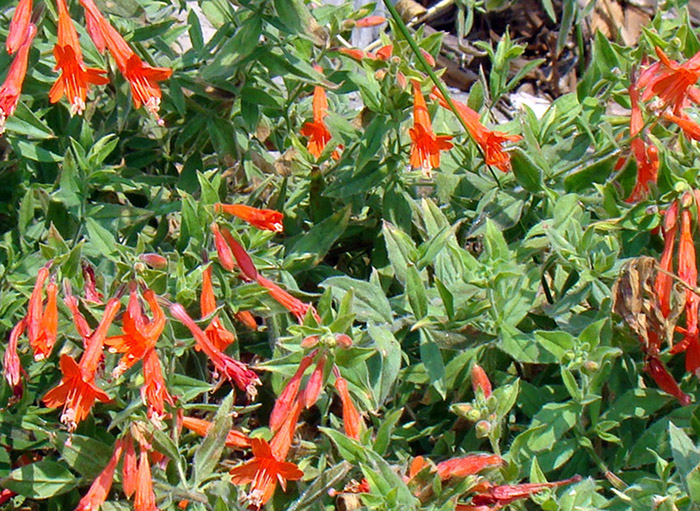
Agastache rupestris, commonly called sunset hyssop or licorice mint, is valued for its airy spikes of orange, coral, and rose flowers, aromatic foliage, and strong appeal to bees and hummingbirds. It is also a plant adapted to dry, lean conditions, which makes its performance in snowy Midwestern gardens especially worth examining.
In the Chicagoland region, winter survival depends on more than minimum temperature. Heavy snow can insulate crowns from extreme cold, yet melting snow and frozen soil may leave the root zone saturated for weeks. Repeated freezing and thawing can add another layer of stress, particularly where clay soil, compacted beds, or poor drainage prevent water from moving away.
A regional trial can separate true cold hardiness from tolerance of prolonged winter wetness. By observing plants across several gardens and seasons, horticultural professionals can identify whether losses result from moisture, exposure, crown damage, or ordinary variation among plants.
Why winter moisture matters
Sunset hyssop typically performs best in full sun and sharply drained soil. Its native and cultivated forms are associated with open, dry habitats, so the crown and roots may be poorly equipped for oxygen-deprived conditions. When soil remains saturated beneath snow, roots can lose access to oxygen, and damaged crown tissue may become vulnerable to fungal and bacterial decay.
Snow cover itself is not necessarily harmful. A consistent layer can buffer temperature swings and protect dormant stems. The greater concern is the transition from frozen to saturated conditions: snowmelt enters soil that is still cold, drainage is slow, and the crown may remain wet while the plant is unable to resume active growth.
Building a useful regional trial
A meaningful evaluation should include multiple sites rather than one highly managed garden. Test locations might include a sandy border, amended loam, heavy clay, a raised bed, and a low area where meltwater tends to collect. Recording soil texture, slope, mulch depth, exposure, and nearby structures will help explain why plants survive in one setting and fail in another.
Plants should be installed during the growing season so they have time to establish a substantial root system before winter. Trial managers can use several plants per site and place them in comparable light conditions. Tracking plant source, container size, planting date, and initial crown diameter reduces the chance that poor establishment will be mistaken for winter moisture injury.
What to record after snowmelt
The first inspection should occur as soon as the site is accessible, before damaged stems are cut back. Observers can note whether crowns are firm or soft, whether basal tissue is discolored, and whether new shoots emerge evenly from the center. A plant with dead top growth but healthy basal buds may still recover, while a collapsed crown usually indicates more serious injury.
Useful measurements include survival percentage, date of first new growth, number of emerging shoots, final height, spread, and flowering performance. Notes should distinguish winter damage from rabbit browsing, vole activity, late spring frost, and mechanical injury caused by snow load. Photographs taken from the same angle can make comparisons more reliable across years.
| Observation | Possible interpretation | Follow-up |
|---|---|---|
| Firm crown with delayed shoots | Dormancy or slow spring warming | Recheck after two to three weeks |
| Soft, darkened crown tissue | Winter rot associated with excess moisture | Compare with drainage and mulch depth |
| Uneven death on the downhill side | Water movement or pooling | Map bed slope and improve runoff |
| Green basal buds with dead stems | Top kill rather than crown loss | Prune only after growth resumes |
| Healthy foliage but weak flowering | Survival with reduced vigor | Review establishment, fertility, and summer moisture |
| Repeated loss in one bed | Site-related stress | Test a better-drained location |
Reading the effects of snow and thaw
Snow depth should be recorded along with the number of major thaw events. A deep, stable snowpack may produce better survival than a series of shallow snowfalls followed by warm spells. During a thaw, water can collect around the crown, then freeze again at night. This cycle may damage tissues mechanically and create small wounds where decay begins.
The timing of melt is also important. Early snowmelt followed by prolonged cold may leave crowns exposed to wind and rapid temperature changes. Late melt may keep soil wet well into spring, delaying root activity and shoot emergence. Comparing these patterns with local weather records can reveal whether a failed plant experienced unusual conditions or a recurring site problem.
Distinguishing genetics from site conditions
Different seed strains, selections, and nursery-propagated clones may vary in vigor, stem structure, and root development. A plant with a larger crown going into winter may have a better chance of surviving than a smaller plant, even when both carry the same name. For that reason, evaluations should compare plants of similar age and size whenever possible.
Site management can be just as influential as genetics. A heavy clay bed may become suitable after grading, incorporation of organic matter, or installation of a raised planting zone, while an overwatered garden may continue to produce losses regardless of cultivar. Gardeners reviewing regional garden notes should look for repeated patterns across locations rather than relying on a single survival percentage.
Practical recommendations for trial gardens
The most useful planting advice should emerge from several winters of observation. Still, current knowledge of sunset hyssop supports a cautious approach in snow-prone areas, especially where spring drainage is slow. These measures can reduce confounding moisture stress while preserving the plant’s preferred growing conditions:
- Plant in full sun on a slight mound, slope, or raised bed rather than in a winter-wet depression.
- Use well-drained soil and avoid heavy, water-retentive amendments placed directly around the crown.
- Space plants to improve air movement and allow foliage to dry quickly after snowmelt.
- Avoid thick, moisture-holding mulch over the crown; use a light, open-textured layer only where needed.
- Delay spring cleanup until new growth shows which stems and crowns are still alive.
Water management during the growing season deserves attention as well. Newly planted specimens need regular moisture while roots establish, but mature plants should not be kept constantly wet. Excess irrigation in late summer and autumn can send plants into winter with soft, poorly hardened growth and a saturated root zone.
Applying the findings in Chicagoland landscapes
For home gardeners and landscape professionals, winter moisture tolerance should be treated as a site-specific characteristic rather than a simple hardiness label. A plant may survive severe cold in a well-drained prairie border and fail in a flat clay bed only a few miles away. Trial results are most valuable when they connect survival with soil, exposure, snow behavior, and spring drainage.
A successful evaluation can also guide plant selection beyond agastache. Similar records may help compare other drought-adapted perennials that are vulnerable to winter wet, including certain salvias, penstemons, and Mediterranean herbs. Publishing those observations gives growers, retailers, public gardens, and homeowners a clearer basis for recommending plants that fit local conditions.
Continue documenting Agastache rupestris through additional winters, share consistent observations across Chicagoland trial sites, and use the evidence to place sunset hyssop where excellent drainage can match its dryland heritage.
In the Garden
Evaluator gardens are located across the Chicagoland area, representing a range of growing conditions. Visit our retail and wholesale partners to find trialled perennials for your own garden.
Retail & Wholesale: Hinsdale Nurseries (Willowbrook, IL), Mariani Nurseries (Kenosha, WI & Garden Prairie, IL), Northwind Perennials (Burlington, WI), The Growing Place (Aurora, IL).
Wholesale Only: Hinsdale Nurseries (Plano, IL), Intrinsic Perennial Gardens (Hebron, IL).
Our Evaluation Program
The 2017–2020 evaluation cycle included Agastache 'Blue Boa', Allium senescens 'Blue Eddy', Amsonia ciliata var. filifolia 'Georgia Pancake', Astilbe 'Chocolate Shogun', Boltonia astroides 'James Crocket', Brunnera 'Alexander's Great', and Geranium cinereum 'Jolly Jewel Purple'. Completed evaluations include Amsonia 'Blue Ice' (2004–07).
On April 10, 2020, the program published snapshot profiles for Vernonia lettermanii 'Iron Butterfly', Stokesia laevis 'Elf', Stachys officinalis 'Pink Cotton Candy', Lobelia 'Monet Moment', Helleborus 'Winter Thrillers', Geum 'Mai Tai', Geranium soboliferum 'Butterfly Kisses', Gentiana x intermedia 'True Blue', Eurybia divaricata, Asparagus 'Purple Passion', and Agastache 'Bolero'.
Browse the full collection of snapshots organized alphabetically — from A–D, E–H, I–Q, and R–Z — to find detailed performance data on perennials trialled across Chicagoland.