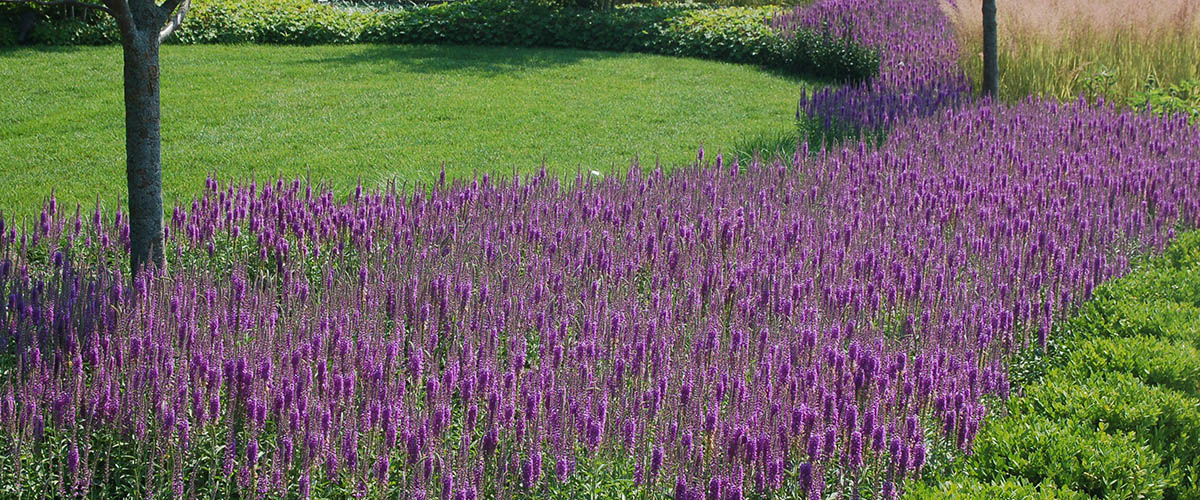
Evaluating Perennials for Chicagoland Gardens
Perennials in Focus is a plant evaluation program that examines new and underused plants for Chicagoland, the third largest metropolitan area in the country. A group of horticultural experts trials and evaluates plants at numerous locations across the region. Results help consumers, public gardens, growers, landscape designers, breeders, and other industry professionals make informed plant choices.
Testing perennial legumes as living mulch in vegetable beds
A living mulch is a low-growing plant maintained between, or occasionally beneath, food crops instead of relying entirely on bare soil and imported mulch. Perennial legumes are especially interesting because they can protect the soil surface, contribute nitrogen through symbiosis with rhizobia, and support pollinators while vegetables are being harvested. Their value, however, depends on whether they cooperate with the crop rather than compete with it.
For Australian gardeners and growers, the question needs to be tested locally. A clover that stays restrained in a cool Melbourne bed may grow aggressively after rain in Sydney, while a plant that survives Brisbane winters may struggle through a hot, dry Adelaide summer. Structured trials can reveal which species, mowing regimes and planting layouts are practical in real vegetable gardens.
Why test legumes beneath vegetables
Bare soil between rows is vulnerable to erosion, crusting, evaporation and weed germination. A low mat of clover or another suitable legume can soften rainfall, reduce soil temperature and provide habitat for predatory insects. In a market garden, it may also reduce the frequency of hoeing and the amount of organic mulch that must be transported and spread.
The nitrogen benefit should be treated as a potential contribution, not a free fertiliser supply. Legumes fix atmospheric nitrogen only when compatible rhizobia are present and the plants have adequate moisture, phosphorus and other nutrients. Much of that nitrogen remains in the living plant until roots, prunings and fallen leaves decompose. A vigorous cover can therefore improve soil over time while still competing with lettuce, beans or tomatoes in the current season.
A useful evaluation framework can draw on the approach used by regional perennial trials, where plant performance is recorded across gardens and seasons rather than judged from a single attractive planting. For living mulch, observations should include establishment speed, winter survival, flowering period, spread, height, weed suppression and the ease of keeping the plant away from crop stems.
Choosing candidates for Australian beds
White clover is familiar, relatively soft underfoot and tolerant of regular mowing, making it a logical candidate for paths and wide inter-row spaces. Strawberry clover may cope better with wetter conditions, while some low-growing medics and native or regionally adapted legumes may suit drier sites. Subterranean clover is useful as a winter-growing cover in parts of southern Australia, though it is generally treated as an annual or self-renewing species rather than a permanent ground layer.
Lucerne, taller clovers and vigorous vetches can produce substantial biomass, but they are usually better suited to rotations, orchard alleys or cut-and-carry systems than tight vegetable beds. A trial should include only plants that can be mown, trimmed or pulled without damaging crop roots. Plants with prickles, persistent stems or rapid seed production deserve extra scrutiny around home gardens.
Seed availability matters as much as horticultural performance. Gardeners in Perth, Canberra and Hobart may find different cultivars through local nurseries, pasture suppliers or seed merchants. A candidate that performs well but is difficult to source in small quantities may have limited value for household growers, whereas a readily available species can be tested widely and compared more reliably.
Designing a fair living mulch trial
The clearest comparison uses replicated beds or marked plots with the same vegetable variety, planting date, irrigation and fertiliser treatment. Include a bare-soil control and, where possible, a conventional organic mulch control such as composted green waste or straw. Compare several living mulch arrangements: a full inter-row cover, narrow strips beside the crop, and a treatment planted after vegetables are established.
Record measurements at regular intervals rather than relying on impressions. Useful data include crop yield, marketable size, days to harvest, soil moisture, weed counts, mulch height and the percentage of ground covered. Note whether the legume climbs into the crop, shelters slugs, interferes with picking or becomes difficult to remove at the end of the season.
Timing will strongly influence results. Establishing a clover before transplanting tomatoes may give it too much of a head start, while sowing it after a leafy crop has formed may leave the soil exposed during its most vulnerable period. A mown strip around each vegetable row can create a practical buffer, and hand shears or a line trimmer can keep the cover from touching stems.
Managing competition, pests and regulation
Water competition is likely to be the main limitation in much of Australia. In a dry Sydney summer or during water restrictions in Melbourne, a living mulch may demand irrigation that would otherwise go to the crop. Trials should monitor soil moisture at several depths and record irrigation volume. In humid Brisbane conditions, dense foliage can also reduce air movement and increase concern about fungal disease around low-growing vegetables.
A living cover can harbour beneficial insects, but it may also shelter snails, slugs, earwigs or rodents. Check the mulch at dawn and after irrigation, and assess pest damage separately from weed suppression. Keep a vegetation-free ring around seedlings and avoid allowing flowering plants to obstruct access for harvesting or encourage excessive bee activity where workers are picking regularly.
Biosecurity and weed legislation must be considered before importing or distributing seed. Rules differ between states and territories, and a plant regarded as harmless in one district may be listed as noxious or invasive elsewhere. Growers should check the relevant state weed register, buy correctly identified seed and prevent unwanted spread beyond the trial area. Herbicides should be used only according to the product label and Australian Pesticides and Veterinary Medicines Authority requirements; a living mulch system is not a reason to improvise chemical applications.
Turning observations into useful recommendations
The most valuable result may be a management recipe rather than a single winning species. For example, a low clover could be recommended for paths, a narrow mown strip for tomato rows, and a winter legume for beds that are otherwise vacant. Recommendations should state the climate, soil type, irrigation level, crop and mowing frequency under which the result was obtained.
Records should also cover the second and third seasons. Some perennials establish slowly, then spread beyond their intended area; others appear successful in year one but fail after a hot summer. The program’s history of evaluation illustrates why repeated observation and shared results are more dependable than a one-season display.
| Candidate or treatment | Likely strength | Main risk | Useful Australian trial setting |
|---|---|---|---|
| Low white clover | Soft cover, easy mowing, broad availability | Water competition and spreading into crop rows | Irrigated southern beds and cool-season paths |
| Strawberry clover | Tolerance of wetter soils and regular cutting | Dense growth around seedlings | Moist sites near Melbourne, Hobart or Sydney |
| Subterranean clover | Winter cover and self-renewing seed | Dies back in heat; may not suit permanent mulch | Winter vegetable beds in southern regions |
| Narrow mown legume strips | Reduced competition near crop roots | More labour and exposed soil immediately beside rows | Small market gardens and demonstration beds |
| Bare-soil or straw control | Clear benchmark for yield and labour | Erosion, weeds or imported mulch costs | Every trial location |
A well-documented trial can help Australian gardeners choose living mulch with realistic expectations. Start with a small, contained bed, compare it with a familiar control, and measure both plant performance and labour. Share results with local growers, public gardens, retailers and horticultural networks so that successful combinations can be refined for each region. Begin with one legume, one vegetable and one season, then expand only when the evidence shows that the soil is protected without sacrificing a reliable harvest.
In the Garden
Evaluator gardens are located across the Chicagoland area, representing a range of growing conditions. Visit our retail and wholesale partners to find trialled perennials for your own garden.
Retail & Wholesale: Hinsdale Nurseries (Willowbrook, IL), Mariani Nurseries (Kenosha, WI & Garden Prairie, IL), Northwind Perennials (Burlington, WI), The Growing Place (Aurora, IL).
Wholesale Only: Hinsdale Nurseries (Plano, IL), Intrinsic Perennial Gardens (Hebron, IL).
Our Evaluation Program
The 2017–2020 evaluation cycle included Agastache 'Blue Boa', Allium senescens 'Blue Eddy', Amsonia ciliata var. filifolia 'Georgia Pancake', Astilbe 'Chocolate Shogun', Boltonia astroides 'James Crocket', Brunnera 'Alexander's Great', and Geranium cinereum 'Jolly Jewel Purple'. Completed evaluations include Amsonia 'Blue Ice' (2004–07).
On April 10, 2020, the program published snapshot profiles for Vernonia lettermanii 'Iron Butterfly', Stokesia laevis 'Elf', Stachys officinalis 'Pink Cotton Candy', Lobelia 'Monet Moment', Helleborus 'Winter Thrillers', Geum 'Mai Tai', Geranium soboliferum 'Butterfly Kisses', Gentiana x intermedia 'True Blue', Eurybia divaricata, Asparagus 'Purple Passion', and Agastache 'Bolero'.
Browse the full collection of snapshots organized alphabetically — from A–D, E–H, I–Q, and R–Z — to find detailed performance data on perennials trialled across Chicagoland.