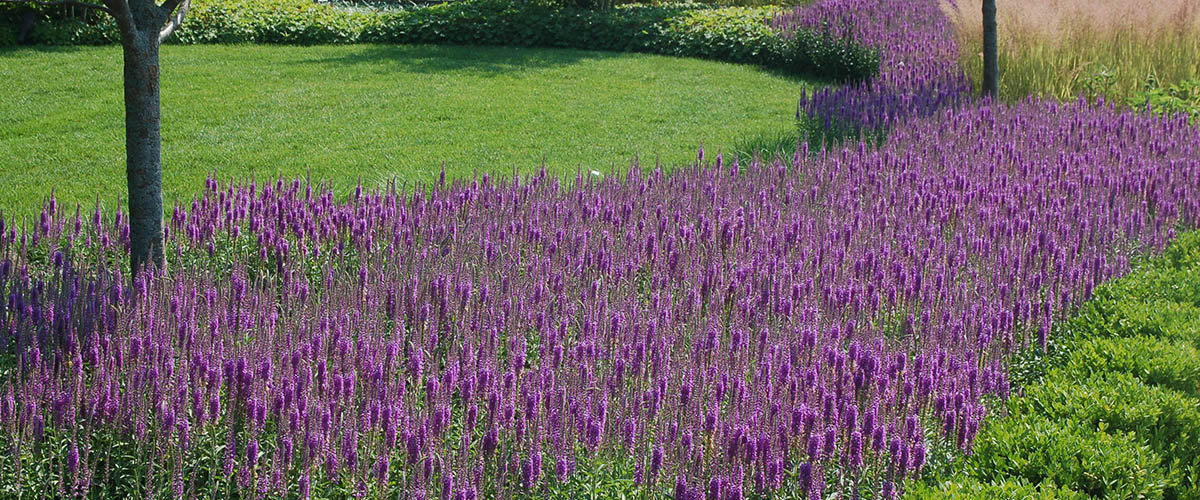
Evaluating Perennials for Chicagoland Gardens
Perennials in Focus is a plant evaluation program that examines new and underused plants for Chicagoland, the third largest metropolitan area in the country. A group of horticultural experts trials and evaluates plants at numerous locations across the region. Results help consumers, public gardens, growers, landscape designers, breeders, and other industry professionals make informed plant choices.
Testing Yarrow Salt Tolerance In Roadside Gardens
Testing the salt tolerance of Achillea millefolium along roadside gardens can reveal whether this familiar yarrow is a dependable choice for difficult urban edges. Road verges receive compacted traffic dust, splash from passing vehicles, irregular irrigation and heat reflected from asphalt. In colder climates, winter de-icing compounds add another source of soluble salts, making roadside conditions especially demanding.
Perennials in Focus evaluates plants across seasons and sites, with attention to flowering, height, spread and long-term garden performance. A Chicagoland trial offers useful evidence about exposure and recovery, while Australian gardeners should interpret the results through local conditions such as coastal wind, recycled water, summer drought and the comparatively limited use of road de-icing salt.
| Trial factor | What to record | Why it matters |
|---|---|---|
| Salt exposure | Soil electrical conductivity, irrigation source and splash frequency | Separates salt injury from drought or compaction |
| Plant appearance | Leaf scorch, yellowing, dieback and crown health | Shows early and lasting stress |
| Flowering | First bloom, peak display, flower colour and stem strength | Tests ornamental value under pressure |
| Growth habit | Height, spread, density and reseeding | Indicates suitability for verges and mass planting |
| Recovery | New growth after rainfall or flushing irrigation | Distinguishes temporary injury from poor tolerance |
Why Roadside Salinity Matters
Roadside salt reaches plants through spray, drifting dust and contaminated runoff. Sodium and chloride can damage leaf tissue directly, while salts in the root zone make it harder for roots to absorb water. A plant may appear drought-stressed even when the soil is damp because high salinity creates physiological drought.
Yarrow is a useful candidate for this kind of evaluation. It forms a fibrous root system, tolerates lean soils and commonly handles heat once established. Its finely divided foliage and flat flower clusters support a naturalistic appearance, and the species is available in white, pale pink, yellow and red-flowering forms. Tolerance should still be measured rather than assumed, since cultivars can respond differently.
In Australia, true winter salt application is most relevant around alpine roads and occasional cold-weather operations, rather than most suburban streets in Sydney, Brisbane or Perth. Coastal spray, saline groundwater and water from poorly managed irrigation systems can create similar stress. In Melbourne and Adelaide, hot summers, hard road surfaces and restricted watering may be more influential than de-icing salt.
Designing A Reliable Trial
A sound evaluation needs comparable plants, repeated sites and a clear untreated reference. Trial managers could plant yarrow beside a less exposed garden bed, then compare it with plots receiving measured saline irrigation or collected roadside runoff. Each treatment should contain several plants, with the same soil preparation, mulch depth and establishment watering.
Electrical conductivity testing is essential. A visual label such as “salty soil” does not indicate how much salt is present or which ions dominate. Soil samples taken at the start, mid-season and after major rainfall can show whether salts are accumulating or being flushed away. Recording sodium and chloride where laboratory testing is available gives a stronger explanation for injury patterns.
The assessment should continue through establishment, peak summer stress and the following spring. A plant that looks excellent for six weeks but loses its crown after repeated exposure is less valuable than one that flowers modestly and returns reliably. Photographs from fixed positions, weekly notes and consistent scoring make results easier for growers and home gardeners to compare.
Reading Plant Responses
Early symptoms of salt injury include brown leaf margins, grey-green foliage, curling and uneven growth. Flower stems may be shorter, flower heads smaller and lower leaves more likely to collapse. These symptoms can resemble drought, nutrient deficiency, herbicide drift or damage from insects, so the surrounding plants and recent weather should be examined before attributing every problem to salinity.
Root-zone injury often appears gradually. Plants may retain attractive flowers while their crowns weaken beneath the surface. After a heavy rain event or deliberate flushing with good-quality water, salt-sensitive plants may produce fresh growth. Persistent dieback, sparse regrowth and a shrinking clump point to a deeper problem.
Yarrow’s flowering period is another useful measure. A strong roadside selection should hold upright stems, maintain a dense clump and provide colour during the period when verges often look tired. Notes on late-season performance can complement the program’s regional flowering records; these late-summer flowering notes are particularly relevant when judging whether a plant earns space in a low-input landscape.
Adapting Findings For Australia
Australian users should separate salt tolerance from general toughness. A yarrow that performs well beside a salted Midwestern road may still struggle in Perth’s sandy soil without sufficient moisture, while a plant in coastal Wollongong may face salt-laden wind without any de-icing residue. Adelaide’s dry summers and irrigation restrictions can intensify salt concentration as water evaporates from the soil surface.
Water quality deserves careful attention. Bore water, recycled water and runoff from hard surfaces may contain salts that accumulate under frequent light irrigation. Gardeners should avoid shallow daily watering where possible, improve drainage before planting and use occasional deep flushing when local water supplies and restrictions permit. Mulch can reduce evaporation, but it should not be piled against the crown.
Local plant sales also shape practical choices. Australian nurseries and landscape contractors often favour waterwise perennials, native species and plants with value for bees and other beneficial insects. Yarrow can sit within that palette, though its spread, reseeding and local weed status should be checked before broad roadside use. Biosecurity and weed regulations vary between states and territories, so councils, state departments and nursery guidance should be consulted before propagating or distributing a vigorous form.
Managing Roadside Plantings
Preparation can reduce salt injury before plants are installed. Loosen compacted soil, incorporate suitable organic matter, create a free-draining profile and keep irrigation away from contaminated pavement runoff. A modestly raised planting strip can prevent salty water from pooling around crowns, while edging can limit direct splash from traffic.
Roadside maintenance should include inspection for litter, mower damage, herbicide drift and insect pressure. Correct diagnosis matters because unnecessary chemical treatment can worsen stress and affect pollinators. Where a site has recurring pest problems, gardeners can consult roadside pest advice alongside local council requirements and use only products registered and applied according to Australian label directions.
Mowing schedules also affect yarrow’s performance. Cutting too early may remove flower heads needed by insects and prevent useful observations about flowering duration. Leaving stems until seed has matured, then trimming selectively, allows the trial team to record persistence while maintaining a tidy verge. Any reseeding should be monitored, especially near natural areas.
Turning Results Into Planting Decisions
The strongest outcome is a practical recommendation rather than a single pass-or-fail label. Records can identify whether Achillea millefolium is suitable for lightly exposed garden edges, heavily splashed traffic islands, saline coastal verges or sites with poor irrigation water. They can also reveal which cultivars remain compact and floriferous under pressure.
Home gardeners should treat trial data as a guide, then match it to their own soil, water and exposure. A small pilot planting is sensible before committing to a long roadside border. Combining yarrow with grasses, low-growing groundcovers and other tested perennials can spread risk and create habitat without relying on one species.
For growers and retailers, the results can support clearer plant descriptions: mature height, expected spread, flowering window, salt exposure rating and recovery after drought or flushing. Landscape professionals can use those details to specify plants more accurately, while public gardens can demonstrate how maintenance and soil preparation influence performance.
Document local observations and compare them with regional trial findings before expanding a planting. Share flowering dates, damage symptoms, soil results and survival through the next season so that gardeners across Australia and the Chicagoland program can build a more useful picture of yarrow’s roadside potential.
In the Garden
Evaluator gardens are located across the Chicagoland area, representing a range of growing conditions. Visit our retail and wholesale partners to find trialled perennials for your own garden.
Retail & Wholesale: Hinsdale Nurseries (Willowbrook, IL), Mariani Nurseries (Kenosha, WI & Garden Prairie, IL), Northwind Perennials (Burlington, WI), The Growing Place (Aurora, IL).
Wholesale Only: Hinsdale Nurseries (Plano, IL), Intrinsic Perennial Gardens (Hebron, IL).
Our Evaluation Program
The 2017–2020 evaluation cycle included Agastache 'Blue Boa', Allium senescens 'Blue Eddy', Amsonia ciliata var. filifolia 'Georgia Pancake', Astilbe 'Chocolate Shogun', Boltonia astroides 'James Crocket', Brunnera 'Alexander's Great', and Geranium cinereum 'Jolly Jewel Purple'. Completed evaluations include Amsonia 'Blue Ice' (2004–07).
On April 10, 2020, the program published snapshot profiles for Vernonia lettermanii 'Iron Butterfly', Stokesia laevis 'Elf', Stachys officinalis 'Pink Cotton Candy', Lobelia 'Monet Moment', Helleborus 'Winter Thrillers', Geum 'Mai Tai', Geranium soboliferum 'Butterfly Kisses', Gentiana x intermedia 'True Blue', Eurybia divaricata, Asparagus 'Purple Passion', and Agastache 'Bolero'.
Browse the full collection of snapshots organized alphabetically — from A–D, E–H, I–Q, and R–Z — to find detailed performance data on perennials trialled across Chicagoland.