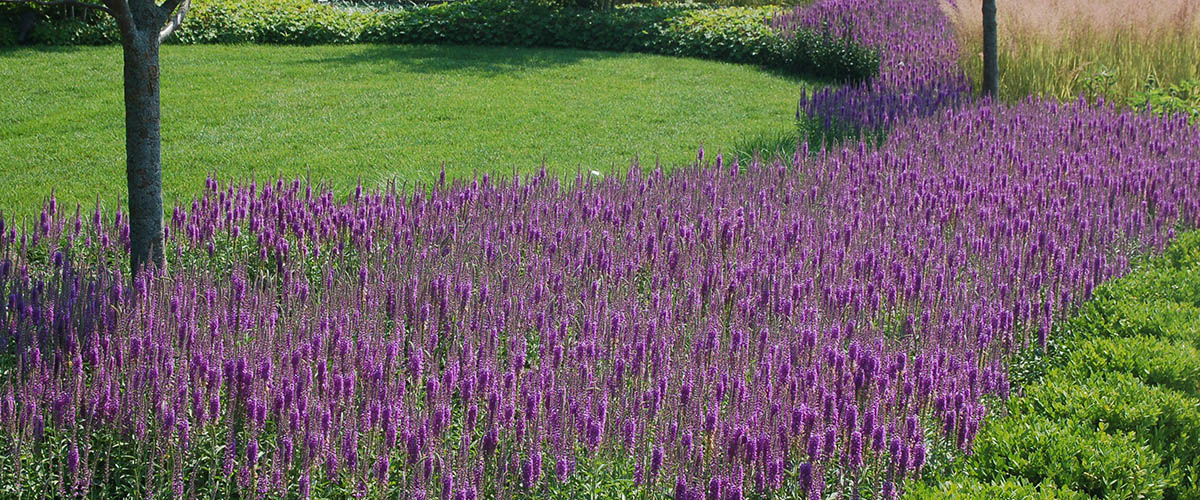
Evaluating Perennials for Chicagoland Gardens
Perennials in Focus is a plant evaluation program that examines new and underused plants for Chicagoland, the third largest metropolitan area in the country. A group of horticultural experts trials and evaluates plants at numerous locations across the region. Results help consumers, public gardens, growers, landscape designers, breeders, and other industry professionals make informed plant choices.
Testing Mulch Moisture for Chicagoland Perennials
Mulch affects far more than the appearance of a perennial bed. A suitable layer can slow evaporation, moderate soil temperature, reduce erosion, and protect developing roots from rapid changes in moisture. The material used, its depth, and its contact with the soil all influence how effectively it performs.
Testing the moisture retention in organic versus synthetic mulch for perennials requires more than checking whether the surface looks damp. Water may remain near the top of the soil while the deeper root zone becomes dry, or a mulch may hold moisture after rain but prevent air movement around the crown. Regional trials help separate these effects under real weather conditions.
Chicagoland provides a useful setting for this kind of comparison. Gardens experience hot summer periods, heavy rainfall, humid conditions, drought intervals, freeze-thaw cycles, and variable soils. Perennial plants must cope with all of them, so mulch performance should be assessed across several months and growing seasons rather than after one watering.
Why moisture management matters
Perennials generally benefit from consistent moisture, especially during establishment and periods of active growth. Repeated drying and rewetting can stress young roots, reduce flowering, and make plants more vulnerable to pests or disease. A mulch that slows moisture loss can extend the time between irrigation events and make rainfall more effective.
The ideal material does not simply retain the greatest possible amount of water. Roots also need oxygen, and saturated soil can create poor conditions for crowns and shallow-rooted plants. The most useful mulch balances water conservation with drainage, air exchange, and appropriate soil temperature.
Plant habit matters as well. Large, deeply rooted perennials may tolerate a brief dry period, while fine-rooted woodland plants can decline quickly when the upper soil dries. A trial should therefore include plants with different root systems and moisture preferences rather than relying on one representative species.
Building a fair regional trial
A reliable comparison begins with consistent planting conditions. Trial beds should use the same soil preparation, irrigation schedule, plant spacing, mulch depth, and exposure. Replicated plots are important because one location may contain a compacted patch, a low spot, or a section that receives extra runoff.
Organic materials might include shredded hardwood, composted leaves, pine bark, or straw. Synthetic treatments could include woven landscape fabric, plastic film, rubber mulch, or a fabric-and-mineral covering. These products differ significantly, so results should identify the material rather than treating all organic or synthetic mulches as interchangeable.
The Perennials in Focus program offers a valuable regional model because horticultural professionals can observe plant performance across multiple gardens and seasons. For a moisture study, those observations can be combined with soil measurements to connect mulch behavior with flowering, plant vigor, winter survival, and maintenance demands.
Measuring water below the surface
Surface appearance is an unreliable indicator of moisture retention. Organic mulch may look dry while the soil beneath it remains evenly moist. Plastic can shed rainfall toward the edges, and landscape fabric may allow water through while still changing evaporation rates. Measurements should focus on the root zone where plants actually draw water.
Useful methods include soil moisture probes at several depths, regular gravimetric samples, and irrigation records. Readings should be taken before and after rainfall, during dry intervals, and after supplemental watering. Recording air temperature, rainfall, humidity, and sunlight helps explain why the same mulch behaves differently from week to week.
| Trial factor | Organic mulch | Synthetic mulch |
|---|---|---|
| Common examples | Shredded wood, leaf mold, bark, straw | Plastic film, landscape fabric, rubber |
| Water behavior | Absorbs and gradually releases some rainfall | May shed, channel, or limit evaporation |
| Soil improvement | Adds organic matter as it decomposes | Usually provides little or no soil amendment |
| Typical durability | Requires periodic replenishment | Often lasts longer, depending on product |
| Main moisture concern | Can become hydrophobic when very dry or compacted | Can create runoff, heat buildup, or uneven wetting |
| Best measurement focus | Soil moisture at several depths | Infiltration, edge runoff, and root-zone moisture |
The most meaningful result is often the duration of usable moisture, not the highest reading immediately after rain. A mulch that keeps soil moderately moist for several days may serve perennials better than one that produces a short-lived spike followed by rapid drying.
What organic materials can reveal
Organic mulch often improves the physical condition of the soil as it breaks down. Shredded wood and leaf-based products can reduce evaporation while gradually contributing carbon and habitat for soil organisms. Their insulating effect may also reduce sharp temperature swings around perennial roots.
Performance depends heavily on particle size and placement. Fine material may compact and slow infiltration, while coarse chips can allow rain to pass quickly but leave larger air spaces. A layer that is too deep may stay wet around crowns, especially in poorly drained beds. Keeping mulch slightly away from stems helps reduce rot and pest shelter.
Organic mulch also changes over time. Decomposition can reduce its depth, and displaced material may expose soil near plant crowns. A strong trial should measure the original depth, settled depth, and moisture performance after several months. This shows whether a product remains effective under routine garden conditions rather than only when freshly applied.
How synthetic materials affect water
Synthetic mulches can reduce direct evaporation and may remain stable through heavy rain, wind, and seasonal maintenance. Landscape fabric covered with a thin layer of decorative material can provide a durable barrier against weeds while allowing some water and air movement. Its effectiveness depends on the weave, installation, soil contact, and condition of the fabric.
Plastic film can retain soil moisture efficiently under some conditions, but it may also concentrate runoff at planting holes or bed edges. Dark materials can raise soil temperatures during sunny weather, while reflective surfaces may produce a cooler root environment. Rubber mulch generally resists decomposition, though it does not replenish organic matter and may behave differently from breathable fabric.
Synthetic materials should therefore be tested for infiltration as well as evaporation control. A plot can appear successful if the soil beneath the center remains moist while plants at seams or openings receive too little water. Observers should record puddling, runoff, heat near the crown, and whether irrigation reaches the full root zone.
Connecting moisture data with plant performance
Moisture readings become more useful when paired with visible plant responses. Record emergence, stem strength, leaf color, flower number, bloom duration, lodging, and signs of drought stress. These observations can reveal whether a mulch creates genuinely favorable conditions or simply keeps soil wet without improving growth.
Different perennials may favor different moisture patterns. A moisture-loving species may perform well under a mulch that retains water after frequent rain, while a drought-tolerant prairie plant may show reduced vigor if the same treatment limits drainage. Trial reports should identify these differences instead of naming one universal winner.
Maintenance is another part of the evaluation. Note how often each treatment requires watering, weeding, replenishment, repositioning, or repair. A mulch with slightly lower moisture retention may still be the better choice if it supports healthy plants, integrates with the soil, and requires less long-term intervention.
Practical choices for perennial beds
Gardeners can use trial results most effectively by matching mulch behavior to site conditions. A sunny border on sandy soil may benefit from a moisture-conserving organic layer, while a heavy clay bed may need a thinner, more breathable covering. Shade, slope, irrigation method, and plant density should all influence the decision.
The following practices support more consistent moisture management:
- Apply organic mulch in an even layer, generally about two to three inches deep, while keeping it away from crowns and stems.
- Check soil moisture below the mulch before irrigating instead of relying on the surface appearance.
- Use landscape fabric selectively, ensuring seams overlap properly and water can reach the entire root zone.
- Replenish decomposed organic mulch before soil becomes exposed, but avoid repeatedly burying perennial crowns.
- Compare plant health, drainage, and maintenance time alongside moisture readings.
Regional evidence is especially useful when selecting plants and materials for unfamiliar conditions. Findings from multi-site perennial trials can help growers, landscape professionals, public gardens, and homeowners choose combinations that remain reliable through changing weather rather than performing well only during a single season.
A careful comparison of organic and synthetic mulch gives gardeners a clearer view of water conservation, soil health, durability, and plant response. Apply these evaluation principles in local beds, record moisture and performance through the season, and use the published regional findings from Perennials in Focus to make more confident perennial and mulch selections.
In the Garden
Evaluator gardens are located across the Chicagoland area, representing a range of growing conditions. Visit our retail and wholesale partners to find trialled perennials for your own garden.
Retail & Wholesale: Hinsdale Nurseries (Willowbrook, IL), Mariani Nurseries (Kenosha, WI & Garden Prairie, IL), Northwind Perennials (Burlington, WI), The Growing Place (Aurora, IL).
Wholesale Only: Hinsdale Nurseries (Plano, IL), Intrinsic Perennial Gardens (Hebron, IL).
Our Evaluation Program
The 2017–2020 evaluation cycle included Agastache 'Blue Boa', Allium senescens 'Blue Eddy', Amsonia ciliata var. filifolia 'Georgia Pancake', Astilbe 'Chocolate Shogun', Boltonia astroides 'James Crocket', Brunnera 'Alexander's Great', and Geranium cinereum 'Jolly Jewel Purple'. Completed evaluations include Amsonia 'Blue Ice' (2004–07).
On April 10, 2020, the program published snapshot profiles for Vernonia lettermanii 'Iron Butterfly', Stokesia laevis 'Elf', Stachys officinalis 'Pink Cotton Candy', Lobelia 'Monet Moment', Helleborus 'Winter Thrillers', Geum 'Mai Tai', Geranium soboliferum 'Butterfly Kisses', Gentiana x intermedia 'True Blue', Eurybia divaricata, Asparagus 'Purple Passion', and Agastache 'Bolero'.
Browse the full collection of snapshots organized alphabetically — from A–D, E–H, I–Q, and R–Z — to find detailed performance data on perennials trialled across Chicagoland.