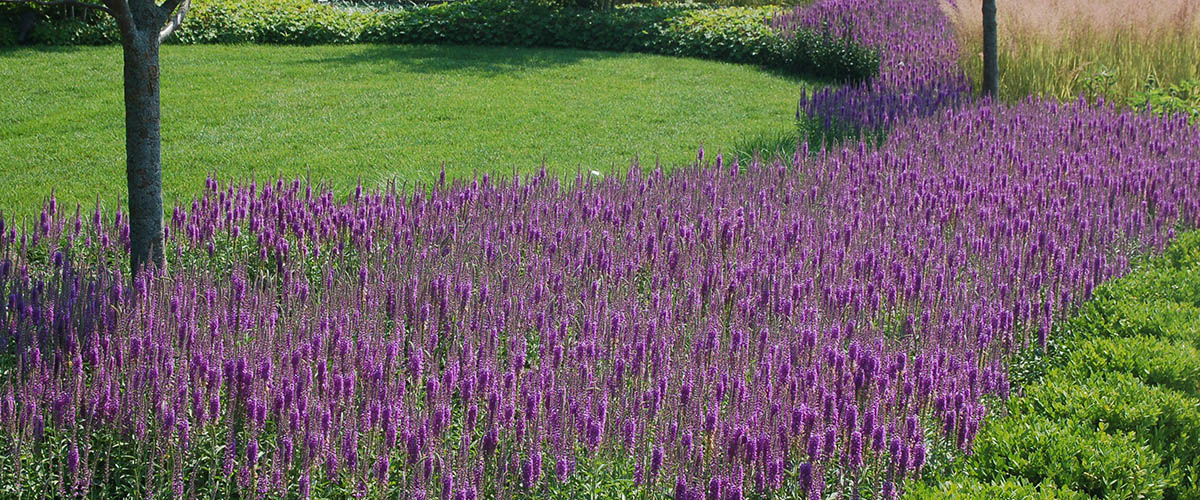
Evaluating Perennials for Chicagoland Gardens
Perennials in Focus is a plant evaluation program that examines new and underused plants for Chicagoland, the third largest metropolitan area in the country. A group of horticultural experts trials and evaluates plants at numerous locations across the region. Results help consumers, public gardens, growers, landscape designers, breeders, and other industry professionals make informed plant choices.
Testing Organic Mulch Depth For Swamp Milkweed Emergence
Asclepias incarnata, commonly called swamp milkweed, is valued for its upright habit, pink to mauve flower clusters and appeal to pollinators. Its fine seed, moisture-loving crown and relatively slow early growth make it a useful subject for testing how organic mulch affects perennial establishment. A mulch layer can conserve water and moderate soil temperature, yet the same material may obstruct seedlings before they reach the light.
For gardeners and growers in Australia, region-specific evidence matters. Results from a Chicagoland evaluation can reveal how mulch depth changes emergence under cold winters and wet springs, while Australian trials can test whether the same pattern holds in Melbourne, Canberra, Hobart or cooler elevated sites. The Perennials in Focus trials provide a helpful model for comparing plant performance across gardens and seasons rather than relying on a single demonstration bed.
Why Mulch Depth Changes Emergence
Organic mulch affects the seed zone in several ways. A thin layer of aged bark, shredded leaves or clean straw can reduce evaporation, soften temperature swings and limit weed competition. It may also keep the surface from crusting after heavy rain. These benefits are especially relevant to small-seeded perennials, whose first roots and shoots are vulnerable to drying.
Depth becomes important when mulch creates a physical barrier. Swamp milkweed seedlings need to push through the covering before their reserves are exhausted. A 2–3 centimetre layer may be manageable, while a settled layer of 7–10 centimetres can delay emergence, bend stems or leave seedlings pale and weak. Fine, wet mulch can be more restrictive than a loose, coarse material at the same measured depth.
The material also changes the result. Fresh wood chips can temporarily immobilise nitrogen at the surface, whereas well-aged composted mulch may supply a small amount of nutrient. Hay can introduce weed seed, and dense leaf matting can stay wet for too long. A fair experiment therefore tests depth within one material before comparing different mulch types.
Building A Reliable Garden Trial
A useful trial starts with uniform seed from one packet or seed lot. Swamp milkweed may benefit from cold, moist stratification, so every treatment should receive the same pre-sowing preparation. Sow at the recommended shallow depth in a prepared bed or containers, and record the sowing date, soil type, irrigation and weather. If seeds are planted too deeply, mulch effects become difficult to separate from sowing-depth effects.
Use several replicated plots for each treatment rather than placing one depth in one corner. A simple design might include bare soil, 2.5 centimetres, 5 centimetres, 7.5 centimetres and 10 centimetres of settled organic mulch. Randomise their positions, because a sunny edge, compacted path or downpipe can influence moisture. Measure mulch after watering and settling, not immediately after spreading it.
Keep everything else consistent. The same seed quantity, irrigation schedule, bed preparation and weed-management approach should apply to every plot. In an Australian garden, this could mean trialling in raised beds at a Melbourne community garden, in heavier soil near Canberra or in a cooler Hobart yard. A Brisbane site would need separate interpretation because warmth, humidity and summer rainfall can accelerate decay and increase fungal pressure.
What To Record Beyond Emergence
Emergence percentage is the clearest first measure: count how many seedlings appear compared with the number of viable seeds sown. Also record the median number of days to emergence. A treatment that produces the same final population but delays seedlings by two weeks may still be less useful where weeds establish quickly or spring moisture disappears.
Continue observations after the first leaves unfold. Record seedling height, number of true leaves, leaf colour, stem strength and survival at four and eight weeks. Note whether stems emerge through the mulch, whether seedlings are trapped beneath it, and whether the surface develops mould. These observations show whether a deeper covering merely slows emergence or causes lasting losses.
Longer-term records are valuable because mulch may influence establishment after the first season. Measure plant height, spread, flowering time and number of flowering stems. Swamp milkweed can take time to form a substantial clump, so a treatment with slightly slower emergence might still produce robust plants if it retains moisture through a dry period.
Photographs taken from the same angle and scale add useful evidence. Weather notes should include rainfall, frost, heatwaves and unusually windy periods. In southern Australia, an autumn sowing may experience cool nights and winter rainfall, while an inland spring can shift quickly from damp to hot and dry. Those conditions can change which mulch depth performs best.
Interpreting Results Across Regions
The likely pattern is a balance between moisture conservation and physical obstruction. Bare soil may produce quick emergence when irrigation is reliable, but it can dry or crust. A shallow organic mulch may provide the best compromise. Medium mulch can help in free-draining soil, while deep mulch is more likely to delay or suppress seedlings unless it is coarse and loosely applied.
Chicagoland data should be read as a climate-specific reference rather than a universal prescription. There, freeze-thaw cycles, snow cover and cool spring soils may make moisture retention valuable. In Australia, mulch can warm the soil differently depending on the season and location. A deep layer that protects a seedbed during a dry Adelaide spring could keep a wet Sydney or Brisbane bed excessively damp.
Planting purpose matters as well. A commercial grower producing uniform tubestock may prefer a shallow, carefully controlled surface covering or no mulch over the seed row. A home gardener establishing a permanent rain-garden planting may accept slower emergence if mulch reduces watering and suppresses weeds between seedlings. Keep mulch several centimetres away from established crowns once plants are growing, especially in humid districts.
Swamp milkweed is an introduced plant in Australia, so check current state and territory biosecurity information before growing or distributing it. Confirm that seed, plants and spent material are permitted locally, and avoid allowing seed to spread beyond the intended bed. Labels in Australian nurseries can vary, and a plant sold as a pollinator perennial may not carry detailed information about cold stratification, mature spread or local weed risk.
Applying Findings In Australian Gardens
The best treatment is likely to differ with soil and climate. In a cool southern garden, mulch can be applied between seedlings once they are visible rather than directly over the seed row. In a warm region, a light layer may protect moisture, but irrigation should be adjusted so the surface does not remain saturated. For a verge or public planting, clear spacing and easy monitoring may be more important than maximum mulch depth.
Retailers, landscape contractors and home gardeners can turn the trial into a practical recommendation by reporting both the depth and the material. “Mulched” is too vague for a plant label or maintenance specification. A note such as “apply 2.5 centimetres of aged fine bark after seedlings emerge” gives a far better guide than a broad instruction to mulch well.
| Settled mulch depth | Expected emergence pattern | Main benefit | Main risk |
|---|---|---|---|
| Bare soil | Fastest when moisture is steady | Easy monitoring and emergence | Drying, crusting and weed competition |
| 2–3 cm | Usually a useful compromise | Moisture retention with limited obstruction | Can still dry in exposed sites |
| 5 cm | More variable and often slower | Better moisture buffering | Delayed shoots and reduced light |
| 7.5–10 cm | Likely to suppress or substantially delay seedlings | Strong weed suppression after establishment | Physical barrier, wetness and seedling loss |
Use the results to separate seedling establishment from mature-plant care. Direct-sown swamp milkweed may need a bare or lightly covered seed strip, while established plants can benefit from a deeper mulch layer around, rather than over, the crown. In Australian retail production, raising seedlings in cells before planting may be more reliable where direct emergence is inconsistent, particularly when seed is expensive or hard to replace.
A carefully recorded trial can give growers a defensible mulch recommendation instead of a guess. Compare the results with local rainfall, soil drainage and seasonal temperature, then share observations with nurseries, public gardens and community growing groups. Start with several mulch depths, measure emergence and early vigour, and refine the treatment before applying it across a larger planting.
In the Garden
Evaluator gardens are located across the Chicagoland area, representing a range of growing conditions. Visit our retail and wholesale partners to find trialled perennials for your own garden.
Retail & Wholesale: Hinsdale Nurseries (Willowbrook, IL), Mariani Nurseries (Kenosha, WI & Garden Prairie, IL), Northwind Perennials (Burlington, WI), The Growing Place (Aurora, IL).
Wholesale Only: Hinsdale Nurseries (Plano, IL), Intrinsic Perennial Gardens (Hebron, IL).
Our Evaluation Program
The 2017–2020 evaluation cycle included Agastache 'Blue Boa', Allium senescens 'Blue Eddy', Amsonia ciliata var. filifolia 'Georgia Pancake', Astilbe 'Chocolate Shogun', Boltonia astroides 'James Crocket', Brunnera 'Alexander's Great', and Geranium cinereum 'Jolly Jewel Purple'. Completed evaluations include Amsonia 'Blue Ice' (2004–07).
On April 10, 2020, the program published snapshot profiles for Vernonia lettermanii 'Iron Butterfly', Stokesia laevis 'Elf', Stachys officinalis 'Pink Cotton Candy', Lobelia 'Monet Moment', Helleborus 'Winter Thrillers', Geum 'Mai Tai', Geranium soboliferum 'Butterfly Kisses', Gentiana x intermedia 'True Blue', Eurybia divaricata, Asparagus 'Purple Passion', and Agastache 'Bolero'.
Browse the full collection of snapshots organized alphabetically — from A–D, E–H, I–Q, and R–Z — to find detailed performance data on perennials trialled across Chicagoland.