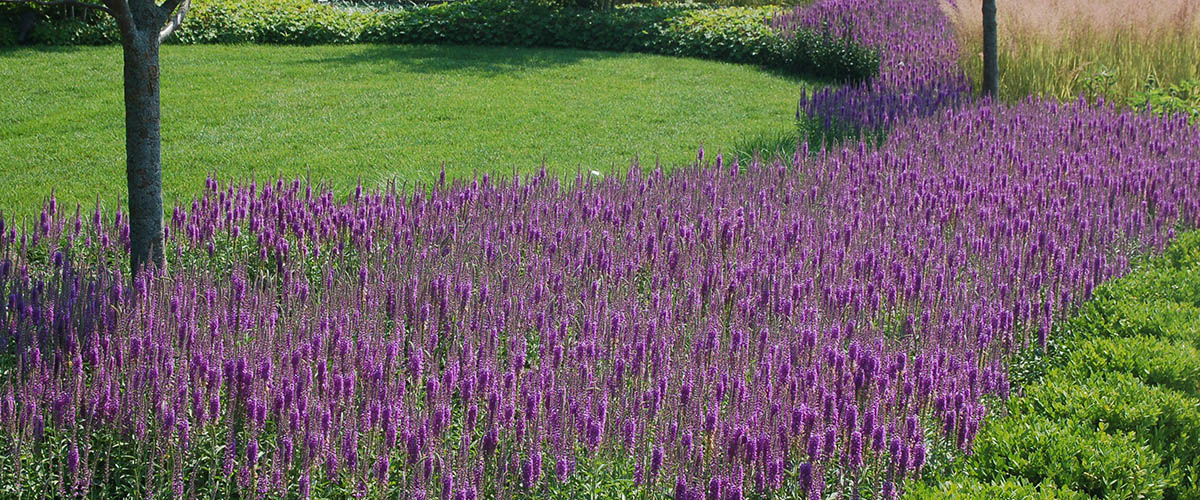
Evaluating Perennials for Chicagoland Gardens
Perennials in Focus is a plant evaluation program that examines new and underused plants for Chicagoland, the third largest metropolitan area in the country. A group of horticultural experts trials and evaluates plants at numerous locations across the region. Results help consumers, public gardens, growers, landscape designers, breeders, and other industry professionals make informed plant choices.
Mycorrhizal Inoculation and Echinacea pallida Establishment Trials
Across temperate southern Australia, pale coneflower has quietly earned a following among gardeners drawn to its slender drooping petals, drought leanings and capacity to draw native and European bees alike. The species hails from the tallgrass prairies of central North America, yet it transplants remarkably well into the rocky ridges of the Macedon Ranges, the cool slopes behind Adelaide, and the frosty edges of a Canberra border. Its long-lived taproot and tolerance for poor, gravelly ground make it an appealing choice for naturalistic plantings, especially as water-wise garden design spreads from Perth suburbs into Melbourne's outer growth corridors.
A multi-site evaluation overseen by the Perennials in Focus network set out to measure what happens when commercially available fungal inoculants are introduced at planting. Researchers tracked first-year survival, root architecture, and flowering behaviour of inoculated versus untreated container stock. The goal was practical: to clarify whether symbiotic fungi products sold through local nurseries and trade suppliers genuinely accelerate plant establishment under Australian soil conditions, or whether the same outcomes can be achieved through careful siting and soil preparation alone.
The Prairie Perennial in an Australian Setting
Echinacea pallida differs from its more familiar cousin E. purpurea in petal form and root habit. Where purple coneflower tends to form a clumping crown, the pale species drives a deep, carrot-like taproot down into the substrate, mining moisture from layers that shallower-rooted perennials cannot reach. That root system, paired with narrow strap-like leaves covered in fine bristles, helps it cope with the long dry summers that increasingly shape gardens in south-eastern Australia. Mature plants reach roughly 90 centimetres in height and can persist for a decade or more if drainage is sharp and the crown stays dry through winter.
Garden designers working on naturalistic plantings around the Southern Highlands and parts of the Adelaide Hills have started requesting it in larger quantities. Its appeal sits in soft, swaying movement and pollinator value, since honeyeaters, native bees and hoverflies all visit the pale pink-mauve blooms from early summer onward. The challenge, as several trial collaborators noted, has always been the slow first season. Without intervention, container-raised plants often sit stalled for months, leaving growers wondering whether establishment has actually taken.
Trial Design Across Four Regional Sites
Four trial beds were established between spring and early autumn in three states. One site sat on a gravelly loam over clay in the Dandenong Ranges, another on a sandy loam in the Perth Hills, a third on basalt-derived loam near Orange in central western New South Wales, and a fourth on a sandstone-based soil outside the Hunter Valley. All sites used the same open-rooted E. pallida stock raised by a single wholesale nursery, ensuring starting material was as uniform as possible. Each bed contained alternating rows of inoculated and uninoculated plants, with the inoculant applied as a granular root-zone amendment at planting.
Local climate data informed planting windows. In Perth and the Hunter Valley, stock went in during the cooler stretch of late autumn to dodge summer scorch. The Dandenong and Orange sites favoured an early spring planting once frost risk had eased. Trials ran for two full growing seasons, with measurements taken at six-month intervals. Researchers recorded soil temperature, moisture, root colonisation percentages from stained root samples, shoot dry weight, leaf count, and days from planting to first visible bud.
Root Colonisation and Early Growth Signals
The most striking divergence between treated and untreated plants appeared below ground. After six months, inoculated specimens across all four sites showed root colonisation rates averaging 62 percent, while untreated controls sat closer to 28 percent. The Perth Hills sandy loam produced the most dramatic gap, with some inoculated plants reaching 78 percent colonisation compared with just 19 percent in controls. Shoot dry weight followed a similar pattern, with inoculated plants weighing roughly 35 percent more than their untreated counterparts by the end of the first summer.
These gains did not translate into a uniform jump in visible top growth. Leaf count and stem height were within statistical noise for the first four months. By month nine, however, the inoculated cohort displayed noticeably fuller basal rosettes, particularly at the Perth and Dandenong sites. Researchers interpreted this as evidence that the fungal partnership was redirecting photosynthate toward root expansion rather than leaf production, a pattern consistent with field studies on other deep-rooted prairie perennials. The table below summarises averaged first-year results across all four trial sites.
| Metric | Untreated control | Inoculated plants | Difference |
|---|---|---|---|
| Root colonisation (%) | 28 | 62 | +34 |
| Shoot dry weight (g) | 14.6 | 19.7 | +5.1 |
| Leaf count per rosette | 9 | 12 | +3 |
| Days to first bud | 138 | 121 | -17 |
| First-season survival (%) | 84 | 96 | +12 |
By the second spring, the gap narrowed but did not vanish. Plants from both groups had reached comparable heights and bud counts, yet the inoculated specimens held onto deeper taproots and produced denser fine-root networks in the upper 30 centimetres of soil.
Flowering, Drought Response and Soil Biology
Inoculated plants flowered earlier by an average of 17 days, a meaningful margin for growers trying to align E. pallida with summer pollinator programmes or cottage-garden colour schedules. Flower count per stem was similar between groups, but petal width and overall bloom duration edged slightly higher in the inoculated cohort at three of the four sites. The exception was the Hunter Valley plot, where prolonged autumn rain waterlogged the heavier patches and knocked back both groups equally.
Water use observations offered another layer. Soil moisture probes placed at 30 and 60 centimetre depths showed that inoculated beds dried down more slowly between supplementary waterings, suggesting the fungal network was drawing moisture from a wider soil volume. This matches what landscape designers working through extended dry stretches in Melbourne's outer growth corridors have long suspected about well-mulched, biologically active plantings. Soil-biology assays also picked up greater microbial diversity in the inoculated beds, hinting that the introduced fungi may have created niches for other beneficial organisms.
Pollinator Activity and Garden Integration
Pollinator counts were taken every fortnight during the main flowering window. Honeybee visits per square metre ran roughly 22 percent higher on inoculated plots, with native bee diversity, particularly small halictid species, also tracking upward. Garden designers interpreting these numbers have suggested that earlier and slightly larger blooms in the inoculated cohort simply provided more forage at the right moment, a small but real benefit when pollinator resources can be scarce across suburban Melbourne and inner Sydney during late-spring gaps.
Beyond pollinators, the trial plants integrated well into a range of Australian garden styles. In a Perth Hills native-blend border, E. pallida held its own alongside kangaroo paw and westringia without dominating. In a Dandenong Ranges perennial meadow, it provided vertical lift above grasses and salvia. The species' tolerance for poor soil meant it performed even on the compacted clay fill typical of newer housing estates on Melbourne's urban fringe, provided drainage was not compromised.
Regional Caveats and Climate Realities
Outcomes were not identical from one site to the next. The Perth Hills sandy loam, low in organic matter and naturally low in native mycorrhizal activity, responded most strongly to inoculation. The Orange basalt plot, already fertile and biologically rich, showed the smallest gap between treated and untreated plants. Cold-winter sites like Canberra and parts of the Macedon Ranges appeared to slow colonisation during dormancy, meaning inoculant benefits largely accrued once soils warmed.
Australian growers should also weigh product variability. Several commercial inoculant blends available through major chains like Bunnings Warehouse and through specialist perennial suppliers carry differing strains, spore counts, and carrier materials. Field staff noted that granular and powder formulations generally outperformed liquid suspensions at planting, possibly because liquid products dried out quickly in the open root zone before hyphal contact could occur.
Practical Guidance for Growers and Landscapers
For those working in southern Australia's temperate belt, applying a quality granular mycorrhizal product at planting appears worthwhile, particularly on disturbed building-site soils, sandy profiles, or new garden beds where biological activity is still rebuilding. The investment is modest compared with the cost of replacing failed plants over multiple seasons. Dig a hole wider than the root spread but no deeper, dust the sides and base of the root ball with inoculant, backfill, water in, and mulch lightly to keep soil temperatures stable.
For native-focused landscaping or restoration projects where prairie perennials sit alongside indigenous species, the calculus is slightly different. Inoculation is rarely harmful to Australian natives, but many local species form their own fungal partnerships with different groups of fungi. Where E. pallida is being planted as a feature perennial in a mixed border rather than as part of a broad ecological planting, the strongest trial-supported approach remains inoculation at install followed by patient, restrained watering through the first summer.
A copy of the full first-year report, including site maps and raw data tables, is available through the program snapshots archive for growers and horticultural professionals wanting to dig deeper into the regional results.
In the Garden
Evaluator gardens are located across the Chicagoland area, representing a range of growing conditions. Visit our retail and wholesale partners to find trialled perennials for your own garden.
Retail & Wholesale: Hinsdale Nurseries (Willowbrook, IL), Mariani Nurseries (Kenosha, WI & Garden Prairie, IL), Northwind Perennials (Burlington, WI), The Growing Place (Aurora, IL).
Wholesale Only: Hinsdale Nurseries (Plano, IL), Intrinsic Perennial Gardens (Hebron, IL).
Our Evaluation Program
The 2017–2020 evaluation cycle included Agastache 'Blue Boa', Allium senescens 'Blue Eddy', Amsonia ciliata var. filifolia 'Georgia Pancake', Astilbe 'Chocolate Shogun', Boltonia astroides 'James Crocket', Brunnera 'Alexander's Great', and Geranium cinereum 'Jolly Jewel Purple'. Completed evaluations include Amsonia 'Blue Ice' (2004–07).
On April 10, 2020, the program published snapshot profiles for Vernonia lettermanii 'Iron Butterfly', Stokesia laevis 'Elf', Stachys officinalis 'Pink Cotton Candy', Lobelia 'Monet Moment', Helleborus 'Winter Thrillers', Geum 'Mai Tai', Geranium soboliferum 'Butterfly Kisses', Gentiana x intermedia 'True Blue', Eurybia divaricata, Asparagus 'Purple Passion', and Agastache 'Bolero'.
Browse the full collection of snapshots organized alphabetically — from A–D, E–H, I–Q, and R–Z — to find detailed performance data on perennials trialled across Chicagoland.