Evaluating Perennials for Chicagoland Gardens
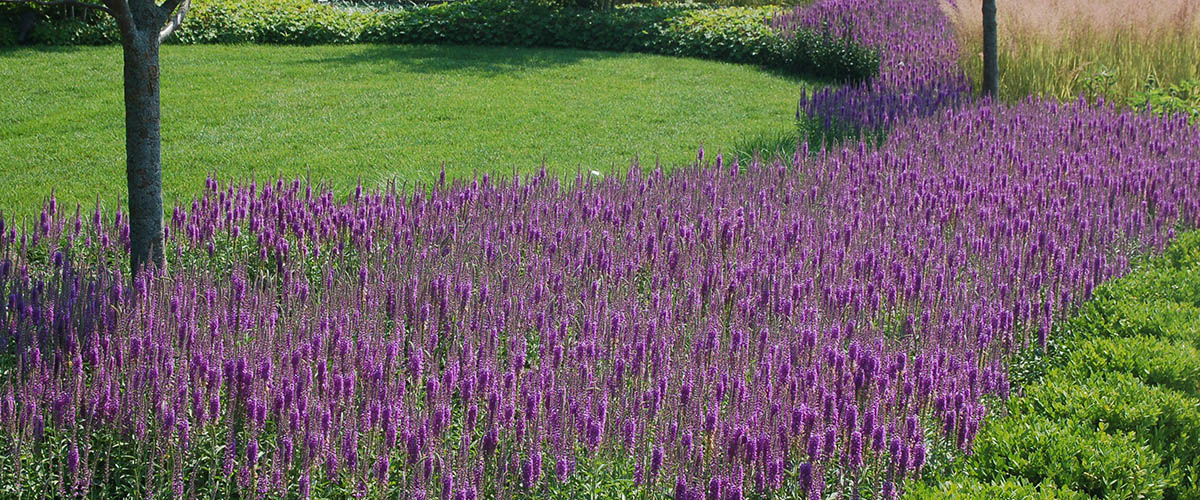
Perennials in Focus is a plant evaluation program that examines new and underused plants for Chicagoland, the third largest metropolitan area in the country. A group of horticultural experts trials and evaluates plants at numerous locations across the region. Results help consumers, public gardens, growers, landscape designers, breeders, and other industry professionals make informed plant choices.
Dark mulch and early spring perennial growth
Dark mulch can make a garden bed look tidy and can alter the temperature around perennial crowns, roots and emerging shoots. Its black or deep brown surface absorbs sunlight, warming quickly during clear days, while the layer beneath may continue to act as insulation after sunset. The result is more complicated than simply assuming a darker surface will produce earlier growth.
For the Perennials in Focus programme, this question matters because plant performance is assessed across seasons, sites and growing conditions rather than in a single garden bed. The project’s Chicagoland trials offer a useful model for comparing mulch treatments, particularly when observations include emergence date, crown survival, flowering time, plant height and spread.
Australian gardeners can apply the same disciplined approach, while allowing for local differences. A bed in Canberra may experience sharp overnight frosts, a Melbourne garden can swing from cool mornings to bright afternoons, and a Perth site may warm rapidly in sandy soil. Testing dark mulch for early spring perennial growth therefore needs measurements that reflect both heat gain and moisture behaviour.
What dark mulch changes in the soil
Dark organic mulch absorbs more short-wave radiation than pale straw, light gravel or fresh wood shavings. During sunny winter and early spring days, the upper surface can become noticeably warm. That warmth may reach the top few centimetres of soil, where dormant crowns and shallow roots respond first.
The effect depends on the material, thickness and moisture content. A thin layer of dark composted bark may warm more readily than a deep, wet layer of woodchip. Black plastic can produce a stronger surface-heating effect, but it also changes air movement, water infiltration and the risk of excessive heat around the crown. These products should not be treated as interchangeable.
Night-time readings are just as important as afternoon readings. Mulch can reduce radiative heat loss from the soil, helping protect roots from a brief frost, but it can also delay the release of daytime warmth. A perennial that needs cool winter conditions may respond differently from one that benefits from a warmer root zone.
Designing a useful perennial trial
A sound comparison starts with matched plots. Use the same perennial cultivar, planting date, soil preparation and irrigation schedule in beds receiving dark mulch, pale mulch and no mulch. Keep mulch depth consistent, perhaps at 50 millimetres, and leave a small gap around each crown to reduce the chance of rot and stem damage.
Record soil temperature at the same depth and at several times each day. A simple data logger is helpful, but manual readings can still reveal patterns if taken before sunrise, around midday and in late afternoon. Also note surface temperature, soil moisture, frost events, shoot emergence and the number of days until the first fully opened flower.
The value of a regional programme lies in repeated observations. A single warm week can make a dark mulch treatment appear successful, while a later cold snap may expose delayed emergence or crown injury. Trials across Melbourne, regional Victoria, Canberra or the Adelaide Hills would provide a more reliable picture than one sheltered backyard.
Choosing plants that reveal the difference
Early-emerging herbaceous perennials are good candidates because their shoots appear during a period when soil temperatures are still changing quickly. Peonies, daylilies, hostas and many ornamental grasses can show differences in emergence, although each has its own dormancy requirements. Plants with fleshy crowns may also reveal whether a mulch holds too much moisture.
A plant’s eventual flowering date should be assessed separately from its first shoot appearance. Warm soil may produce earlier leaves without creating earlier flowers if day length, vernalisation or later weather controls the flowering process. Records should therefore include canopy development, bud formation and bloom duration rather than relying on one date.
Flowering overlap can also influence how useful a treatment is in a designed border. For example, regional observations on bloom timing notes help demonstrate why a few days of seasonal acceleration may matter when combining plants for a continuous display.
Reading Australian growing conditions
In Canberra and inland New South Wales, dark mulch may help moderate a cold root zone after clear winter nights, but a late frost can still damage exposed young foliage. Gardeners should avoid interpreting warmer soil as protection for leaves. Frost cloth, site selection and delayed pruning may have a greater effect on visible shoot survival.
In Sydney and Brisbane, early spring soil may already be warm enough for rapid growth. A thick dark mulch layer can hold moisture after heavy rain, encourage fungal problems and reduce oxygen around crowns. In Perth’s sandy soils, the same mulch may be valuable for reducing evaporation, yet the surface can heat sharply under strong sun. Irrigation should be checked rather than increased automatically.
Australian retail habits also affect the trial. Garden centres commonly sell sugar cane mulch, lucerne, composted pine bark, eucalyptus-based products and decorative dark woodchips. Their colour can vary between batches, and some products settle considerably after wetting. Record the product, supplier, approximate particle size and actual depth after watering so results can be repeated by home gardeners and growers.
Avoiding misleading measurements
A dark mulch treatment can look warmer while the root zone remains similar to the control. Measure at crown level and below the mulch, not only at the exposed surface. A cheap infrared thermometer is useful for screening, but it reads the surface rather than the soil profile. Pair it with a probe thermometer for a clearer interpretation.
Moisture is another major variable. Wet mulch conducts heat differently from dry mulch, and irrigation can temporarily cool the bed. Weighing soil samples is precise, while a consistent finger test or moisture meter may be adequate for a home-scale trial. Record rainfall from the Bureau of Meteorology or a nearby gauge, especially during unsettled spring weather.
Watch for secondary effects such as slugs under damp mulch, ants nesting in dry material, buried crowns and windblown mulch collecting against stems. These factors can change plant performance without being caused by temperature alone. Photographs taken from the same position each week make it easier to separate earlier growth from simply fuller-looking foliage.
Comparing treatments across a garden
The clearest results come from combining temperature data with plant records. A treatment that raises midday soil temperature by several degrees may have little horticultural value if it delays overnight cooling, increases crown losses or fails to improve flowering. Conversely, a modest thermal effect may still be useful if it conserves moisture and produces more uniform emergence.
Use several plants per treatment and repeat the comparison in more than one bed. A north-facing wall in Adelaide, a shaded Melbourne courtyard and an exposed Canberra border will produce different outcomes. For public gardens and professional growers, repeating the test across sites can show whether a recommendation is broadly reliable or limited to a particular microclimate.
| Treatment | Likely thermal behaviour | Main benefit | Risk to monitor | Useful measurements |
|---|---|---|---|---|
| Dark composted bark | Warmer surface in sunlight; moderate insulation | May support earlier root-zone warming and moisture retention | Crown rot if too wet or deep | Soil temperature, moisture, emergence |
| Pale straw or sugar cane mulch | Reflects more light; cooler surface | Protects soil and adds organic matter | Can blow away or shelter pests | Soil temperature, depth, wind loss |
| Dark woodchip | Slow, uneven warming depending on moisture and size | Long-lasting cover and weed suppression | May draw down surface nitrogen while decomposing | Surface temperature, soil moisture, plant colour |
| Black plastic mulch | Strongest surface heating and moisture barrier | Rapid warming in selected situations | Overheating, poor infiltration and crown damage | Surface and root-zone temperature, irrigation |
| Bare soil | Fast daytime warming and rapid night cooling | Simple reference treatment | Greater evaporation, weeds and frost fluctuation | Daily temperature range, moisture, emergence |
For gardeners, growers and retailers, the practical goal is not to promote one colour of mulch in every climate. It is to identify which material, depth and placement suit a particular perennial and site. Begin recording this season with clear labels, regular photographs and a small number of reliable measurements, then share the results with local horticultural networks and evaluation programmes such as Perennials in Focus.
In the Garden
Evaluator gardens are located across the Chicagoland area, representing a range of growing conditions. Visit our retail and wholesale partners to find trialled perennials for your own garden.
Retail & Wholesale: Hinsdale Nurseries (Willowbrook, IL), Mariani Nurseries (Kenosha, WI & Garden Prairie, IL), Northwind Perennials (Burlington, WI), The Growing Place (Aurora, IL).
Wholesale Only: Hinsdale Nurseries (Plano, IL), Intrinsic Perennial Gardens (Hebron, IL).
Our Evaluation Program
The 2017–2020 evaluation cycle included Agastache 'Blue Boa', Allium senescens 'Blue Eddy', Amsonia ciliata var. filifolia 'Georgia Pancake', Astilbe 'Chocolate Shogun', Boltonia astroides 'James Crocket', Brunnera 'Alexander's Great', and Geranium cinereum 'Jolly Jewel Purple'. Completed evaluations include Amsonia 'Blue Ice' (2004–07).
On April 10, 2020, the program published snapshot profiles for Vernonia lettermanii 'Iron Butterfly', Stokesia laevis 'Elf', Stachys officinalis 'Pink Cotton Candy', Lobelia 'Monet Moment', Helleborus 'Winter Thrillers', Geum 'Mai Tai', Geranium soboliferum 'Butterfly Kisses', Gentiana x intermedia 'True Blue', Eurybia divaricata, Asparagus 'Purple Passion', and Agastache 'Bolero'.
Browse the full collection of snapshots organized alphabetically — from A–D, E–H, I–Q, and R–Z — to find detailed performance data on perennials trialled across Chicagoland.