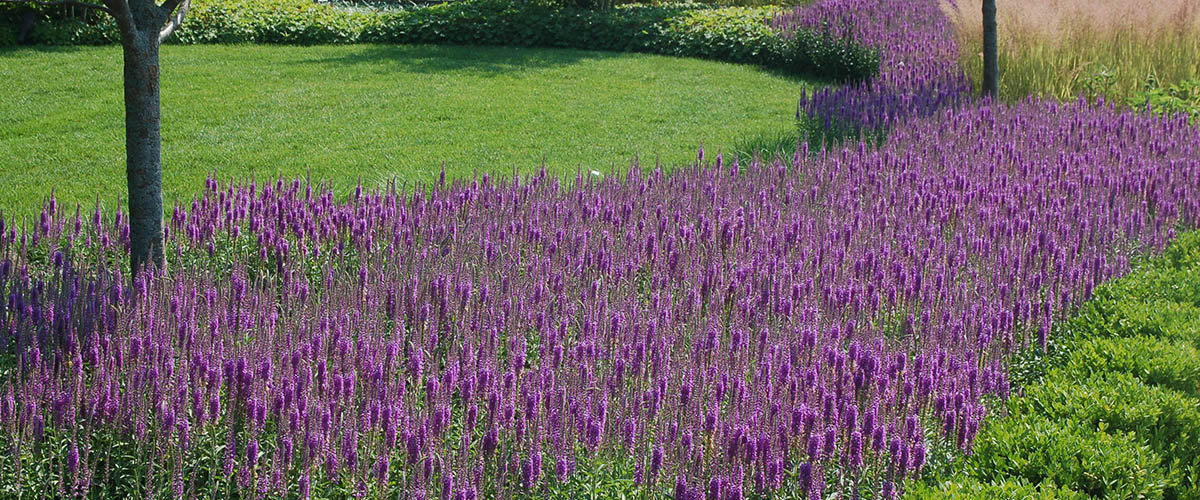
Evaluating Perennials for Chicagoland Gardens
Perennials in Focus is a plant evaluation program that examines new and underused plants for Chicagoland, the third largest metropolitan area in the country. A group of horticultural experts trials and evaluates plants at numerous locations across the region. Results help consumers, public gardens, growers, landscape designers, breeders, and other industry professionals make informed plant choices.
What Deadheading Reveals About Campanula Persicifolia Blooming
Campanula persicifolia, commonly called peach-leaved bellflower, is valued for its upright stems and clear bell-shaped flowers in shades of blue, violet and white. In a garden trial, removing spent flowers can reveal whether the plant has a genuinely extended flowering period or simply produces a brief flush followed by scattered late blooms.
Testing the flowering period of Campanula persicifolia after deadheading requires consistent observations. The timing of the first flowers, the number of fresh stems, plant height, weather conditions and recovery after cutting all help distinguish a reliable rebloomer from a plant that offers only occasional follow-up flowers.
| Treatment | Main observation | Likely garden effect | Useful record |
|---|---|---|---|
| No deadheading | Seed heads develop after the first flush | Longer ornamental display from seed pods, limited repeat flowering | Date flowering declines |
| Prompt removal of spent flowers | Energy is redirected from seed production | Greater chance of new buds and a tidier clump | Date of cutting and second flush |
| Partial deadheading | Some stems flower while others set seed | Useful for comparing seed formation with regrowth | Stem-by-stem bloom count |
| Hard cut after flowering | Foliage and stems are substantially reduced | May encourage basal regrowth, but recovery varies | New shoots, plant size and vigour |
Establishing A Fair Flowering Trial
A useful evaluation begins with plants of similar age, size and provenance. Campanula persicifolia should be planted in well-drained soil with adequate moisture during establishment, then assessed under the same light and irrigation conditions. A sunny or lightly shaded position is generally suitable, although intense afternoon heat can shorten flower life in some Australian gardens.
Trial plants should be labelled individually, with the planting date and cultivar recorded. Note the first open flower, the date when the main display peaks, and the point when half the flowers have faded. Record flower colour, stem height, spread and any lodging, since a second flush is more valuable when the stems remain presentable.
A simple weekly assessment is usually enough. Count open flowers or flowering stems, estimate the percentage of faded blooms, and photograph each plant from the same angle. These methods are consistent with broader perennial evaluation practices, where repeatable observations matter more than a single impressive display.
What To Remove And When
Deadheading works best when spent flowers are removed before substantial seed development. Follow the flower stalk down to a healthy side shoot or basal leaf group and cut just above it. Removing only the dry bell can leave an untidy stem and may not redirect growth effectively.
For a first comparison, leave a small number of stems untouched while cutting the rest. This creates a practical control within the same garden bed. The untreated stems show how long the original display lasts, while the cut stems indicate whether fresh buds or new flowering stalks appear afterwards.
The timing of the cut should be recorded precisely. Removing flowers as they fade may produce a different result from cutting the entire plant after flowering has finished. A light, selective approach is usually safer than an immediate hard trim, particularly where summer heat, dry soil or transplant stress may slow recovery.
Reading The Second Flush
A genuine repeat display should be separated from late-opening flowers that were already present as small buds. Inspect the plant several days after deadheading and mark new flower stalks separately from buds that were formed before the cut. The distinction helps clarify whether the plant is reblooming or simply completing its first flowering cycle.
Measure the interval between cutting and the appearance of new buds. Also record the number of new stems and their height compared with the original stems. A second flush that appears quickly but consists of two short stems may have less landscape value than a slower, fuller return.
Weather has a strong influence on the result. In Melbourne, cool nights can support a longer flowering window, while a hot spell in Adelaide may dry the plant before it can rebuild. In Sydney, humid periods may increase foliage and disease concerns, whereas well-timed irrigation in Canberra can help plants recover after a dry summer.
Comparing Cultivars And Garden Conditions
Campanula persicifolia is not a single uniform garden performer. Cultivars differ in height, flower size, branching and tendency to produce basal growth. Some may respond to deadheading with a modest second flush, while others are best treated as early-summer performers with attractive seed heads afterwards.
The trial should therefore compare plants by cultivar rather than combining all observations. A tall form may need support and show reduced flowering after wind or heavy rain. A shorter selection could produce fewer flowers overall but remain compact and useful at the front of a border or in a large container.
The same principle applies to foliage traits in perennial assessments. When evaluating another genus, these variegation trial insights show why observations across locations and seasons are more informative than a single nursery description. Flowering response should be judged with the same care.
Translating Chicagoland Findings For Australia
Perennials in Focus findings are developed from trials in the Chicagoland region, where cold winters, spring transitions and summer conditions differ from most Australian growing areas. The evaluation method remains useful, but flowering dates should not be copied directly onto an Australian garden calendar.
Australian gardeners can use the results as a framework for local observation. A Campanula persicifolia that flowers in late spring in Chicago may bloom earlier in Perth or coastal New South Wales, while a cooler site in Tasmania may produce a schedule closer to temperate North American conditions. Frost exposure, soil temperature and summer rainfall all affect regrowth.
Local nursery availability also matters. Australian retailers may stock a narrower selection of peach-leaved bellflower than specialist European or North American suppliers, and plants may arrive at different sizes depending on the season. Garden centres and online growers should record which cultivars perform well in their own region rather than relying solely on imported catalogue claims.
Recording Results For Practical Use
A useful report should state whether deadheading produced a full repeat display, a few additional flowers or no meaningful response. Include the dates of the original flush, cutting, new buds and final flowering. Note irrigation, fertiliser, heatwaves, pest damage and any need for staking, since these factors can influence the result.
Photographs should show the whole clump as well as close views of flowers and seed heads. A simple rating system—such as poor, moderate or strong repeat flowering—can make results easier to compare across gardens. Avoid describing a plant as continuously flowering when the second flush is brief or widely scattered.
Gardeners working in community plots or public gardens should also record maintenance time. A plant that needs frequent removal of faded stems may offer less value than one that remains attractive with occasional care. When kneeling or working for extended periods, sensible posture, gloves and short breaks help keep routine observations comfortable; a joint comfort guide may provide general background for readers managing garden-related discomfort.
Keep the records for at least two seasons before drawing a firm judgement. One cool, moist year may make deadheading appear highly effective, while a hot, dry season may suppress regrowth. Repeated observations will show whether Campanula persicifolia deserves a place in Australian perennial borders, cottage gardens and mixed planting schemes.
Add your own plants to a simple flowering log this season, comparing deadheaded and untouched stems under the same conditions. Share dates, cultivar names, photographs and second-flush results with local gardeners, nurseries or trial groups so that regional knowledge of this useful bellflower continues to grow.
In the Garden
Evaluator gardens are located across the Chicagoland area, representing a range of growing conditions. Visit our retail and wholesale partners to find trialled perennials for your own garden.
Retail & Wholesale: Hinsdale Nurseries (Willowbrook, IL), Mariani Nurseries (Kenosha, WI & Garden Prairie, IL), Northwind Perennials (Burlington, WI), The Growing Place (Aurora, IL).
Wholesale Only: Hinsdale Nurseries (Plano, IL), Intrinsic Perennial Gardens (Hebron, IL).
Our Evaluation Program
The 2017–2020 evaluation cycle included Agastache 'Blue Boa', Allium senescens 'Blue Eddy', Amsonia ciliata var. filifolia 'Georgia Pancake', Astilbe 'Chocolate Shogun', Boltonia astroides 'James Crocket', Brunnera 'Alexander's Great', and Geranium cinereum 'Jolly Jewel Purple'. Completed evaluations include Amsonia 'Blue Ice' (2004–07).
On April 10, 2020, the program published snapshot profiles for Vernonia lettermanii 'Iron Butterfly', Stokesia laevis 'Elf', Stachys officinalis 'Pink Cotton Candy', Lobelia 'Monet Moment', Helleborus 'Winter Thrillers', Geum 'Mai Tai', Geranium soboliferum 'Butterfly Kisses', Gentiana x intermedia 'True Blue', Eurybia divaricata, Asparagus 'Purple Passion', and Agastache 'Bolero'.
Browse the full collection of snapshots organized alphabetically — from A–D, E–H, I–Q, and R–Z — to find detailed performance data on perennials trialled across Chicagoland.