Evaluating Perennials for Chicagoland Gardens
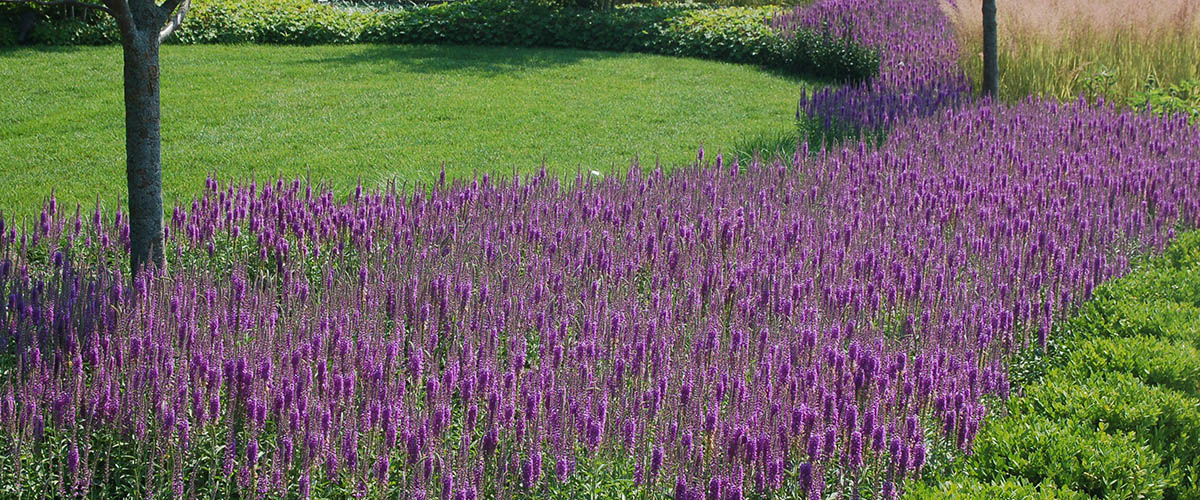
Perennials in Focus is a plant evaluation program that examines new and underused plants for Chicagoland, the third largest metropolitan area in the country. A group of horticultural experts trials and evaluates plants at numerous locations across the region. Results help consumers, public gardens, growers, landscape designers, breeders, and other industry professionals make informed plant choices.
Testing Late Winter Pruning Effects on Spirea Japonica Flowering
Spiraea japonica, commonly called Japanese spiraea, is valued for its neat habit, fresh foliage and clusters of pink or white flowers. Because it blooms on the current season’s growth, the timing and severity of pruning can influence how many flowering shoots develop, how long the display lasts and how compact the plant remains.
A late-winter pruning trial can turn familiar gardening advice into measurable regional evidence. Perennials in Focus evaluates plants across Chicagoland gardens and seasons, and its approach offers a useful model for Australian gardeners who want to compare pruning methods rather than rely on a single rule. The growing calendar differs between Chicago, Melbourne, Sydney and other regions, so observations need to be interpreted through local climate and plant behaviour.
| Pruning approach | Expected shoot response | Likely flowering effect | Main observation |
|---|---|---|---|
| No pruning | Older stems remain intact | Earlier or less even flowering | Natural shape and flower quantity |
| Light thinning | Selected old or weak stems removed | Moderate new growth and an open display | Air movement and branch balance |
| Hard late-winter cutback | Most stems shortened substantially | Many vigorous flowering shoots | Flower number, timing and plant density |
| Delayed spring pruning | Growth begins before cutting | Flowering may be postponed | Recovery speed and missed bloom period |
Why Timing Matters
Japanese spiraea flowers on new wood. Buds form after dormant-season pruning as fresh shoots expand in spring, meaning a late-winter cutback generally removes less potential flower-bearing growth than pruning an older-wood shrub after bud development has begun. The exact result still depends on plant age, cultivar, weather and the amount removed.
In Chicagoland, late winter can mean a narrow window between frozen soil, thawing conditions and rapid spring growth. A trial may therefore compare pruning dates in February, March and early April, while recording soil temperature and the date of bud break. For Australian readers, the equivalent timing may fall in July or August in Melbourne, while mild Sydney gardens may see active growth earlier.
Building A Useful Trial
A reliable comparison needs plants of similar age, size and growing conditions. Replicated groups are preferable to single specimens because one plant may naturally produce more stems or flower clusters than another. Each treatment should be applied to several plants, with labels recording cultivar, planting position and pruning date.
The Chicagoland program’s multi-garden approach is especially valuable because performance can shift between exposed urban beds, sheltered courtyards and open suburban borders. Gardeners and professionals can apply the same principle at home by comparing plants in similar light and soil. Notes on related perennial care can also be informed by this division guidance, particularly when a mixed border contains plants with different maintenance needs.
Comparing Pruning Treatments
The strongest experiment changes one factor at a time. A no-pruning control establishes the plant’s natural flowering pattern, while a light prune might remove crossing, damaged or very old stems. A hard prune could shorten the remaining framework to a consistent height, such as 10 to 20 centimetres above ground level, depending on the cultivar.
Clean, sharp secateurs reduce tearing and make treatment differences easier to interpret. In commercial landscapes, powered hedge trimmers may be common, but they can produce a dense outer shell and leave congested interior stems. Hand pruning takes longer yet provides greater control over stem age, height and spacing, which matters when flower production is the main measurement.
Measuring Flower Production
Flower production should be recorded in more than one way. Counting every individual flower may be impractical, particularly on large plants, so evaluators can count flowering shoots, estimate the number of flower clusters per shoot and rate overall display density. Recording the first open flowers and the date when the display reaches its peak adds useful timing information.
Flower colour and cluster size also deserve attention. A treatment that produces many short shoots may create a fuller appearance without increasing the total number of flowers. Conversely, longer shoots may carry larger clusters but leave gaps in the canopy. Photographs taken from the same distance and direction can support written scores and help distinguish genuine treatment effects from changes in light or background planting.
Reading Results Across Regions
A Chicagoland result should not be transferred directly to every Australian garden. Winter dormancy, frost frequency and summer heat vary widely. Melbourne’s cool winter and spring conditions may produce a response closer to a temperate trial, while Brisbane or Sydney can have earlier growth and a longer active season. Perth gardeners may need to account for winter rainfall followed by a dry, warming spring.
Local market expectations also influence the preferred result. Australian garden centres often sell compact flowering shrubs for small urban blocks, balconies and low-maintenance front gardens. A hard prune that creates vigorous, dense growth may suit a retail plant display or a formal border, but a softer thinning approach could be better for a water-conscious garden where reduced canopy stress matters.
Applying Findings In Australian Gardens
For many Australian gardeners, late winter is a practical time to assess spiraea before new leaves fully expand. Remove dead or damaged wood first, then consider whether the plant needs a general reduction or merely selective thinning. Avoid pruning during heatwaves, drought stress or immediately before a forecast cold snap in frost-prone districts.
Sydney and coastal New South Wales gardeners may need to prune earlier if buds are already swelling. In Melbourne, August pruning is often feasible, although local frost exposure should guide the exact date. Gardeners in Canberra should be more cautious about cutting too early, as late frosts can damage emerging shoots. Applying mulch after pruning can protect the root zone, but it should be kept away from the stems to reduce moisture-related problems.
What The Trial Can Reveal
The most useful outcome may not be a single winning treatment. The data could show that hard pruning produces the greatest number of flowering shoots, while light thinning gives the longest-lasting and most naturally shaped display. It may also reveal that cultivar differences are larger than pruning differences, an important finding for growers and retailers selecting plants for regional markets.
Repeated trials over several seasons are essential. One unusually cold winter, wet spring or hot summer can alter shoot growth and flowering independently of pruning. Recording plant height, spread, bloom colour, flowering period and recovery after cutting creates a fuller performance profile for home gardeners, landscape contractors, public gardens and breeders.
A disciplined pruning trial gives gardeners something more valuable than a blanket instruction: a way to connect timing, plant response and local conditions. Australian growers can adapt the method by matching dates to their climate, while professionals can use consistent records to select cultivars that flower reliably after late-winter maintenance. Put the approach into practice with labelled plants, repeated observations and photographs, then contribute clear regional evidence to the wider understanding of perennial and woody plant performance.
In the Garden
Evaluator gardens are located across the Chicagoland area, representing a range of growing conditions. Visit our retail and wholesale partners to find trialled perennials for your own garden.
Retail & Wholesale: Hinsdale Nurseries (Willowbrook, IL), Mariani Nurseries (Kenosha, WI & Garden Prairie, IL), Northwind Perennials (Burlington, WI), The Growing Place (Aurora, IL).
Wholesale Only: Hinsdale Nurseries (Plano, IL), Intrinsic Perennial Gardens (Hebron, IL).
Our Evaluation Program
The 2017–2020 evaluation cycle included Agastache 'Blue Boa', Allium senescens 'Blue Eddy', Amsonia ciliata var. filifolia 'Georgia Pancake', Astilbe 'Chocolate Shogun', Boltonia astroides 'James Crocket', Brunnera 'Alexander's Great', and Geranium cinereum 'Jolly Jewel Purple'. Completed evaluations include Amsonia 'Blue Ice' (2004–07).
On April 10, 2020, the program published snapshot profiles for Vernonia lettermanii 'Iron Butterfly', Stokesia laevis 'Elf', Stachys officinalis 'Pink Cotton Candy', Lobelia 'Monet Moment', Helleborus 'Winter Thrillers', Geum 'Mai Tai', Geranium soboliferum 'Butterfly Kisses', Gentiana x intermedia 'True Blue', Eurybia divaricata, Asparagus 'Purple Passion', and Agastache 'Bolero'.
Browse the full collection of snapshots organized alphabetically — from A–D, E–H, I–Q, and R–Z — to find detailed performance data on perennials trialled across Chicagoland.