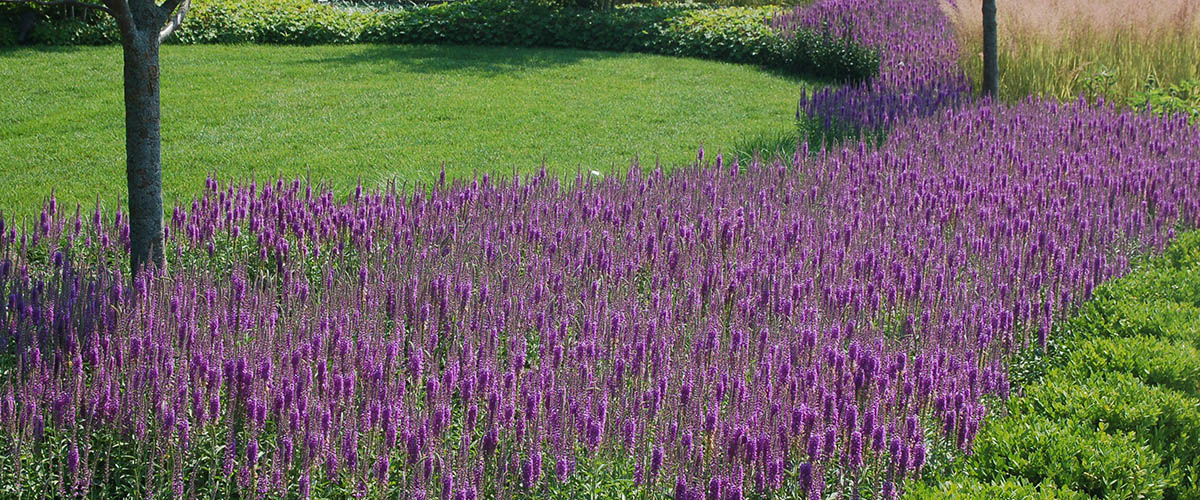
Evaluating Perennials for Chicagoland Gardens
Perennials in Focus is a plant evaluation program that examines new and underused plants for Chicagoland, the third largest metropolitan area in the country. A group of horticultural experts trials and evaluates plants at numerous locations across the region. Results help consumers, public gardens, growers, landscape designers, breeders, and other industry professionals make informed plant choices.
Perennials That Thrive in Shallow Soil over Limestone Bedrock
Limestone sites can be among the most rewarding places to garden, yet they expose weak plant choices quickly. A thin layer of soil over rock drains sharply, warms rapidly and gives roots little room to escape drought. The surface may look fertile after rain, but plants can face alkaline conditions, reflected heat and moisture stress only days later.
For Australian gardeners, the same planting problem appears in different forms. Adelaide gardens may sit over limestone, Perth’s coastal suburbs often have free-draining alkaline sands with limestone below, and Melbourne sites can combine shallow soil with winter wet and summer dryness. The right palette needs to suit both the geology and the local climate.
Results from a regional evaluation program such as Perennials in Focus are valuable because plants are observed over several seasons rather than judged from a catalogue photograph. Chicagoland trials cannot be transferred directly to Brisbane or Hobart, but their records on bloom period, habit, spread and persistence provide a disciplined way to compare plants before spending money.
Understand what limestone changes
Shallow soil over limestone usually has limited water storage and a high pH. Iron, phosphorus and several trace elements may become less available, producing pale foliage even when the soil contains nutrients. Roots can also meet hard rock within a few centimetres, so a plant that performs well in deep loam may remain stunted.
Drainage is not always uniform. Cracks in the bedrock can hold moisture, while compacted pockets beside paths may stay wet after heavy rain. Pale stone and masonry increase heat around the root zone, especially in Adelaide courtyards or Perth gardens exposed to afternoon sun. These contrasts make broad statements about “dry soil plants” less useful than observing the actual site.
Dig a small test hole before planting. Measure the depth of workable soil, note whether water disappears quickly, and check the pH if yellowing or poor growth has been a recurring issue. If the bed is only 10 to 20 centimetres deep, choose plants with fibrous or spreading roots rather than species that need a cool, deep root run.
Match plants to exposure and moisture
The best performers generally combine drought tolerance with a compact habit. Plants from rocky grasslands, limestone pavements, Mediterranean regions and alpine screes often cope with shallow ground because their natural habitats demand efficient roots and sturdy crowns. Full sun is helpful for many of them, although reflected heat can require temporary shade while new plants establish.
Reliable choices include creeping thyme, catmint, yarrow, salvias, dianthus, rock cress, stonecrop, ice plant and lamb’s ear. Compact lavender and rosemary can work where drainage is excellent, though they may become woody and require replacement after several years. Australian natives such as pigface, creeping boobialla, fan flower and some Dianella cultivars offer useful alternatives, particularly when sourced from a nursery familiar with local conditions.
Avoid placing thirsty woodland plants in the hottest, shallowest pockets. Hostas, astilbes and many moisture-loving perennials may survive with irrigation but usually demand more attention than the site can justify. Plants that resent alkaline soil, including some rhododendrons and blueberries, are better grown in purpose-built containers or dedicated acidic beds.
| Plant type | Useful qualities | Watch for |
|---|---|---|
| Creeping thyme | Low mat, fragrant foliage and small flowers; suits paving edges | Needs excellent drainage and can thin in heavy shade |
| Catmint | Long flowering season, grey foliage and strong drought tolerance | May flop if grown in rich, moist soil |
| Yarrow | Deeply divided foliage, durable stems and broad colour range | Can spread more quickly than expected |
| Stonecrop | Succulent foliage, shallow roots and late-season flowers | Winter wet can cause crown rot |
| Dianthus | Compact growth, fragrant flowers and tolerance of alkaline ground | Remove spent blooms to maintain a neat display |
| Pigface | Australian native groundcover with fleshy leaves and bright flowers | Protect from severe frost in colder districts |
| Dianella | Tough strappy foliage and useful mass-planting form | Select cultivars suited to the site’s mature spread |
Build a planting palette that lasts
A successful bed needs more than a list of tolerant species. Combine low mats that protect bare soil with mounded plants that provide volume and upright flower stems. Repeating three or four forms creates a coherent design, while different flowering periods keep the garden active from spring through autumn.
For a sunny Melbourne or Canberra garden, combine dianthus and creeping thyme at the front, catmint or salvia through the middle, and a restrained grass or Dianella behind them. In warmer Adelaide and Perth locations, add pigface, fan flower or compact westringia where a woody perennial or small shrub will provide year-round structure. In cooler regions, stonecrop, yarrow and ornamental onions can extend the display into late summer.
Spacing is especially important over bedrock. Close planting can create a finished look quickly, but crowded crowns compete for the small volume of available moisture. Allow each plant to reach its mature spread, then mulch between them with gravel, fine mineral mulch or well-aged organic material that will not form a wet collar around the crown.
Use trial information carefully
Plant evaluation records are most useful when they describe performance rather than simply naming a favourite. Look for observations about flowering length, stem strength, disease, winter survival, self-seeding and final spread. A plant that flowers heavily for three weeks but collapses in heat may be less useful than one with a longer, quieter display.
The plant snapshots from Perennials in Focus can help gardeners examine traits across a range of evaluated plants. Use those details as a comparison tool, then check the plant’s climate rating and local availability. A Chicago-tested perennial may need a cooler position in Sydney or extra summer irrigation in Perth, while an Australian native may have no equivalent performance record in a cold continental trial.
Local nursery advice matters because stock is often selected for regional demand. Garden centres around Adelaide and Perth commonly carry drought-tolerant plants in small tubes or compact pots, while specialist native nurseries may offer forms that are unavailable through large chains. Read the mature dimensions on the label rather than buying by pot size; a plant that looks modest in a 140-millimetre pot can still spread widely across a narrow limestone bed.
Prepare shallow ground without overbuilding it
Improve the planting pocket rather than attempting to replace the entire site. Remove loose rubble, add a modest amount of compost, and blend it through the existing soil so roots encounter a gradual transition. Excess compost can hold too much water around drought-adapted crowns, and a deep pocket of rich soil may encourage roots to circle within an unstable layer above the rock.
Water deeply during the first growing season, allowing the surface to dry between applications. Drip irrigation or leaky hose is more efficient than overhead spraying, particularly during Australian summer water restrictions. Once roots have spread, reduce frequency rather than giving frequent shallow drinks. This encourages plants to use the cracks and cooler layers beneath the surface.
A gravel mulch suits many sun-loving perennials and reflects the character of a limestone landscape. Organic mulch is useful where the site dries excessively, but keep it clear of crowns and stems. Remove damaged foliage, divide congested clumps in the suitable season, and replace short-lived plants before they become bare and woody.
Start with a small test bed containing several contrasting forms, then record flowering, wilting, spread and maintenance through a full year. This practical approach is especially useful when shopping during the spring rush at Australian garden centres, when attractive labels can conceal very different water and soil requirements. Select the plants that remain healthy with ordinary care, and expand that proven palette across the rest of the garden.
Turn your limestone edge, courtyard or rocky verge into a deliberate planting trial. Measure the soil depth, choose a few resilient perennials, and visit a reputable local nursery for climate-suitable stock. With careful observation and restrained watering, even a thin layer above bedrock can become a long-flowering, low-maintenance garden.
In the Garden
Evaluator gardens are located across the Chicagoland area, representing a range of growing conditions. Visit our retail and wholesale partners to find trialled perennials for your own garden.
Retail & Wholesale: Hinsdale Nurseries (Willowbrook, IL), Mariani Nurseries (Kenosha, WI & Garden Prairie, IL), Northwind Perennials (Burlington, WI), The Growing Place (Aurora, IL).
Wholesale Only: Hinsdale Nurseries (Plano, IL), Intrinsic Perennial Gardens (Hebron, IL).
Our Evaluation Program
The 2017–2020 evaluation cycle included Agastache 'Blue Boa', Allium senescens 'Blue Eddy', Amsonia ciliata var. filifolia 'Georgia Pancake', Astilbe 'Chocolate Shogun', Boltonia astroides 'James Crocket', Brunnera 'Alexander's Great', and Geranium cinereum 'Jolly Jewel Purple'. Completed evaluations include Amsonia 'Blue Ice' (2004–07).
On April 10, 2020, the program published snapshot profiles for Vernonia lettermanii 'Iron Butterfly', Stokesia laevis 'Elf', Stachys officinalis 'Pink Cotton Candy', Lobelia 'Monet Moment', Helleborus 'Winter Thrillers', Geum 'Mai Tai', Geranium soboliferum 'Butterfly Kisses', Gentiana x intermedia 'True Blue', Eurybia divaricata, Asparagus 'Purple Passion', and Agastache 'Bolero'.
Browse the full collection of snapshots organized alphabetically — from A–D, E–H, I–Q, and R–Z — to find detailed performance data on perennials trialled across Chicagoland.