Evaluating Perennials for Chicagoland Gardens
Perennials in Focus is a plant evaluation program that examines new and underused plants for Chicagoland, the third largest metropolitan area in the country. A group of horticultural experts trials and evaluates plants at numerous locations across the region. Results help consumers, public gardens, growers, landscape designers, breeders, and other industry professionals make informed plant choices.
Perennials That Provide Winter Seeds for Goldfinches in Chicago Gardens
A Chicago winter garden can look quiet while still offering valuable food for wildlife. When perennial stems and seedheads remain standing after autumn, American goldfinches may continue visiting for nutritious seed through the coldest months. These plants also create shelter, structure and visual interest when lawns and borders are dormant.
For Australian gardeners, the planting lesson is broadly useful even though the bird is not. Chicago’s long freeze, snow cover and sharp seasonal changes demand different plant choices from gardens in Melbourne, Sydney or Perth. Still, the principle is familiar: select reliable perennials, allow seed to mature, and resist the urge to cut every stem back before winter.
Why Seedheads Matter In Chicago
American goldfinches are especially fond of small, oil-rich seeds. In Chicago, they may feed on coneflower, black-eyed Susan, blazing star, sunflower relatives and late-season asters after many insects have disappeared. Their bright yellow breeding plumage fades to a softer olive colour in winter, so they can be easy to overlook among pale stems and dried foliage.
A seedhead also does more than hold food. Upright stalks catch snow, break winter wind and provide perches from which birds can inspect a garden. A mixed border with several heights is more useful than a single clipped mass, particularly where shrubs, fences or evergreen plants offer nearby cover.
Coneflowers And Black-Eyed Susans
Purple coneflower, Echinacea purpurea, is one of the most dependable choices for a bird-friendly perennial border. Its sturdy stems often remain upright into late winter, and the mature central cones hold seeds that goldfinches can prise out. Choose simple-flowered forms where possible, since heavily doubled cultivars may produce less accessible seed.
Black-eyed Susan, Rudbeckia fulgida or Rudbeckia hirta, provides another long-lasting seed source. The dark centres become more prominent as the yellow petals fade, creating useful food and strong winter form. Rudbeckia fulgida is generally a longer-lived perennial, while Rudbeckia hirta is often short-lived but can self-sow in suitable sites.
Both plants prefer full sun and reasonably well-drained soil. In a Chicago garden, leave the stalks intact until late winter or early spring. In an Australian garden, the same approach works in principle, but damp coastal climates may require wider spacing to reduce fungal problems.
Asters, Blazing Star And Coreopsis
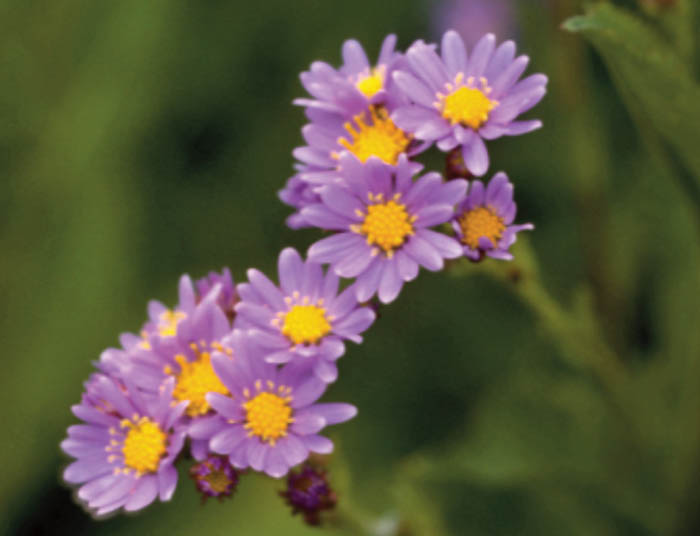
Native asters, including Symphyotrichum novae-angliae and related species, flower late and extend the feeding season into autumn. Their seed is smaller than sunflower seed, but the timing is valuable because goldfinches can use the heads after the last flowers have faded. Asters also support late pollinators before winter arrives.
Blazing star, Liatris spicata, forms vertical spikes of purple flowers in summer and compact seedheads afterwards. It suits sunny, well-drained positions and gives a border useful height without becoming visually heavy. Coreopsis, particularly perennial forms such as Coreopsis verticillata, offers smaller seeds and fine-textured stems that remain attractive through the dormant months.
Availability varies across the Australian market. Echinacea and Rudbeckia are commonly found through larger garden centres and independent nurseries, while named native Chicago selections may be less familiar. Australian buyers should check the mature height, climate suitability and flowering time rather than assuming a cultivar trialled in Illinois will perform identically in Adelaide or Brisbane.
Choosing Plants By Winter Performance
The strongest candidates combine accessible seed, durable stems and a habit that remains upright under snow. Plants that collapse immediately after frost may still feed birds, but they provide less structure and can become difficult to manage in wet conditions. A layered planting of seed-producing perennials, grasses and shrubs gives birds several feeding levels.
| Perennial | Winter Seed Value | Structure Through Winter | Preferred Site |
|---|---|---|---|
| Echinacea purpurea | High; mature cones hold accessible seed | Strong, upright stems | Full sun, average soil |
| Rudbeckia fulgida | High; dark seed centres persist | Medium to strong | Full sun, moderate moisture |
| Symphyotrichum species | Moderate; extends late-season supply | Medium, may need support | Sun, fertile well-drained soil |
| Liatris spicata | Moderate; narrow seedheads remain useful | Upright, architectural | Sun, well-drained soil |
| Coreopsis verticillata | Moderate; small seedheads | Fine, airy stems | Sun, leaner soil |
| Helianthus perennial types | High; larger seedheads attract birds | Tall, sometimes top-heavy | Sun, room to spread |
When evaluating a plant, consider more than its flower colour or catalogue photograph. Perennials in Focus records bloom period, height, spread and seasonal performance across multiple gardens, making its regional plant trials useful when comparing plants for Chicago conditions.
Managing A Border For Birds
Leave seedheads standing until late winter, then cut them down before fresh growth begins. In Chicago, that may mean pruning in March or early April, depending on snow and soil conditions. Cutting too early removes food just when natural supplies are most limited. It can also destroy overwintering insects that support other garden birds.
Avoid excessive tidying in autumn. The common Australian habit of clearing every spent stem before the holiday period may produce a neat border, but it removes much of the habitat value. Instead, remove diseased material, clear paths and trim only plants that threaten to flop across paving or block access.
Place seed-producing perennials where goldfinches can feed safely. A border near a window is enjoyable to watch, but it should not be directly beside a dense cat hiding place. Fresh water, thorny shrubs and an open view can make a garden more useful than a collection of isolated food plants.
Adding Grasses And Shelter
Perennial grasses do not always provide the preferred seed of American goldfinches, yet they contribute important cover. Their dense bases shelter insects and small creatures, while their flowering sprays create perches and soften the hard geometry of paths, walls and fences. Ideas for using them around built features appear in these notes on how to soften hardscape edges.
In Chicago, switchgrass, little bluestem and prairie dropseed can support a naturalistic winter design when left uncut. Their foliage turns bronze or straw-coloured, and their seed sprays catch frost. In Australia, ornamental grasses such as Lomandra, Miscanthus and Pennisetum may be easier to source, although their suitability depends on local water restrictions, frost exposure and whether a species has invasive tendencies in the region.
Use grasses as a framework rather than allowing them to dominate. A group of coneflowers or asters beside a low grass creates a clear feeding zone, while taller stems at the rear provide shelter without concealing every seedhead.
Avoiding Common Winter Mistakes
Hybridisation and plant breeding can alter the features that matter to birds. Very double flowers may be attractive to people but often produce fewer accessible seeds. Sterile cultivars can also offer little food. Read plant descriptions carefully and favour plants described as seed-bearing, wildlife-friendly or close to a productive species.
Do not rely on one perennial. Weather, snow cover and bird preference vary from year to year. A broad selection of coneflower, Rudbeckia, aster, Liatris, coreopsis and suitable grasses spreads the food supply across different seasons and plant shapes. It also reduces the risk of one disease or pest affecting the entire border.
Fertiliser and irrigation should match the plant rather than encourage oversized growth. Excessively lush stems can flop before winter, while drought-stressed plants may set little seed. Good soil preparation, full sun and sensible spacing usually matter more than frequent feeding.
Planning A Four-Season Wildlife Border
Begin with a sunny area where plants can remain undisturbed after flowering. Place taller Helianthus, asters or Liatris towards the back, medium-height Echinacea and Rudbeckia through the middle, and lower grasses or Coreopsis near the edge. Repeat groups of three or five plants to make the border look intentional rather than scattered.
In Chicago, plan for snow load, freeze-thaw cycles and a short growing season. Select cultivars with strong stems and enough space to mature. In Sydney or Perth, the same planting style may need adjustments for heat, humidity or irrigation limits; in Melbourne, winter wet and occasional frost can influence drainage and plant survival.
The reward is a border that changes gradually instead of disappearing after the last flower. Goldfinches receive winter seed, insects gain overwintering places, and gardeners enjoy frost-covered stems, seed silhouettes and movement among the plants. Visit the Perennials in Focus resources to compare region-tested perennial traits before selecting plants for a Chicago garden or adapting the approach to Australian conditions.
Leave a few seedheads standing this season, add several reliable native or wildlife-friendly perennials, and observe which plants attract birds through winter. That simple change can turn a tidy dormant border into a living food landscape.
In the Garden
Evaluator gardens are located across the Chicagoland area, representing a range of growing conditions. Visit our retail and wholesale partners to find trialled perennials for your own garden.
Retail & Wholesale: Hinsdale Nurseries (Willowbrook, IL), Mariani Nurseries (Kenosha, WI & Garden Prairie, IL), Northwind Perennials (Burlington, WI), The Growing Place (Aurora, IL).
Wholesale Only: Hinsdale Nurseries (Plano, IL), Intrinsic Perennial Gardens (Hebron, IL).
Our Evaluation Program
The 2017–2020 evaluation cycle included Agastache 'Blue Boa', Allium senescens 'Blue Eddy', Amsonia ciliata var. filifolia 'Georgia Pancake', Astilbe 'Chocolate Shogun', Boltonia astroides 'James Crocket', Brunnera 'Alexander's Great', and Geranium cinereum 'Jolly Jewel Purple'. Completed evaluations include Amsonia 'Blue Ice' (2004–07).
On April 10, 2020, the program published snapshot profiles for Vernonia lettermanii 'Iron Butterfly', Stokesia laevis 'Elf', Stachys officinalis 'Pink Cotton Candy', Lobelia 'Monet Moment', Helleborus 'Winter Thrillers', Geum 'Mai Tai', Geranium soboliferum 'Butterfly Kisses', Gentiana x intermedia 'True Blue', Eurybia divaricata, Asparagus 'Purple Passion', and Agastache 'Bolero'.
Browse the full collection of snapshots organized alphabetically — from A–D, E–H, I–Q, and R–Z — to find detailed performance data on perennials trialled across Chicagoland.