Evaluating Perennials for Chicagoland Gardens
Perennials in Focus is a plant evaluation program that examines new and underused plants for Chicagoland, the third largest metropolitan area in the country. A group of horticultural experts trials and evaluates plants at numerous locations across the region. Results help consumers, public gardens, growers, landscape designers, breeders, and other industry professionals make informed plant choices.
Purple evening gardens with phlox and complementary perennials
Phlox paniculata brings a familiar vertical accent to summer borders. Its branched flower heads carry dozens of blossoms in lavender, lilac and violet. As daylight fades, pale edges remain readable, while open flowers continue offering nectar to bees and night-flying moths.
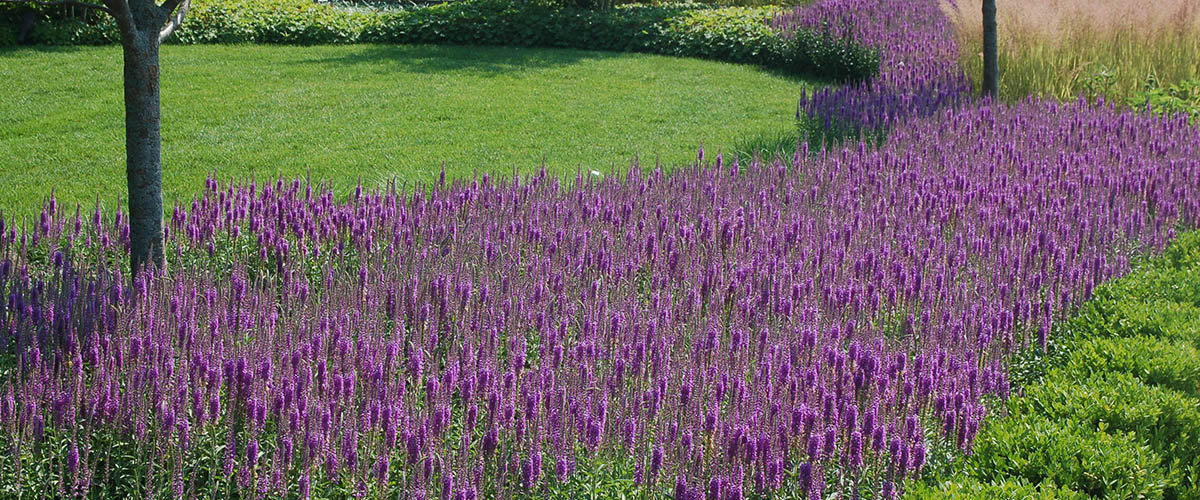
Perennials that provide purple flowers for evening gardens like Phlox paniculata can create a softer finish than a border that feels empty after sunset. Upright panicles, rounded daisies and low foliage add rhythm, texture and waves of colour.
Australia reverses the northern planting calendar, so overseas trials are evidence rather than a prescription. Local heat, humidity, winter chill and soil can change flowering dates, final height and whether a plant returns.
Why purple flowers work after sunset
Deep purple can lose detail in dim light, so mix saturated shades with silver foliage, pale lavender blooms and leaves that catch daylight. This creates contrast without a single dark mass. Moths and other nocturnal pollinators also favour open, pale flowers over dense, closed petals.
Colour must also appear in sequence. A continuous bloom checklist helps match early, middle and late displays, but its spring-to-frost dates should be translated for the southern hemisphere rather than copied. In many Australian gardens, phlox carries the early summer display while verbena and coneflower extend it.
Match plants to Australian light and soil
Check the site across seasons, especially sun from December to February and protection from winter frost. Melbourne's cool, wet winters and dry summers differ from Sydney's humid summers, Adelaide's heat and low humidity, and Brisbane's subtropical rain. Soil matters too: phlox prefers moisture-retentive ground, while several alpine-sage and cornflower-aster choices tolerate clay when drainage is sound.
Borrowing the visual principle behind adequate line spacing, give each perennial room to develop its intended shape and let air move through damp foliage. Crowding reduces display and can encourage mildew around phlox. At Australian nurseries, look for climate and soil guidance, and ask whether a cultivar has been grown locally rather than relying solely on a broad “perennial” label.
Set the evening benchmark with phlox paniculata
Use upright phlox as the benchmark: plants commonly reach 60–120 cm, prefer full sun and well-drained soil with steady moisture, and carry colour through the warmest part of the season in cool districts. Warm, humid areas can shorten its life, while poor airflow encourages powdery mildew. Staking, dividing crowded clumps and removing spent panicles improve both appearance and repeat flowering.
Choose cultivars for the space rather than the largest label. A compact variety suits a narrow bed; a tall selection needs a protected position because its stems can lean toward evening light. Pair phlox with contrasting flower forms and foliage, repeating one colour in several plants so the border reads as a connected planting rather than isolated specimens.
Tall flowers for the back of a border
Tall verbena provides the strongest vertical companion. Verbena bonariensis carries airy violet clusters on stems from roughly 90–180 cm and handles heat and dry soil once established, although it may behave as a short-lived perennial in frosty areas. Verbena hastata produces narrower violet spikes, prefers reliable moisture and can reach 1.5 m. Both benefit from support or an early pinch, and both may self-seed.
Echinacea purpurea adds large rose-purple daisies at a similar middle height, followed by seed heads for winter structure. Regional observations in the Chicago echinacea guide show why records of bloom start, duration and size are useful, but those results describe Illinois rather than Australian conditions. Use them to compare cultivars, then check local flowering calendars.
Lower plants for paths and outdoor rooms
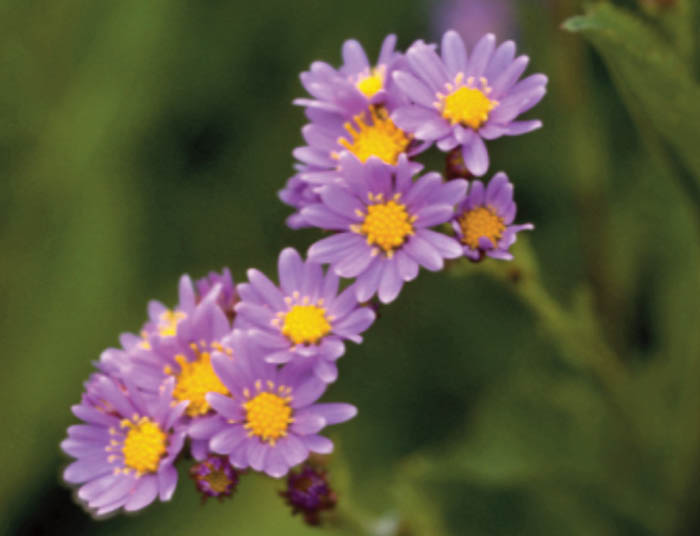
For lower layers, woodland sage brings upright violet spikes on 30–60 cm stems and performs well in sun and dry soil where drainage is good. Cornflower aster, Stokesia laevis, offers larger lavender-blue heads and accepts heavy clay better than many perennials. Both give a neat edge after taller flowers fade, although sage can be shorter-lived in humid districts.
Hardy geranium ‘Rozanne’ supplies a long succession of magenta-purple, dark-centred flowers over mounding foliage. It works in containers, along paths and in partial shade, though it can spread beyond its intended patch. These compact plants suit Australian courtyards, balconies and the outdoor rooms used for everyday barbecues; use free-draining potting mix and water early in the day.
Compare purple perennials before planting
Perennials in Focus records bloom period, colour, height and spread across multiple Chicagoland gardens, making its findings useful for judging regional consistency. Australian gardeners should use those observations to identify dependable traits, not to copy dates. Local garden societies, public gardens and climate-aware nurseries can provide the sharper site-specific advice this program cannot.
Check biosecurity and quarantine requirements before buying or moving plants. The Commonwealth's Biosecurity Act 2015 and state or territory rules can restrict imported or interstate material, while local councils may regulate certain weeds. Buy from reputable Australian nurseries, retain plant labels and confirm that each species is suitable for the destination garden.
| Perennial | Purple display | Typical height | Australian conditions | Watch for |
|---|---|---|---|---|
| Phlox paniculata | Dense lavender to violet panicles | 60–120 cm | Cool to temperate; steady moisture and winter chill | Mildew, flopping and weak returns in warm zones |
| Verbena bonariensis | Airy violet flower clusters | 90–180 cm | Hot, dry, sunny sites | Self-seeding; possible frost damage |
| Verbena hastata | Narrow violet flower spikes | 90–150 cm | Sunny sites with reliable moisture | Flopping and seedlings |
| Echinacea purpurea | Rose-purple ray petals | 60–120 cm | Full sun; heat tolerance once established | Flopping; shorter life in some warm areas |
| Salvia nemorosa | Dense violet flower spikes | 30–60 cm | Dry, sunny, well-drained soil | Shorter life in humid or wet soil |
| Stokesia laevis | Large lavender-blue flower heads | 45–75 cm | Sun and clay; useful in warm regions | Needs sharp drainage in cool, wet areas |
| Geranium ‘Rozanne’ | Magenta-purple saucer flowers | 30–50 cm | Sun to part shade | Can spread beyond its assigned space |
Use the shortlist to match mature size to the available space. Record the expected flowering window, water needs, winter behaviour and any reseeding habit before purchase; a plant that looks small at sale can dominate a bed by its second season.
Plant a sequence for long summer evenings
In warmer districts, let phlox lead the early-summer display, then carry colour through heat with verbena, sage and coneflower. In cooler southern gardens, the same sequence can begin with hardy geranium and extend into autumn. Pale companion flowers keep the palette legible at dusk and provide a softer landing around seating.
Prepare the bed with compost, install plants at the spacing shown on their labels, and water deeply before mulching. Keep irrigation directed at the soil, especially in humid areas, and remove fading blooms to encourage further buds. A low, warm light along a path can reveal flower texture without disturbing moths gathering nectar.
Choose one tall variety, one middle-height daisy and one low, mounding perennial, then repeat them across the view. Buy from a reputable local nursery, plant in autumn or at the start of the local growing season, and reserve a path-side seat for dusk. Your evening garden can then deliver colour, structure and pollinator activity long after the lawn has gone quiet.
In the Garden
Evaluator gardens are located across the Chicagoland area, representing a range of growing conditions. Visit our retail and wholesale partners to find trialled perennials for your own garden.
Retail & Wholesale: Hinsdale Nurseries (Willowbrook, IL), Mariani Nurseries (Kenosha, WI & Garden Prairie, IL), Northwind Perennials (Burlington, WI), The Growing Place (Aurora, IL).
Wholesale Only: Hinsdale Nurseries (Plano, IL), Intrinsic Perennial Gardens (Hebron, IL).
Our Evaluation Program
The 2017–2020 evaluation cycle included Agastache 'Blue Boa', Allium senescens 'Blue Eddy', Amsonia ciliata var. filifolia 'Georgia Pancake', Astilbe 'Chocolate Shogun', Boltonia astroides 'James Crocket', Brunnera 'Alexander's Great', and Geranium cinereum 'Jolly Jewel Purple'. Completed evaluations include Amsonia 'Blue Ice' (2004–07).
On April 10, 2020, the program published snapshot profiles for Vernonia lettermanii 'Iron Butterfly', Stokesia laevis 'Elf', Stachys officinalis 'Pink Cotton Candy', Lobelia 'Monet Moment', Helleborus 'Winter Thrillers', Geum 'Mai Tai', Geranium soboliferum 'Butterfly Kisses', Gentiana x intermedia 'True Blue', Eurybia divaricata, Asparagus 'Purple Passion', and Agastache 'Bolero'.
Browse the full collection of snapshots organized alphabetically — from A–D, E–H, I–Q, and R–Z — to find detailed performance data on perennials trialled across Chicagoland.