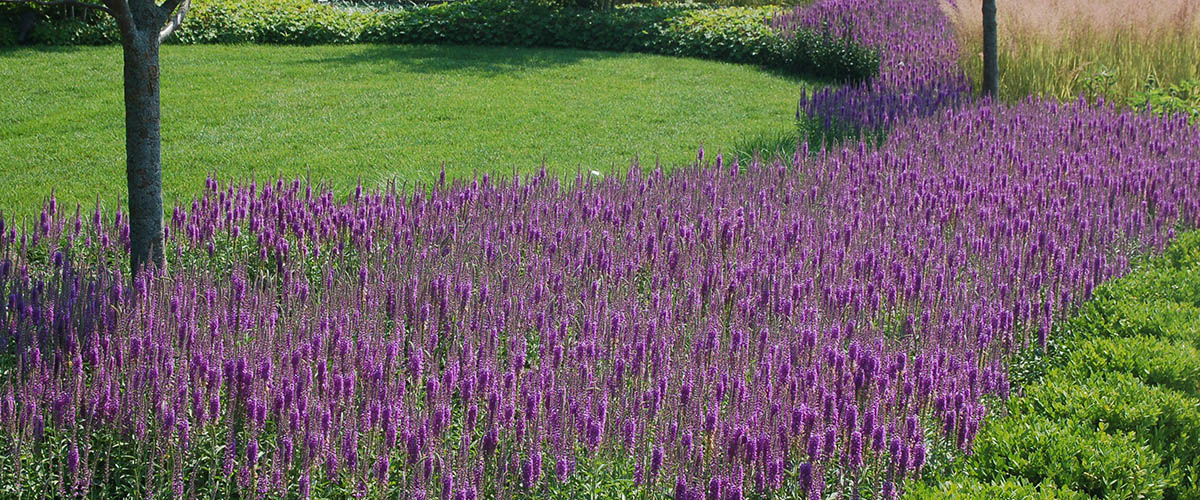
Evaluating Perennials for Chicagoland Gardens
Perennials in Focus is a plant evaluation program that examines new and underused plants for Chicagoland, the third largest metropolitan area in the country. A group of horticultural experts trials and evaluates plants at numerous locations across the region. Results help consumers, public gardens, growers, landscape designers, breeders, and other industry professionals make informed plant choices.
Autumn Perennials That Help Songbirds Build Their Nests
Autumn can look like the quiet season in a garden, but it is a valuable time to leave useful plant material standing. Dry stems, spent flower heads, seed fibres and fine grasses can become building supplies for small birds preparing nests or reinforcing sheltered roosts. A tidy garden is not always the most useful garden for wildlife.
For Australian gardeners, the timing needs a little thought. Autumn falls between March and May, while the Chicagoland trials behind many North American plant evaluations follow a very different seasonal rhythm. A perennial that holds its stems through a Chicago winter may break down quickly in a warm Brisbane garden or remain green in coastal New South Wales.
The best choices combine habitat value with reliable garden performance. Look for plants that produce slender fibres, soft down, papery bracts or sturdy stems, then allow some material to remain available rather than removing every faded flower. This approach suits suburban blocks, community gardens, school grounds and larger public landscapes.
The findings from a regional evaluation program can still be useful to Australian growers and gardeners when read as performance evidence rather than a ready-made planting list. Height, spread, flowering period and persistence help indicate how a plant may behave, while local climate, soil and bird species determine whether it earns a place in the garden.
Why Nesting Materials Matter
Many small birds use a mixture of materials when building a nest. Fine grass, bark strips, leaf fibres, moss, spider web and soft plant down may be woven together, with stronger stems forming the outer structure. Different species have different preferences, so a varied planting usually offers more value than a bed containing one fashionable perennial.
In Australian gardens, fairywrens, silvereyes, thornbills and other small insect-eating birds may forage around dense borders even when they are not nesting there. Providing materials close to cover can reduce the distance birds must travel across exposed lawns or paved areas. It also makes a garden more useful through the less colourful months.
Plant Features That Birds Can Use
Fine-stemmed ornamental grasses are among the most practical choices. Their leaves can provide flexible fibres, while dried flower stems offer longer strands for weaving. Native grasses such as kangaroo grass and selected tussocks may suit local conditions, although their mature size and water needs vary considerably between a dry Canberra block and a humid Darwin garden.
Plants with persistent seed heads also contribute texture and structure. Coneflowers, asters, yarrow and similar perennials can hold rigid stems into autumn, while plants with fluffy or silky seed structures may offer softer material. Avoid assuming that every feathery flower head is useful: birds still need a mix of length, strength and flexibility.
Some plants provide indirect benefits as well. Dense clumps create sheltered gathering points, and seed heads support insects that birds may collect as food. Lamb’s ear and other woolly-leaved plants can add soft fibres, though they should be grown where their spreading habit is manageable and the climate suits them.
Perennials Worth Considering
For gardens influenced by Chicagoland trial results, coneflower, sneezeweed, goldenrod, catmint, yarrow and ornamental grasses are useful groups to investigate. Their value lies in their habit: upright stems, durable seed heads and a tendency to remain standing after flowering. Exact cultivars matter, because some collapse quickly while others hold their shape for months.
Australian gardeners can pair those northern-hemisphere candidates with locally adapted options. Lomandra, Dianella, native poas and kangaroo grass can provide long leaves or fine stems, while everlasting daisies contribute papery flower structures. Check whether a plant is listed as invasive in your state, and favour stock from reputable native nurseries when choosing Australian species.
A plant does not need to be native to support birds, but it must be well behaved and suited to the site. In a Melbourne garden, a drought-tolerant tussock may outperform a moisture-loving perennial. In the Dandenong Ranges or a cool Tasmanian garden, the same plant may behave differently again. Trialling small numbers before mass planting is a sensible nursery practice.
Leaving Material Through Autumn
Resist cutting every perennial to ground level as soon as flowering ends. Leave a proportion of strong stems and seed heads standing through autumn, especially around the back of a border or beside dense shrubs. This gives birds access to materials while retaining some visual order for gardens where a completely wild look will not suit.
A staggered cutback works well. Remove damaged or diseased growth, clear paths and trim plants that obstruct windows, but leave healthy stems in discreet groups. In frost-prone areas, delayed cutting can also protect crowns from cold and wet. In warmer regions, inspect retained material regularly so mould does not spread through crowded clumps.
Water restrictions are part of gardening life in places such as Adelaide and Perth, so low-input planting is especially valuable. Mulch helps establish perennials, but avoid covering every open patch with thick material if ground-foraging birds use the soil surface. A few dry, sunny stems alongside low cover create a more varied habitat.
Managing A Bird-Friendly Border
Pesticide use can undermine the benefits of a nesting-material garden. Broad-spectrum sprays may remove insects that birds need for feeding, while sticky residues can contaminate foliage and stems. Use cultural controls first, monitor pest levels and choose targeted treatments only when necessary. This is particularly important in small urban gardens where birds have few alternative food sources.
Keep plant material clean and dry where possible. Wet, decaying stems are less useful for weaving and can harbour fungal problems. However, do not remove every fallen leaf: some leaf litter supports insects and helps retain moisture. A balanced border might contain standing stems, a small leaf-litter zone and a clear strip beside paths.
Local councils and Australian native-plant societies often promote habitat planting, but retail availability can vary. A plant sold widely at a large hardware nursery may be easy to find, while a less common grass may require a specialist grower. Ask nurseries about mature width, seedling spread and water requirements rather than relying on the label’s picture alone.
Reading Regional Trial Results
Evaluation data is most useful when it separates appearance from performance. Flower colour attracts attention, but stem strength, flowering duration, spread and winter persistence tell you whether a perennial will keep contributing after the display fades. These traits also help growers decide which plants deserve wider production.
The regional trial snapshots provide a useful model for comparing perennial characteristics across seasons and sites. Australian readers should treat the information as a starting point, then adjust for hemisphere, local rainfall, soil type and heat. A plant that remains upright in Illinois may need support in a summer storm on the New South Wales coast.
Look for repeated performance rather than a single striking result. If a plant holds its form across several gardens and seasons, it is more likely to be dependable in landscape use. For Australian retail and landscape professionals, that kind of evidence can support clearer plant descriptions and reduce the risk of recommending a perennial solely because it flowers well in a catalogue photograph.
Designing Small Spaces For Birds
Even a narrow courtyard can provide nesting supplies if plants are layered. Place a clump of fine grass near a compact shrub, add one upright seed-head perennial, and retain a few fallen leaves beneath the planting. Birds benefit from nearby cover because they can collect material without crossing a large exposed space.
Balconies and rental gardens need a different approach. Use large containers for tussock-forming grasses and leave trimmed stems in a small decorative bundle until birds have finished using them. Avoid loose synthetic fibres, plastic mesh and dryer lint, which can tangle around feet or retain moisture inside nests.
For larger blocks, repeat plant groups rather than scattering single specimens. Repeated clumps create continuity for birds and make maintenance easier for councils, schools and commercial landscapes. A simple mown edge or narrow path can keep the planting looking deliberate while allowing the centre of each group to remain undisturbed.
Choosing Plants For Your Site
The strongest plant palette balances nesting value, regional suitability and maintenance. Use the comparison below as a starting point, then confirm local availability and invasive-plant guidance before buying. “Autumn value” refers to the likelihood that useful stems, leaves or seed structures remain available after flowering.
| Plant group | Nesting contribution | Autumn habit | Australian considerations |
|---|---|---|---|
| Fine ornamental grasses | Flexible leaves and slender stems | Often holds form well | Choose species suited to local rainfall and avoid invasive varieties |
| Coneflowers and similar seed-head perennials | Rigid stems and durable heads | Upright after flowering | Best in temperate regions with good drainage |
| Yarrow and catmint | Fine stems and dense clumps | Can provide mixed soft and firm material | May need trimming in fertile soils |
| Native tussock grasses | Long leaves and sheltered structure | Often useful beyond flowering | Lomandra, Dianella and poas differ greatly in size and water needs |
| Everlasting daisies | Papery flower structures | Dried heads persist | Select species suited to the local climate and soil |
| Asters and goldenrod | Branched stems and insect habitat | Late-season structure | Check spread, height and state-based weed guidance |
Choose at least three plant forms rather than relying on one species. A fine grass supplies flexible strands, an upright perennial contributes firm pieces, and a dense clumping plant offers shelter. That combination is more resilient than a single row of ornamental seed heads.
Start with a modest trial, record flowering time and stem persistence, and observe which areas attract birds. When the results are clear, expand the best performers through divisions or nursery orders. Leave a portion of the autumn cutback for wildlife, and turn the rest into compost for the next season’s growth.
In the Garden
Evaluator gardens are located across the Chicagoland area, representing a range of growing conditions. Visit our retail and wholesale partners to find trialled perennials for your own garden.
Retail & Wholesale: Hinsdale Nurseries (Willowbrook, IL), Mariani Nurseries (Kenosha, WI & Garden Prairie, IL), Northwind Perennials (Burlington, WI), The Growing Place (Aurora, IL).
Wholesale Only: Hinsdale Nurseries (Plano, IL), Intrinsic Perennial Gardens (Hebron, IL).
Our Evaluation Program
The 2017–2020 evaluation cycle included Agastache 'Blue Boa', Allium senescens 'Blue Eddy', Amsonia ciliata var. filifolia 'Georgia Pancake', Astilbe 'Chocolate Shogun', Boltonia astroides 'James Crocket', Brunnera 'Alexander's Great', and Geranium cinereum 'Jolly Jewel Purple'. Completed evaluations include Amsonia 'Blue Ice' (2004–07).
On April 10, 2020, the program published snapshot profiles for Vernonia lettermanii 'Iron Butterfly', Stokesia laevis 'Elf', Stachys officinalis 'Pink Cotton Candy', Lobelia 'Monet Moment', Helleborus 'Winter Thrillers', Geum 'Mai Tai', Geranium soboliferum 'Butterfly Kisses', Gentiana x intermedia 'True Blue', Eurybia divaricata, Asparagus 'Purple Passion', and Agastache 'Bolero'.
Browse the full collection of snapshots organized alphabetically — from A–D, E–H, I–Q, and R–Z — to find detailed performance data on perennials trialled across Chicagoland.