Evaluating Perennials for Chicagoland Gardens
Perennials in Focus is a plant evaluation program that examines new and underused plants for Chicagoland, the third largest metropolitan area in the country. A group of horticultural experts trials and evaluates plants at numerous locations across the region. Results help consumers, public gardens, growers, landscape designers, breeders, and other industry professionals make informed plant choices.
Late-October perennials for pollinators before the first hard frost
When gardens wind down in autumn, the blossoms lingering into the final weeks before a hard frost become lifelines for pollinators preparing for winter. In the Chicagoland area, perennial evaluation programs track which plants keep flowering until the season cuts off, gathering information that identifies reliable perennials delivering late-season colour when little else remains. For gardeners planning borders that sustain insects through dormancy, these trial results are a practical shortcut to better choices.
Australian gardeners may wonder what relevance Chicagoland findings have to a Southern Hemisphere spring. Yet the methodology translates across hemispheres, particularly for those in cooler zones such as southern Tasmania, the hills around Melbourne, parts of the Adelaide Hills, or higher altitudes near Canberra. These areas experience late-spring frosts, and perennials resilient in Chicago are likely candidates for tough Australian conditions.
Ahead is a survey of six perennial categories earning attention in the trials, along with notes on how Australian gardeners might interpret the findings. The choices illustrate late-blooming, pollinator-friendly plants that hold value into the cooler shoulder of the year.
Why late-season nectar matters for pollinators
Pollinators approaching the end of the active season face a quiet crisis: nectar and pollen sources thin out just when they need them most. Bumblebee queens feed heavily before hibernation, solitary bees stockpile provisions in nests, and various butterfly species sip final reserves before migration or overwintering. Gardeners who plant only for the showy midsummer display leave pollinators hungry through the most critical weeks.
The Chicago program tracks bloom timing as a core data point, recording when each perennial starts and stops flowering across multiple seasons. The record shows which plants extend colour into October's second half, even as temperatures drop toward freezing. For Australian readers, this documentation provides confidence when selecting perennials, showing plants that perform reliably rather than relying on anecdotal claims.
Plants that bridge this gap share certain traits. They produce small, accessible flowers packed with nectar, or wide, flat blooms that double as landing pads. Many tolerate cooler nights, opening their petals even when morning dew has frosted the surrounding lawn.
Asters and Symphyotrichum varieties for cool-season bloom
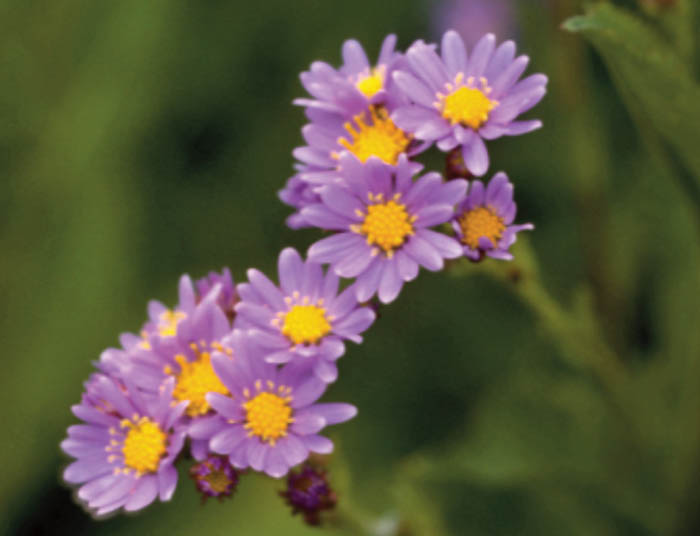
Asters have long been workhorses of the autumn border, but modern breeding has expanded the palette beyond familiar pink-and-purple daisies. The Chicagoland trials have highlighted several Symphyotrichum, the botanical name now widely accepted for what gardeners commonly call asters, that bloom deep into October. Heights vary from compact border plants to taller back-of-bed selections, and trial data records spread so gardeners can plan spacing with confidence.
These asters remain open through cool nights and overcast days when other pollinator plants have shut down, and honey bees, bumblebees, and small native bees visit them heavily. In Melbourne's cooler suburbs and in Hobart or higher parts of Canberra, they perform well, particularly where spring rainfall is reliable, sustaining bees through late October and early November.
For those interested in seeing exactly which aster cultivars the program has evaluated, the published trial database provides searchable records of bloom period, colour, height, and spread for every entry.
Goldenrod selections worth a second look
Goldenrod, or Solidago, has suffered for decades from an undeserved reputation as a hay-fever culprit, when the actual cause is ragweed flowering at the same time. The trial program has worked to rehabilitate goldenrod's image by highlighting compact, well-behaved cultivars that hold vivid yellow colour from early autumn until the first hard frost. Modern selections stay tidy in the border rather than spreading aggressively.
Bright yellow plumes of goldenrod pair beautifully with cooler purples of asters, creating an autumn combination that looks intentional rather than incidental. Bees visit goldenrod so heavily in autumn that the plants often hum with activity on sunny afternoons, even as nearby flowers have faded. Heights range from compact 60-centimetre forms to taller selections that anchor a back row.
Australian gardeners in cooler regions can grow several Solidago species and cultivars successfully, particularly in Tasmania, the Dandenong Ranges east of Melbourne, and parts of the Southern Tablelands of New South Wales. These areas share enough climatic overlap with the upper Midwest to give Chicago-trialled goldenrods a reasonable chance of performing well.
Sedum and late-flowering foliage plants
Sedums, now botanically classified largely under Hylotelephium, are among the most dependable late-season perennials, and the trials confirm how long their flowers persist. The classic 'Autumn Joy' remains a workhorse, but newer cultivars offer richer pink tones, burgundy seedheads, and more compact habits that suit smaller gardens. Their succulent foliage provides unusual resilience to dry conditions and frosty nights alike.
These sedums begin in late summer and continue through autumn, with petals deepening in colour and seedheads drying into attractive winter silhouettes. Trial data records the full progression, documenting when each cultivar reaches peak colour. For Australian gardeners, sedums grow well in many regions, particularly where drainage is sharp and summer rainfall is moderate, and they appear in many garden centres along the temperate southern coastline.
Propagation of these and other common perennials is straightforward, and the division tips guide walks through lifting, splitting, and replanting established clumps. Dividing perennials in autumn or early spring is a cost-effective way to expand a late-season border without buying new plants.
Japanese anemones and toad lilies for shaded corners
Not every late-season pollinator perennial thrives in full sun, and shaded corners deserve attention too. Japanese anemones carry their pink or white blooms on slender stems well into October, often persisting until the first hard frost cuts them down. They prefer the dappled light of a woodland edge or the cool side of a building, and they naturalise slowly into generous clumps over several seasons.
Toad lilies (Tricyrtis) bring an even more unusual late-season display, with their orchid-like spotted flowers appearing in the cooler weeks of autumn. They prefer shade and moisture, and their intricate blooms attract attention from gardeners and pollinators alike. While they don't match asters for sheer pollinator volume, they extend the season of interest in shaded areas where little else is blooming.
In Australian gardens, both Japanese anemones and toad lilies perform reliably in cooler regions. Gardeners around Melbourne, in the Yarra Valley, across much of Tasmania, and in Sydney's upper suburbs have long grown them successfully, and their preference for moist, shaded conditions matches the typical conditions of an Australian bush garden or a sheltered courtyard.
How Australian gardeners can use these trial findings
The trial program may be based in the American Midwest, but the disciplined record-keeping translates into practical guidance for gardeners anywhere. Check trial data for plants meeting your specific needs: bloom colour, height, spread, and importantly, the recorded bloom window. In southern Australia, late October and November correspond roughly to what October means in Chicago, so perennials blooming into Chicago's late October have an excellent chance of performing through an unpredictable Australian late spring.
Local realities matter. Soil type, summer rainfall, and summer heat all influence how a Chicago-trialled perennial performs in Australia. Gardeners in Perth's sandy soils will need to amend beds, while those in Brisbane's humid subtropics may find cool-loving species struggle through warmer months. Trial data complements local knowledge, providing baseline expectations of what a well-bred perennial delivers when conditions suit it.
Bunnings and similar retailers carry many of the genera discussed, while specialists like the Diggers Club and Garden Express stock a broader range of named cultivars. Native plant nurseries can also help combine introduced perennials with Australian natives flowering at similar seasons, creating borders that support honey bees and native pollinators through late spring.
Before any plant goes into the ground, the trial records reward a closer look. Browsing the database to compare bloom windows, heights, and regional performance takes only a few minutes and can save the disappointment of a plant that fades too soon. For those ready to expand an existing collection, the propagation guide walks through how to lift, divide, and replant clumps that have grown crowded. Combining careful selection with simple propagation builds a late-season border that sustains pollinators reliably, year after year.
In the Garden
Evaluator gardens are located across the Chicagoland area, representing a range of growing conditions. Visit our retail and wholesale partners to find trialled perennials for your own garden.
Retail & Wholesale: Hinsdale Nurseries (Willowbrook, IL), Mariani Nurseries (Kenosha, WI & Garden Prairie, IL), Northwind Perennials (Burlington, WI), The Growing Place (Aurora, IL).
Wholesale Only: Hinsdale Nurseries (Plano, IL), Intrinsic Perennial Gardens (Hebron, IL).
Our Evaluation Program
The 2017–2020 evaluation cycle included Agastache 'Blue Boa', Allium senescens 'Blue Eddy', Amsonia ciliata var. filifolia 'Georgia Pancake', Astilbe 'Chocolate Shogun', Boltonia astroides 'James Crocket', Brunnera 'Alexander's Great', and Geranium cinereum 'Jolly Jewel Purple'. Completed evaluations include Amsonia 'Blue Ice' (2004–07).
On April 10, 2020, the program published snapshot profiles for Vernonia lettermanii 'Iron Butterfly', Stokesia laevis 'Elf', Stachys officinalis 'Pink Cotton Candy', Lobelia 'Monet Moment', Helleborus 'Winter Thrillers', Geum 'Mai Tai', Geranium soboliferum 'Butterfly Kisses', Gentiana x intermedia 'True Blue', Eurybia divaricata, Asparagus 'Purple Passion', and Agastache 'Bolero'.
Browse the full collection of snapshots organized alphabetically — from A–D, E–H, I–Q, and R–Z — to find detailed performance data on perennials trialled across Chicagoland.