Evaluating Perennials for Chicagoland Gardens
Perennials in Focus is a plant evaluation program that examines new and underused plants for Chicagoland, the third largest metropolitan area in the country. A group of horticultural experts trials and evaluates plants at numerous locations across the region. Results help consumers, public gardens, growers, landscape designers, breeders, and other industry professionals make informed plant choices.
Bare-root perennials that bloom in their first year
Bare-root divisions offer a practical way to establish quality perennials without paying for a large potted plant. A healthy division can settle quickly, produce strong foliage and, with the right species and timing, deliver flowers during its first growing season. The result depends on the plant’s maturity, the number of crown buds, planting conditions and the climate where it is grown.
For Australian gardeners, first-year flowering is especially useful when filling a new border, refreshing a cottage garden or preparing a display for spring and summer. However, advice from a Chicagoland trial needs to be interpreted through local conditions, from cool winters in Ballarat and Canberra to humid summers in Brisbane and long dry spells around Adelaide and Perth.
What makes a division flower quickly
A bare-root division is a section of a mature perennial crown that carries roots and one or more viable growing points. The best flowering candidates have naturally fast establishment, a short juvenile period and flower buds that can form during the same season as new root growth. A small piece with few roots may survive, yet spend its first year rebuilding rather than blooming.
Look for divisions with firm crowns, several healthy buds and abundant, undamaged roots. For clumping plants, a division with two or three strong shoots generally has a better chance of flowering than a single offset. Daylilies, yarrow and many herbaceous salvias are dependable choices because they recover readily after division and can produce flower stems from a modest planting.
The timing of division matters just as much as the species. Plants lifted during dormancy have less foliage to support and can direct energy towards root establishment. In southern Australia, winter is the traditional bare-root season, while gardeners in frost-free districts may receive stock earlier or later. Plant promptly after delivery, since exposed roots can dry out rapidly in warm weather.
Reliable performers for an early display
Daylilies are among the strongest options for a first-season result. A healthy division of Hemerocallis may flower in its first summer, particularly if it contains multiple fans and is planted into full sun. Flowering can be lighter than in a mature clump, but the plants are forgiving and suit suburban gardens, roadside beds and larger landscape schemes.
Achillea, commonly called yarrow, is another useful choice. It establishes quickly in well-drained soil and often flowers in the first year from a robust division. Its flat flower heads attract beneficial insects, tolerate dry conditions once established and combine well with ornamental grasses or silver-leaved plants. In Australia, yarrow is particularly helpful in water-wise borders, though it can spread if conditions are highly favourable.
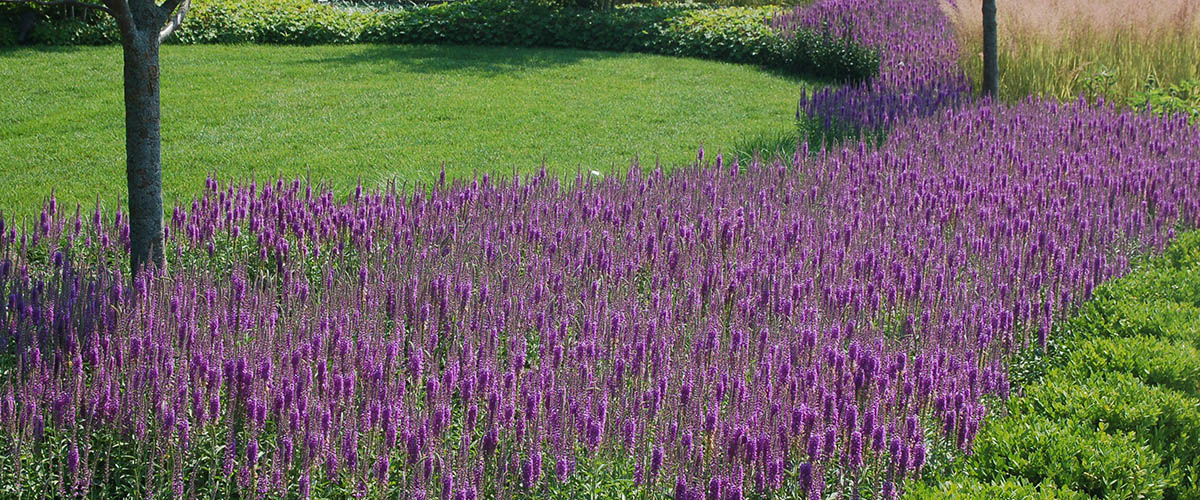
Nepeta, Salvia nemorosa and other compact salvias can also bloom early when divisions are large enough. Their flower spikes respond well to sunlight and a light trim after the first flush. Rudbeckia and some garden phlox may flower in the first season, although their performance varies with division size and planting date. Choose established stock rather than tiny fragments when an immediate display is important.
Plants that need more patience
Some popular perennials are poor choices when first-year flowers are the main objective. Peonies often take several seasons to settle, especially if planted too deeply or divided into small pieces. Many ornamental grasses spend their first year producing roots and foliage, with flowering delayed until the crown has expanded.
Echinacea can flower from a strong division, but young plants may produce only a few stems. Geraniums, heucheras and hostas may establish well while offering limited bloom in their first season. This does not make them inferior plants; it simply means they should be selected for structure, foliage or long-term performance rather than an instant floral effect.
When ordering, ask whether the material is a true crown division, a rooted cutting or a small tissue-cultured plant. These forms can differ considerably in maturity. A named cultivar supplied as a generous division is usually a safer choice for immediate flowering than a juvenile liner, even when both carry the same plant label.
Planting bare roots in Australian gardens
Prepare the site before the parcel arrives. Improve compacted soil with compost, remove perennial weeds and check drainage, since waterlogged ground can rot newly divided crowns. Most first-year flowering perennials need several hours of direct sun, although afternoon shade can protect plants in hot inland or western districts.
Set the crown at the depth it occupied previously. Deep planting is a common reason for weak growth and delayed flowers, especially with peonies, salvias and daylilies. Spread the roots through the soil rather than bending them sharply, firm the planting hole gently and water thoroughly to settle the soil around the roots.
In Melbourne, Hobart and Canberra, a winter-planted division may experience frosts before active growth begins, which is generally acceptable for hardy herbaceous species. In Sydney and Brisbane, warm winter conditions can encourage earlier growth, so avoid allowing roots to dry out. Gardeners in Perth and Adelaide should pay close attention to irrigation as spring temperatures rise, while a light mulch can reduce moisture loss without covering the crown.
Avoid heavy fertilising at planting. A high-nitrogen feed can produce soft foliage without encouraging reliable flowering. Use a balanced, controlled-release fertiliser only if the soil is deficient, and keep competing plants away from the new division during its first season.
Reading trial information before buying
A plant that flowers quickly in a Chicagoland garden may behave differently in Australia, yet regional trial data still provides valuable clues. Look for records covering bloom period, mature height, spread, habit, disease resistance and how consistently the plant performed across several gardens. These details help distinguish a genuinely reliable selection from one that produced a single impressive display.
The regional trial results published by Perennials in Focus can help growers and gardeners examine performance beyond a catalogue photograph. Pay particular attention to plants that flowered over more than one season and maintained good form without excessive staking or special treatment.
Translate those findings into local conditions rather than copying them directly. A perennial listed as a full-sun performer may need protection from intense afternoon heat in western Sydney. A plant that remained compact in a cool Midwestern summer could grow taller in a mild Australian winter. Soil type, irrigation restrictions, humidity and local pest pressure all influence the final result.
For retail nurseries and landscape professionals, clear labelling is valuable. State the division size, expected mature dimensions and likely flowering window instead of promising guaranteed blooms. Home gardeners can then choose a realistic mix: several proven first-year performers for immediate colour, supported by slower perennials that will provide greater presence in later seasons.
Managing expectations after the first flowers
First-year bloom should be treated as a sign of good establishment, not a measure of the plant’s final potential. Remove spent flowers if the plant begins to look exhausted, but leave enough foliage to replenish the crown. Regular watering during the first summer is more important than forcing extra blooms with fertiliser.
Some plants will flower briefly and then concentrate on root growth. Others may produce a generous first flush followed by a quieter second season while they expand. This is normal, particularly after a long period in storage or transport. Strong autumn growth and a healthy crown are often better indicators of future performance than a handful of early flowers.
A well-chosen division can therefore provide colour quickly while developing into a durable garden feature. Select mature stock, plant it at the correct depth, match it with the local climate and judge it across several seasons. Browse current trial findings, then source robust bare-root divisions from reputable Australian nurseries for the strongest chance of flowers in the first year.
In the Garden
Evaluator gardens are located across the Chicagoland area, representing a range of growing conditions. Visit our retail and wholesale partners to find trialled perennials for your own garden.
Retail & Wholesale: Hinsdale Nurseries (Willowbrook, IL), Mariani Nurseries (Kenosha, WI & Garden Prairie, IL), Northwind Perennials (Burlington, WI), The Growing Place (Aurora, IL).
Wholesale Only: Hinsdale Nurseries (Plano, IL), Intrinsic Perennial Gardens (Hebron, IL).
Our Evaluation Program
The 2017–2020 evaluation cycle included Agastache 'Blue Boa', Allium senescens 'Blue Eddy', Amsonia ciliata var. filifolia 'Georgia Pancake', Astilbe 'Chocolate Shogun', Boltonia astroides 'James Crocket', Brunnera 'Alexander's Great', and Geranium cinereum 'Jolly Jewel Purple'. Completed evaluations include Amsonia 'Blue Ice' (2004–07).
On April 10, 2020, the program published snapshot profiles for Vernonia lettermanii 'Iron Butterfly', Stokesia laevis 'Elf', Stachys officinalis 'Pink Cotton Candy', Lobelia 'Monet Moment', Helleborus 'Winter Thrillers', Geum 'Mai Tai', Geranium soboliferum 'Butterfly Kisses', Gentiana x intermedia 'True Blue', Eurybia divaricata, Asparagus 'Purple Passion', and Agastache 'Bolero'.
Browse the full collection of snapshots organized alphabetically — from A–D, E–H, I–Q, and R–Z — to find detailed performance data on perennials trialled across Chicagoland.