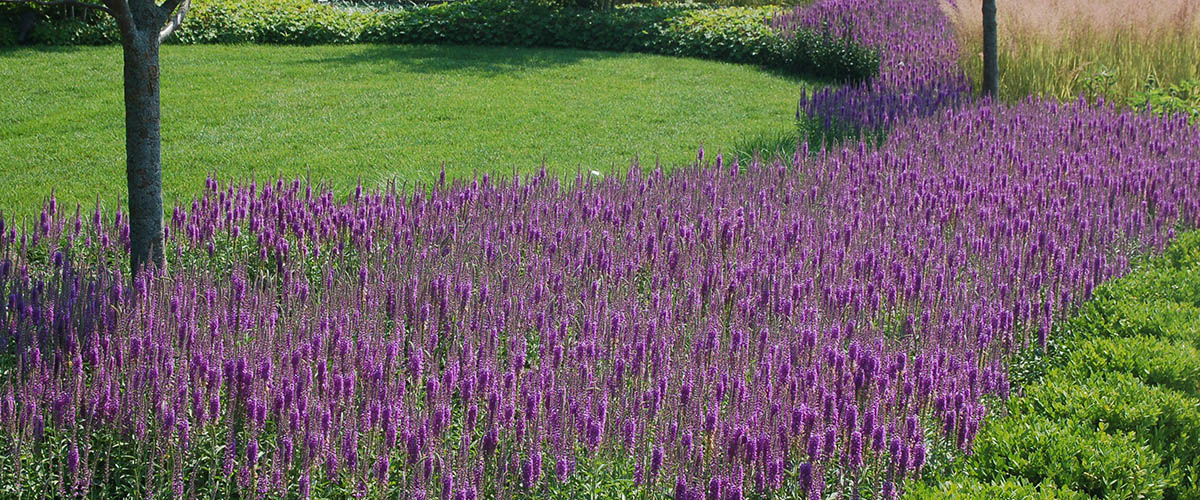
Evaluating Perennials for Chicagoland Gardens
Perennials in Focus is a plant evaluation program that examines new and underused plants for Chicagoland, the third largest metropolitan area in the country. A group of horticultural experts trials and evaluates plants at numerous locations across the region. Results help consumers, public gardens, growers, landscape designers, breeders, and other industry professionals make informed plant choices.
Perennials that keep blooming through the Midwest summer
A perennial border can look spectacular in early June and disappointing by mid-July if every plant reaches its peak at once. For Midwest gardens, a better approach is to combine dependable long-flowering varieties with plants that begin later, recover quickly after trimming, or continue producing new buds through changing weather.
The phrase “six weeks or more” describes a useful garden performance goal rather than a guarantee. Bloom duration depends on temperature, rainfall, soil fertility, sunlight, and whether spent flowers are removed. In the Chicagoland region, plants that hold color through heat, humidity, and occasional dry spells are especially valuable.
Regional trials provide a stronger basis for choosing these plants than catalog descriptions alone. Observations across multiple gardens can reveal which perennials maintain attractive foliage, resist flopping, and continue flowering after the first flush fades.
What a six-week display really means
A plant may bloom continuously for six weeks, flower in repeated waves, or offer a long sequence of individual blooms across an extended period. Daylilies, for example, open new flowers daily, while catmint and salvia often produce a major flush, respond to shearing, and flower again.
Bloom timing also varies by cultivar. A compact coneflower may begin in early July and continue into September, while another selection flowers later or pauses during a heat wave. When planning a border, consider the full display: flower production, plant shape, foliage quality, and the way neighboring plants take over as one variety slows down.
Long-blooming perennials are most useful when they fill a specific seasonal gap. Early-season catmint can connect spring bulbs to summer flowers, while coneflower and black-eyed Susan carry a sunny border into late summer. In shade, certain hardy geraniums and astilbes provide lasting color where many sun-loving plants struggle.
Reliable long-blooming choices
Threadleaf coreopsis is one of the strongest candidates for a sunny Midwest site. Its yellow flowers can begin in June and continue for many weeks, particularly when faded blooms are clipped. It prefers well-drained soil and can decline in heavy, constantly wet ground, so raised areas or amended planting beds suit it well.
Catmint, including compact cultivars, offers aromatic gray-green foliage and lavender-blue flowers from late spring into summer. Cutting the plant back by about one-half after its first major flush often encourages a fresh mound of foliage and another period of bloom. Salvia works similarly, with upright flower spikes that benefit from prompt removal once they fade.
Purple coneflower, black-eyed Susan, yarrow, and many daylilies are dependable choices for full sun. They tolerate ordinary garden conditions and support a succession of warm-season color. For lower-light borders, gardeners can compare plants discussed in this guide to shade-loving perennials, paying close attention to moisture and mature spread rather than flower color alone.
How the candidates compare
The strongest performers are not interchangeable. Some need regular deadheading, some prefer lean soil, and others remain attractive because their foliage holds up after flowering. Use the following characteristics as a starting point, then verify mature size and local trial observations before planting large groups.
| Perennial | Typical bloom window in the Midwest | Best setting | Useful maintenance |
|---|---|---|---|
| Threadleaf coreopsis | June into August | Full sun, well-drained soil | Shear after the first flush |
| Catmint | Late May through July, often reblooming | Full sun, average to dry soil | Cut back after flowering |
| Salvia | June through August in waves | Full sun, moderate drainage | Remove spent spikes |
| Purple coneflower | July into September | Full sun, average soil | Deadhead for tidiness; leave some seedheads |
| Black-eyed Susan | July into September | Full sun, average to dry soil | Divide when crowded |
| Hardy geranium ‘Rozanne’ types | June into September | Sun to part shade, evenly drained soil | Trim lightly if sprawling |
| Daylily | Several weeks, depending on cultivar | Sun to light shade | Remove old scapes and spent flowers |
| Yarrow | June into August | Full sun, lean, dry soil | Cut back after the first bloom |
Hardy geraniums are particularly useful where a soft, spreading habit is desirable. They can weave through the front of a border and continue producing blue, violet, or pink flowers for much of the summer. Their foliage also helps cover bare soil around taller plants.
Daylilies offer another type of extended performance. Individual flowers may last only a day, but a mature clump carries many buds. Selecting early-, mid-, and late-season cultivars can create a longer overall daylily display than relying on one variety.
Match plants to Midwest conditions
Sun exposure is the first filter. Most of the longest-blooming plants need at least six hours of direct light, although morning sun and bright afternoon shade can work for some hardy geraniums and daylilies. A plant labeled “full sun” may flower poorly if it receives only filtered light beneath mature trees.
Drainage matters just as much. Coreopsis, yarrow, catmint, and salvia generally perform best where winter moisture drains away quickly. Coneflower and black-eyed Susan tolerate a wider range of soils, but they still benefit from a bed that does not remain saturated after heavy rain.
In urban and suburban gardens, reflected heat from pavement can accelerate flowering and increase water demand. Mulch helps moderate soil temperature and moisture, but keep it slightly away from plant crowns. During establishment, deep watering once or twice a week is usually more effective than frequent shallow sprinkling.
Stretch the season with smart care
Deadheading is the simplest way to encourage a longer flower show. Remove faded flowers before the plant directs energy into seed production, especially on catmint, salvia, coreopsis, yarrow, and many coneflowers. Leave a portion of late-season seedheads if birds, winter structure, or natural reseeding are priorities.
The Chelsea chop, performed in late spring, can also improve summer performance. Cut selected stems back by roughly one-third to one-half before flower buds form. This produces shorter, sturdier plants and can delay flowering slightly, helping prevent the entire border from reaching peak bloom at the same time.
Avoid excessive nitrogen fertilizer. Rich feeding can create lush foliage and weak stems rather than more flowers. A soil test, compost added before planting, and a thin layer of organic mulch usually provide better long-term support. For additional timing strategies, use these methods for extending perennial bloom when combining plants with different flowering habits.
A practical planting checklist
A long-blooming border becomes more dependable when plant selection, spacing, and maintenance are planned together. Choose cultivars with evidence of strong regional performance, then repeat them in groups rather than scattering single specimens throughout the bed.
Use this checklist when developing a Midwest planting:
- Select at least three plants that flower during different parts of the growing season.
- Repeat reliable performers in drifts of three, five, or more for stronger visual impact.
- Match each perennial to its mature height, spread, drainage needs, and light exposure.
- Combine plants that rebloom after trimming with others that flower only once but provide strong structure.
- Leave space for air circulation and future clump expansion.
Record bloom dates, height, and maintenance results in your own garden. A plant that performs for eight weeks in one sunny, well-drained bed may bloom for a shorter period in compacted soil or heavy shade. These observations become especially useful when replacing weak performers or expanding a successful border.
Perennials that bloom for six weeks or more can anchor a Midwest garden from late spring through early fall, but the best results come from combining dependable genetics with suitable conditions. Explore region-specific evaluations from Perennials in Focus, compare plants by season and site, and use those findings to build a border that remains colorful well beyond its first flush of flowers.
In the Garden
Evaluator gardens are located across the Chicagoland area, representing a range of growing conditions. Visit our retail and wholesale partners to find trialled perennials for your own garden.
Retail & Wholesale: Hinsdale Nurseries (Willowbrook, IL), Mariani Nurseries (Kenosha, WI & Garden Prairie, IL), Northwind Perennials (Burlington, WI), The Growing Place (Aurora, IL).
Wholesale Only: Hinsdale Nurseries (Plano, IL), Intrinsic Perennial Gardens (Hebron, IL).
Our Evaluation Program
The 2017–2020 evaluation cycle included Agastache 'Blue Boa', Allium senescens 'Blue Eddy', Amsonia ciliata var. filifolia 'Georgia Pancake', Astilbe 'Chocolate Shogun', Boltonia astroides 'James Crocket', Brunnera 'Alexander's Great', and Geranium cinereum 'Jolly Jewel Purple'. Completed evaluations include Amsonia 'Blue Ice' (2004–07).
On April 10, 2020, the program published snapshot profiles for Vernonia lettermanii 'Iron Butterfly', Stokesia laevis 'Elf', Stachys officinalis 'Pink Cotton Candy', Lobelia 'Monet Moment', Helleborus 'Winter Thrillers', Geum 'Mai Tai', Geranium soboliferum 'Butterfly Kisses', Gentiana x intermedia 'True Blue', Eurybia divaricata, Asparagus 'Purple Passion', and Agastache 'Bolero'.
Browse the full collection of snapshots organized alphabetically — from A–D, E–H, I–Q, and R–Z — to find detailed performance data on perennials trialled across Chicagoland.