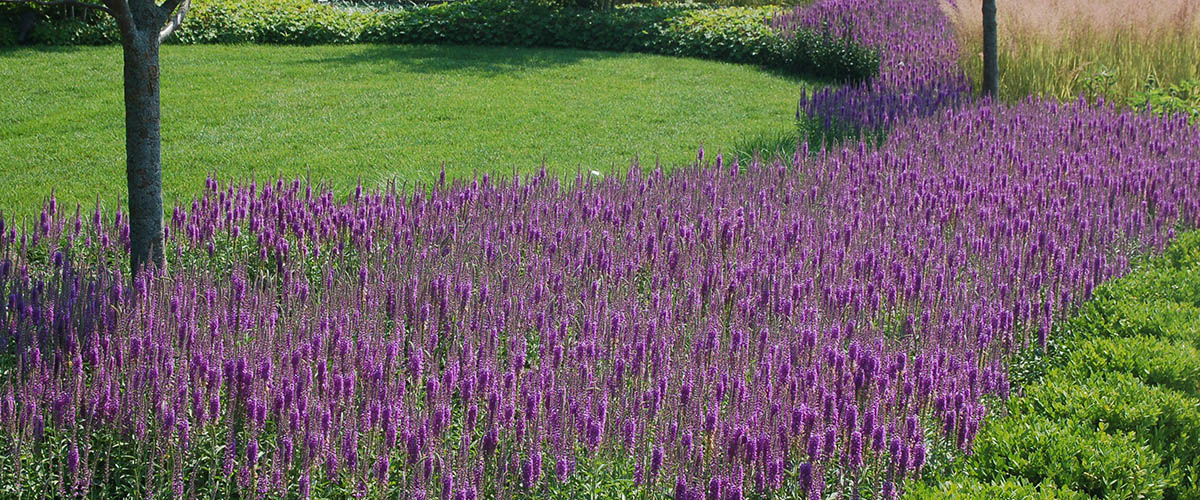
Evaluating Perennials for Chicagoland Gardens
Perennials in Focus is a plant evaluation program that examines new and underused plants for Chicagoland, the third largest metropolitan area in the country. A group of horticultural experts trials and evaluates plants at numerous locations across the region. Results help consumers, public gardens, growers, landscape designers, breeders, and other industry professionals make informed plant choices.
Long-Blooming Perennials For Chicagoland Gardens
A garden that stays colorful from June through September does not require constant deadheading. The strongest candidates combine a long succession of flowers with sturdy stems, attractive foliage, and the ability to keep producing new buds through heat, humidity, summer storms, and the occasional dry spell.
A strict interpretation of perennials that bloom continuously from June to September without deadheading is uncommon. Most plants flower in waves rather than opening every bloom at once, and performance changes with soil, exposure, winter survival, and cultivar. Still, several dependable perennials can provide an extended display with little maintenance in the Chicagoland region.
Regional observation is especially useful because catalog descriptions often reflect warmer climates or ideal growing conditions. The program’s history shows why repeated evaluation across gardens and seasons can offer more practical guidance than a single nursery listing.
What Long Blooming Really Means
Continuous bloom usually describes a plant that has flowers present for most of a defined season, rather than one that opens a single flush and stops. A perennial may produce a heavy display in June, pause briefly during extreme heat, and then continue with scattered blooms into September. That pattern can still create reliable garden color.
Deadheading removes spent flowers before they form seed, often encouraging additional buds. Plants such as catmint and many repeat-blooming salvias may flower longer after shearing, but they are not the only choices. Some perennials keep producing new flowers naturally, while others retain attractive seedheads after their strongest bloom period.
For a low-maintenance planting, consider the whole plant. A perennial with slightly fewer flowers but strong foliage, upright growth, and ornamental seedheads may contribute more to the landscape than a heavy bloomer that collapses after rain or needs repeated cutting.
Reliable Candidates For Extended Color
Threadleaf coreopsis, especially cultivars related to Coreopsis verticillata, is a useful choice for sunny, well-drained beds. Its fine foliage forms a soft mound, and yellow flowers can continue from early summer into fall. It generally needs no deadheading to remain attractive, although cutting it back lightly can tidy the plant later in the season.
‘Rozanne’ cranesbill is valued for its violet-blue flowers, spreading habit, and exceptionally long season. In a suitable site, it can begin in June and continue through September, sometimes longer. The plant works well at the front of a border or spilling over a retaining wall, though it can occupy considerable space.
Catmint, including Nepeta cultivars such as ‘Walker’s Low’, offers gray-green foliage and lavender-blue flower spikes. It often begins in late spring or early summer and keeps producing flowers into late summer. A midsummer trim can create a fresh flush, but gardeners seeking a no-deadheading planting can leave it in place and accept a looser second half of the season.
Long-blooming coneflowers, blanket flower, yarrow, and some garden phlox cultivars also deserve consideration. Their bloom timing varies, so they are best combined rather than planted as a single-species mass. Agastache can provide strong color and pollinator value from summer into early fall, although winter hardiness and drainage are important in Chicagoland.
Match The Plant To The Site
Sun exposure is the first filter. Coreopsis, yarrow, coneflower, blanket flower, Russian sage, and agastache perform best with at least six hours of direct sunlight. In lighter shade, cranesbill and some catmints may remain productive, but flowering usually decreases as competition from trees and nearby shrubs increases.
Drainage is equally important. Wet winter soil can damage agastache, lavender-like plants, and other species that tolerate summer drought but dislike saturated roots. Heavy clay should be improved gradually with compost and organic matter, while raised areas or slopes can provide better conditions for plants that need sharp drainage.
Soil fertility also influences flowering. Excess nitrogen can produce lush leaves and fewer flowers, while moderate fertility encourages a balanced plant. Water deeply during the establishment period, then allow plants suited to dry conditions to develop deeper roots rather than relying on frequent shallow irrigation.
How The Main Options Compare
The following comparison emphasizes typical garden behavior rather than guaranteed dates. Cultivar, planting location, winter conditions, and regional weather can shift bloom periods by several weeks.
| Perennial | Typical Flower Color | Approximate Bloom Window | Best Conditions | No-Deadheading Value |
|---|---|---|---|---|
| ‘Rozanne’ cranesbill | Violet-blue | June–September | Sun to part shade, moderate moisture | Excellent |
| Threadleaf coreopsis | Yellow | June–September | Full sun, well-drained soil | Very good |
| Catmint | Lavender-blue | June–September | Full sun, average to dry soil | Good |
| Yarrow | White, yellow, pink, red | June–September | Full sun, dry to average soil | Very good |
| Coneflower | Pink, white, orange, yellow | July–September | Full sun, average soil | Excellent |
| Agastache | Purple, orange, pink | July–September | Full sun, excellent drainage | Good |
| Russian sage | Blue-purple | July–September | Full sun, dry, well-drained soil | Excellent |
Use Regional Trial Evidence
A trial result is most helpful when it records more than the first day of bloom. Look for observations on flowering duration, plant height, spread, lodging, disease resistance, winter survival, and how the plant looks after its peak. These details help distinguish a genuinely persistent performer from a plant that blooms impressively for two weeks.
The regional trial snapshots can help gardeners compare traits observed in real evaluation settings. Pay attention to whether a plant stayed upright after storms, maintained foliage through August, and occupied the expected amount of space. Those characteristics have a direct effect on how much care a planting needs.
No single perennial should be expected to carry a border from June to September by itself. A garden with three or four overlapping bloom periods will usually look fuller and more stable. For example, cranesbill and coreopsis can establish early summer color, followed by coneflower, agastache, and Russian sage in the hotter months.
Design For A Continuous Display
Layer plants by height and spread so that the planting remains attractive between bloom cycles. Use cranesbill or catmint near paths, coreopsis and yarrow in the middle, and coneflower or Russian sage toward the back. Repeat the same plants in groups of three or more to create visual rhythm and make occasional gaps less noticeable.
Include plants with different flower shapes. Flat-topped yarrow supports beneficial insects and contrasts with the vertical spikes of agastache and catmint. Daisy-shaped coneflowers add a familiar midsummer form, while the fine foliage of coreopsis provides texture even when flowers are temporarily less abundant.
Allow room for mature width. Crowded plants compete for light and air movement, increasing the risk of weak stems and foliar disease. A correctly spaced planting may look sparse in its first year, but it will develop stronger form and require less division or corrective pruning later.
Build A Low-Maintenance Blooming Palette
Choose plants by season, site, and structure rather than flower color alone. A practical combination might include ‘Rozanne’ cranesbill for a spreading front layer, threadleaf coreopsis for early summer yellow, coneflower for midsummer presence, and Russian sage or agastache for late-season height.
Use these recommendations when assembling a low-maintenance border:
- Select at least three species with overlapping bloom windows instead of relying on one long-blooming cultivar.
- Give sun-loving plants six or more hours of direct light and avoid placing drought-tolerant perennials in winter-wet soil.
- Check mature height and spread before planting, especially with cranesbill, catmint, and Russian sage.
- Leave seedheads on coneflower, yarrow, and similar plants when winter structure and bird habitat are valuable.
- Evaluate regional performance over more than one season before using a new cultivar throughout the entire garden.
A no-deadheading design still benefits from basic seasonal care. Remove diseased foliage, water new plants during prolonged drought, and cut back damaged stems in spring or late winter. These tasks support plant health without turning the bed into a high-maintenance display.
Visit Perennials in Focus to compare regional observations, then select a small group of long-blooming perennials for your own Chicagoland conditions. Plant them with adequate space, record their flowering period and performance, and build future combinations around the plants that truly stay attractive through September.
In the Garden
Evaluator gardens are located across the Chicagoland area, representing a range of growing conditions. Visit our retail and wholesale partners to find trialled perennials for your own garden.
Retail & Wholesale: Hinsdale Nurseries (Willowbrook, IL), Mariani Nurseries (Kenosha, WI & Garden Prairie, IL), Northwind Perennials (Burlington, WI), The Growing Place (Aurora, IL).
Wholesale Only: Hinsdale Nurseries (Plano, IL), Intrinsic Perennial Gardens (Hebron, IL).
Our Evaluation Program
The 2017–2020 evaluation cycle included Agastache 'Blue Boa', Allium senescens 'Blue Eddy', Amsonia ciliata var. filifolia 'Georgia Pancake', Astilbe 'Chocolate Shogun', Boltonia astroides 'James Crocket', Brunnera 'Alexander's Great', and Geranium cinereum 'Jolly Jewel Purple'. Completed evaluations include Amsonia 'Blue Ice' (2004–07).
On April 10, 2020, the program published snapshot profiles for Vernonia lettermanii 'Iron Butterfly', Stokesia laevis 'Elf', Stachys officinalis 'Pink Cotton Candy', Lobelia 'Monet Moment', Helleborus 'Winter Thrillers', Geum 'Mai Tai', Geranium soboliferum 'Butterfly Kisses', Gentiana x intermedia 'True Blue', Eurybia divaricata, Asparagus 'Purple Passion', and Agastache 'Bolero'.
Browse the full collection of snapshots organized alphabetically — from A–D, E–H, I–Q, and R–Z — to find detailed performance data on perennials trialled across Chicagoland.