Evaluating Perennials for Chicagoland Gardens
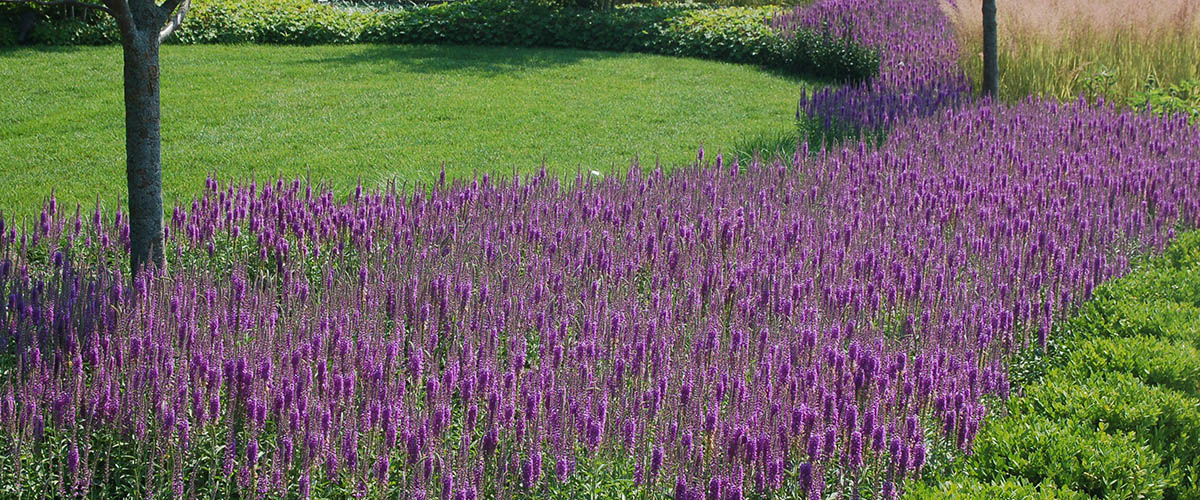
Perennials in Focus is a plant evaluation program that examines new and underused plants for Chicagoland, the third largest metropolitan area in the country. A group of horticultural experts trials and evaluates plants at numerous locations across the region. Results help consumers, public gardens, growers, landscape designers, breeders, and other industry professionals make informed plant choices.
Perennial Flowers That Recruit Nature’s Pest Patrol
Beneficial wasps are easy to overlook in a perennial border. Many are tiny, solitary insects with slender bodies, while larger hunting wasps may be mistaken for unwanted stingers. Yet these insects can make a valuable contribution to garden health by parasitizing or capturing aphids, caterpillars, beetle larvae, leafhoppers, and other plant-eating pests.
Adult wasps often visit flowers for nectar, while females search foliage, stems, soil, or sheltered plant growth for prey or hosts. A planting that supplies accessible blooms, nesting opportunities, and a steady succession of flowers can support these natural enemies throughout the growing season.
For gardeners in northern Illinois, plant selection also has to account for winter survival, clay soil, summer humidity, and fluctuating spring temperatures. Regionally tested perennials offer a stronger starting point than a flower chosen only for a catalog photograph.
How beneficial wasps support garden health
Parasitic wasps are among the most important natural pest-control insects in gardens. Species in several wasp families lay eggs in or on pests such as caterpillars, aphids, scale insects, and whiteflies. Their developing young consume the host, reducing pest populations before the next generation matures.
Predatory wasps work differently. Paper wasps, mud daubers, and many solitary wasps hunt insects and carry them back to nests as food for their young. A single nest may receive numerous caterpillars or other soft-bodied insects during the season, particularly when nearby flowers provide adults with fuel.
Flowers do not necessarily attract a wasp because a specific pest is present. Instead, they provide nectar and pollen that help adult insects live long enough to reproduce and hunt. Small, open flower clusters are especially useful because their short-tongued visitors can reach the food without navigating a deep floral tube.
Flower shapes that make nectar easy to reach
Flat-topped umbels, shallow composite flowers, and dense clusters are excellent choices for small parasitoid wasps. Yarrow, golden alexanders, feverfew, and many asters present nectar across a broad surface. These plants also attract hoverflies, lacewings, bees, and other beneficial arthropods, creating a more diverse food web.
Mountain mint, anise hyssop, and other members of the mint family offer repeated flowering and strong aromatic foliage. Their tubular blooms are accessible to many wasps and larger pollinators, although the plants can spread vigorously in fertile soil. Cutting back spent flowers can encourage a second flush and prevent unwanted seeding.
Late-season bloom is particularly valuable. Goldenrod and native asters flower when many spring and summer plants are fading, giving adult wasps access to nectar before frost. Gardeners comparing options for the region can also review winter-hardy perennials before committing space to a long-term planting.
Perennials worth evaluating in Chicagoland
No single perennial attracts every beneficial wasp. Flower size, bloom timing, height, moisture tolerance, and local microclimate all influence which insects appear. The plants below represent useful candidates for a layered planting, though performance should still be assessed in the specific conditions of each garden.
| Perennial | Flower access | Pest-control value | Siting note |
|---|---|---|---|
| Yarrow (Achillea millefolium) | Broad, flat flower heads | Supports small parasitoid wasps and predatory insects | Performs best in sun and well-drained soil |
| Golden alexanders (Zizia aurea) | Early, open umbels | Provides spring nectar when few perennials are blooming | Suits sun to light shade and average moisture |
| Mountain mint (Pycnanthemum spp.) | Dense clusters of small flowers | Draws many hunting and parasitoid insects | Give it room; excellent for larger borders |
| Anise hyssop (Agastache foeniculum) | Numerous small tubular flowers | Supplies summer nectar to wasps and other beneficials | Needs sun and good drainage |
| Boneset (Eupatorium perfoliatum) | Broad clusters of white flowers | Offers abundant late-summer nectar | Best in moist soil or rain-garden conditions |
| Goldenrod (Solidago spp.) | Branched sprays of tiny blooms | Important late-season resource for natural enemies | Choose a clump-forming cultivar for smaller gardens |
| New England aster (Symphyotrichum novae-angliae) | Many accessible composite flowers | Extends nectar availability into fall | Pinch or support tall plants in rich soil |
Plant trials can reveal differences that a hardiness zone alone does not show. A cultivar may survive winter but lodge in summer storms, bloom later than expected, or struggle in heavy clay. Tracking height, spread, flowering period, and disease resistance helps gardeners choose plants that will remain attractive and functional over several seasons.
Build shelter as well as nectar
A wasp-friendly border should include more than tidy flowering stems. Leave some hollow stems standing through winter, allow a portion of leaf litter to remain, and avoid covering every inch of bare or lightly mulched ground. Many solitary wasps nest in cavities, soil, or soft plant debris.
Shrubs, ornamental grasses, and upright perennials create protected hunting areas where wasps can rest between flights. Dense vegetation also supports the aphids, caterpillars, and other prey that sustain predatory species. The goal is a balanced habitat rather than a completely pest-free bed.
Use pesticides cautiously, especially broad-spectrum products applied while flowers are open. Spot treatment, hand removal, or tolerance of minor leaf damage usually protects beneficial insects better than routine spraying. If intervention is necessary, follow the product label and apply when pollinators and other flower visitors are least active.
Plan bloom from spring through fall
Golden alexanders and early-flowering native perennials can provide the first significant nectar sources after winter. Their spring bloom supports insects emerging before the main summer display, including small parasitoid wasps that may later respond to aphid outbreaks.
Summer is the season for abundance. Yarrow, mountain mint, anise hyssop, and other long-blooming plants can overlap to create a continuous nectar supply. Removing only damaged or finished stems, rather than cutting the entire planting back, preserves shelter and extends the usefulness of the border.
Goldenrod, boneset, and asters carry the sequence into fall. Combining several bloom periods is more dependable than relying on one heavily flowering species, particularly when hot weather or storms shorten a plant’s display.
Select plants by site and behavior
A wasp-supporting perennial still has to fit the garden. Match moisture needs to the site, allow mature spread, and consider whether the plant will tolerate reflected heat, compacted soil, or partial shade. Plants that are stressed or crowded produce fewer flowers and offer less habitat.
- Choose at least one early, one summer, and one late-season nectar source.
- Group several plants together so insects can forage efficiently.
- Include both flat flower clusters and small tubular blooms.
- Leave winter stems and some leaf litter for nesting and shelter.
- Avoid invasive species and select restrained cultivars for compact landscapes.
A mixed planting also makes pest activity easier to observe. Aphids gathered on a few stems may attract hoverfly larvae and parasitoid wasps, while chewed leaves can indicate that hunting wasps are removing caterpillars. These signs are evidence of an active ecosystem, not necessarily a failing garden.
Turn observations into better plant choices
The best perennial combinations emerge through observation over time. Record when each plant flowers, how long it stays attractive, whether it withstands Chicagoland winters, and which insects visit. Notes from several gardens and seasons can be more useful than a single performance claim.
Perennials in Focus helps turn those observations into region-specific information for gardeners, growers, designers, retailers, and public landscapes. Use its trial findings to build a resilient planting with dependable bloom, manageable growth, and habitat value.
Start with a small group of nectar-rich perennials, protect the insects that visit them, and document what performs in your own garden. Each season of careful observation can improve the next planting decision while giving beneficial wasps a stronger place in the landscape.
In the Garden
Evaluator gardens are located across the Chicagoland area, representing a range of growing conditions. Visit our retail and wholesale partners to find trialled perennials for your own garden.
Retail & Wholesale: Hinsdale Nurseries (Willowbrook, IL), Mariani Nurseries (Kenosha, WI & Garden Prairie, IL), Northwind Perennials (Burlington, WI), The Growing Place (Aurora, IL).
Wholesale Only: Hinsdale Nurseries (Plano, IL), Intrinsic Perennial Gardens (Hebron, IL).
Our Evaluation Program
The 2017–2020 evaluation cycle included Agastache 'Blue Boa', Allium senescens 'Blue Eddy', Amsonia ciliata var. filifolia 'Georgia Pancake', Astilbe 'Chocolate Shogun', Boltonia astroides 'James Crocket', Brunnera 'Alexander's Great', and Geranium cinereum 'Jolly Jewel Purple'. Completed evaluations include Amsonia 'Blue Ice' (2004–07).
On April 10, 2020, the program published snapshot profiles for Vernonia lettermanii 'Iron Butterfly', Stokesia laevis 'Elf', Stachys officinalis 'Pink Cotton Candy', Lobelia 'Monet Moment', Helleborus 'Winter Thrillers', Geum 'Mai Tai', Geranium soboliferum 'Butterfly Kisses', Gentiana x intermedia 'True Blue', Eurybia divaricata, Asparagus 'Purple Passion', and Agastache 'Bolero'.
Browse the full collection of snapshots organized alphabetically — from A–D, E–H, I–Q, and R–Z — to find detailed performance data on perennials trialled across Chicagoland.