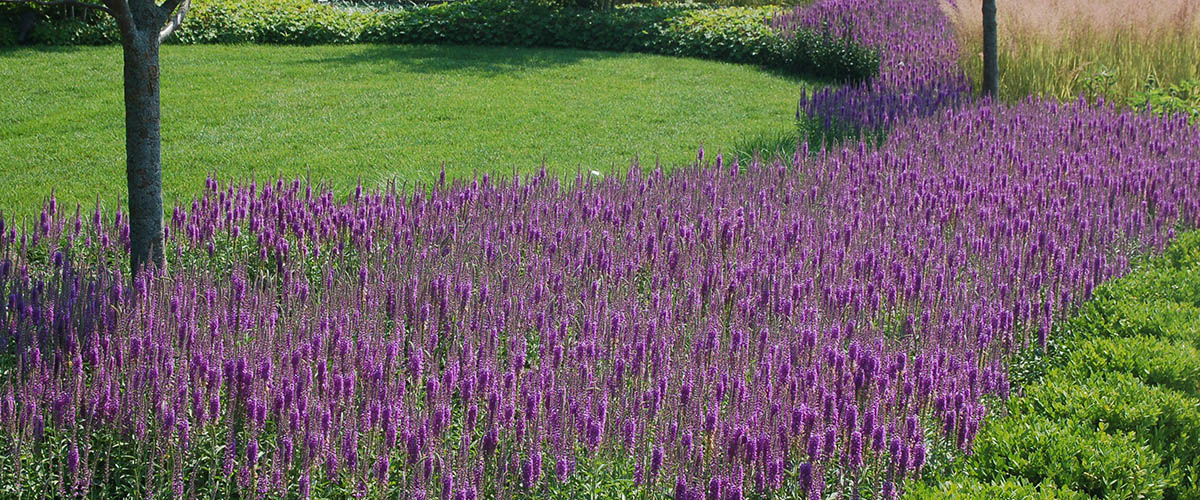
Evaluating Perennials for Chicagoland Gardens
Perennials in Focus is a plant evaluation program that examines new and underused plants for Chicagoland, the third largest metropolitan area in the country. A group of horticultural experts trials and evaluates plants at numerous locations across the region. Results help consumers, public gardens, growers, landscape designers, breeders, and other industry professionals make informed plant choices.
Perennials That Bring Beneficial Insects to Chicago Vegetable Gardens
A productive vegetable garden depends on more than sunlight, fertile soil, and regular watering. Pollinating bees, hoverflies, lacewings, lady beetles, parasitic wasps, and other helpful insects can improve fruit set while reducing pest pressure. Perennial flowers give these insects dependable sources of nectar, pollen, and shelter throughout the growing season.
In the Chicagoland region, perennial insectary plants must handle cold winters, humid summers, clay soils, spring floods, and occasional drought. The best choices are reliable garden performers that return each year without overwhelming vegetables or spreading aggressively into paths and planting beds.
A well-designed border can support beneficial insects from early spring through fall. It can also make a vegetable garden more attractive, add structure between crop rotations, and provide a living record of which plants thrive in local conditions. Regional evaluation work, such as the program’s history, helps gardeners look beyond catalog descriptions and focus on performance in real Midwestern landscapes.
Why Perennial Insectary Plants Matter
Beneficial insects use flowering plants in several ways. Adult lacewings, hoverflies, and many parasitic wasps feed on nectar or pollen, while their larvae consume aphids, caterpillars, thrips, and other garden pests. Small, open flowers are especially useful because insects with short mouthparts can reach the nectar easily.
Perennials also create continuity. Annual flowers may provide abundant blooms for a few weeks, but established perennial clumps can offer food and cover across several seasons. Their foliage shelters ground-dwelling predators, and their stems may provide overwintering sites for insects when they are left standing until late winter or early spring.
Flowers For Early And Late Season Activity
Spring-blooming perennials fill an important gap before many summer flowers open. Golden Alexander, wild columbine, creeping phlox, and native violets can support early bees and small flies. Golden Alexander is especially valuable because its flat flower clusters are accessible to a wide range of insects and bloom before many vegetable crops reach full size.
Late-season nectar is equally important. Asters, goldenrods, obedient plant, and sneezeweed can feed bees and migrating butterflies after early summer flowers fade. Several of these plants continue flowering when tomatoes and peppers are still producing, creating a useful overlap between vegetable harvest and fall insect activity.
Match Flower Form To Beneficial Insects
Flat-topped clusters, such as those produced by yarrow, dill relatives, and golden Alexander, provide convenient landing platforms for hoverflies, lacewings, tiny wasps, and beetles. These plants work well along the edges of raised beds, where their lower profile keeps them from shading sun-loving crops.
Tubular flowers attract insects with longer tongues, including bumble bees and some butterflies. Bee balm, anise hyssop, and native mountain mint offer strong summer nectar supplies. Mountain mint can spread steadily, so it is best planted where its expansion can be controlled or contained with a wide mowing strip.
| Perennial | Main bloom period | Helpful insects supported | Chicago garden notes |
|---|---|---|---|
| Golden Alexander | Late spring to early summer | Hoverflies, small bees, parasitic wasps | Handles average soil; prefers sun to light shade |
| Anise hyssop | Summer into early fall | Bumble bees, honey bees, butterflies | Upright habit; good near paths and tomatoes |
| Yarrow | Summer | Hoverflies, beetles, solitary bees | Drought tolerant and useful in lean soil |
| Bee balm | Summer | Bumble bees, butterflies, hummingbirds | Provide air circulation to limit mildew |
| Mountain mint | Mid to late summer | Native bees, wasps, butterflies | Vigorous; give it room or use a root barrier |
| New England aster | Late summer to fall | Native bees, migrating butterflies | Strong late-season food source; may need support |
| Goldenrod | Late summer to fall | Bees, beetles, flies, butterflies | Choose a garden-form cultivar with controlled growth |
Choose Plants For Chicago Soil And Exposure
Many Chicago-area vegetable plots contain heavy clay, compacted fill, or soil that stays wet in spring and dries hard in midsummer. Amendments should improve structure over time rather than create a rich pocket that encourages weak, floppy growth. Compost worked into the planting area can help, while a thick organic mulch reduces moisture swings and weed competition.
Match each perennial to its site before planting. Yarrow and anise hyssop prefer bright sun and well-drained soil. Bee balm tolerates consistent moisture but benefits from good air movement. Goldenrod and asters are adaptable, though taller varieties may require staking or placement at the back of a bed. Plants that repeatedly struggle in the wrong location provide fewer flowers and less habitat.
Build A Continuous Flowering Edge
A simple three-part design can keep resources available from spring through fall. Place early flowers near the vegetable garden entrance, summer bloomers along the main border, and tall late-season plants where they will not shade crops. Repeating several plants in groups of three or five creates a stronger visual display and helps insects locate food efficiently.
Leave narrow gaps between flower groups for access, mulch, or low-growing herbs. This makes it easier to harvest vegetables and inspect plants for pest outbreaks. Perennial borders should be close enough to serve the beds but far enough away that vigorous roots do not compete with shallow-rooted lettuce, onions, or young transplants.
Avoid relying on a single flower species. Weather can shorten one bloom period, and some plants may perform poorly in a particular season. A mixture of flower shapes, heights, and bloom times gives beneficial insects more dependable resources and makes the garden more resilient.
Use Habitat-Friendly Garden Practices
Flowering perennials cannot compensate for routine insecticide use that kills predators and pollinators alongside pests. Begin with monitoring: inspect the undersides of leaves, identify the insect, and determine whether damage is increasing before taking action. Aphids, for example, may disappear quickly after hoverfly larvae or lady beetles arrive.
Choose disease-resistant cultivars when possible, water at the soil surface, and avoid excessive nitrogen that produces lush growth attractive to aphids. Allow some perennial stems and seedheads to remain through winter. They provide shelter for overwintering insects and food for birds, while also offering valuable structure during the dormant season.
Cut back most stems in late winter rather than autumn, once temperatures have warmed and beneficial insects have emerged. A shallow layer of leaf litter can remain in protected areas. Keep paths clear and remove diseased plant material, creating a balance between tidy access and year-round habitat.
Planting Priorities For A Productive Garden
Start with a small combination that covers different seasons and insect needs. Golden Alexander supplies spring flowers, anise hyssop bridges summer, and aster or goldenrod carries nectar into fall. Add bee balm or mountain mint if the site has enough room and consistent moisture.
A practical planting sequence includes:
- Place early-flowering golden Alexander or native violets beside cool-season crops.
- Add anise hyssop, yarrow, or bee balm near tomatoes, peppers, cucumbers, and squash.
- Reserve the back of the border for asters and controlled goldenrod cultivars.
- Group plants in repeated clusters instead of scattering single specimens.
- Keep a section of bare, well-drained soil for ground-nesting native bees.
Observe the planting through several seasons and record bloom dates, plant height, disease resistance, and insect activity. Conditions vary widely among Chicago neighborhoods, so local performance is more useful than a plant label alone. Perennials that remain healthy, flower consistently, and fit the garden’s scale are the strongest long-term choices.
Choose a few dependable plants this season, place them where vegetables and flowers can share sunlight, and watch which insects arrive. With thoughtful perennial borders and reduced pesticide pressure, a Chicago vegetable garden can become a productive food-growing space and a durable refuge for the beneficial insects that help it thrive.
In the Garden
Evaluator gardens are located across the Chicagoland area, representing a range of growing conditions. Visit our retail and wholesale partners to find trialled perennials for your own garden.
Retail & Wholesale: Hinsdale Nurseries (Willowbrook, IL), Mariani Nurseries (Kenosha, WI & Garden Prairie, IL), Northwind Perennials (Burlington, WI), The Growing Place (Aurora, IL).
Wholesale Only: Hinsdale Nurseries (Plano, IL), Intrinsic Perennial Gardens (Hebron, IL).
Our Evaluation Program
The 2017–2020 evaluation cycle included Agastache 'Blue Boa', Allium senescens 'Blue Eddy', Amsonia ciliata var. filifolia 'Georgia Pancake', Astilbe 'Chocolate Shogun', Boltonia astroides 'James Crocket', Brunnera 'Alexander's Great', and Geranium cinereum 'Jolly Jewel Purple'. Completed evaluations include Amsonia 'Blue Ice' (2004–07).
On April 10, 2020, the program published snapshot profiles for Vernonia lettermanii 'Iron Butterfly', Stokesia laevis 'Elf', Stachys officinalis 'Pink Cotton Candy', Lobelia 'Monet Moment', Helleborus 'Winter Thrillers', Geum 'Mai Tai', Geranium soboliferum 'Butterfly Kisses', Gentiana x intermedia 'True Blue', Eurybia divaricata, Asparagus 'Purple Passion', and Agastache 'Bolero'.
Browse the full collection of snapshots organized alphabetically — from A–D, E–H, I–Q, and R–Z — to find detailed performance data on perennials trialled across Chicagoland.