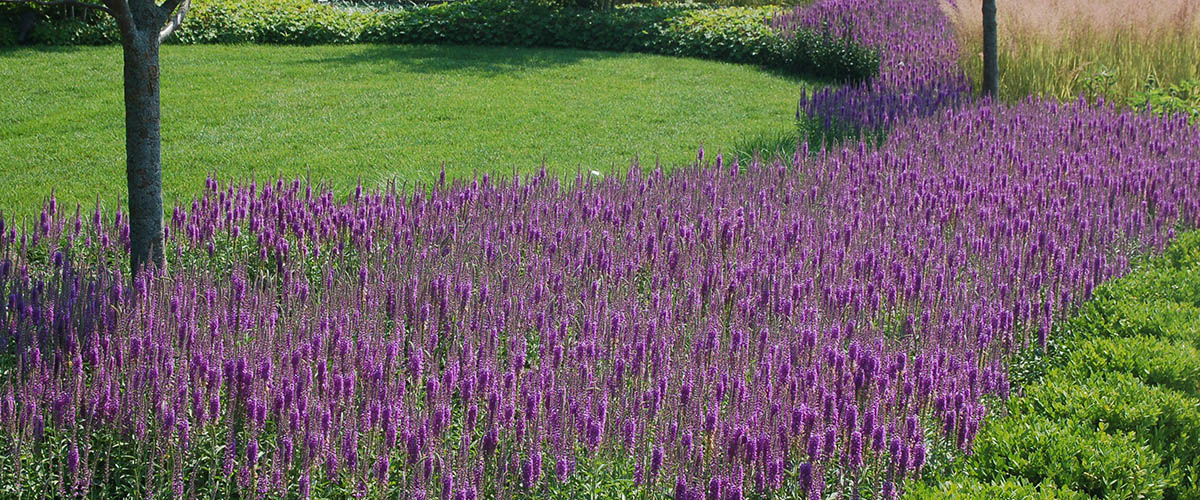
Evaluating Perennials for Chicagoland Gardens
Perennials in Focus is a plant evaluation program that examines new and underused plants for Chicagoland, the third largest metropolitan area in the country. A group of horticultural experts trials and evaluates plants at numerous locations across the region. Results help consumers, public gardens, growers, landscape designers, breeders, and other industry professionals make informed plant choices.
New Heliopsis Cultivars That Resist Powdery Mildew
New cultivars of Heliopsis that resist powdery mildew are attracting attention from gardeners who want a long season of golden flowers without sacrificing reliable foliage. Heliopsis helianthoides, commonly called false sunflower or oxeye, is valued for its daisy-like blooms, sturdy stems, and tolerance of heat once established. Its broad leaves can, however, develop a conspicuous white coating when summer weather turns humid and air movement is limited.
Resistance is best understood as reduced disease severity rather than complete immunity. A cultivar may remain attractive with a few spots or show mildew late in the season, while a highly susceptible selection can become heavily coated by midsummer. Local trials are especially useful because cultivar performance depends on regional weather, soil, spacing, and garden management.
For Chicagoland gardeners, the most useful comparison includes more than flower color. Plant height, branching, bloom timing, foliage density, winter survival, and the amount of powdery mildew present over several seasons all help identify a dependable false sunflower for the landscape.
Why Powdery Mildew Matters On Heliopsis
Powdery mildew appears as gray-white patches on leaves and stems. Unlike many fungal diseases, it does not require leaf surfaces to remain wet for long periods. Warm days, humid nights, crowded planting, and poor air circulation can create favorable conditions even during a relatively dry summer.
The disease usually affects appearance before it threatens the plant’s survival. Severe infection can reduce photosynthesis, cause lower leaves to yellow or drop, and make a planting look tired before the flowering season ends. A resistant cultivar keeps more clean foliage visible, which is particularly important in mixed borders where Heliopsis acts as a bold vertical and textural element.
Cultivars Worth Watching
‘Tuscan Sun’ remains a widely recognized compact selection, typically forming a shorter, well-branched plant with golden-yellow flowers. Its manageable size suits residential borders and containers, while its dense growth can make spacing important. In humid sites, even a relatively sturdy cultivar benefits from room for air to move through the crown.
‘Burning Hearts’ and ‘Bleeding Hearts’ bring burgundy, bronze, or red tones to the foliage and flower centers, creating more contrast than traditional yellow forms. Their disease response can vary with location and season, so they should be assessed for both ornamental color retention and leaf cleanliness. A plant that starts beautifully but becomes heavily mildewed may need a less prominent position.
‘Loraine Sunshine’ is often selected for its narrow, variegated foliage and bright flowers. ‘Sunstruck’ offers a compact habit with green-and-yellow foliage and a strong visual effect early in the season. Variegated cultivars can be especially useful where foliage matters as much as bloom, although dense, shaded planting may increase disease pressure.
Reading Regional Trial Results
Cultivar names and nursery descriptions provide a starting point, but replicated regional evaluation gives gardeners more meaningful information. The Perennials in Focus program records traits across gardens and seasons, helping users compare plants under conditions closer to those found in the Chicagoland area.
When reviewing trial data, look for repeated observations rather than a single favorable season. A cultivar that shows clean foliage during a dry year has not necessarily demonstrated strong resistance. Consistent performance during humid summers, combined with good flowering and winter survival, provides a stronger basis for selection.
The most useful records distinguish between early, moderate, and late-season symptoms. Some Heliopsis cultivars remain clean through peak bloom and develop mildew only as temperatures cool. That may be an acceptable performance in a home border, especially if the plant continues to flower and retains enough foliage to look presentable.
| Cultivar or Type | Notable Ornamental Traits | Disease-Resistance Considerations | Best Landscape Use |
|---|---|---|---|
| ‘Tuscan Sun’ | Compact habit, golden flowers, strong branching | Often considered a practical choice, but spacing still affects foliage quality | Front or middle border, containers |
| ‘Burning Hearts’ | Yellow blooms with dark foliage and stems | Monitor in humid sites; color and disease response may vary by season | Mixed perennial borders |
| ‘Bleeding Hearts’ | Rich foliage tones and warm flower centers | Evaluate late-season leaf health as well as early color | Pollinator beds and specimen groupings |
| ‘Loraine Sunshine’ | Variegated foliage, yellow flowers, upright form | Avoid dense shade and overcrowding to preserve clean foliage | Bright accents and formal borders |
| ‘Sunstruck’ | Compact, variegated foliage and golden blooms | Useful for small spaces; regional observation remains important | Containers, edging, small gardens |
| Species or tall forms | Large clumps, long stems, abundant yellow flowers | Greater canopy density may increase mildew pressure without airflow | Back of border, naturalistic plantings |
Matching Plants To The Site
Sun is the first line of defense. Heliopsis generally performs best with at least six hours of direct light, where stems stay sturdy and foliage dries quickly after dew or rain. Plants grown in bright shade may stretch toward light, produce weaker stems, and maintain humid pockets within the canopy.
Soil should drain well but retain enough moisture to support steady growth. Excessively dry plants can become stressed, while constantly wet soil weakens roots and encourages a lush, crowded canopy. A moderate layer of compost and a restrained approach to high-nitrogen fertilizer usually produce more balanced growth than repeated feeding.
Spacing deserves special attention with mildew-prone perennials. Follow the mature width listed for the cultivar rather than planting according to the size of the nursery pot. If a selection forms a dense clump, dividing it after several years can improve airflow and reduce competition for water and nutrients.
Cultural Practices That Support Clean Foliage
Water at the soil line in the morning when supplemental irrigation is needed. Overhead watering is not the primary cause of powdery mildew, but it can add humidity to an already crowded planting and spread other leaf diseases. Drip irrigation or a soaker hose keeps the surface of the foliage drier.
Remove badly infected leaves and clear fallen plant material at the end of the season. Cutting stems back after frost reduces overwintering debris and gives the bed a clean start in spring. Good sanitation will not transform a susceptible cultivar into a resistant one, but it can reduce the amount of disease pressure carried into the next season.
Avoid excessive pruning or shearing during the growing season. Heliopsis flowers on the current season’s growth, and light deadheading can extend display without creating a dense flush of weak shoots. If a plant repeatedly develops severe mildew despite adequate sun, airflow, and watering practices, replacement with a better-performing cultivar may be more effective than intensive treatment.
Selecting Heliopsis For Different Gardens
Small urban gardens benefit from compact cultivars such as ‘Tuscan Sun’ or ‘Sunstruck’. Their shorter stature makes them easier to combine with catmint, salvia, ornamental grasses, and other full-sun perennials. Variegated foliage also contributes visual interest before the first flowers open.
Large borders and public plantings can accommodate taller selections and species forms, but these should be given enough room to develop without being compressed by neighboring plants. Grouping several plants with similar mature heights often improves airflow and creates a more coherent display than mixing tall stems into a tightly packed low border.
For pollinator gardens, flower abundance and a long bloom period matter alongside leaf health. Heliopsis attracts bees and other flower visitors, and its seedheads can provide late-season interest if they are left standing. Choose cultivars that retain strong stems and attractive foliage so the planting continues to contribute after peak flowering.
Practical Choices For A Healthier Planting
- Start with cultivars that have shown clean or acceptably healthy foliage in repeated local observations.
- Give each plant its mature width, with extra space in humid, sheltered sites.
- Grow Heliopsis in full sun and avoid locations where fences, walls, or dense shrubs block airflow.
- Irrigate deeply at the soil surface and avoid routine high-nitrogen feeding.
- Remove severely infected leaves and clean up spent stems and debris after the growing season.
Use these principles when comparing plants at a nursery or planning a new border. Regional performance records, mature size, bloom timing, and foliage quality together offer a more reliable guide than a flower photograph alone. Explore current perennial evaluations, compare the traits that matter in your garden, and choose Heliopsis cultivars with the confidence that comes from evidence gathered in conditions close to home.
In the Garden
Evaluator gardens are located across the Chicagoland area, representing a range of growing conditions. Visit our retail and wholesale partners to find trialled perennials for your own garden.
Retail & Wholesale: Hinsdale Nurseries (Willowbrook, IL), Mariani Nurseries (Kenosha, WI & Garden Prairie, IL), Northwind Perennials (Burlington, WI), The Growing Place (Aurora, IL).
Wholesale Only: Hinsdale Nurseries (Plano, IL), Intrinsic Perennial Gardens (Hebron, IL).
Our Evaluation Program
The 2017–2020 evaluation cycle included Agastache 'Blue Boa', Allium senescens 'Blue Eddy', Amsonia ciliata var. filifolia 'Georgia Pancake', Astilbe 'Chocolate Shogun', Boltonia astroides 'James Crocket', Brunnera 'Alexander's Great', and Geranium cinereum 'Jolly Jewel Purple'. Completed evaluations include Amsonia 'Blue Ice' (2004–07).
On April 10, 2020, the program published snapshot profiles for Vernonia lettermanii 'Iron Butterfly', Stokesia laevis 'Elf', Stachys officinalis 'Pink Cotton Candy', Lobelia 'Monet Moment', Helleborus 'Winter Thrillers', Geum 'Mai Tai', Geranium soboliferum 'Butterfly Kisses', Gentiana x intermedia 'True Blue', Eurybia divaricata, Asparagus 'Purple Passion', and Agastache 'Bolero'.
Browse the full collection of snapshots organized alphabetically — from A–D, E–H, I–Q, and R–Z — to find detailed performance data on perennials trialled across Chicagoland.