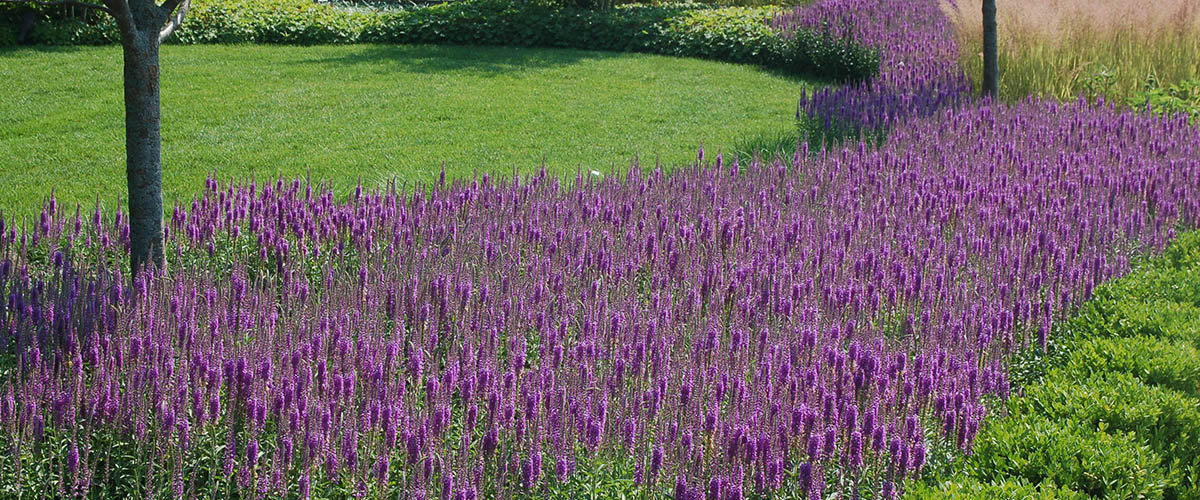
Evaluating Perennials for Chicagoland Gardens
Perennials in Focus is a plant evaluation program that examines new and underused plants for Chicagoland, the third largest metropolitan area in the country. A group of horticultural experts trials and evaluates plants at numerous locations across the region. Results help consumers, public gardens, growers, landscape designers, breeders, and other industry professionals make informed plant choices.
Root Hardiness of Paeonia lactiflora in Container Overwintering
Gardeners in cool parts of Australia often grow Chinese peonies permanently in pots or lift dormant crowns to avoid summer heat. Winter then raises a practical question: will the crown and roots remain viable? A plant can look completely dead above the compost while its underground framework survives, and a weak shoot in spring does not prove that freezing killed the roots.
Reliable answers require more than a minimum thermometer reading. Root-zone temperature must be considered alongside soil moisture, pot construction, winter duration and the plant’s condition in spring. The same measurement method can then help growers, public gardens and Australian gardeners determine which container treatments protect Paeonia lactiflora without concealing genuine differences in cold tolerance.
Why Containers Create a Harsher Winter
A plant growing in open ground gains insulation from surrounding soil, while a container exposes its crown and roots to rapid temperature changes. Terracotta pots generally heat and cool faster than thick plastic containers, and a small pot has less thermal mass than a large one. Snow or mulch may moderate these swings, but neither is equally effective across Australian climates.
Winter conditions vary sharply between Melbourne’s cool, often damp gardens and Canberra’s severe frosts and snow. Sydney normally offers milder temperatures but may not provide enough winter chill, while Brisbane’s hot summers can weaken plants before autumn growth ends. Adelaide combines cool winters with hot, dry summers. Record keeping should therefore capture the actual conditions around each collection rather than assigning every site to a broad climate zone. Teams can use standardised plant assessment tools to maintain consistent observations between sites.
Turning Winter Records Into a Hardiness Measure
Root hardiness is best expressed as a response to cold exposure, not as one universal temperature threshold. A useful record includes the minimum temperature near crown depth, the number of hours below freezing, the frequency of freeze–thaw cycles and the moisture condition of the potting mix. A single cold night may cause less damage than several mild freezes interrupted by sunny thaws.
Each pot should also have a defined score for spring performance. A possible local index runs from complete crown death at one end to strong shoots, multiple buds and renewed root growth at the other. Scores should be based on replicated plants, not one exceptional specimen. Destructive examination of a small sample after emergence can confirm whether roots remain white and firm, although lifting the entire trial would sacrifice the plants needed for further observations.
Chilling requirements, flowering quality and cold survival should remain separate measurements. A surviving plant in a mild climate may fail to flower because it received insufficient winter chill. That limitation does not mean its roots were injured by frost.
Designing a Repeatable Container Trial
Use uniform pots, potting mix, planting depth and initial plant size so that the treatment remains the main variable. Randomise pot positions within each site and move them periodically where one corner receives stronger wind or reflected heat. At least three dormant seasons provide a more dependable result than a single winter, particularly when conditions range from mild frost to severe cold.
Place temperature and moisture sensors at crown depth without allowing the probe to touch the pot wall. Record readings at short intervals, especially around clear, calm nights when radiation cooling can be strongest. A container exposed to the morning sun may thaw quickly but still suffer tissue injury, so thaw rate deserves attention as well as minimum temperature. Useful documentation practices from the Lamium ground-cover checklist illustrate how observations can be structured across multiple locations and observers.
Watching for Damage During Dormancy
Inspect pots during winter without repeatedly disturbing the crown. Waterlogged compost, a collapsed root ball or a loosened plant may indicate stress even before temperatures become severe. Dormant peonies should not be saturated, yet prolonged dry conditions can dehydrate fine roots and make them more vulnerable when cold arrives. Irrigation records should show when plants were watered, how much was applied and whether drainage was immediate.
Do not move apparently frozen stems indoors simply because they look black. Warm, dry indoor conditions can reduce residual moisture in the crown while roots have already been damaged. Keep failed and successful pots under the same spring assessment schedule. Emergence percentage, shoot length, bud count, crown firmness and signs of new roots provide a clearer picture than colour alone.
Comparing Practical Overwintering Methods
| Overwintering approach | Root-zone exposure | Record carefully | Practical value | Main limitation |
|---|---|---|---|---|
| Unsheltered container | Full local winter temperature and wind | Crown-depth minimum, freeze–thaw cycles and moisture | Best test of genuine container hardiness | Can expose trial plants to destructive extremes |
| Pot beside a sheltered wall | Reduced wind and altered radiation | Wall temperature, reflected heat and soil moisture | Useful for home-garden comparison | May conceal frost injury in a mild winter |
| Pot sunk partly into soil | More stable temperature and added insulation | Soil temperature, drainage and pot position | Low-cost protection in many gardens | Waterlogging and rot can increase |
| Ground-planted control | Natural soil buffering and winter conditions | Soil moisture, emergence and flower performance | Useful regional benchmark | Does not reproduce container conditions |
The appropriate method depends on the objective. Unsheltered, replicated pots provide the clearest evidence of root hardiness, while protected treatments show which approach maintains plant quality. A ground-planted control connects the experiment with familiar garden performance but cannot reproduce the thermal behaviour of a pot.
Waterproof covers should be used cautiously. They can keep rain from saturated compost, but they may also trap moisture around dormant crowns. Record every intervention, including covering, burying, moving or watering, because otherwise the apparent treatment effect may simply reflect different levels of care.
Translating Chicagoland Findings for Australian Gardens
Perennials in Focus evaluations from Chicagoland provide a valuable regional framework, including observations of bloom period, height, spread and survival. They do not transfer directly to Australia. Chicago winters can combine deep cold, snow, ice and repeated freeze–thaw cycles, whereas many Australian sites experience shorter freezes, persistent winter wet or mild conditions with limited chill. Local trials should interpret those differences rather than copy a predicted hardiness rating.
The local market also shapes how the research can be used. Australian nurseries commonly sell dormant peony crowns for autumn and winter planting, and peonies hold a strong place in Melbourne’s Cup Day tradition. Buyers should use reputable local suppliers, retain cultivar labels and follow Australian biosecurity requirements rather than importing soil or untreated plant material. In frost-free areas, trials should record winter temperatures alongside chill accumulation, while plants in Canberra and elevated southern sites need close attention to minimum temperatures and crown depth.
Australian records are most useful when they preserve units, management details and precise site conditions. Keep temperatures in Celsius, irrigation volumes in litres and notes in local time. Sharing the same form across a home garden, nursery and public collection would reveal whether a promising result holds across soil types, pot sizes and local weather patterns.
Turn Local Observations Into Useful Evidence
Start with a manageable group of healthy dormant crowns in similar containers, including a ground-planted control where space permits. Assign each pot a code, install sensors and establish the winter assessment scale before cold weather arrives. Record management actions weekly and reserve one plant in each treatment for a later root inspection.
Collaborate with nearby growers, garden groups, public gardens or plant nurseries to extend the trial across sites. Publish temperatures, soil moisture and spring survival alongside photographs and cultivar names so other Australian gardeners can interpret the results. During the coming dormant season, begin with the first winter’s minimum crown-depth temperature, moisture pattern and spring regrowth, then repeat the record through several seasons for a dependable assessment of container overwintering.
In the Garden
Evaluator gardens are located across the Chicagoland area, representing a range of growing conditions. Visit our retail and wholesale partners to find trialled perennials for your own garden.
Retail & Wholesale: Hinsdale Nurseries (Willowbrook, IL), Mariani Nurseries (Kenosha, WI & Garden Prairie, IL), Northwind Perennials (Burlington, WI), The Growing Place (Aurora, IL).
Wholesale Only: Hinsdale Nurseries (Plano, IL), Intrinsic Perennial Gardens (Hebron, IL).
Our Evaluation Program
The 2017–2020 evaluation cycle included Agastache 'Blue Boa', Allium senescens 'Blue Eddy', Amsonia ciliata var. filifolia 'Georgia Pancake', Astilbe 'Chocolate Shogun', Boltonia astroides 'James Crocket', Brunnera 'Alexander's Great', and Geranium cinereum 'Jolly Jewel Purple'. Completed evaluations include Amsonia 'Blue Ice' (2004–07).
On April 10, 2020, the program published snapshot profiles for Vernonia lettermanii 'Iron Butterfly', Stokesia laevis 'Elf', Stachys officinalis 'Pink Cotton Candy', Lobelia 'Monet Moment', Helleborus 'Winter Thrillers', Geum 'Mai Tai', Geranium soboliferum 'Butterfly Kisses', Gentiana x intermedia 'True Blue', Eurybia divaricata, Asparagus 'Purple Passion', and Agastache 'Bolero'.
Browse the full collection of snapshots organized alphabetically — from A–D, E–H, I–Q, and R–Z — to find detailed performance data on perennials trialled across Chicagoland.