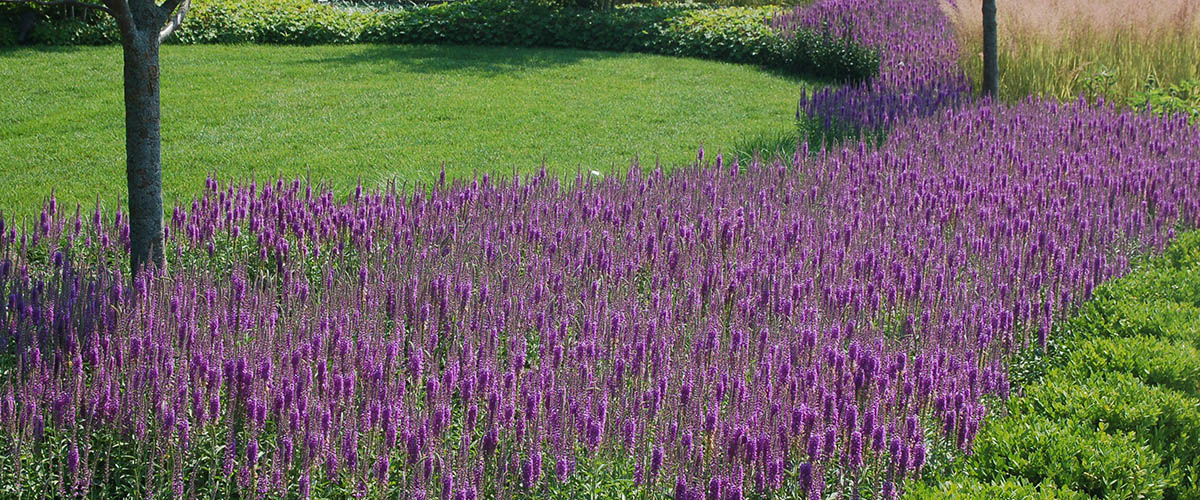
Evaluating Perennials for Chicagoland Gardens
Perennials in Focus is a plant evaluation program that examines new and underused plants for Chicagoland, the third largest metropolitan area in the country. A group of horticultural experts trials and evaluates plants at numerous locations across the region. Results help consumers, public gardens, growers, landscape designers, breeders, and other industry professionals make informed plant choices.
How Perennials Can Hide Utility Boxes And Other Eyesores
Utility boxes, meter housings, air-conditioning equipment, and other service fixtures are necessary parts of a functioning property, but they can interrupt an otherwise carefully designed landscape. A well-placed perennial planting can soften these views, integrate equipment into the garden, and add seasonal interest without creating a permanent maintenance obstacle.
The best screening plants do more than grow tall. They need to tolerate the site’s light, soil, moisture, winter conditions, and available space while leaving technicians enough room to work. In Chicagoland, where freeze-thaw cycles and heavy spring moisture influence plant performance, regional reliability matters as much as appearance.
A successful planting treats the utility feature as a practical design constraint rather than something to bury under vegetation. Layered foliage, attractive seed heads, and a long bloom season can make the area feel intentional while preserving access and safety.
Start With Access And Safety
Before selecting plants, identify how the equipment opens and how much working space service crews require. Utility companies may need clear access around boxes, doors, vents, meters, or underground lines. Never plant directly on top of marked utilities, and contact the appropriate locating service before digging.
A planting that looks effective in May may become a problem by late summer if stems block a door or fall across a service panel. Keep the front and sides of the fixture open according to local requirements. Lower-growing plants can frame the box, while taller perennials are positioned toward the back or along the least obstructed edge.
Avoid aggressive vines, dense woody growth, and plants that spread into hinges or vents. Also consider irrigation and mulch. Wet mulch piled against a housing can encourage deterioration, while automatic irrigation aimed at electrical equipment creates an unnecessary maintenance concern.
Match Plants To The Site
Light is usually the first major decision. A sunny utility strip can support ornamental grasses, aromatic catmint, yarrow, false indigo, and many prairie-style perennials. Part-shade locations may be better suited to coral bells, woodland phlox, Solomon’s seal, or Japanese forest grass, depending on soil moisture.
Measure the mature height and spread rather than relying on the size of a nursery container. A plant that is 12 inches wide at installation may reach three feet across within a few seasons. Choose cultivars with predictable habits, especially where a narrow bed sits between a utility box and a walkway.
Soil conditions deserve equal attention. Many service areas are compacted during construction and may drain poorly or become unusually dry beneath roof overhangs. Improve soil only where digging is permitted, and select durable plants when the bed cannot be deeply amended. Regional trial information, such as the findings shared through regional plant evaluations, can help identify perennials with dependable performance in the Chicagoland climate.
Build A Layered Screen
A single row of identical plants often looks artificial and can expose the utility feature in winter. A more natural arrangement combines a low edging layer, a middle group of flowering perennials, and a taller seasonal screen placed where it will not interfere with access.
For sunny sites, short sedges or creeping ground covers can soften the bed’s edge. In front of the box, compact catmint, prairie dropseed, or coral bells may provide texture without overwhelming the equipment. Behind or beside it, consider upright perennials such as switchgrass, blazing star, New England aster, or Culver’s root.
Use repetition to make the planting look designed. Three or five plants of one species usually create more visual unity than a collection of unrelated singles. Repeat colors already found elsewhere in the garden, then use foliage shape and seed heads to maintain interest after flowering ends.
| Site condition | Perennials to consider | Screening role | Design notes |
|---|---|---|---|
| Full sun, average soil | Catmint, yarrow, blazing star | Low to medium-height cover | Shear catmint after its first flush for fresh growth |
| Full sun, dry or compacted soil | Prairie dropseed, little bluestem, false indigo | Texture and seasonal structure | Use grasses away from doors and service panels |
| Full sun, moist soil | Switchgrass, Culver’s root, New England aster | Taller background screen | Allow room for mature spread and winter stems |
| Part shade, evenly moist soil | Coral bells, woodland phlox, Solomon’s seal | Low layered screening | Combine foliage colors without crowding the box |
| Shade, average moisture | Japanese forest grass, sedges, foamflower | Soft edging and ground-level concealment | Best for reducing visual contrast rather than creating a tall screen |
Choose Plants With Four-Season Value
Flowers attract attention during the growing season, but foliage and structure determine whether an eyesore remains disguised in early spring and late fall. Evergreen or semi-evergreen sedges, persistent grass clumps, and sturdy seed heads can keep the planting visually useful after frost.
Plants with strong stems are especially valuable in snowy areas. Switchgrass, little bluestem, coneflower, and asters can hold their form into winter, creating a textured veil instead of a bare patch. Cut them back in late winter or early spring when wildlife value and winter structure are no longer needed.
Include plants with different bloom periods to prevent the screen from looking empty between major displays. Catmint and yarrow can begin the season, followed by coneflowers, blazing star, and ornamental grasses, with asters extending color into autumn. This sequence makes the utility area part of the garden’s rhythm.
Keep Maintenance Manageable
Utility screening should reduce visual distraction without creating a difficult corner to maintain. Avoid packing plants too tightly at installation. Proper spacing improves air circulation, reduces disease pressure, and allows each perennial to develop its intended form.
Plan for occasional cutting back, division, and weed removal. Plants that flop across a path or lean into equipment may need support or a different location. Ornamental grasses generally benefit from one annual cutback, while many flowering perennials can be divided every few years if clumps become crowded.
Mulch can suppress weeds and make the planting look finished, but leave a clear margin around the box. Use a moderate layer rather than creating a deep mound. If the area is difficult to reach with a hose or tools, choose drought-tolerant plants and group them according to watering needs.
Design Around The Eye, Not The Box
The most convincing disguise does not always place the tallest plant directly in front of the utility feature. Instead, use plants to redirect the eye toward a stronger garden element, such as a path, specimen perennial, container, or curved bed edge. A gentle planting line can make the service area appear integrated into the overall layout.
Color can help reduce contrast. Dark green foliage may make a gray box less conspicuous in a shaded setting, while silver foliage can connect it to a sunny, gravelly bed. Warm flower colors draw attention, so reserve them for areas you want to emphasize rather than placing them immediately beside an eyesore.
Hardscape can support the planting without dominating it. A narrow path, low edging, or layer of decorative stone may define the service zone and keep mulch from spreading. These elements should frame the perennials, not block access or create a trip hazard.
Planting Choices That Hold Up
- Confirm utility locations, clearance rules, and access requirements before digging or installing a permanent bed.
- Select plants based on mature height and spread, then leave an unobstructed service corridor around doors and panels.
- Combine low foliage, mid-height bloomers, and taller grasses or seed-bearing perennials for a layered screen.
- Choose several bloom periods and durable winter forms so the area remains attractive beyond peak summer.
- Group plants with similar light, moisture, and maintenance needs to simplify long-term care.
A small planting can make a large visual difference when the scale is right. For a narrow space, three compatible perennials repeated in drifts may be more effective than a crowded mix. For a broad equipment area, staggered groups can create depth while leaving clear routes for inspection and repair.
Review the planting throughout the first full year. Note where snow, runoff, shade, or reflected heat changes conditions, and watch how quickly each perennial reaches its mature size. Regional performance records and observations from multiple gardens provide useful context when deciding which plants deserve a permanent place.
Use these principles to turn utility boxes and other service fixtures into manageable parts of the landscape. Select dependable perennials, preserve required access, and build a layered planting that offers color, texture, and structure through the seasons. Explore region-specific perennial evaluations, then put the findings to work in a screening bed suited to your own Chicagoland garden.
In the Garden
Evaluator gardens are located across the Chicagoland area, representing a range of growing conditions. Visit our retail and wholesale partners to find trialled perennials for your own garden.
Retail & Wholesale: Hinsdale Nurseries (Willowbrook, IL), Mariani Nurseries (Kenosha, WI & Garden Prairie, IL), Northwind Perennials (Burlington, WI), The Growing Place (Aurora, IL).
Wholesale Only: Hinsdale Nurseries (Plano, IL), Intrinsic Perennial Gardens (Hebron, IL).
Our Evaluation Program
The 2017–2020 evaluation cycle included Agastache 'Blue Boa', Allium senescens 'Blue Eddy', Amsonia ciliata var. filifolia 'Georgia Pancake', Astilbe 'Chocolate Shogun', Boltonia astroides 'James Crocket', Brunnera 'Alexander's Great', and Geranium cinereum 'Jolly Jewel Purple'. Completed evaluations include Amsonia 'Blue Ice' (2004–07).
On April 10, 2020, the program published snapshot profiles for Vernonia lettermanii 'Iron Butterfly', Stokesia laevis 'Elf', Stachys officinalis 'Pink Cotton Candy', Lobelia 'Monet Moment', Helleborus 'Winter Thrillers', Geum 'Mai Tai', Geranium soboliferum 'Butterfly Kisses', Gentiana x intermedia 'True Blue', Eurybia divaricata, Asparagus 'Purple Passion', and Agastache 'Bolero'.
Browse the full collection of snapshots organized alphabetically — from A–D, E–H, I–Q, and R–Z — to find detailed performance data on perennials trialled across Chicagoland.