Evaluating Perennials for Chicagoland Gardens
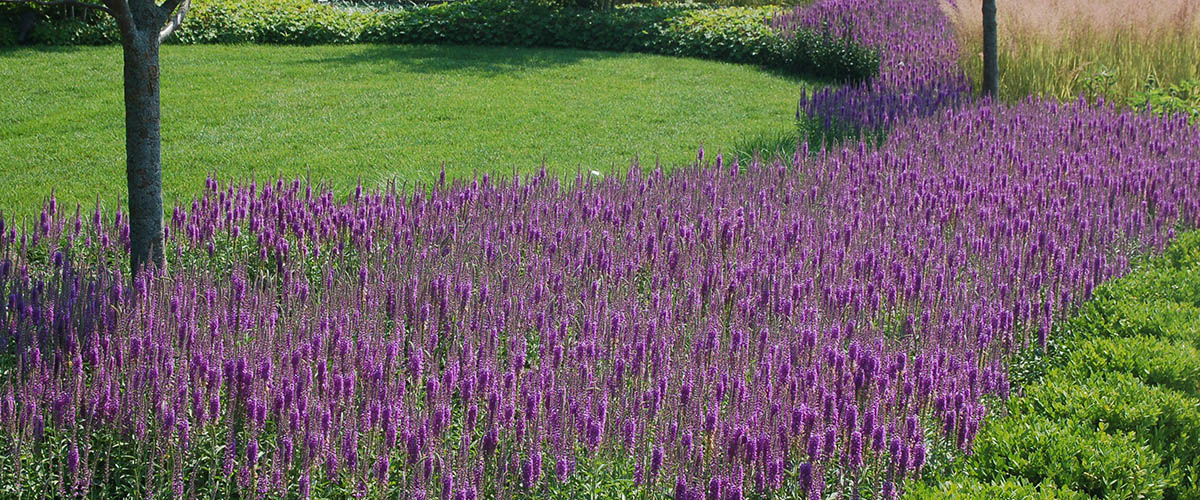
Perennials in Focus is a plant evaluation program that examines new and underused plants for Chicagoland, the third largest metropolitan area in the country. A group of horticultural experts trials and evaluates plants at numerous locations across the region. Results help consumers, public gardens, growers, landscape designers, breeders, and other industry professionals make informed plant choices.
Create a striking perennial focal point in a small urban front yard
A small front garden can have the visual confidence of a much larger landscape when one plant group, feature pot or sculptural arrangement takes the lead. Perennials are especially useful because they return season after season, soften hard surfaces and provide changing colour without requiring a complete redesign each year.
For Australian homes, the best focal point balances beauty with practical limits. A narrow Melbourne terrace, a sunny Adelaide frontage and a humid Brisbane entry will need different plants and maintenance routines. Start with the site, then select plants for reliable performance rather than choosing solely by flower colour.
Start with the view from the street
Stand across the road, at the gate and inside the front door to see where attention naturally falls. A focal point should be visible from at least one important viewpoint, but it should not block the path, obscure house numbers or interfere with sightlines for vehicles and pedestrians. In a compact garden, a single strong composition usually works better than several competing features.
Everyday habits should shape the layout. Leave room for wheelie bins, parcel deliveries, children arriving home from school and visitors stepping out of a car. On narrow suburban blocks in Sydney or inner Melbourne, a generous planting bed may be less practical than a tall pot beside the entry or a slim border along the fence.
Check local council requirements before changing a nature strip, removing a verge tree or installing edging near the footpath. Some councils require approval for verge planting, while others restrict plant height near driveways and intersections. A beautiful focal point becomes a liability if it reduces access or breaches local streetscape rules.
Give the focal point a clear structure
Use height, mass and contrast to establish a visual hierarchy. A tall perennial or upright grass can act as the anchor, while lower plants form a supporting base. Repeating one or two shapes around it makes the planting feel deliberate, even when the area is only a few square metres.
A feature pot is an effective solution for renters or homeowners with paving over most of the frontage. Choose a container large enough to resist tipping, with drainage holes and a colour that relates to the brickwork, render or front door. Place it slightly off-centre rather than directly in the middle of the path, allowing the entrance to feel welcoming instead of obstructed.
Consider seasonal form as carefully as flowers. Seed heads, evergreen foliage, attractive stems and architectural leaves keep the focal point working after the main display fades. The Perennials in Focus program offers a useful example of evaluating plants by bloom period, height, spread and performance, rather than treating a catalogue photograph as a guarantee.
Match plants to the Australian site
Sun exposure, reflected heat and drainage matter more than the size of the garden. A north- or west-facing wall can create a hot pocket that suits drought-tolerant plants but quickly stresses moisture-loving perennials. Conversely, a shaded entry beneath eaves may need foliage-led plants that tolerate low light and dry soil.
In a cool-climate city such as Canberra or Melbourne, try a compact combination of salvias, echinacea, nepeta or heuchera where drainage is good. In warmer regions, architectural plants such as dianella, lomandra, kangaroo paw or compact native grasses can provide a strong centre. Brisbane gardeners may need to prioritise humidity tolerance and airflow, while Perth gardeners should focus on heat, sandy soil and efficient irrigation.
Treat plant labels as a starting point, not a final verdict. Trial data from another climate can reveal useful habits, such as a plant’s mature width or flowering duration, but local conditions still determine success. Reviewing plant trial snapshots can help you compare characteristics before checking availability and suitability with Australian nurseries.
Build layers around one leading plant
Choose one dominant feature before buying companion plants. This might be a clump-forming grass, a tall flowering perennial, a group of three matching pots or a small tree with a clean trunk. The supporting plants should frame that feature, not compete with it through equal height and equally bright flowers.
A reliable arrangement often has three layers: a taller anchor at the rear, a middle band of flowering or textured plants, and a low edging near the path. Plant in groups rather than scattering single specimens. Three, five or seven plants of the same variety create stronger visual weight and make a small garden look calmer.
Repeat one colour or leaf shape elsewhere in the frontage to connect the composition. For example, silver foliage near the focal point can echo a grey fence, while purple flowers can relate to a painted door. Repetition is particularly valuable in an urban garden surrounded by fences, parked cars and hard paving.
Use colour and texture with restraint
Bright colour draws the eye, so reserve it for the focal point and keep nearby plants quieter. A cluster of blue salvias against soft grasses may feel more sophisticated than a mixture of every available flower colour. White flowers and pale foliage can brighten a shaded entrance, while warm yellows and oranges stand out against dark brick.
Texture creates interest when flowers are between seasons. Combine fine foliage with broad leaves, upright stems with rounded mounds, and soft grasses with sturdy architectural forms. Avoid placing several aggressive spreaders together in a confined bed, since they can quickly hide the intended structure.
The Australian plant market offers many waterwise natives, but availability varies by state and season. Ask an independent nursery about mature dimensions, frost tolerance, root behaviour and whether a plant is known to self-seed. A plant marketed as compact may still become too wide for a 900-millimetre path edge after several seasons.
Keep the display attractive through the year
Plan for succession rather than expecting one perennial to flower continuously. Combine early, mid-season and late performers, then include foliage plants that remain present between flowering periods. In many Australian gardens, autumn planting is a practical time to establish perennials before the hottest summer weather arrives.
Water deeply while plants establish, then adjust irrigation according to rainfall, soil and council restrictions. During dry periods, mulch can reduce evaporation, but keep it away from crowns and stems to limit rot. Drip irrigation or a properly adjusted micro-spray system is usually more efficient than frequent hand watering.
Maintenance should preserve the focal point’s shape. Remove spent flowers when this encourages repeat blooming, cut back tired foliage at the appropriate time and divide crowded clumps before they overwhelm the bed. If your property is in a bushfire-prone area, follow the relevant state and council guidance on combustible mulch, plant spacing and vegetation near structures; garden design must never compromise required defendable space.
| Front-yard condition | Suitable focal-point approach | Key consideration |
|---|---|---|
| Full sun and limited water | Upright grass, dianella or flowering salvia with gravel mulch | Confirm mature spread and irrigation limits |
| Part shade near an entry | Textured foliage, heuchera or shade-tolerant clumps in a large pot | Protect from reflected heat and drying winds |
| Narrow terrace frontage | One tall container or a repeated vertical planting rhythm | Preserve bin access, door clearance and footpath space |
| Humid subtropical garden | Airy foliage and disease-tolerant perennials with open spacing | Improve airflow and avoid persistently wet crowns |
| Frost-prone inland site | Hardy clumps with winter structure and sheltered placement | Check frost tolerance before committing to a feature plant |
Choose the focal point first, mark its mature dimensions on the ground and observe the area for a full day before planting. Then source a small number of proven companions, prepare the soil carefully and give the arrangement time to settle. A well-chosen perennial centrepiece can make a compact Australian front yard feel generous, welcoming and connected to the home.
In the Garden
Evaluator gardens are located across the Chicagoland area, representing a range of growing conditions. Visit our retail and wholesale partners to find trialled perennials for your own garden.
Retail & Wholesale: Hinsdale Nurseries (Willowbrook, IL), Mariani Nurseries (Kenosha, WI & Garden Prairie, IL), Northwind Perennials (Burlington, WI), The Growing Place (Aurora, IL).
Wholesale Only: Hinsdale Nurseries (Plano, IL), Intrinsic Perennial Gardens (Hebron, IL).
Our Evaluation Program
The 2017–2020 evaluation cycle included Agastache 'Blue Boa', Allium senescens 'Blue Eddy', Amsonia ciliata var. filifolia 'Georgia Pancake', Astilbe 'Chocolate Shogun', Boltonia astroides 'James Crocket', Brunnera 'Alexander's Great', and Geranium cinereum 'Jolly Jewel Purple'. Completed evaluations include Amsonia 'Blue Ice' (2004–07).
On April 10, 2020, the program published snapshot profiles for Vernonia lettermanii 'Iron Butterfly', Stokesia laevis 'Elf', Stachys officinalis 'Pink Cotton Candy', Lobelia 'Monet Moment', Helleborus 'Winter Thrillers', Geum 'Mai Tai', Geranium soboliferum 'Butterfly Kisses', Gentiana x intermedia 'True Blue', Eurybia divaricata, Asparagus 'Purple Passion', and Agastache 'Bolero'.
Browse the full collection of snapshots organized alphabetically — from A–D, E–H, I–Q, and R–Z — to find detailed performance data on perennials trialled across Chicagoland.