Evaluating Perennials for Chicagoland Gardens
Perennials in Focus is a plant evaluation program that examines new and underused plants for Chicagoland, the third largest metropolitan area in the country. A group of horticultural experts trials and evaluates plants at numerous locations across the region. Results help consumers, public gardens, growers, landscape designers, breeders, and other industry professionals make informed plant choices.
Groundcovers That Keep Shrub Borders Weed-Free
Bare soil beneath shrubs quickly becomes an invitation to weeds. Rain exposes new seed, birds bring in unwanted plants, and disturbed beds give perennial weeds room to spread. A well-chosen groundcover can occupy that open space with attractive foliage and flowers while reducing the light, moisture, and soil access weeds need.
For Chicagoland gardens, the best choices are not simply the fastest-spreading plants. They must tolerate regional winters, summer humidity, variable soils, and the shade or sun created by nearby shrubs. Perennials in Focus evaluates plants across multiple gardens and seasons, making regional performance especially useful when selecting a living mulch.
Groundcovers work most effectively as part of a planting system. Correct spacing, thorough bed preparation, a temporary mulch layer, and regular inspection during establishment all determine whether the plants form a dense cover or leave gaps where weeds return.
Match the groundcover to the site
Begin by observing the bed throughout the day. Dense shrubs may create dry shade beneath their canopies, while an exposed south or west edge can become hot and bright. Soil beneath established shrubs is often crowded with roots, so a groundcover that needs consistently moist soil may struggle even if the site appears shady.
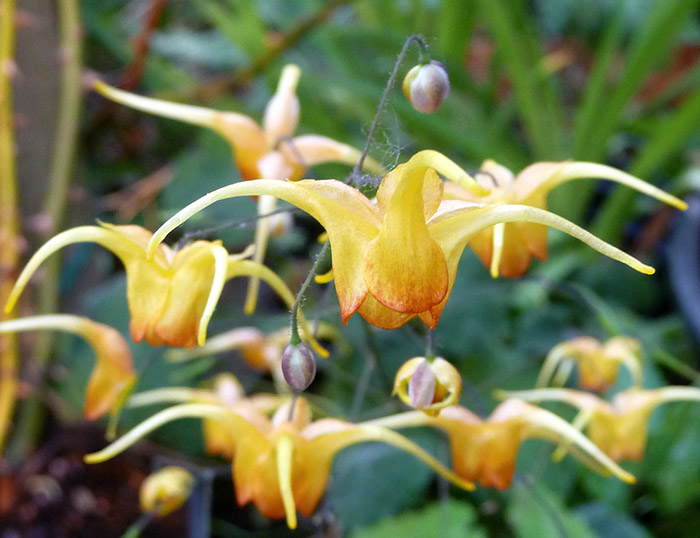
In dry shade, consider plants such as barrenwort, wild ginger, bigroot geranium, or foamflower, depending on soil and available space. For moderate shade, hostas, sedges, and coral bells can provide dependable foliage. Sunny borders may support catmint, creeping thyme, low-growing sedums, or compact ornamental grasses, provided the soil drains well.
Plant habit matters as much as light tolerance. A clumping perennial creates a tidy colony but may leave open soil between plants for several years. A spreading groundcover fills space faster, yet it requires more frequent edge control. Select plants that can occupy the intended area without crossing paths, lawns, or neighboring beds.
Prepare the bed before planting
Weed suppression begins before the first groundcover goes into the soil. Remove existing weeds carefully, including as many roots and rhizomes as possible. Perennial weeds such as quackgrass, bindweed, and creeping buttercup can push through new plantings and become harder to remove once the groundcover canopy develops.
Avoid deep cultivation beneath established shrubs, where digging can damage woody roots. Instead, loosen only the upper soil in open areas, add a modest amount of finished compost if the soil is poor, and smooth the surface. Excessive amendments can encourage lush growth at the expense of durability and may alter drainage around shrubs.
A two- to three-inch layer of shredded leaves, composted bark, or another suitable organic mulch helps conserve moisture while plants establish. Keep mulch away from shrub trunks and perennial crowns. As the groundcover expands, gradually reduce the visible mulch rather than piling it over the foliage.
Use spacing and layers to close gaps
Plant spacing determines how long weeds have access to bare soil. Close spacing gives quicker coverage but increases the initial cost and may create overcrowding. Wider spacing is economical, though it requires more hand-weeding and mulch maintenance during the first seasons.
Use the mature spread listed on a reliable plant label or regional evaluation. A plant expected to spread 18 inches should generally be installed closer than one expected to reach three feet. Staggering plants in triangular or informal drifts usually closes gaps more evenly than arranging them in rigid rows.
Layering can make the planting more resilient. Combine a low, foliage-forming groundcover with taller, restrained perennials that flower above it. Under shrubs, this might mean a broad carpet of sedge or wild ginger accented by spring bulbs or a few shade-tolerant flowering plants. In sunny areas, a low mat can support upright perennials without leaving the soil completely exposed.
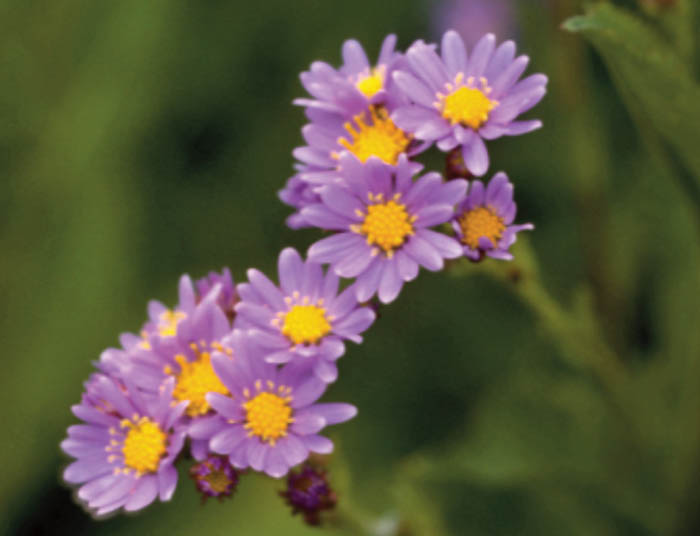
When choosing flowering companions for a sunny shrub border, regional trial information can help distinguish dependable performers from plants that merely look promising in a catalog. The documented aster performance offers a useful example of how bloom, height, and site conditions influence a perennial’s role in a broader planting.
Compare useful groundcover traits
No single groundcover is ideal for every shrub border. Use the following comparison as a starting point, then verify mature size, hardiness, moisture needs, and local availability before planting.
| Groundcover type | Best setting | Weed-suppression strength | Main consideration |
|---|---|---|---|
| Wild ginger | Moist to average shade | Broad leaves form a dense carpet | Can be slow to establish in dry soil |
| Barrenwort | Dry or average shade | Spreads steadily and shades soil | Flowers are seasonal; foliage carries the display |
| Bigroot geranium | Part shade to sun | Large foliage fills gaps well | May flop or spread beyond small beds |
| Sedge | Shade to part sun, depending on species | Grasslike clumps knit together over time | Species differ greatly in moisture tolerance |
| Creeping thyme | Full sun and sharp drainage | Low mat suppresses small annual weeds | Performs poorly in wet or heavily shaded soil |
| Sedum | Full sun, lean soil | Dense foliage covers exposed ground | Avoid rich, constantly wet beds |
The table also highlights why “fast-growing” is not a complete selection criterion. A plant that races through a moist bed may languish beneath thirsty shrubs, while a slower perennial can become an excellent long-term cover in the right location.
Maintain the planting while it fills in
Most groundcovers need regular attention during the first one or two growing seasons. Inspect the bed every week or two, especially after rainfall and during spring weed flushes. Pull weeds while they are small, taking care not to disturb shallow groundcover roots.
Water deeply when plants show establishment stress rather than applying frequent, shallow irrigation. Newly planted perennials need consistent moisture, but mature groundcovers should be managed according to their natural preferences. Overwatering can create weak growth, root problems, and conditions favorable to slugs or fungal disease.
Refresh a thin mulch layer when bare soil remains visible, but do not bury spreading stems or crowns. Prune damaged shrub branches so the groundcover receives appropriate light and air circulation. In late winter or early spring, remove only old foliage that interferes with new growth or harbors disease; many evergreen or semi-evergreen species provide useful soil cover through winter.
Prevent aggressive spread
A successful groundcover should suppress weeds without becoming one itself. Check whether a plant spreads by rhizomes, stolons, self-sown seed, or expanding crowns. Vigorous species may be suitable for a large, contained bed but troublesome near woodland edges, drainage channels, or neighboring properties.
Install a physical edging where the planting meets turf or paving. Inspect the outer boundary twice a year and divide or cut back plants before they cross it. Remove unwanted seedlings before they mature and scatter seed. This is particularly important when a flowering groundcover attracts pollinators but also produces abundant volunteer plants.
Regional experience is valuable when judging long-term behavior. The program’s evaluation history shows why plants should be considered across seasons and locations rather than selected from a single photograph or isolated garden result. Performance includes persistence, habit, bloom timing, and how well a plant fits its intended landscape role.
Build a manageable planting routine
A weed-suppressing border becomes easier to maintain when its planting design matches the time available for care. Use fewer plant types in broad, repeated groups if you prefer a clean appearance, or combine several compatible groundcovers when seasonal interest is more important than uniformity.
Keep a simple record of planting dates, spacing, irrigation, and plants that spread too slowly or aggressively. These observations are especially helpful in Chicagoland, where winter conditions, spring moisture, and summer heat can vary from year to year.
Practical choices for a durable border
- Select plants according to actual light, soil moisture, drainage, and mature spread.
- Clear perennial weeds before planting, especially rhizomatous grasses and creeping vines.
- Use temporary mulch and closer spacing to reduce bare soil during establishment.
- Inspect edges and remove unwanted seedlings before the groundcover becomes difficult to control.
- Favor regionally tested plants whose seasonal performance matches the site.
A groundcover should make shrub care simpler, not create another high-maintenance layer. Start with one well-observed section, monitor it through a full growing season, and expand only after seeing how the plants handle the site’s shade, moisture, winter exposure, and competition from shrub roots.
Explore the perennial evaluations available through Perennials in Focus, then use those regional observations to plan a shrub border that covers soil attractively, limits weed pressure, and remains manageable for years.
In the Garden
Evaluator gardens are located across the Chicagoland area, representing a range of growing conditions. Visit our retail and wholesale partners to find trialled perennials for your own garden.
Retail & Wholesale: Hinsdale Nurseries (Willowbrook, IL), Mariani Nurseries (Kenosha, WI & Garden Prairie, IL), Northwind Perennials (Burlington, WI), The Growing Place (Aurora, IL).
Wholesale Only: Hinsdale Nurseries (Plano, IL), Intrinsic Perennial Gardens (Hebron, IL).
Our Evaluation Program
The 2017–2020 evaluation cycle included Agastache 'Blue Boa', Allium senescens 'Blue Eddy', Amsonia ciliata var. filifolia 'Georgia Pancake', Astilbe 'Chocolate Shogun', Boltonia astroides 'James Crocket', Brunnera 'Alexander's Great', and Geranium cinereum 'Jolly Jewel Purple'. Completed evaluations include Amsonia 'Blue Ice' (2004–07).
On April 10, 2020, the program published snapshot profiles for Vernonia lettermanii 'Iron Butterfly', Stokesia laevis 'Elf', Stachys officinalis 'Pink Cotton Candy', Lobelia 'Monet Moment', Helleborus 'Winter Thrillers', Geum 'Mai Tai', Geranium soboliferum 'Butterfly Kisses', Gentiana x intermedia 'True Blue', Eurybia divaricata, Asparagus 'Purple Passion', and Agastache 'Bolero'.
Browse the full collection of snapshots organized alphabetically — from A–D, E–H, I–Q, and R–Z — to find detailed performance data on perennials trialled across Chicagoland.