Evaluating Perennials for Chicagoland Gardens
Perennials in Focus is a plant evaluation program that examines new and underused plants for Chicagoland, the third largest metropolitan area in the country. A group of horticultural experts trials and evaluates plants at numerous locations across the region. Results help consumers, public gardens, growers, landscape designers, breeders, and other industry professionals make informed plant choices.
How to stagger perennial bloom times in the Chicagoland garden
A garden with continuous color does not depend on one spectacular month of flowering. It depends on a sequence: bulbs and early perennials begin the display, dependable summer plants carry it forward, and late-season bloomers keep beds attractive into fall. This approach creates a garden that changes gradually rather than reaching one peak and fading.
For gardeners in the Chicagoland region, bloom succession requires attention to winter hardiness, spring temperature swings, summer humidity, and the length of the growing season. A perennial that flowers early in a sheltered suburban garden may open later in an exposed site, while drought or excessive shade can shorten an expected bloom period.
The most useful planting plans combine regional trial information with observation in the garden. Records of flowering dates, mature height, flower color, and spread can help you select plants that overlap slightly, filling gaps without making the border look crowded.
Start with the seasonal rhythm
Think of the border as a relay rather than a collection of isolated plants. Early-season perennials hand visual interest to midseason performers, which then overlap with plants that flower in late summer and autumn. Some overlap is valuable because weather can shift bloom dates by several weeks.
A strong sequence also includes foliage, seed heads, and plant structure. Heuchera, brunnera, ornamental grasses, and evergreen ground covers may not provide showy flowers for long, yet their leaves support the display between bloom periods. Plants with attractive post-flowering form can extend the garden’s interest after petals fall.
Avoid designing around bloom dates alone. Consider each plant’s mature size, moisture preference, light requirement, and tendency to spread. A short-lived flower display is less useful if the plant collapses in July or overwhelms its neighbors by the following season.
Build the opening display
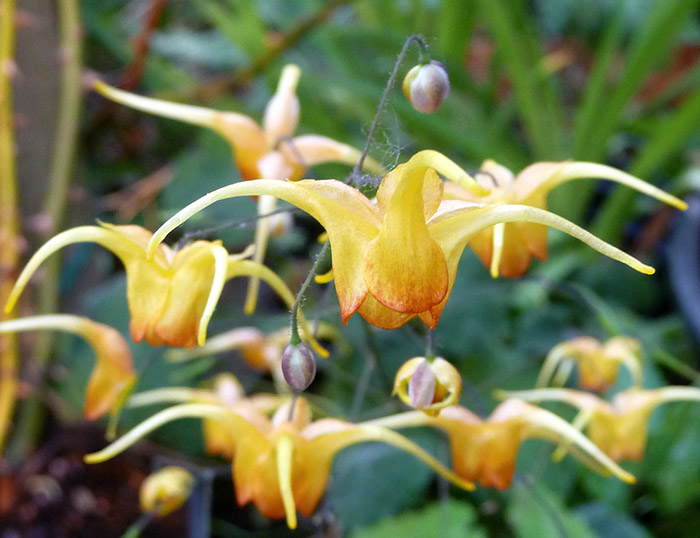
Early bloomers bring energy to the garden when many perennial borders are still bare. In Chicagoland, plants such as creeping phlox, barrenwort, lungwort, catmint, and early woodland perennials can begin flowering from April into May, depending on exposure and spring temperatures.
Place these plants where their low growth can be seen from paths, patios, or windows. Early perennials often work well along bed edges, beneath deciduous trees, or between shrubs that have not yet filled out. Their compact habit also leaves room for later plants to rise behind them.
Choose several early plants with different forms rather than relying on one mass of color. A mound-forming perennial can be paired with upright stems, rounded leaves, or fine-textured foliage. This adds interest even when flowering overlaps only briefly and makes the border feel designed throughout the season.
Keep color moving through summer
Midseason perennials form the bridge between spring freshness and late-season abundance. Garden phlox, coneflower, yarrow, daylily, salvia, bee balm, and many hardy geraniums can provide color from June through August. Their flowering windows may be extended through deadheading, adequate moisture, or selecting cultivars with naturally long bloom periods.
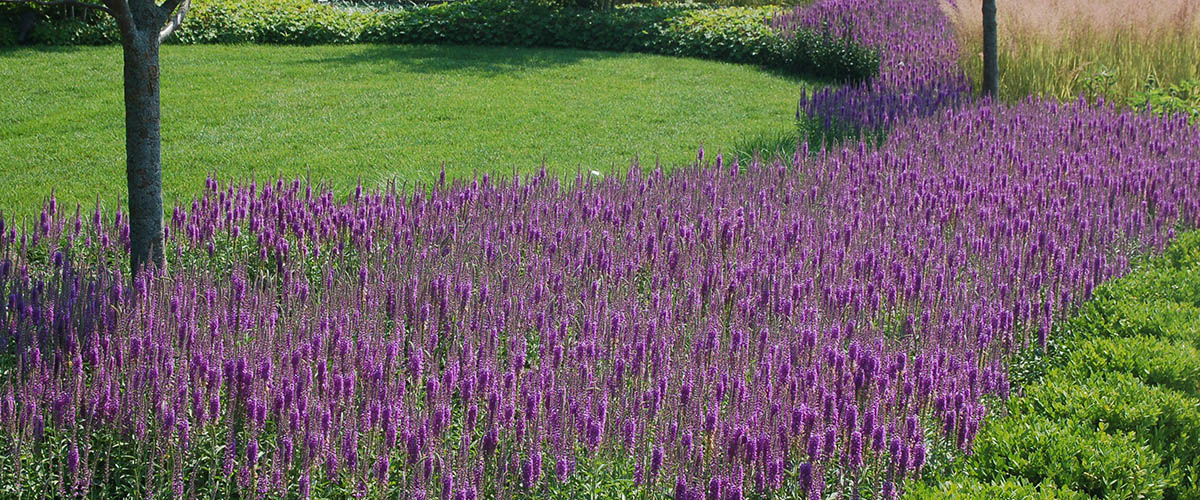
Use repetition to make the transition feel intentional. Repeating a flower color or foliage shape in several parts of the bed creates continuity as individual plants come into bloom. For example, purple spikes in early summer can echo the color of late-summer asters, even when different plants occupy the spaces between them.
Midseason plants should also be chosen for their behavior during heat and humidity. In heavier clay soils, prioritize perennials that tolerate periodic moisture while improving drainage around plants that dislike wet winter conditions. In dry, sunny sites, use deep-rooted or drought-tolerant selections and group them separately from plants that need consistent moisture.
| Bloom window | Useful perennial roles | Placement and care considerations |
|---|---|---|
| Early spring to late spring | Ground covers, woodland plants, low mounds | Place near paths and under open trees; protect from competition as foliage develops |
| Late spring to early summer | Iris, peony, salvia, catmint, hardy geranium | Provide good air circulation and room for foliage after flowering |
| Midsummer | Coneflower, daylily, yarrow, bee balm, garden phlox | Match soil moisture to the plant; deadhead selectively to encourage repeats |
| Late summer to early fall | Rudbeckia, sedum, anise hyssop, ornamental grasses | Allow adequate spacing for mature width and strong late-season structure |
| Fall | Asters, goldenrod, Japanese anemone, perennial sunflower | Provide full sun where possible and avoid late-season crowding |
Fill the late-season gap
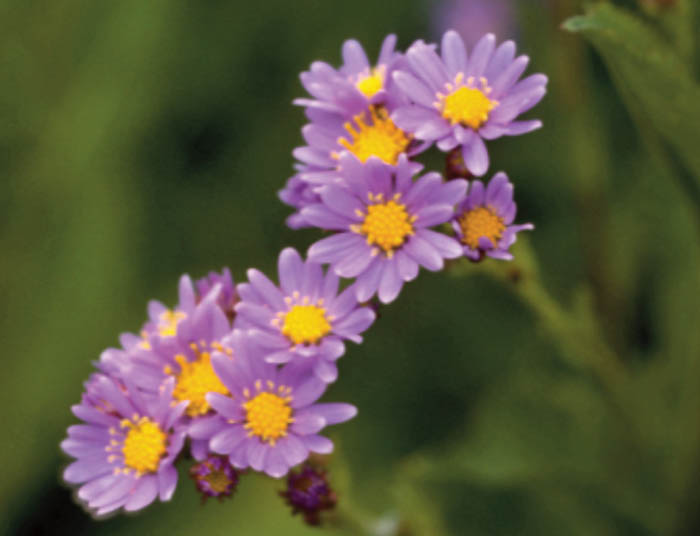
Late-season perennials prevent the garden from losing momentum in August and September. Asters, goldenrod, sneezeweed, sedum, Japanese anemone, and perennial sunflower can supply nectar, strong color, and valuable structure when many spring plants have finished.
Position late bloomers where their height will be useful rather than disruptive. Tall asters and perennial sunflowers can form a backdrop, while compact sedums and shorter cultivars of rudbeckia can occupy the front or middle of a border. Ornamental grasses add movement and remain effective after frost, giving the display a longer visual life.
Late-season planting is especially important for pollinator gardens. Blooming asters, goldenrod, and other autumn perennials provide forage when fewer flowers are available. Include plants with different flower shapes, since bees, butterflies, and other beneficial insects use a range of floral resources.
Use trial data to refine plant choices
Regional performance records can reveal details that catalog descriptions often leave out. A plant may be advertised as a long bloomer but flower briefly in a particular climate, or it may prove more compact, upright, or disease-resistant than expected. The plant snapshots offer a practical way to review evaluated selections and compare characteristics relevant to local gardens.
Look for plants whose bloom periods overlap by at least a week or two. Exact succession is fragile because cool springs, heat waves, and rainfall patterns influence flowering. Slight overlap creates a fuller appearance and ensures that one delayed or shortened bloom does not leave an empty space.
Keep your own seasonal notes after planting. Record the first and last flower dates, height at bloom, signs of flopping, pest pressure, and how the plant performs during dry periods. After two or three seasons, these observations can guide replacements and help you identify combinations that provide reliable continuity.
Arrange layers for a fuller display
Staggered bloom times work best when plants are arranged in layers. Low early perennials can occupy the front edge, medium plants can fill the central band, and tall late-season selections can rise behind them. This arrangement lets new growth appear without completely hiding plants that are still contributing foliage or flowers.
Leave enough space for mature spread, even if the bed looks sparse during the first year. Overplanting creates competition, reduces air circulation, and makes it harder to see which plants are in bloom. Temporary annuals or a thin layer of mulch can cover open soil while perennials establish.
Use bloom charts as planning tools, not rigid schedules. A bed may have the same plants every year but display them in a slightly different order based on weather. Designing for flexibility is one of the strengths of a mixed perennial border.
Maintain the sequence over time
Maintenance can lengthen the display and preserve the intended rhythm. Remove spent flowers from plants that rebloom, cut back damaged stems when appropriate, and divide crowded clumps before flowering declines. Do not automatically cut every plant to the ground; seed heads and sturdy stems can support winter interest and wildlife.
A few practical habits help keep succession dependable:
- Group plants with similar sun, soil, and moisture needs.
- Record bloom dates for at least two growing seasons.
- Combine early, midseason, and late plants in repeating drifts.
- Allow room for mature height and spread before adding more specimens.
- Replace weak performers with proven selections suited to local conditions.
Review the border in late summer, when gaps are easiest to see. If spring color is strong but August is quiet, add dependable mid- or late-season plants rather than increasing the number of early bloomers. If fall color feels crowded, move some tall plants toward the back and use lower forms near paths.
A well-staggered perennial garden gives every month a role. Select plants for regional performance, build in overlapping bloom periods, and observe how each combination responds to the Chicagoland climate. Use those records to plan the next planting season and create a border that remains engaging from the first spring leaves through the final autumn flowers.
In the Garden
Evaluator gardens are located across the Chicagoland area, representing a range of growing conditions. Visit our retail and wholesale partners to find trialled perennials for your own garden.
Retail & Wholesale: Hinsdale Nurseries (Willowbrook, IL), Mariani Nurseries (Kenosha, WI & Garden Prairie, IL), Northwind Perennials (Burlington, WI), The Growing Place (Aurora, IL).
Wholesale Only: Hinsdale Nurseries (Plano, IL), Intrinsic Perennial Gardens (Hebron, IL).
Our Evaluation Program
The 2017–2020 evaluation cycle included Agastache 'Blue Boa', Allium senescens 'Blue Eddy', Amsonia ciliata var. filifolia 'Georgia Pancake', Astilbe 'Chocolate Shogun', Boltonia astroides 'James Crocket', Brunnera 'Alexander's Great', and Geranium cinereum 'Jolly Jewel Purple'. Completed evaluations include Amsonia 'Blue Ice' (2004–07).
On April 10, 2020, the program published snapshot profiles for Vernonia lettermanii 'Iron Butterfly', Stokesia laevis 'Elf', Stachys officinalis 'Pink Cotton Candy', Lobelia 'Monet Moment', Helleborus 'Winter Thrillers', Geum 'Mai Tai', Geranium soboliferum 'Butterfly Kisses', Gentiana x intermedia 'True Blue', Eurybia divaricata, Asparagus 'Purple Passion', and Agastache 'Bolero'.
Browse the full collection of snapshots organized alphabetically — from A–D, E–H, I–Q, and R–Z — to find detailed performance data on perennials trialled across Chicagoland.