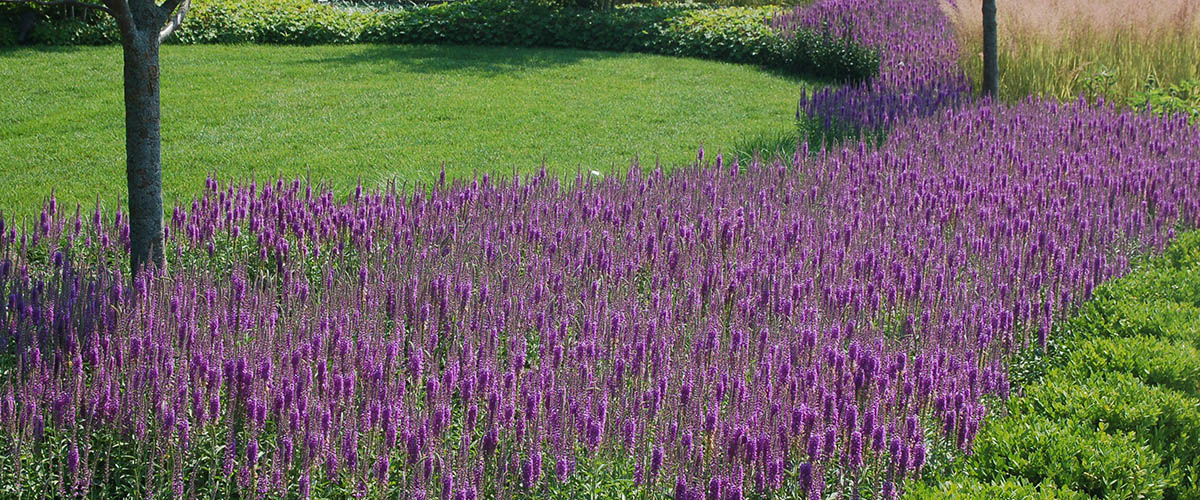
Evaluating Perennials for Chicagoland Gardens
Perennials in Focus is a plant evaluation program that examines new and underused plants for Chicagoland, the third largest metropolitan area in the country. A group of horticultural experts trials and evaluates plants at numerous locations across the region. Results help consumers, public gardens, growers, landscape designers, breeders, and other industry professionals make informed plant choices.
Selecting Perennials for Rabbit-Prone Suburban Gardens
Rabbits can turn a carefully planted border into a patchwork of chewed stems, especially where new housing meets open grassland, railway corridors, creek reserves or bushland. In Australian suburbs, pressure may come from established European rabbits, hares or locally abundant populations moving through unfenced gardens. A plant labelled “rabbit resistant” is therefore best treated as less preferred, rather than completely safe.
The most reliable approach combines plant selection with observation, physical protection and good garden design. Trial information from cooler regions can help identify strong, repeat-flowering perennials, but Australian gardeners also need to consider heat, drought, humidity, soil type and what is actually available through local nurseries and retail chains.
| Plant characteristic | Often less attractive to rabbits | Useful examples | Important qualification |
|---|---|---|---|
| Aromatic foliage | Strongly scented leaves may be avoided | Salvia, catmint, lavender, thyme | Young growth can still be grazed |
| Hairy or coarse leaves | Texture can discourage browsing | Lamb’s ear, yarrow, some mulleins | Preference changes with food scarcity |
| Spiny or prickly growth | Difficult to bite repeatedly | Sea holly, thistles, some ornamental forms | Check safety around children and pets |
| Tough, grass-like foliage | Fibrous leaves are often less appealing | Lomandra, liriope, ornamental grasses | Rabbits may eat new shoots |
| Toxic or irritating sap | May deter feeding | Euphorbia and selected bulbs | Avoid where pets or children may chew plants |
Assess the Level of Rabbit Pressure
Before buying plants, inspect the garden at different times of day. Look for cleanly clipped stems, small pellet droppings, narrow paths through mulch and damage concentrated close to the ground. Rabbits often feed at dawn and dusk, so a plant that looks untouched at midday may be heavily browsed overnight.
Pressure also varies across the block. A front garden beside a reserve, golf course or drainage corridor may need tougher plant choices than a fenced courtyard. In Canberra’s outer suburbs, Melbourne’s fringe and parts of Adelaide, seasonal grass growth can support larger rabbit populations, followed by intense garden browsing when pasture dries.
Photographing damage for several weeks helps reveal patterns. Mark a few existing plants and record whether rabbits target tender tips, flower buds or whole young plants. This information is more useful than relying on a generic label, because local animals can develop strong preferences for particular cultivars.
Prioritise Defensible Plant Characteristics
Plants with aromatic, resinous, hairy, bitter or coarse foliage are sensible candidates for a rabbit-prone border. Salvia, catmint, lavender, rosemary, yarrow, lamb’s ear and many ornamental grasses may receive less attention than soft-leaved hostas, beans or young rudbeckias. Their foliage also contributes texture and structure when flowers are not at their peak.
A plant’s maturity matters. Rabbits commonly target newly planted perennials because their soft shoots are easy to bite and their root systems have not yet established. Even a relatively unpalatable species may need a temporary wire guard during its first season. Protecting the crown and lower stems is especially important after planting in spring or following a hard cutback.
Treat poisonous or sap-irritating plants carefully. Euphorbias, some bulbs and several ornamental species can discourage feeding, but they are not automatically suitable for every household. Sap may irritate skin and eyes, while bulbs can be dangerous if dug up and chewed by pets. Rabbit resistance should never override basic household safety.
Match Plant Choices to Australian Conditions
A rabbit-tolerant perennial still has to survive the site. In a hot Sydney courtyard, reflected heat from paving can stress plants that perform well in an open trial bed. Perth gardens may demand excellent drainage and drought tolerance, while Brisbane gardeners need to consider humid summers, heavy rainfall and fungal disease. Select plants for both browsing pressure and the local growing conditions.
Water restrictions and summer holidays also influence plant choice. A dense planting of established salvias, gauras, yarrow or hardy grasses can be more practical than a collection of thirsty, soft-stemmed perennials. In cooler districts, autumn planting may help roots establish before summer; in tropical and subtropical areas, timing should follow rainfall, drainage and heat rather than a southern calendar.
The Chicagoland results published by Perennials in Focus can still provide valuable clues about habit, flowering duration, spread and recovery after stress. However, transfer those observations thoughtfully. A perennial that survives Chicago winters may struggle with Australian humidity, while a plant that flowers for months in a northern trial may have a shorter season in a hot inland garden.
Use Trial Data Without Ignoring the Site
Reliable evaluation records can narrow the field to plants with consistent performance rather than attractive catalogue photographs. Look for details such as mature height, spread, flowering period, flower colour, habit and whether the plant remains presentable after weather events. These characteristics help create a layered planting plan that does not depend on one vulnerable species.
Heat is a particularly important filter for urban gardens. Paved areas, brick walls and reflected afternoon sun can create pockets far hotter than the surrounding suburb. The coreopsis heat checklist offers a useful way to think about exposure, irrigation, foliage condition and flowering when assessing plants in heat-affected spaces.
Read trial results alongside Australian information from state botanic gardens, local councils, specialist nurseries and experienced growers. Availability changes quickly in the Australian market, and a cultivar listed in overseas trials may not be stocked by independent nurseries or major retailers. Ask for the botanical name and mature dimensions rather than choosing by a vague common name.
Combine Plants With Physical Protection
Fencing remains the strongest defence where rabbits are numerous. Use sturdy wire mesh with openings small enough to prevent rabbits pushing through, and secure the lower edge firmly to the ground. A buried skirt or outward-facing ground section can reduce digging beneath the barrier. Gates and gaps under sheds often need as much attention as the main fence.
Individual guards are useful for specimen perennials, new installations and plants with high sentimental or financial value. Cylinders should be wide enough to prevent leaves pressing through the mesh, and tall enough to stop rabbits reaching over the top. Check guards frequently because growing stems can become trapped, while mulch, fallen branches or garden furniture can create launch points.
Repellents may provide short-term support, but rain, irrigation and new growth reduce their effect. Homemade deterrents can also damage foliage or create unwanted risks for pets and wildlife. Physical exclusion, clean edges and removal of hiding places generally provide a more dependable foundation than repeated applications of scent-based products.
Design for Recovery and Long-Term Performance
A resilient border uses repetition instead of placing every plant in isolation. Group several less-preferred perennials together, then repeat them through the bed so a single browsing event does not destroy the whole display. Combine upright salvias or grasses with spreading groundcovers and a few protected feature plants for seasonal variation.
Allow enough space for mature spread. Crowded plants become weak, humid and difficult to inspect, while widely spaced plants leave bare soil where rabbits can approach tender growth. A well-planted border closes its canopy over time, but young gaps should be covered with temporary guards or coarse mulch that does not provide a hiding tunnel.
Keep records of what survives. Note the cultivar, planting date, exposure, rainfall, irrigation and the severity of browsing. After one or two seasons, replace repeatedly damaged plants with better-performing alternatives and propagate or divide the dependable ones where appropriate. Local evidence from your own garden is often the most precise guide available.
Choose a small trial group this season, protect each new plant while it establishes, and record how it performs through heat, rain and rabbit activity. By combining regional trial knowledge with Australian site experience, gardeners can build borders that flower reliably, recover quickly and require far fewer emergency replacements.
In the Garden
Evaluator gardens are located across the Chicagoland area, representing a range of growing conditions. Visit our retail and wholesale partners to find trialled perennials for your own garden.
Retail & Wholesale: Hinsdale Nurseries (Willowbrook, IL), Mariani Nurseries (Kenosha, WI & Garden Prairie, IL), Northwind Perennials (Burlington, WI), The Growing Place (Aurora, IL).
Wholesale Only: Hinsdale Nurseries (Plano, IL), Intrinsic Perennial Gardens (Hebron, IL).
Our Evaluation Program
The 2017–2020 evaluation cycle included Agastache 'Blue Boa', Allium senescens 'Blue Eddy', Amsonia ciliata var. filifolia 'Georgia Pancake', Astilbe 'Chocolate Shogun', Boltonia astroides 'James Crocket', Brunnera 'Alexander's Great', and Geranium cinereum 'Jolly Jewel Purple'. Completed evaluations include Amsonia 'Blue Ice' (2004–07).
On April 10, 2020, the program published snapshot profiles for Vernonia lettermanii 'Iron Butterfly', Stokesia laevis 'Elf', Stachys officinalis 'Pink Cotton Candy', Lobelia 'Monet Moment', Helleborus 'Winter Thrillers', Geum 'Mai Tai', Geranium soboliferum 'Butterfly Kisses', Gentiana x intermedia 'True Blue', Eurybia divaricata, Asparagus 'Purple Passion', and Agastache 'Bolero'.
Browse the full collection of snapshots organized alphabetically — from A–D, E–H, I–Q, and R–Z — to find detailed performance data on perennials trialled across Chicagoland.