Evaluating Perennials for Chicagoland Gardens
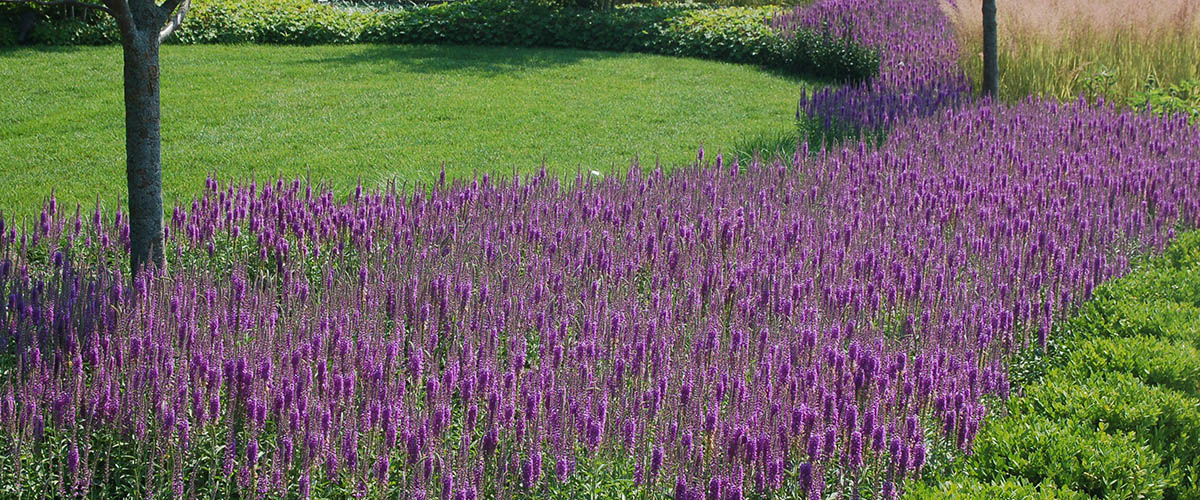
Perennials in Focus is a plant evaluation program that examines new and underused plants for Chicagoland, the third largest metropolitan area in the country. A group of horticultural experts trials and evaluates plants at numerous locations across the region. Results help consumers, public gardens, growers, landscape designers, breeders, and other industry professionals make informed plant choices.
Choosing Perennials For Pollinator-Friendly Lawns In Partial Shade
A lawn beneath trees, beside a fence or on the southern side of a house can be difficult to plant. Grass often thins where light is limited, while bare soil quickly becomes compacted and unattractive. Low-growing perennials can provide a softer, more useful ground layer, with flowers and shelter for bees, hoverflies, butterflies and other beneficial insects.
The best choices depend on local conditions rather than a universal list of “bee-friendly” plants. Australian gardeners need to consider heat, seasonal rainfall, soil type, frost and water restrictions, while growers in the Chicagoland evaluation region track how plants cope with cold winters and changing seasons. Use regional trial information as a guide, then test a small planting area in your own garden.
Read The Light And Soil First
Partial shade is not a single condition. A garden receiving four to six hours of morning sun is very different from one beneath dense evergreen foliage, where filtered light may last all day. Observe the area through summer and winter, noting whether the shade comes from buildings, deciduous trees or neighbouring gardens. Deciduous trees may allow spring flowers to bloom before their canopy closes.
Check soil moisture as carefully as light. Areas beneath established trees can be dry because roots absorb water quickly, while low spots near downpipes may remain damp after rain. Dig a small hole and examine the soil at root depth. Compacted clay may need organic matter and careful aeration, whereas sandy soil may need compost and a mulch layer to reduce moisture loss.
A soil test is useful where a lawn has received years of fertiliser or herbicide. Avoid assuming that a rich soil produces better flowers: excessive nitrogen can encourage soft foliage and reduce flowering. Leave a clear edge around tree trunks, and do not pile mulch against bark.
Match Plants To Pollinator Needs
Choose several perennial species with overlapping flowering periods rather than relying on one mass of colour. Early flowers support insects emerging in late winter and spring, while summer and autumn blooms help maintain food supplies when many ornamental plants have finished. Flat, open flowers are particularly accessible to short-tongued bees and hoverflies; tubular flowers may favour butterflies, moths and long-tongued bees.
For a mild Australian garden, Australian violet, kidney weed and selected native violets can create a low green layer in lightly shaded areas. In cooler districts, consider clumping perennials such as heuchera, Helleborus, hardy geraniums or lungwort, checking that each species suits local conditions. In warmer regions such as Brisbane, some cool-climate plants may struggle through humid summers, while Melbourne gardeners may need to plan for dry periods and occasional frost.
Avoid choosing flowers solely by colour or catalogue photography. Look for plants that offer nectar, pollen and useful shelter, and retain a few seedheads where practical. A small patch of leaf litter, hollow stems or mulch can provide nesting and overwintering habitat. If you are comparing trial results from different regions, review the work of the evaluation committee to understand how plants are assessed before applying those observations to an Australian site.
| Garden condition | Useful plant traits | Suitable directions to investigate |
|---|---|---|
| Bright, filtered shade | Low habit, repeated flowering, moderate drought tolerance | Australian violet, native violet, hardy geranium |
| Dry shade beneath trees | Tough foliage, low water demand, strong root system | Kidney weed, heuchera selections, local shade-tolerant natives |
| Moist shade | Dense groundcover, tolerance of damp soil, early flowers | Primula types, lungwort, violets |
| Cool southern garden | Frost tolerance, spring and summer bloom | Heuchera, Helleborus, hardy geranium |
| Warm subtropical garden | Humidity tolerance, good drainage, quick recovery | Local native groundcovers and regionally adapted perennials |
Keep The Lawn Usable And Diverse
A pollinator-friendly lawn does not need to become a fully planted meadow. Retain paths, play areas and open sections, then convert weak turf under trees or along borders into planted pockets. Curving the edge can make the change look deliberate, while repeated groups of the same plant create visual continuity.
Low-growing plants should be able to tolerate occasional foot traffic if they are placed beside a path, but most flowering perennials perform better when given some protection. Use stepping stones through larger beds and keep taller species toward the back. A mixed planting of groundcovers, small clumps and a few upright flowers offers more structure than a single flat carpet.
Mowing practices also matter. Raise the mower height around perennial zones and avoid scalping the transition between grass and garden bed. Stop using broad-spectrum lawn treatments close to flowering plants, and mow only after checking for active flowers and insect activity. In many Australian suburbs, water restrictions and council guidance can affect irrigation, pesticide use and verge planting, so check local rules before changing a nature strip.
Plan For The Australian Growing Cycle
Timing should follow local weather rather than a fixed calendar. In Sydney and coastal New South Wales, autumn planting often gives roots time to establish before summer heat. In Melbourne and Adelaide, autumn and spring are both useful, provided the soil is workable and plants are protected from sudden hot, dry weather. Tropical and subtropical gardeners may prefer the wetter season, when new plants can establish without constant hand watering.
Prepare the site by removing persistent weeds, loosening the topsoil and adding compost only where it is needed. Plant in small groups with enough spacing for mature spread; crowded plants compete for water and airflow. A coarse organic mulch can suppress weeds, but keep it away from crowns and avoid fine mulch that forms a water-resistant mat.
Buy from nurseries that label mature height, spread, light requirements and water needs clearly. The Australian market includes native groundcovers, habitat plants and imported ornamental perennials, but availability varies between independent nurseries, large garden centres and specialist online growers. Select healthy plants with strong roots rather than oversized specimens forced into flower.
Observe Results And Adjust Gradually
Record planting dates, flowering periods, plant losses, insect visitors and irrigation needs. A simple garden notebook can reveal that one species flowers reliably in spring but collapses during January, while another provides late-season colour with very little attention. Take photographs from the same position each month to compare coverage and bare patches.
Watch the planting for at least one full growing cycle before removing a slow starter. Some perennials establish roots first and flower modestly in their first season. Replace plants that repeatedly fail, however, rather than repeatedly watering a species unsuited to the site. Local performance is more valuable than a plant’s reputation in a catalogue.
Aim for resilience as well as wildlife value. A successful shaded lawn alternative should support insects, tolerate ordinary household use and remain manageable without constant inputs. Combine several plant families, leave some natural cover, and avoid treating every chewed leaf as a problem. Gardeners in Australia can also seek advice from local native plant societies, botanic gardens and community habitat groups for species suited to their district.
Start with one manageable section of lawn and map its light, drainage and existing tree roots. Choose a small range of flowering groundcovers and clumping perennials, install them in autumn or the season best suited to your region, and monitor their performance through heat, rain and shade. With careful observation, a thin patch of grass can become a durable pollinator habitat that fits naturally into the wider garden.
In the Garden
Evaluator gardens are located across the Chicagoland area, representing a range of growing conditions. Visit our retail and wholesale partners to find trialled perennials for your own garden.
Retail & Wholesale: Hinsdale Nurseries (Willowbrook, IL), Mariani Nurseries (Kenosha, WI & Garden Prairie, IL), Northwind Perennials (Burlington, WI), The Growing Place (Aurora, IL).
Wholesale Only: Hinsdale Nurseries (Plano, IL), Intrinsic Perennial Gardens (Hebron, IL).
Our Evaluation Program
The 2017–2020 evaluation cycle included Agastache 'Blue Boa', Allium senescens 'Blue Eddy', Amsonia ciliata var. filifolia 'Georgia Pancake', Astilbe 'Chocolate Shogun', Boltonia astroides 'James Crocket', Brunnera 'Alexander's Great', and Geranium cinereum 'Jolly Jewel Purple'. Completed evaluations include Amsonia 'Blue Ice' (2004–07).
On April 10, 2020, the program published snapshot profiles for Vernonia lettermanii 'Iron Butterfly', Stokesia laevis 'Elf', Stachys officinalis 'Pink Cotton Candy', Lobelia 'Monet Moment', Helleborus 'Winter Thrillers', Geum 'Mai Tai', Geranium soboliferum 'Butterfly Kisses', Gentiana x intermedia 'True Blue', Eurybia divaricata, Asparagus 'Purple Passion', and Agastache 'Bolero'.
Browse the full collection of snapshots organized alphabetically — from A–D, E–H, I–Q, and R–Z — to find detailed performance data on perennials trialled across Chicagoland.