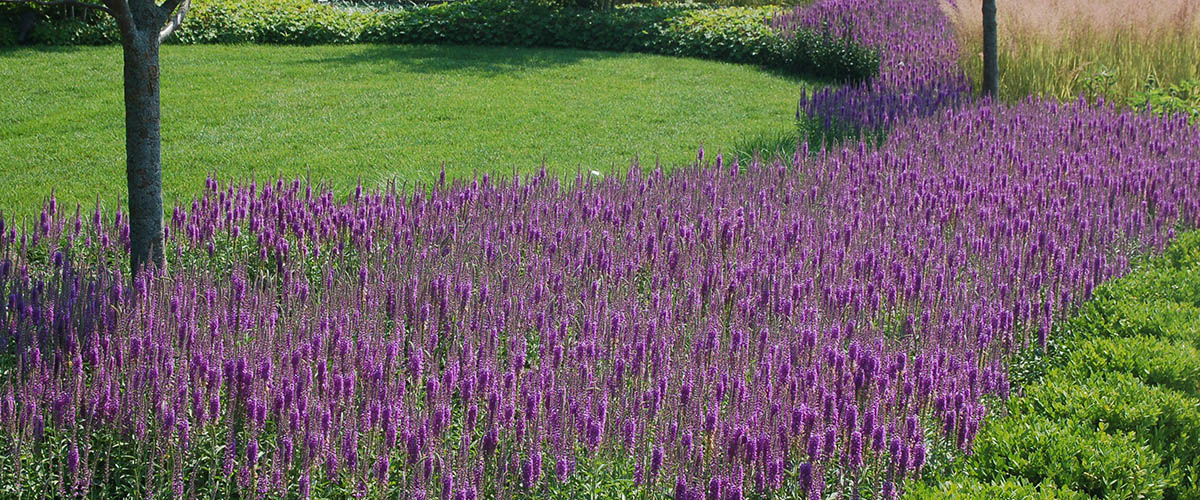
Evaluating Perennials for Chicagoland Gardens
Perennials in Focus is a plant evaluation program that examines new and underused plants for Chicagoland, the third largest metropolitan area in the country. A group of horticultural experts trials and evaluates plants at numerous locations across the region. Results help consumers, public gardens, growers, landscape designers, breeders, and other industry professionals make informed plant choices.
A Practical Perennial Border for Your Community Garden Plot
A well-planned perennial border can give a community garden plot structure, color, and habitat for years, while reducing the need to replant every season. The best borders are designed around the site rather than assembled from attractive plants at the garden center. Light, soil, moisture, available space, and shared-garden rules all influence which plants will thrive.
Chicagoland gardeners also need to account for cold winters, spring rain, summer heat, heavy clay in many locations, and sudden changes between wet and dry conditions. A perennial that performs beautifully in one neighborhood may struggle in another, so regional observations are valuable when choosing plants for a long-lived planting.
A successful border does not need to be elaborate. A limited palette of dependable perennials, repeated across the plot, often creates a stronger visual effect than a crowded collection of unrelated plants. Thoughtful spacing and a realistic maintenance plan matter just as much as bloom color.
Read the plot before planting
Begin by observing the plot for several days, preferably during different parts of the day. Record where the sun falls in spring and summer, whether nearby trees cast afternoon shade, and where water collects after rain. A site described as “full sun” may receive only four hours of strong light once surrounding vegetation reaches full leaf.
Check the soil before buying plants. Dig several small holes to inspect drainage, compaction, and root depth. If the soil is dense or difficult to work, add finished compost to the planting area rather than filling each hole with a pocket of rich soil. A soil test can reveal pH and nutrient levels, but texture and drainage are equally important for perennial health.
Measure the plot and mark paths, hose access, and any required setback from neighboring beds. Leave enough room to reach plants without stepping into the border. In a community garden, a narrow access strip can prevent accidental damage and make weeding, harvesting, and seasonal cleanup far easier.
Build a border that fits
Use the shape of the plot to establish a clear planting design. Taller perennials generally belong along a rear edge or where they will not shade vegetables and herbs. Medium-height plants can occupy the center, while low mounding species should soften the front edge or frame a path. If the plot is visible from several directions, arrange height in layers rather than placing all tall plants at the back.
Repeat a few plant forms and colors to create continuity. For example, several clumps of white-flowering plants can connect brighter yellow, blue, or pink accents. Grouping three or five plants together usually looks more intentional than spacing individual specimens evenly across the bed.
Allow for mature width, not just the size of a nursery container. A plant that reaches 24 inches wide should not be installed 12 inches from its neighbor simply because the bed looks empty at planting time. Temporary open space can be filled with annuals or mulch while the permanent plants develop.
Choose reliable plants for the region
Prioritize perennials with proven performance in the local climate, especially when the garden cannot provide daily attention. Useful qualities include sturdy stems, a long bloom window, attractive foliage after flowering, and tolerance of ordinary garden soil. Plants that support pollinators or provide seed for birds can also add ecological value without requiring a separate habitat bed.
Regional evaluation programs can help gardeners move beyond generic hardiness ratings. The regional trial network brings together horticultural professionals who observe how new and underused perennials perform across gardens and seasons. These findings can help you compare bloom duration, mature size, flower color, and overall garden presence under conditions closer to your own.
Select plants for several seasons of interest. Early bulbs and spring perennials can hand off color to summer bloomers, while ornamental grasses, seed heads, and persistent foliage carry the border into fall and winter. Combine different leaf shapes as well as flowers so the planting remains attractive between peak bloom periods.
| Border role | Suitable qualities | Examples to investigate | Placement and care |
|---|---|---|---|
| Low edge | Compact habit, tidy foliage, tolerance of foot traffic nearby | Heuchera, creeping sedum, dwarf catmint | Front of the border; avoid burying crowns with mulch |
| Middle layer | Long bloom period, clumping growth, moderate height | Coreopsis, coneflower, salvia, yarrow | Plant in groups with room for mature spread |
| Seasonal accent | Strong color or distinctive texture | Baptisia, ornamental onion, garden phlox | Use sparingly so accents remain visible |
| Backdrop | Tall stems, late-season structure, wildlife value | Ornamental grasses, Joe-Pye weed, sneezeweed | Place where height will not shade shorter plants |
| Shade transition | Moisture tolerance and attractive foliage | Hosta, brunnera, woodland sedges | Use beneath trees only if roots and dryness are manageable |
Plant for establishment
Planting time is most successful when the soil is workable and the weather is moderate. Spring and early fall are generally useful windows in the Chicago region, although container-grown plants can be installed at other times if they receive consistent water. Avoid planting into saturated soil, since working wet clay can create lasting compaction.
Set each plant at the same depth it occupied in its container. The crown should not be buried, and roots circling the outside of a container should be loosened gently before planting. Firm the surrounding soil enough to eliminate large air pockets, then water slowly so moisture reaches the full root zone.
Apply a light layer of shredded leaf mulch or another suitable organic mulch after planting. Keep it away from stems and crowns, where constant moisture can encourage rot or attract pests. Mulch should conserve moisture and suppress weeds, not form a thick mound around every plant.
Keep maintenance manageable
A community plot benefits from a simple care routine that can be shared among several gardeners. During the first growing season, regular watering is more important than frequent fertilizing. Check soil moisture below the surface, water deeply when needed, and adjust after rain rather than following a rigid calendar.
Once plants are established, avoid excessive nitrogen, which can produce soft growth and fewer flowers. Remove diseased foliage promptly, divide overcrowded clumps when vigor declines, and stake only plants that genuinely need support. Many perennials can be left standing through winter to provide seed and shelter, then cut back in late winter or early spring.
- Weed while weeds are small, using shallow cultivation that does not disturb perennial roots.
- Water new plantings deeply and less often instead of giving frequent shallow sprinkles.
- Deadhead selectively when you want more flowers or a tidier appearance.
- Mark dormant plants so spring cultivation does not damage their crowns.
- Record bloom dates, pest issues, and plant spread for future planning.
Shared responsibility is easier when tasks are visible and limited. A short maintenance schedule posted near the plot can identify who checks irrigation, removes weeds, and handles seasonal cutback. Choose plants whose care matches the time volunteers can realistically provide rather than designing a border that depends on daily intervention.
Refresh and evaluate each season
Treat the first year as an observation period. Note which plants flower when expected, which flop after heavy rain, and which spread more quickly than anticipated. Photograph the border from the same position throughout the season; images make it easier to compare plant proportions and identify gaps.
Do not remove a perennial solely because it performs poorly during one unusual season. Look for patterns across two or three years and consider whether the problem is caused by shade, drainage, competition, or incorrect spacing. Relocating a plant may solve the issue more effectively than replacing it.
As the border matures, edit with purpose. Divide healthy clumps to share with other gardeners, move plants that are crowding paths, and replace weak performers with varieties better suited to the site. A community garden border becomes more valuable over time when gardeners record what succeeds and use those observations to guide future planting decisions.
Start with a measured sketch, a modest plant list, and a maintenance agreement among plot members. Then install the border in stages, observe it through the seasons, and refine it using local performance rather than guesswork. A carefully chosen perennial planting can become a lasting source of color, pollinator activity, and shared knowledge for the whole garden community.
In the Garden
Evaluator gardens are located across the Chicagoland area, representing a range of growing conditions. Visit our retail and wholesale partners to find trialled perennials for your own garden.
Retail & Wholesale: Hinsdale Nurseries (Willowbrook, IL), Mariani Nurseries (Kenosha, WI & Garden Prairie, IL), Northwind Perennials (Burlington, WI), The Growing Place (Aurora, IL).
Wholesale Only: Hinsdale Nurseries (Plano, IL), Intrinsic Perennial Gardens (Hebron, IL).
Our Evaluation Program
The 2017–2020 evaluation cycle included Agastache 'Blue Boa', Allium senescens 'Blue Eddy', Amsonia ciliata var. filifolia 'Georgia Pancake', Astilbe 'Chocolate Shogun', Boltonia astroides 'James Crocket', Brunnera 'Alexander's Great', and Geranium cinereum 'Jolly Jewel Purple'. Completed evaluations include Amsonia 'Blue Ice' (2004–07).
On April 10, 2020, the program published snapshot profiles for Vernonia lettermanii 'Iron Butterfly', Stokesia laevis 'Elf', Stachys officinalis 'Pink Cotton Candy', Lobelia 'Monet Moment', Helleborus 'Winter Thrillers', Geum 'Mai Tai', Geranium soboliferum 'Butterfly Kisses', Gentiana x intermedia 'True Blue', Eurybia divaricata, Asparagus 'Purple Passion', and Agastache 'Bolero'.
Browse the full collection of snapshots organized alphabetically — from A–D, E–H, I–Q, and R–Z — to find detailed performance data on perennials trialled across Chicagoland.