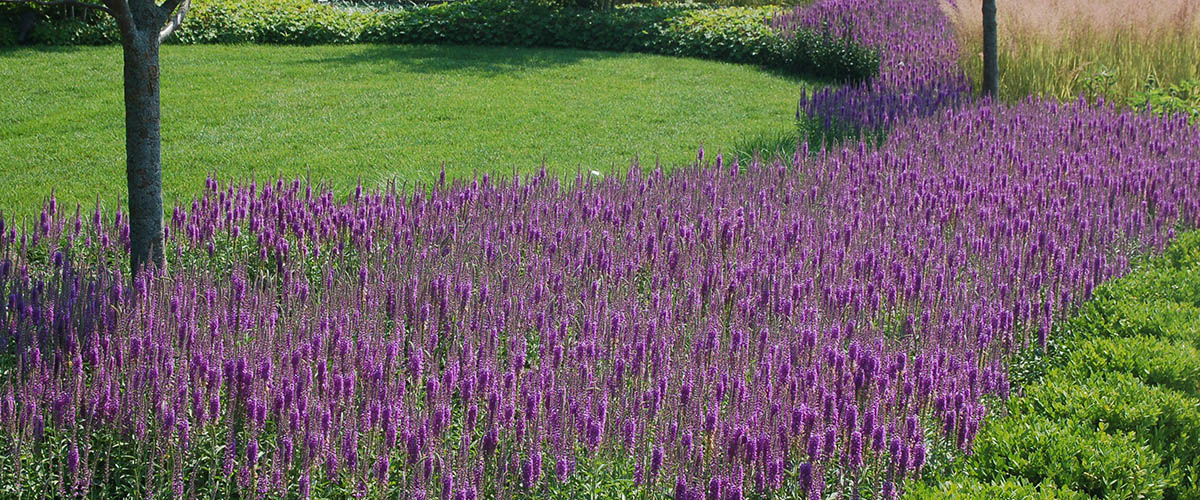
Evaluating Perennials for Chicagoland Gardens
Perennials in Focus is a plant evaluation program that examines new and underused plants for Chicagoland, the third largest metropolitan area in the country. A group of horticultural experts trials and evaluates plants at numerous locations across the region. Results help consumers, public gardens, growers, landscape designers, breeders, and other industry professionals make informed plant choices.
Pairing Ornamental Grasses With Late-Blooming Perennials
A garden can lose much of its visual energy after summer flowers fade, but the planting season does not have to end with the first hard frost. Ornamental grasses and late-blooming perennials create a durable display that carries through autumn and often remains attractive well into winter. Their seedheads, stems, foliage, and silhouettes provide structure when colorful flowers are scarce.
In the Chicagoland region, successful combinations must handle humid summers, cold winters, fluctuating temperatures, and periods of heavy snow or ice. A reliable pairing considers more than bloom color. Mature height, spread, flowering time, stem strength, and winter persistence all influence whether a planting looks intentional or crowded.
Regional evaluation can make those choices easier. The regional plant trials from Perennials in Focus offer useful context for selecting perennial plants that have been observed across multiple gardens and seasons rather than relying only on catalog descriptions.
Start With Structure And Seasonal Timing
Use ornamental grasses as the framework, then place late-blooming perennials around them as supporting accents. Medium- to tall-growing grasses can create a soft screen or a strong vertical rhythm, while shorter grasses work well at the front of a border. The best combinations retain visible variation after flowering ends instead of becoming one undifferentiated mass.
Timing is equally important. Choose perennials that begin flowering from late summer into fall, when warm-season grasses are reaching their best color and fullness. A grass with airy flower plumes can complement the broad blooms of a late coneflower, while a denser grass can balance the open form of aster, goldenrod, or Japanese anemone.
Think in terms of a seasonal handoff. The perennial supplies color and pollinator value during the final weeks of the growing season; the grass takes over visually as flowers fade. This approach keeps the border active from August through winter without requiring constant replanting.
Balance Height, Spread, And Movement
A successful planting usually includes at least three visual levels. Tall grasses or upright perennials form the back layer, medium plants occupy the center, and low mounds soften the edge. Avoid placing every plant at the same height, since a flat arrangement can hide lower foliage and make the border feel static.
Movement adds another dimension. Grasses sway in wind, catch frost, and create shifting patterns in low winter light. Pair that motion with perennials that have firm stems or distinctive seedheads. Plants such as asters, sedums, rudbeckias, and goldenrods can hold their shape after flowering, giving the grass a more substantial visual partner.
Pay close attention to mature spread rather than the size of a young nursery plant. A grass that appears modest in its first year may expand considerably by its third season. Leave enough room for air circulation and access, especially in rich soil where vigorous plants can quickly fill a bed.
Match Plants To Light And Soil
Most ornamental grasses and late-season perennials perform best in full sun, generally meaning six or more hours of direct light. A site with morning sun and afternoon shade may suit some perennials, but it can produce weaker stems and fewer plumes in sun-loving grasses. Observe the garden throughout the day before finalizing a combination.
Soil moisture should guide plant selection as carefully as sunlight. Switchgrass, certain sedges, and many asters tolerate more consistent moisture, while little bluestem and some prairie perennials prefer sharper drainage. Planting a moisture-loving perennial beside a drought-adapted grass often creates uneven growth and unnecessary maintenance.
The following pairings illustrate how different forms can work together. They are starting points rather than fixed recipes; local performance, cultivar size, and site conditions should determine the final selection.
| Ornamental grass character | Late-blooming perennial partner | Seasonal effect | Best placement |
|---|---|---|---|
| Upright, medium-tall switchgrass | New England aster | Strong color against vertical foliage | Mid-border or back layer |
| Fine-textured little bluestem | Sedum with broad flower heads | Fine grass texture beside a solid late-season form | Sunny, well-drained border |
| Airy muhly-like form in a protected site | Goldenrod | Repeated movement with bright autumn color | Informal mixed planting |
| Clumping fountain grass | Rudbeckia or compact coneflower | Soft plumes behind warm flower tones | Entry bed or patio border |
| Evergreen or semi-evergreen sedge | Late-blooming anemone | Low winter mass beneath taller stems | Part shade or sheltered edge |
Use Color Beyond The Flowering Season
Late-season color does not have to come from flowers alone. Many grasses turn copper, bronze, burgundy, gold, or straw-colored as temperatures fall. Pairing those tones with flowers in purple, blue, pink, yellow, or white creates a layered palette that changes gradually instead of ending abruptly.
For a restrained design, repeat one flower color through several planting groups and let the grasses provide contrast. Purple asters beside golden seedheads create a classic autumn combination, while pink flowers against tan plumes feel softer. Dark-stemmed grasses can echo the stems of sedums or the aging foliage of rudbeckias.
Winter interest depends on color, but texture is often more durable. Frost outlines narrow blades, snow caps seedheads, and low sunlight highlights upright stems. Select at least one grass with persistent foliage or plumes, then combine it with perennials whose dried heads remain recognizable. Plants with weak stems may collapse quickly in wind or wet snow, so observe their habit before using them as winter anchors.
Design For Wildlife And Winter Views
Late-blooming perennials provide valuable nectar and pollen when many earlier flowers have finished. Their seedheads can also support birds after frost, while dense grass clumps offer cover for insects and small wildlife. Leaving stems standing through winter preserves these benefits and gives the garden a more natural appearance.
Place winter-interest plants where they can be seen from paths, windows, or frequently used outdoor spaces. A planting that looks subtle in summer may become a focal point when the rest of the landscape is dormant. Backlighting from a low winter sun can make pale plumes and translucent seedheads especially effective.
Use repetition to connect separate beds. Repeating one grass in several groups creates continuity, while changing the companion perennial prevents the design from becoming monotonous. For a more naturalistic effect, vary the spacing slightly but keep each plant community large enough to read as a unified patch.
Keep Maintenance Simple And Intentional
Most grasses and late-blooming perennials benefit from a deliberate spring cleanup rather than frequent autumn cutting. Standing stems protect crowns, offer wildlife habitat, and preserve winter structure. Cut back deciduous grasses and perennial stems in late winter or early spring before new growth accelerates, taking care not to damage emerging shoots.
Some grasses spread by seed or rhizomes more readily than others. Remove unwanted seedlings while they are small, divide overcrowded clumps in spring, and avoid overfertilizing. Excess nitrogen can encourage floppy growth and reduce the sturdy form that makes these plants valuable in winter.
Before planting, compare mature dimensions and seasonal behavior in local trials. The plant snapshots provide concise details that can help gardeners assess height, spread, bloom period, and other traits when narrowing a planting palette.
Practical Choices For A Stronger Border
- Combine one grass with persistent winter form and one perennial with durable seedheads.
- Repeat grasses in groups of three or more instead of scattering single plants throughout the bed.
- Match moisture needs carefully, especially in heavy clay or beds that dry quickly near foundations.
- Allow mature spread when spacing plants, even if the first-season arrangement looks sparse.
- Delay cutting until late winter unless safety, visibility, or disease concerns require earlier cleanup.
A well-planned combination should look attractive in several distinct stages: fresh grass growth in spring, full foliage in summer, flowers and changing color in fall, and stems or plumes in winter. Use regional observations to refine the choices, then plant in generous groups so each partnership has enough scale to make an impression. Explore the available evaluations, select plants suited to your site, and build a border that continues working long after the last bloom fades.
In the Garden
Evaluator gardens are located across the Chicagoland area, representing a range of growing conditions. Visit our retail and wholesale partners to find trialled perennials for your own garden.
Retail & Wholesale: Hinsdale Nurseries (Willowbrook, IL), Mariani Nurseries (Kenosha, WI & Garden Prairie, IL), Northwind Perennials (Burlington, WI), The Growing Place (Aurora, IL).
Wholesale Only: Hinsdale Nurseries (Plano, IL), Intrinsic Perennial Gardens (Hebron, IL).
Our Evaluation Program
The 2017–2020 evaluation cycle included Agastache 'Blue Boa', Allium senescens 'Blue Eddy', Amsonia ciliata var. filifolia 'Georgia Pancake', Astilbe 'Chocolate Shogun', Boltonia astroides 'James Crocket', Brunnera 'Alexander's Great', and Geranium cinereum 'Jolly Jewel Purple'. Completed evaluations include Amsonia 'Blue Ice' (2004–07).
On April 10, 2020, the program published snapshot profiles for Vernonia lettermanii 'Iron Butterfly', Stokesia laevis 'Elf', Stachys officinalis 'Pink Cotton Candy', Lobelia 'Monet Moment', Helleborus 'Winter Thrillers', Geum 'Mai Tai', Geranium soboliferum 'Butterfly Kisses', Gentiana x intermedia 'True Blue', Eurybia divaricata, Asparagus 'Purple Passion', and Agastache 'Bolero'.
Browse the full collection of snapshots organized alphabetically — from A–D, E–H, I–Q, and R–Z — to find detailed performance data on perennials trialled across Chicagoland.