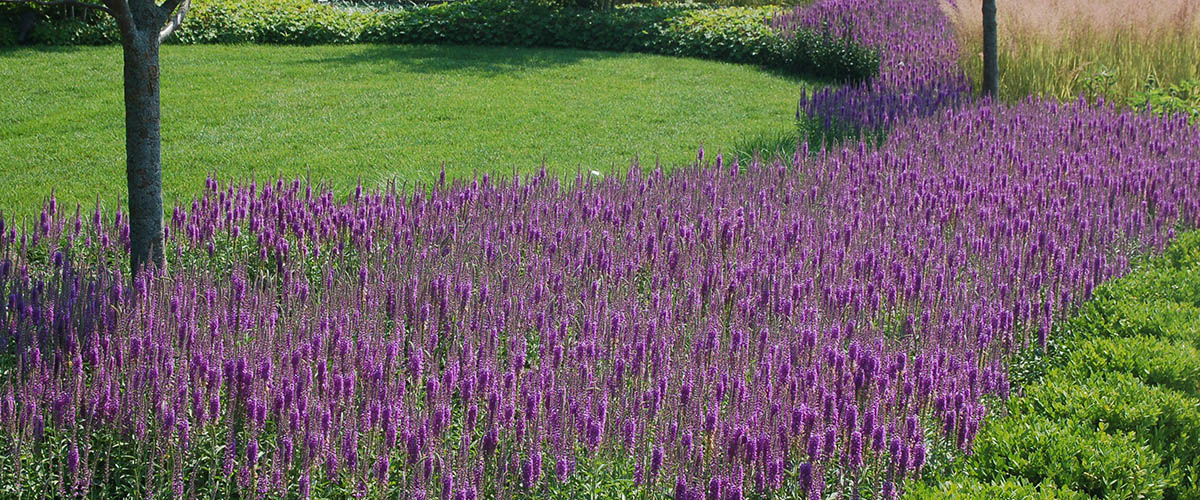
Evaluating Perennials for Chicagoland Gardens
Perennials in Focus is a plant evaluation program that examines new and underused plants for Chicagoland, the third largest metropolitan area in the country. A group of horticultural experts trials and evaluates plants at numerous locations across the region. Results help consumers, public gardens, growers, landscape designers, breeders, and other industry professionals make informed plant choices.
Overwintering Perennials in Unheated Balcony Pots
Learning how to overwinter perennials in unheated balcony pots is mostly a matter of managing exposure. In Northern Illinois, winter cold is only one concern. Wind, rapid freeze-thaw cycles, drying stems, limited snow cover, and containers that freeze from every direction can make a balcony far harsher than a garden bed.
Many hardy plants can survive this setting when their roots are protected and their moisture level remains steady. The goal is not to keep a perennial actively growing through winter. It is to help the plant remain dormant without allowing the root ball to become dangerously cold, dry, or waterlogged.
The best results come from choosing suitable species, using adequately sized containers, and preparing before the first hard freeze. A little planning in autumn can also make spring cleanup faster and reduce losses among valuable or unusual plants.
Read Your Balcony’s Winter Microclimate
A balcony several stories above ground usually receives more wind than a protected yard. Wind strips moisture from dormant stems and can chill containers rapidly. South- and west-facing balconies may also warm dramatically in winter sunshine, encouraging premature thawing before another cold night.
Observe where snow tends to collect and which corners are shielded by walls, railings, or neighboring buildings. A location beside the building is usually safer than an exposed outer edge. However, avoid placing pots directly against a wall beneath an overhang if they will receive no precipitation at all; winter-dry roots are a common cause of failure.
Container size matters as much as plant hardiness. A perennial rated for USDA Zone 5 may survive in the ground but struggle in a small pot, because the limited soil volume reaches outdoor temperatures quickly. Larger pots provide more thermal buffering and give roots room to remain insulated.
Choose Plants and Pots for Survival
Start with perennials that are reliably hardy in the Chicago area, rather than plants that are marginally rated for the region. Species with sturdy crowns, dormant winter buds, and naturally good drainage tend to perform better than plants with tender crowns or evergreen foliage that loses moisture quickly.
Regional trial information can help distinguish dependable performers from plants that merely look promising in a catalog. Browse the program’s regional plant snapshots for observations on bloom time, mature size, habit, and performance that are relevant to Chicagoland gardens.
Use a frost-resistant container with drainage holes. Thick plastic, resin, fiberglass, or glazed ceramic generally handles winter better than porous terra-cotta, which can absorb water, freeze, and crack. Avoid leaving a pot in a saucer that can hold ice around the drainage hole.
A container should be broad enough to prevent tipping and deep enough to give roots meaningful insulation. Tall, narrow pots are especially vulnerable because they have a large exposed surface compared with their soil volume. If a plant is already crowded, divide it in spring rather than disturbing the root system immediately before winter.
Prepare Before the Ground Freezes
Stop fertilizing by late summer so plants can slow their growth naturally. Continue watering during autumn, especially after leaves begin to yellow. The soil should be evenly moist going into winter, never saturated. A dry root ball can suffer winter injury even when the plant is fully dormant.
After several hard frosts, cut back herbaceous stems if the species tolerates it. Leaving some stems standing can protect the crown, catch snow, and provide habitat, so avoid treating every perennial the same way. Plants with semi-evergreen foliage may benefit from retaining healthy leaves until spring.
Group containers tightly together in a protected corner, with the hardiest plants on the outside and more vulnerable pots in the center. Raise them slightly on pot feet, wood strips, or a sturdy platform so drainage holes do not freeze against the balcony surface. Do not block required exits, vents, or building drainage systems.
Insulate Roots Without Sealing In Water
The most reliable protection surrounds the pot rather than wrapping the plant tightly. Place grouped containers inside a large storage bin, cardboard carton protected from rain, or a simple frame, then fill the spaces with loose leaves, straw, shredded bark, or pine needles. Keep the insulating material airy and dry.
Another option is to wrap the outside of each pot with burlap, blankets designed for outdoor use, or several layers of rigid foam. Leave the top of the soil open enough to receive occasional moisture and air. Plastic sheeting can trap condensation and encourage crown rot when wrapped directly around foliage or soil.
Snow is an excellent natural insulator when it is available. If a light, fluffy layer settles around the containers, leave it in place. Brush away heavy, wet snow from brittle stems and railings, and never add snow contaminated with salt or deicing chemicals.
For exceptionally exposed balconies, a temporary wind screen can reduce drying. Use breathable fabric, lattice, or a barrier with openings rather than creating an airtight enclosure. Good airflow helps prevent mold during mild spells.
| Winter condition | Main risk | Practical response |
|---|---|---|
| Small container in open wind | Rapid root chilling and drying | Move it beside the building and insulate the pot |
| Warm sunny balcony | Premature thawing and bud damage | Use shade or a light windbreak; avoid dark heat-absorbing covers |
| Repeated freeze-thaw cycles | Cracked pots and heaved roots | Use frost-resistant containers and keep them stable |
| Dry winter with little snow | Dehydrated crowns and roots | Check moisture during mild periods and water sparingly |
| Poor drainage | Crown rot and frozen saturated soil | Clear drainage holes and remove standing water |
| Heavy snow or ice | Broken stems and unsafe railings | Remove excess weight carefully after storms |
Water Carefully During Dormancy
Winter watering requires restraint. Check the soil during a thaw when temperatures are safely above freezing. If the upper layer is dry and the container feels unusually light, add a modest amount of water slowly, allowing excess to drain completely.
Do not water before a sharp freeze, and do not pour water onto frozen soil in an attempt to warm it. Water may remain trapped around the crown, then freeze into a solid mass. A dormant plant uses very little moisture, so occasional maintenance is safer than a regular watering schedule.
Balcony containers can become dry even in snowy weather because wind removes moisture and overhangs prevent precipitation from reaching them. Pay particular attention to evergreen or semi-evergreen perennials, which continue losing water through their foliage. If foliage is limp, browned, or brittle during a mild spell, inspect the soil before assuming the plant is dead.
Check Plants Through the Coldest Months
Inspect the pots after major storms and temperature swings. Confirm that insulation has not blown away, drainage holes remain open, and containers have not shifted toward an unsafe edge. Remove standing water from saucers and clear ice that blocks drainage.
Avoid bringing dormant perennials into a heated apartment, stairwell, or enclosed room. Warm conditions can break dormancy, produce weak growth, and expose plants to low indoor light. If a container must be moved temporarily for building access, keep it in the coolest bright location available and return it outdoors promptly.
Rodents may shelter beneath insulation and feed on crowns or stems. Look for shredded material, tunnels, or gnaw marks. Use physical barriers and tidy storage materials rather than applying products that could wash into shared drainage or harm balcony wildlife.
Wake Plants Gradually in Spring
When daytime temperatures begin to moderate, remove only the outermost insulation first. Keep some protection in place while nights remain sharply cold. Sudden exposure to bright sun and drying wind can damage tender new shoots that emerge during the first warm spell.
Begin checking for swelling buds and green growth near the crown. Once growth is visible, move pots into brighter conditions gradually if they were heavily shaded. Water more consistently as leaves expand, but wait until the plant is actively growing before applying a balanced fertilizer.
Cut away dead stems and remove wet, compacted leaves that could harbor fungal problems. If roots have heaved above the soil or the container is cracked, repot after the danger of severe frost has passed. Spring is also the right time to divide vigorous perennials and replace plants that show clear signs of crown rot.
A Practical Balcony Winter Checklist
- Select perennials proven hardy for Northern Illinois, with preference for sturdy crowns and reliable dormancy.
- Use large, frost-resistant pots with open drainage holes and stable placement.
- Water thoroughly in late autumn, then check moisture only during safe winter thaws.
- Cluster and insulate containers while keeping foliage, crowns, and drainage areas ventilated.
- Remove protection gradually in spring and monitor new growth for wind, sun, and frost damage.
With the right plant, pot, and placement, an unheated balcony can support a surprisingly durable collection of perennial plants. Prepare containers before severe weather arrives, inspect them through winter, and give spring growth time to adjust. Use regional performance information to refine future selections, then put those findings into practice by protecting your strongest balcony plants through the next Northern Illinois winter.
In the Garden
Evaluator gardens are located across the Chicagoland area, representing a range of growing conditions. Visit our retail and wholesale partners to find trialled perennials for your own garden.
Retail & Wholesale: Hinsdale Nurseries (Willowbrook, IL), Mariani Nurseries (Kenosha, WI & Garden Prairie, IL), Northwind Perennials (Burlington, WI), The Growing Place (Aurora, IL).
Wholesale Only: Hinsdale Nurseries (Plano, IL), Intrinsic Perennial Gardens (Hebron, IL).
Our Evaluation Program
The 2017–2020 evaluation cycle included Agastache 'Blue Boa', Allium senescens 'Blue Eddy', Amsonia ciliata var. filifolia 'Georgia Pancake', Astilbe 'Chocolate Shogun', Boltonia astroides 'James Crocket', Brunnera 'Alexander's Great', and Geranium cinereum 'Jolly Jewel Purple'. Completed evaluations include Amsonia 'Blue Ice' (2004–07).
On April 10, 2020, the program published snapshot profiles for Vernonia lettermanii 'Iron Butterfly', Stokesia laevis 'Elf', Stachys officinalis 'Pink Cotton Candy', Lobelia 'Monet Moment', Helleborus 'Winter Thrillers', Geum 'Mai Tai', Geranium soboliferum 'Butterfly Kisses', Gentiana x intermedia 'True Blue', Eurybia divaricata, Asparagus 'Purple Passion', and Agastache 'Bolero'.
Browse the full collection of snapshots organized alphabetically — from A–D, E–H, I–Q, and R–Z — to find detailed performance data on perennials trialled across Chicagoland.