Evaluating Perennials for Chicagoland Gardens
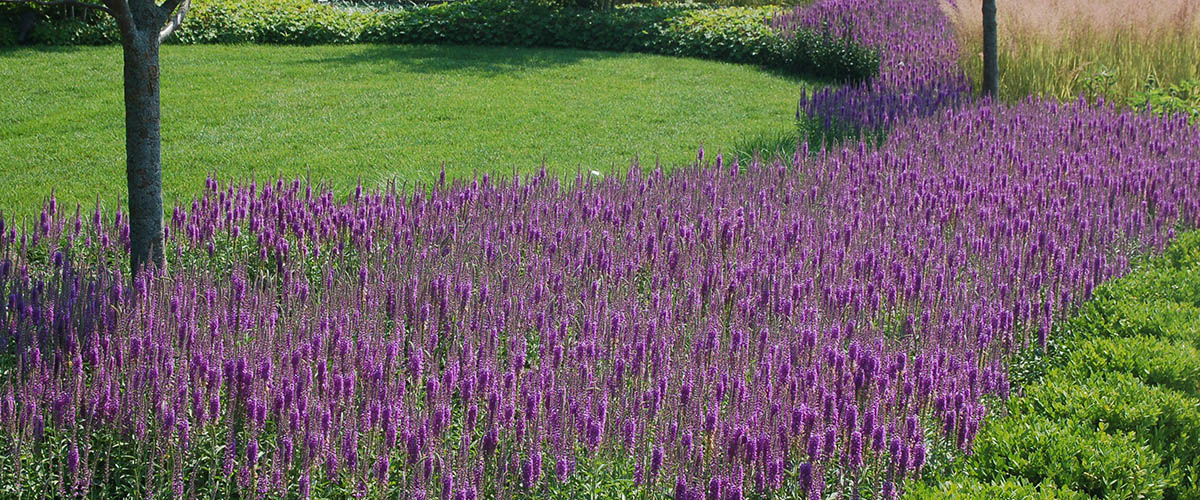
Perennials in Focus is a plant evaluation program that examines new and underused plants for Chicagoland, the third largest metropolitan area in the country. A group of horticultural experts trials and evaluates plants at numerous locations across the region. Results help consumers, public gardens, growers, landscape designers, breeders, and other industry professionals make informed plant choices.
Layering Bloodroot With Summer Perennials In Australian Gardens
Spring ephemerals offer some of the earliest woodland colour in temperate climates, yet many Australian gardeners assume they are impossible to grow locally because the Southern Hemisphere calendar feels upside down. The good news is that a handful of cold-requiring species, including Sanguinaria canadensis, will settle in happily across southern Australia if you understand their rhythm and plant accordingly.
Bloodroot is a small rhizomatous perennial native to the deciduous woodlands of eastern North America. It produces a single cupped white flower in early spring, unfurling alongside a deeply lobed blue-green leaf that disappears by midsummer once the canopy above closes. In an Australian setting, that dormancy line is what makes it such a useful layering plant, because the empty space it leaves behind is precisely where a summer perennial can shine.
The art of layering in this context is about sequencing bloom and foliage interest across one patch of soil. Rather than treating the ephemeral as a disappointment that vanishes, gardeners from Hobart to the Adelaide Hills are using Sanguinaria canadensis as an opening act for sturdy, drought-adapted summer performers that take over the visual baton from November onwards.
Adopting this approach also fits neatly with the way many Australian councils now encourage layered, biodiverse plantings through local native vegetation guidelines. By mixing exotic ephemerals with regionally appropriate perennials, you can build a bed that looks after itself through the southern winter and rewards you with a long succession of texture.
Getting To Know Bloodroot Behaviour
Sanguinaria canadensis grows from a fleshy rhizome that sits only a few centimetres below the soil surface. The plant needs a distinct cold period to trigger flowering, which is why it performs reliably around Canberra, the elevated parts of the Southern Tablelands, Tasmania's east coast, and the cooler suburbs of Melbourne such as the Dandenong Ranges. In subtropical Brisbane it will grow foliage but rarely flower, and in Perth's sandy coastal gardens it tends to desiccate unless planted in heavily mulched shade.
The flower emerges on a pale stem wrapped around the leaf, opening in response to warm days following winter chill. Once pollinated, the petals drop within a few days and the leaf expands to photosynthesise while the canopy above is still bare. By late October or early November in most southern regions, the foliage collapses and the plant disappears underground until the following autumn.
This predictable rhythm is the foundation of the layering strategy: if you know bloodroot vacates the stage by mid-spring, you can plant taller summer perennials nearby so their emerging growth covers the gap without smothering the dormant rhizome.
Choosing Summer Partners That Pick Up The Baton
Selecting the right summer perennial is partly an aesthetic decision and partly a cultural one. Many gardeners across Sydney and Melbourne are now choosing plants that cope with extended dry periods, reflective heat from paving, and the kind of water restrictions that swing in during El Niño summers. The ideal partner for bloodroot therefore needs to tolerate dry shade in early spring and full sun or part shade in summer, depending on the bed orientation.
A simple combination that works from Adelaide to Hobart is to place Sanguinaria canadensis near the front of a border, with taller mid-border perennials rising behind it. For early summer structure, the sturdy upright spires of Baptisia australis selections bridge the dormancy gap beautifully, since their blue-green foliage emerges in early spring and their lupin-like flower spikes carry through November and into December in cooler sites.
For later colour, Helenium autumnale selections provide warm daisy tones from January into March, long after bloodroot has vanished. Their taller cultivars work as a back-of-border anchor, and their tolerance of heavy clay suits the volcanic soils common around Melbourne's western suburbs as well as the loamy clays of the Adelaide Plains.
| Layer | Plant Example | Role | Bloom Period In Australia |
|---|---|---|---|
| Front | Sanguinaria canadensis | Spring ephemeral, white flowers | August to early October |
| Middle | Baptisia australis cultivars | Upright filler, blue-green foliage | November to December |
| Back | Helenium autumnale cultivars | Late summer colour, pollinator support | January to March |
The sequencing above is a rough guide, although exact timing shifts by a month or so depending on whether you garden in coastal Perth or the frost pockets of regional Victoria.
Microclimates And Siting Across Australia
Australian gardens are rarely uniform, and the success of layering bloodroot depends heavily on choosing the right microclimate. The plant resents root competition from thirsty trees, but it also dislikes bone-dry surface soil, so a position beneath a deciduous tree such as a claret ash or Japanese maple gives it the cool root run and filtered light it prefers. In suburban Canberra and the Southern Highlands of New South Wales, this combination is almost effortless to replicate.
In Melbourne's inner suburbs, gardeners must watch for the reflected heat coming off south-facing brick walls, which can scorch emerging bloodroot leaves in September. A position on the east side of a fence, or beneath a pergola draped with winter-flowering wisteria, keeps the foliage cool while still allowing the rhizome to experience the cold nights it needs. Hobart's often cloudy summers actually suit bloodroot well, as long as drainage is sharp.
For those in Adelaide, where summer temperatures regularly exceed thirty-five degrees, layering becomes more about soil preparation than plant choice. Incorporating well-rotted compost and a thick layer of bark mulch keeps the dormant rhizome cool and prevents it from drying out completely. Brisbane gardeners are usually better off skipping Sanguinaria canadensis and substituting a different ephemeral, since the lack of winter chill means flowering is sporadic and growth is weak.
Putting The Layers Together Step By Step
Start by preparing the bed in late summer or early autumn, which in Australia means February or March. Remove any weeds, dig in compost, and check that drainage is sharp; bloodroot rhizomes rot quickly in waterlogged soil, which is common in the heavy clays around Geelong and parts of western Sydney.
Plant the Sanguinaria canadensis rhizomes about five centimetres deep and twenty centimetres apart, positioning them where you want the earliest display. Mark the spot with a small stake, because once the foliage dies down there will be nothing visible above ground to remind you where the treasure lies.
Place the summer perennials around and behind these positions, leaving enough room for their mature spread. If you are working with Baptisia, remember that the plants develop deep taproots and dislike being moved, so take time to get their placement correct from the start. Water everything in well and apply a five-centimetre layer of organic mulch, keeping it clear of the emerging bloodroot shoots the following winter.
By the second spring, the layering effect should be clearly visible, with bloodroot flowers nestled at the front, Baptisia spires rising behind them, and the first signs of Helenium foliage developing further back.
Looking After The Bed Through The Seasons
Once established, layered plantings like this need surprisingly little intervention. The main risk in Australia is overwatering during summer dormancy, because bloodroot rhizomes will rot if the surrounding soil stays wet while the plant is leafless. Drip irrigation aimed at the summer perennials is preferable to overhead sprinklers, and it pays to check local water-use rules before installing any reticulation, particularly in South Australia where restrictions can tighten quickly during a dry spring.
Cutting back the Helenium and Baptisia foliage in late autumn, once flowering finishes, keeps the bed tidy and reduces the slug and snail habitat that often builds up in damp Melbourne and Hobart winters. A light application of blood and bone or a slow-release native-friendly fertiliser in early winter supports strong rhizome growth without forcing soft foliage that cold winds could damage.
If you live in a bushfire-prone interface zone around Perth's foothills, Canberra's rural edges, or the Adelaide Hills, consider replacing some of the taller perennials with lower-growing, less flammable species once the bed is established. Layering can still work, simply by swapping in plants that stay under knee height and choosing mulches that do not form a continuous fuel path.
Once a season passes, take photographs from the same vantage point and note where the gaps fall. You will quickly see whether your summer perennials are filling in too early, too late, or just right, and you can adjust the spacing the following autumn. Many gardeners in Melbourne's inner north report that a second round of tweaking in the third year turns a good bed into a great one, with bloodroot acting almost like a punctuation mark between two longer summer phrases.
Browse the Perennials in Focus program to see how gardeners across temperate Australia are trialling combinations like these and which summer perennials are proving most reliable in your region.
In the Garden
Evaluator gardens are located across the Chicagoland area, representing a range of growing conditions. Visit our retail and wholesale partners to find trialled perennials for your own garden.
Retail & Wholesale: Hinsdale Nurseries (Willowbrook, IL), Mariani Nurseries (Kenosha, WI & Garden Prairie, IL), Northwind Perennials (Burlington, WI), The Growing Place (Aurora, IL).
Wholesale Only: Hinsdale Nurseries (Plano, IL), Intrinsic Perennial Gardens (Hebron, IL).
Our Evaluation Program
The 2017–2020 evaluation cycle included Agastache 'Blue Boa', Allium senescens 'Blue Eddy', Amsonia ciliata var. filifolia 'Georgia Pancake', Astilbe 'Chocolate Shogun', Boltonia astroides 'James Crocket', Brunnera 'Alexander's Great', and Geranium cinereum 'Jolly Jewel Purple'. Completed evaluations include Amsonia 'Blue Ice' (2004–07).
On April 10, 2020, the program published snapshot profiles for Vernonia lettermanii 'Iron Butterfly', Stokesia laevis 'Elf', Stachys officinalis 'Pink Cotton Candy', Lobelia 'Monet Moment', Helleborus 'Winter Thrillers', Geum 'Mai Tai', Geranium soboliferum 'Butterfly Kisses', Gentiana x intermedia 'True Blue', Eurybia divaricata, Asparagus 'Purple Passion', and Agastache 'Bolero'.
Browse the full collection of snapshots organized alphabetically — from A–D, E–H, I–Q, and R–Z — to find detailed performance data on perennials trialled across Chicagoland.