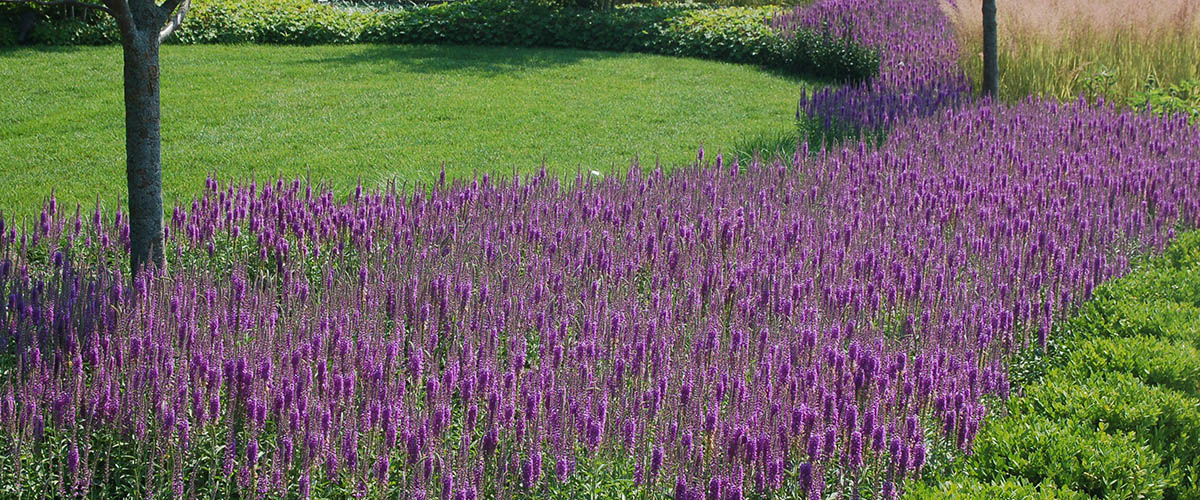
Evaluating Perennials for Chicagoland Gardens
Perennials in Focus is a plant evaluation program that examines new and underused plants for Chicagoland, the third largest metropolitan area in the country. A group of horticultural experts trials and evaluates plants at numerous locations across the region. Results help consumers, public gardens, growers, landscape designers, breeders, and other industry professionals make informed plant choices.
Layer Perennials for Three Seasons of Color in Small Gardens
A small garden can offer a longer, richer display than a larger border when plants are selected for succession rather than for a single peak moment. The aim is to arrange perennials so that spring bulbs and early flowers hand attention to summer performers, while seedheads, foliage, and late blooms carry the planting into autumn.
In the Chicagoland region, this approach requires more than matching flower colors. Winter cold, wet springs, humid summers, clay soils, and periods of drought all affect how reliably a plant performs. Region-specific trial observations can help gardeners choose plants that have demonstrated useful traits under local conditions.
The most successful compact borders usually combine three kinds of plants: dependable seasonal anchors, shorter fillers that occupy open spaces, and foliage plants that maintain structure between bloom periods. Repeating a few colors and forms keeps the design calm, even when many species share the space.
Read Small Spaces As Vertical Layers
Begin by sketching the garden from a front view as well as from above. Place tall plants toward a wall, fence, or the back of a border, medium-height plants in the middle, and low mounding or spreading perennials near paths. In a narrow bed, this arrangement prevents taller stems from hiding shorter flowers and makes the garden appear deeper.
Height should be considered at maturity, not at planting time. A perennial listed as 3 feet tall may lean into a walkway when rain softens its stems, while a plant with a smaller stated height may spread widely at the base. Record both mature height and spread, then leave enough room for air movement and maintenance access.
Use foliage as a second layer of design. Narrow leaves, rounded leaves, upright seedheads, and fernlike textures create contrast when flowers are absent. This is especially valuable in shade, where bloom periods may be shorter but foliage can remain attractive for much of the growing season.
Choose Plants By Season And Scale
A three-season planting does not require every plant to flower continuously. Instead, combine early, middle, and late performers so that each month includes a few strong focal points. Four or five weeks of bloom from one species can be enough when another plant begins flowering as it fades.
For a small garden, avoid filling every inch with novelty plants. Choose a limited palette and repeat reliable selections in groups of three or five. Repetition makes the space feel intentional and allows individual plants to support one another visually.
A useful selection record includes bloom time, flower color, mature height, spread, light preference, and foliage quality. The Perennials in Focus evaluations are particularly useful because they compare plants across gardens and seasons, giving gardeners a clearer sense of how new or underused perennials may behave in the region.
Build The Spring Foundation
Spring color often begins below the soil line with bulbs tucked among emerging perennials. Crocuses, daffodils, and species tulips can occupy spaces that later become shaded by foliage. Their leaves should be allowed to mature naturally, so place them among perennials that will eventually disguise fading foliage.
Early-blooming perennials extend the display after bulbs begin to decline. Brunnera, barrenwort, pulmonaria, and foamflower offer flowers along with foliage that remains useful after bloom. In sunnier sites, catmint, creeping phlox, and early salvia can create a low band of color around taller summer plants.
Shaded gardens need dependable foliage to bridge the transition into summer. Ferns can provide texture before and after flowering perennials emerge, and the regional guide to Chicagoland fern choices offers a helpful starting point for matching fern character to local conditions. Combine arching fronds with broad-leaved plants rather than placing several finely textured species together.
Carry Color Through Summer
Summer is the main test of a compact planting because many perennials reach full size at once. Use a clear height rhythm: one upright accent, several mid-height bloomers, and a low edging plant. This keeps the border readable and leaves small pockets where annuals or bulbs can be added without overcrowding.
Flower color can move through the season gradually. Pale pinks, blues, and whites work well in late spring; stronger purples, yellows, and warm pinks can take over in midsummer; and deeper reds or copper tones can prepare the eye for autumn. Repeating one color in different flower shapes helps separate the layers.
Plants with airy stems are valuable in small spaces because they add volume without creating a solid wall. Gaura, for example, can weave among sturdier perennials and keep the composition light. Before using it widely, review the Gaura trial results, especially if the garden has heavy soil or tends to stay wet in spring.
| Garden Layer | Seasonal Role | Useful Traits | Examples For Chicagoland |
|---|---|---|---|
| Low edging | Early and repeat color near paths | Compact habit, spreading foliage | Creeping phlox, catmint, heuchera |
| Middle layer | Main summer display | Long bloom, sturdy stems, moderate spread | Salvia, coneflower, yarrow |
| Vertical accent | Height and late-season focus | Upright form, strong seedheads | False indigo, culver’s root, switchgrass |
| Shade texture | Continuity between blooms | Durable foliage, clumping habit | Ferns, brunnera, lungwort |
| Late-season layer | Autumn color and structure | Late flowers, persistent stems | Asters, sedum, rudbeckia |
Finish With Autumn Structure
Late-season planning begins in spring, when you decide which plants will remain attractive after flowering. Coneflower seedheads, ornamental grasses, rattlesnake master, and upright sedum can hold their shape through autumn and into winter. Their structure also provides food or shelter for wildlife.
Late-blooming asters, goldenrods, and chrysanthemums can supply fresh color when summer perennials begin to tire. In a small garden, use them selectively rather than creating a second crowded border. One drift of a late bloomer repeated near the front can connect the entire planting.
Autumn foliage adds another form of succession. Heuchera, geranium, amsonia, and some ornamental grasses may develop richer tones as temperatures cool. Plants that combine late color with attractive foliage offer greater value than short-lived flowers that leave an empty space immediately afterward.
Manage Density And Seasonal Transitions
Planting too closely is one of the most common mistakes in a small border. Young perennials may look sparse at first, but rapid growth can lead to poor air circulation, weak stems, and difficult division later. Follow mature spacing recommendations, then use mulch to cover temporary gaps while plants establish.
Maintenance can reinforce the sequence. Remove spent flowers from plants that look untidy, but leave selected seedheads for texture and wildlife. Cut back collapsing foliage when it begins to obscure neighboring plants, while allowing sturdy stems to remain until late winter if they contribute to the garden’s structure.
A simple seasonal review improves future choices. Photograph the border in May, July, and October, then note which plants flowered when expected, which sprawled, and which disappeared behind stronger neighbors. These observations are more useful than relying on a catalog photograph or a generic bloom calendar.
A Practical Planting Checklist
Use the following checklist when designing or revising a compact perennial border:
- Select at least two strong performers for spring, summer, and autumn.
- Repeat a few key colors or plant forms instead of using one specimen of everything.
- Check mature height, spread, light requirements, and soil tolerance before planting.
- Include foliage plants to connect periods of bloom and fill shaded areas.
- Reserve space for air circulation, access, and eventual division.
Arrange plants in groups large enough to read from a distance, then repeat those groups through the garden where space permits. A small border gains visual scale when the same sedge, salvia, fern, or coneflower appears in more than one location.
Use local trial information to refine the design over time. When a perennial proves sturdy, floriferous, and well behaved in the Chicagoland climate, give it a larger role. When a plant struggles repeatedly, replace it with a better regional performer rather than building the entire planting around extra maintenance.
Plan the border around succession, record what actually happens, and adjust one season at a time. Explore the regional evaluations from Perennials in Focus to discover dependable plants for your light, soil, and available space, then use those findings to create a garden that keeps offering color from spring emergence through autumn frost.
In the Garden
Evaluator gardens are located across the Chicagoland area, representing a range of growing conditions. Visit our retail and wholesale partners to find trialled perennials for your own garden.
Retail & Wholesale: Hinsdale Nurseries (Willowbrook, IL), Mariani Nurseries (Kenosha, WI & Garden Prairie, IL), Northwind Perennials (Burlington, WI), The Growing Place (Aurora, IL).
Wholesale Only: Hinsdale Nurseries (Plano, IL), Intrinsic Perennial Gardens (Hebron, IL).
Our Evaluation Program
The 2017–2020 evaluation cycle included Agastache 'Blue Boa', Allium senescens 'Blue Eddy', Amsonia ciliata var. filifolia 'Georgia Pancake', Astilbe 'Chocolate Shogun', Boltonia astroides 'James Crocket', Brunnera 'Alexander's Great', and Geranium cinereum 'Jolly Jewel Purple'. Completed evaluations include Amsonia 'Blue Ice' (2004–07).
On April 10, 2020, the program published snapshot profiles for Vernonia lettermanii 'Iron Butterfly', Stokesia laevis 'Elf', Stachys officinalis 'Pink Cotton Candy', Lobelia 'Monet Moment', Helleborus 'Winter Thrillers', Geum 'Mai Tai', Geranium soboliferum 'Butterfly Kisses', Gentiana x intermedia 'True Blue', Eurybia divaricata, Asparagus 'Purple Passion', and Agastache 'Bolero'.
Browse the full collection of snapshots organized alphabetically — from A–D, E–H, I–Q, and R–Z — to find detailed performance data on perennials trialled across Chicagoland.