Evaluating Perennials for Chicagoland Gardens
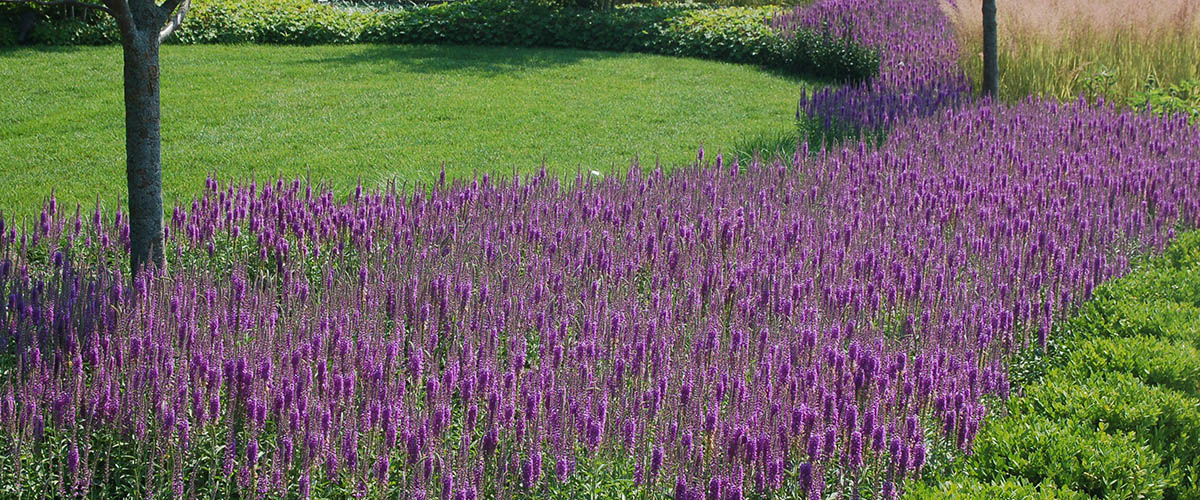
Perennials in Focus is a plant evaluation program that examines new and underused plants for Chicagoland, the third largest metropolitan area in the country. A group of horticultural experts trials and evaluates plants at numerous locations across the region. Results help consumers, public gardens, growers, landscape designers, breeders, and other industry professionals make informed plant choices.
How to Incorporate Perennials into a Formal Rose Garden Design
A formal rose garden depends on clarity. Repeated shapes, balanced borders, controlled color, and visible pathways create the ordered character that makes roses feel intentional rather than scattered. Perennials can strengthen that structure when they are chosen for proportion, foliage, bloom timing, and restraint.
The best companion plants do more than fill empty soil around rose bushes. They soften hard edges, cover bare stems, extend seasonal interest, and create a layered composition that remains attractive when roses pause between flowering cycles. Their placement should support the geometry of the garden instead of competing with the roses.
In the Chicagoland region, perennial selection also needs to account for cold winters, humid summers, variable soils, and periods of heavy rain or drought. A plant that looks appealing in a catalog may have a very different performance in a local rose border, so regional trial information is especially valuable.
Start with the garden’s geometry
Begin by identifying the rose garden’s strongest lines. These may include a central axis, symmetrical beds, clipped edging, a circular bed, or paths that lead toward a focal point. Perennials should repeat those lines through consistent groupings rather than appear as isolated specimens.
Use matching drifts on either side of a path or mirror similar combinations in opposing beds. Repetition gives the planting visual rhythm and makes a mixed border feel formal. Three, five, or seven plants grouped together usually read more clearly than single plants scattered throughout the bed.
Keep taller perennials toward the back of borders or near the center of island beds, while low edging plants define paths and lawn boundaries. Avoid allowing a vigorous perennial to obscure the lower structure of a rose or spill across a walkway. Mature width matters as much as height when preserving clean geometry.
Build a restrained planting palette
A formal rose garden benefits from a limited color scheme. White, blue, lavender, soft pink, and silver foliage create a calm setting for rose flowers, while burgundy or deep green leaves can provide controlled contrast. Too many unrelated colors can make the garden look busy, especially during peak bloom.
Repeat a small number of companion plants throughout the space. Catmint, for example, can form a soft blue-gray ribbon along several beds, while white yarrow or pale salvia can appear at regular intervals. Hardy geraniums, heucheras, and ornamental grasses can contribute foliage continuity even when flowers are absent.
Texture should be coordinated as carefully as color. Rounded rose blooms pair well with upright flower spikes, fine grass blades, or broad architectural leaves. A combination of one dominant form, one supporting texture, and one low filler is often enough for a polished bed.
Layer plants around rose shrubs
Roses generally occupy the middle layer of a planting design, so the surrounding perennials should have distinct roles. Low plants can conceal bare soil and rose legs, medium-height plants can occupy the space between shrubs, and taller vertical accents can frame the back of the border without blocking sunlight.
Suitable front-edge choices for many Chicagoland gardens include creeping thyme in well-drained areas, compact sedums, lady’s mantle, and low-growing hardy geraniums. In slightly taller positions, plants such as salvia, catmint, veronica, and yarrow can echo the vertical stems of roses while keeping an airy appearance.
Leave enough space around each rose for air circulation and access. Perennials planted directly against a rose crown can trap moisture, complicate pruning, and make disease monitoring harder. A narrow open ring of mulch or soil around each shrub creates a practical buffer while preserving a deliberate look.
| Garden role | Suitable perennial qualities | Possible plant choices |
|---|---|---|
| Path and bed edging | Compact, tidy, long-lived foliage | Lady’s mantle, hardy geranium, sedum |
| Mid-level rose companions | Repeat flowering, moderate height, clumping habit | Catmint, salvia, yarrow, veronica |
| Vertical accents | Upright form without excessive spread | Culver’s root, foxglove beardtongue, ornamental grasses |
| Shade-side structure | Decorative leaves and reliable habit | Heuchera, brunnera, hosta |
| Late-season interest | Seed heads, texture, or autumn color | Asters, anemones, switchgrass |
Coordinate bloom and foliage seasons
Roses may flower in flushes, leaving brief periods when foliage carries the composition. Select perennials that bridge those intervals with dependable leaves or staggered flowering. Early alliums and peonies can begin the display, followed by catmint, salvia, coneflowers, and summer phlox. Late asters and sedums can carry the border into autumn.
Foliage is particularly important in a formal design because it maintains structure after individual flowers fade. Silver catmint leaves, glossy heuchera foliage, vertical iris leaves, and fine-textured grasses can create contrast even when the bed is between bloom cycles.
Deadheading should be coordinated across the planting. Removing spent rose flowers keeps the shrubs tidy, while cutting back selected perennials at different times can preserve seed heads and winter texture. A garden that remains visually intentional after flowering requires a seasonal maintenance plan, not just a list of attractive plants.
Design for Chicagoland conditions
Choose perennials according to the actual conditions around the roses. Rose beds often receive full sun, but nearby walls, fences, or dense shrub borders can create pockets of afternoon shade. Soil may also vary from heavy clay to amended loam within the same property. Match each plant to drainage, exposure, and mature size.
The regional trials documented through regional plant trials can help gardeners compare perennial performance under conditions relevant to the area. Information about bloom period, plant height, spread, and seasonal behavior is useful when building a coordinated planting plan rather than relying on appearance alone.
Good drainage is essential for many roses and perennial companions. Improve compacted soil with organic matter, but avoid creating a sharply different soil pocket that holds water around individual plants. Mulch should be applied evenly and kept away from rose stems and perennial crowns.
Water deeply during establishment, then adjust irrigation according to rainfall and soil type. Group plants with similar moisture needs so that drought-tolerant companions are not overwatered simply because neighboring roses require regular attention. This approach supports healthier roots and reduces maintenance confusion.
Keep the formal effect through maintenance
Formal planting depends on edges staying visible. Trim perennials that lean into paths, divide clumps when they become crowded, and remove seedlings that appear outside the intended pattern. A plant with a beautiful flower may still be unsuitable if it rapidly escapes its allotted space.
Use supports early for perennials that tend to flop, particularly in rich soil or exposed beds. Staking before stems bend is less noticeable and preserves the vertical lines of the garden. Compact cultivars are often preferable to tall, loose forms when the design relies on crisp edges.
Plan access routes before planting. Rose pruning, feeding, pest inspection, and winter cleanup all require room to work. Stepping stones or narrow maintenance paths can be integrated into larger beds without disrupting the visual axis. The most successful formal gardens are designed for care as carefully as they are designed for viewing.
Practical recommendations for a polished border
- Repeat two or three dependable perennial companions throughout the rose garden.
- Keep a clear mulch ring around each rose crown for airflow and maintenance access.
- Use low plants at paths, medium plants beside rose shrubs, and taller accents behind them.
- Choose colors that support the rose palette instead of competing with every bloom.
- Record mature height, spread, bloom period, and winter hardiness before purchasing.
Review the border several times during the growing season. A combination that looks balanced in May may become crowded by July, while a gap in late summer may reveal the need for an additional long-blooming perennial. Small adjustments are easier when the original planting follows a clear structure.
Bring the plan into the garden
A formal rose garden becomes more expressive when its companion planting has a deliberate framework. Start with the paths and focal points, repeat a limited palette, protect air circulation, and select perennials that contribute beauty across the entire season. The result should feel composed from a distance and rewarding up close.
Use regional performance information to refine the plant list, then map mature sizes onto the beds before buying. A carefully measured plan will help the roses remain the stars while perennials supply rhythm, foliage, and lasting seasonal interest. Build the design in stages, observe how it performs, and make each addition serve the garden’s overall form.
In the Garden
Evaluator gardens are located across the Chicagoland area, representing a range of growing conditions. Visit our retail and wholesale partners to find trialled perennials for your own garden.
Retail & Wholesale: Hinsdale Nurseries (Willowbrook, IL), Mariani Nurseries (Kenosha, WI & Garden Prairie, IL), Northwind Perennials (Burlington, WI), The Growing Place (Aurora, IL).
Wholesale Only: Hinsdale Nurseries (Plano, IL), Intrinsic Perennial Gardens (Hebron, IL).
Our Evaluation Program
The 2017–2020 evaluation cycle included Agastache 'Blue Boa', Allium senescens 'Blue Eddy', Amsonia ciliata var. filifolia 'Georgia Pancake', Astilbe 'Chocolate Shogun', Boltonia astroides 'James Crocket', Brunnera 'Alexander's Great', and Geranium cinereum 'Jolly Jewel Purple'. Completed evaluations include Amsonia 'Blue Ice' (2004–07).
On April 10, 2020, the program published snapshot profiles for Vernonia lettermanii 'Iron Butterfly', Stokesia laevis 'Elf', Stachys officinalis 'Pink Cotton Candy', Lobelia 'Monet Moment', Helleborus 'Winter Thrillers', Geum 'Mai Tai', Geranium soboliferum 'Butterfly Kisses', Gentiana x intermedia 'True Blue', Eurybia divaricata, Asparagus 'Purple Passion', and Agastache 'Bolero'.
Browse the full collection of snapshots organized alphabetically — from A–D, E–H, I–Q, and R–Z — to find detailed performance data on perennials trialled across Chicagoland.