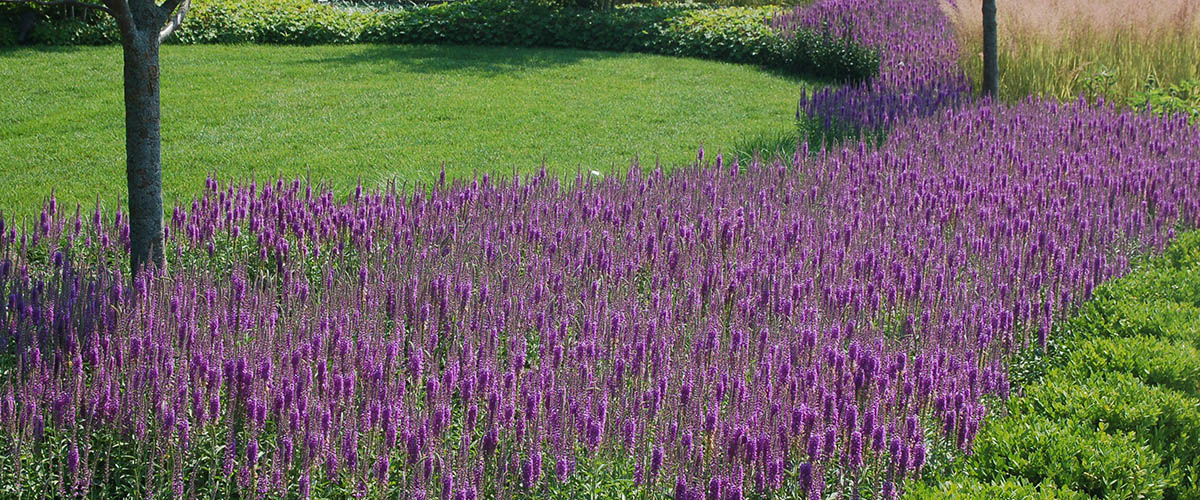
Evaluating Perennials for Chicagoland Gardens
Perennials in Focus is a plant evaluation program that examines new and underused plants for Chicagoland, the third largest metropolitan area in the country. A group of horticultural experts trials and evaluates plants at numerous locations across the region. Results help consumers, public gardens, growers, landscape designers, breeders, and other industry professionals make informed plant choices.
Designing Edible Beauty With Asparagus In Ornamental Borders
A productive garden does not need to look like a separate vegetable patch. Perennial food plants can bring edible harvests, distinctive foliage and seasonal structure to the same borders as salvias, daisies and ornamental grasses. Asparagus is especially useful because its spring spears give way to tall, airy fern-like stems that soften hard edges and fill gaps between flowering plants.
For Australian gardeners, this approach suits everything from a suburban Melbourne front garden to a sunny backyard in Adelaide or a mixed planting near Perth. The key is to treat asparagus as a long-term design plant with harvest requirements, rather than hiding it at the back of the allotment. With thoughtful spacing and compatible companions, an edible border can feel intentional throughout the year.
Give Asparagus A Permanent Place
Asparagus is a long-lived perennial that can remain productive for 15 years or more when planted in well-drained soil. It dislikes regular disturbance, so choose a position where crowns will not be dug up for annual bulbs or replanted vegetables. A sunny border with at least six hours of direct light is ideal, although a little afternoon shade can be helpful in very hot inland areas.
Prepare the soil deeply before planting. Work in mature compost and improve drainage if the ground is heavy clay, particularly in parts of Melbourne or Sydney where winter moisture can linger. Crowns should sit in a shallow trench and be covered gradually as shoots develop, following the directions supplied by the nursery. Avoid fresh manure, which can damage young roots and encourage lush, weak growth.
The ferny stems can reach around 1.2 to 1.8 metres, depending on variety and conditions. Place asparagus toward the middle or rear of a wide border, or use it as a loose screen beside a path. Its upright habit creates height without the dense visual block produced by a hedge.
Design Around The Seasonal Shift
The edible spears appear in spring, often before many warm-season perennials reach full size. Harvest only from established plants, usually after the first couple of growing seasons, and stop picking once the spears become thin. Allowing the remaining shoots to develop into foliage is essential because the ferns replenish the crown for future growth.
That seasonal change can become a design feature. Low spring bulbs, creeping thyme or early flowering perennials can occupy the foreground while spears are being harvested. Once the fern expands, it provides a light green backdrop for salvias, yarrow, catmint and rudbeckia. In Australian gardens, this can extend the border’s interest from late winter in mild climates through the warmer months.
The foliage may yellow and collapse as plants enter dormancy. Leave it in place until it has fully browned, then cut it down and remove the debris. In frost-prone districts such as Canberra, dormant crowns can be protected with a modest mulch layer, but avoid burying the crowns under wet, compacted material.
Choose Companions That Share The Conditions
Asparagus prefers fertile, free-draining soil and steady moisture during active growth. Good companions include perennial chives, garlic chives, sorrel, parsley, strawberries and compact herbs. Their lower growth helps cover bare soil without competing aggressively for the same vertical space.
For flowers, select plants with similar sun and water needs. Salvia nemorosa, penstemon, gaura, coreopsis and echinacea can provide colour around the asparagus foliage. In a cool-climate Australian garden, hellebores and hardy geraniums can fill the spring layer, while in warmer areas dianthus, society garlic and compact lomandra may cope better with dry conditions.
Avoid planting vigorous groundcovers directly over asparagus crowns. Mint, running grasses and spreading perennial vegetables can make harvesting difficult and may overwhelm young plants. A narrow strip of mulch or visible soil around each crown keeps access clear and makes it easier to spot emerging spears.
Balance Food Production With Ornament
A productive border works best when harvest paths are built into the layout. Position asparagus where you can reach the spears without stepping into flowering plants. A stepping stone path, narrow gravel access strip or open front edge can prevent accidental damage to neighbouring perennials.
Repeated textures help the food plants look intentional. Pair the fine asparagus foliage with broad-leaved plants such as rhubarb, cardoon or bergenia, then repeat upright forms with iris, foxglove or verbascum. Colour can be restrained rather than busy: silvery foliage, soft pink flowers and blue-purple blooms create a calm scheme around the bright green fern.
Edible flowers and foliage can add another layer of interest. Chives bloom in round purple heads, fennel offers yellow umbels and nasturtiums trail through the front of a border. Fennel can self-seed freely, so it is best placed where seedlings will not become a nuisance. In smaller Australian gardens, one or two carefully repeated food plants will usually look more polished than a collection of unrelated specimens.
Adapt The Planting To Australian Gardens
Water management deserves special attention in Australia. In a dry summer climate, apply compost and organic mulch around, rather than directly over, the crowns. Drip irrigation or a low-flow line can provide deep, consistent moisture while reducing evaporation. Check local restrictions before installing new irrigation, particularly during summer in Adelaide, Perth or regional New South Wales.
In tropical and subtropical areas, asparagus may struggle with warm, wet winters or insufficient dormancy. Choose a well-drained position and seek varieties suited to the local climate from a specialist nursery. In Tasmania and elevated southeastern districts, spring growth may be slower, while coastal gardens can experience salt-laden winds that scorch delicate foliage.
Plant availability also varies through the Australian market. Specialist edible nurseries and mail-order growers commonly sell crowns in winter, while larger garden centres may offer them seasonally alongside bare-root fruit plants. Ask for male or predominantly male varieties when available, as these generally direct more energy into edible spear production and produce fewer unwanted seedlings.
A border can carry colour from spring into autumn when asparagus is combined with plants selected for staggered flowering. Use this continuous bloom checklist as a planning reference, then adjust the plant list for Australian seasons and local climate rather than copying dates directly.
Build A Border That Ages Well
Long-term structure matters more than a perfect first-year display. Asparagus may look modest when newly planted, while nearby perennials expand quickly. Leave room for mature width and resist filling every gap. Temporary annuals can provide colour during establishment, provided they do not compete heavily with the crowns.
Divide the border into layers: low edging plants at the front, medium flowering perennials around the asparagus, and taller stems or shrubs behind. Keep at least 45 to 60 centimetres between asparagus crowns, with more space where soil is rich and growth is vigorous. This spacing improves air circulation and makes harvesting easier.
The following combinations offer a starting point for different Australian conditions:
| Border position | Food plant | Ornamental companions | Main design benefit |
|---|---|---|---|
| Front or middle edge | Alpine strawberry | Thyme, chives, dwarf dianthus | Low, edible groundcover |
| Middle layer | Asparagus | Salvia, penstemon, yarrow | Fine foliage and seasonal height |
| Rear of a sunny border | Globe artichoke | Verbena, grasses, echinacea | Bold architectural structure |
| Part-shade section | Sorrel or perennial parsley | Heuchera, hardy geranium, violets | Fresh foliage and soft colour |
| Dry-climate border | Garlic chives | Lomandra, lavender, everlasting daisies | Resilient texture with edible harvests |
Start with a small group of asparagus crowns and repeat two or three companion plants for visual rhythm. Harvest regularly during the permitted season, keep the planting weed-free and feed after the fern growth begins. Over time, the border will develop a relaxed, layered character that connects everyday food production with ornamental gardening.
Bring edible perennials into your next planting plan by reserving one sunny, accessible section for asparagus and its companions. Choose plants suited to your local Australian climate, allow space for mature growth and record how the border performs through each season. The result can be a productive garden that looks at home beside the flowers, rather than apart from them.
In the Garden
Evaluator gardens are located across the Chicagoland area, representing a range of growing conditions. Visit our retail and wholesale partners to find trialled perennials for your own garden.
Retail & Wholesale: Hinsdale Nurseries (Willowbrook, IL), Mariani Nurseries (Kenosha, WI & Garden Prairie, IL), Northwind Perennials (Burlington, WI), The Growing Place (Aurora, IL).
Wholesale Only: Hinsdale Nurseries (Plano, IL), Intrinsic Perennial Gardens (Hebron, IL).
Our Evaluation Program
The 2017–2020 evaluation cycle included Agastache 'Blue Boa', Allium senescens 'Blue Eddy', Amsonia ciliata var. filifolia 'Georgia Pancake', Astilbe 'Chocolate Shogun', Boltonia astroides 'James Crocket', Brunnera 'Alexander's Great', and Geranium cinereum 'Jolly Jewel Purple'. Completed evaluations include Amsonia 'Blue Ice' (2004–07).
On April 10, 2020, the program published snapshot profiles for Vernonia lettermanii 'Iron Butterfly', Stokesia laevis 'Elf', Stachys officinalis 'Pink Cotton Candy', Lobelia 'Monet Moment', Helleborus 'Winter Thrillers', Geum 'Mai Tai', Geranium soboliferum 'Butterfly Kisses', Gentiana x intermedia 'True Blue', Eurybia divaricata, Asparagus 'Purple Passion', and Agastache 'Bolero'.
Browse the full collection of snapshots organized alphabetically — from A–D, E–H, I–Q, and R–Z — to find detailed performance data on perennials trialled across Chicagoland.