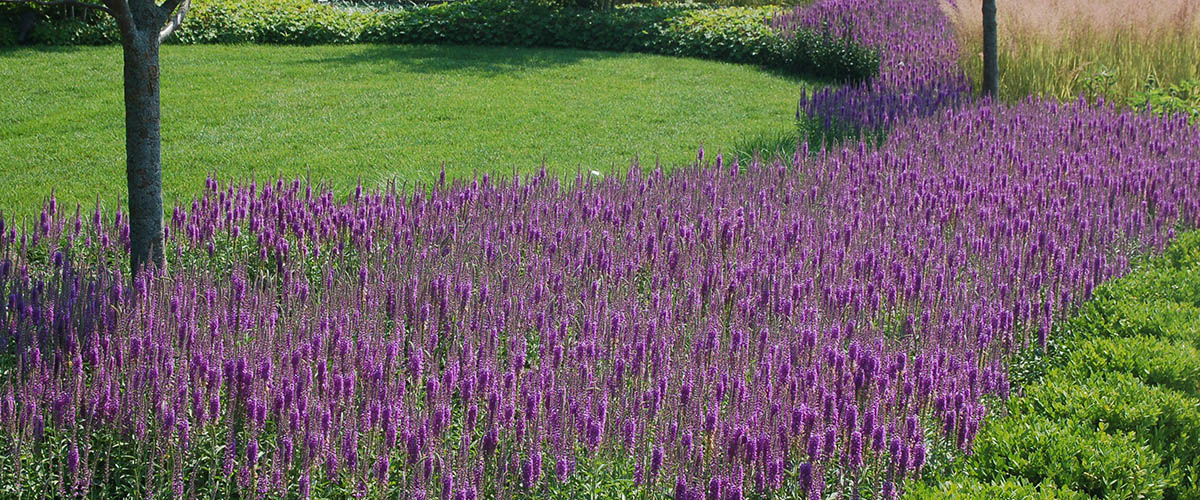
Evaluating Perennials for Chicagoland Gardens
Perennials in Focus is a plant evaluation program that examines new and underused plants for Chicagoland, the third largest metropolitan area in the country. A group of horticultural experts trials and evaluates plants at numerous locations across the region. Results help consumers, public gardens, growers, landscape designers, breeders, and other industry professionals make informed plant choices.
How to create a perennial meadow in a Chicago suburban lawn
A perennial meadow can turn an ordinary suburban lawn into a layered planting that supports pollinators, handles seasonal weather, and offers changing color from spring through fall. In the Chicagoland region, the most successful conversions begin with realistic expectations: this is not a wild patch left entirely on its own, but a designed plant community that needs thoughtful preparation and occasional management.
Chicago-area gardens face freeze-thaw cycles, heavy clay in many neighborhoods, summer heat, periods of drought, and runoff from hard surfaces. A meadow must therefore be matched to the site’s soil, sunlight, drainage, and available maintenance. Choosing plants evaluated in regional conditions gives the planting a stronger start than relying only on national hardiness information.
The best lawn conversions also respect the scale of a suburban property. A broad front-yard meadow can be informal and visually generous, while a narrow side yard may work better as a restrained ribbon of grasses and flowering perennials. Clear edges, repeated plant groupings, and a planned path help the result feel intentional.
Read the site before removing turf
Begin by observing the proposed planting area through several parts of the day. Record how many hours of direct sun it receives, where water collects after rain, and whether nearby trees create dry shade through summer. A site with at least six hours of sun can support many prairie-inspired perennials, while lighter shade calls for woodland-edge or shade-tolerant selections.
Soil testing is especially valuable before a lawn conversion. Many suburban soils are compacted from construction activity, and fertile turf soil may encourage tall, floppy growth rather than sturdy flowering stems. Test pH, organic matter, and drainage, then correct only what the results justify. Excessive amendments can create a rich but unstable planting medium.
Consider views from inside the house, the sidewalk, and neighboring properties. Place taller plants toward the back or center of an island, keeping lower species near paths and driveways. Check mature spread rather than relying on the plant’s first-year size, and leave room for air movement between clumps.
Choose plants for a long Chicago season
A resilient meadow combines different heights, textures, bloom periods, and root structures. Early-season plants provide interest before warm-season grasses reach full size. Summer bloomers carry the display through July, while late-flowering perennials and seedheads extend color and wildlife value into autumn and winter.
Use dependable regional performers as the framework, then add a smaller number of experimental or underused plants. The regional plant snapshots published by Perennials in Focus can help gardeners compare characteristics such as flowering time, mature height, spread, and flower color under Chicagoland conditions.
A balanced palette might include spring bulbs or early perennials, midseason plants such as coneflower and blazing star, and late-season choices such as asters, goldenrods, and thoroughworts. Bunch grasses can provide structure, but they should support rather than overwhelm the flowers. Select plants with compatible moisture needs so that irrigation is practical during establishment.
Avoid filling the entire space with one attractive species. Large repeated drifts are effective, but a monoculture is more vulnerable to pests, weather extremes, and seasonal gaps. Three to seven plants of a kind, repeated across the area, often create cohesion while preserving ecological and visual diversity.
Remove turf without damaging the soil
For a small suburban area, sheet mulching can suppress grass with overlapping cardboard and a thick layer of compost or mulch. It is convenient, but the materials must be installed carefully so perennial weeds do not escape through gaps. Keep cardboard away from tree trunks and avoid burying existing desirable plants.
Solarization or repeated shallow cultivation can work during warm weather, especially where the lawn contains few persistent weeds. Removing sod mechanically is faster for larger spaces, though it can strip topsoil and expose compacted subsoil. Whichever approach you use, inspect the area for bindweed, quackgrass, creeping charlie, and other aggressive weeds before planting.
Do not automatically add deep compost across the whole site. A modest layer incorporated into severely depleted soil may help, while excessive organic matter can alter drainage and encourage lush, weak growth. Once the turf is gone, loosen compacted soil without turning up large amounts of buried weed seed.
Build the planting in layers
Install plants in groups rather than spacing every specimen evenly like a formal border. Repeated drifts create visual rhythm and make the meadow easier to read from a distance. Place structural plants first, then weave in medium-height flowers and low edging species to soften paths and boundaries.
The following framework works well for many sunny suburban conversions, but local soil and moisture should guide the final choices:
| Planting layer | Typical role | Useful characteristics |
|---|---|---|
| Low edging plants | Define paths and soften borders | Compact growth, long bloom, tolerance of foot-level heat |
| Mid-height perennials | Supply the main seasonal color | Strong stems, varied bloom periods, pollinator value |
| Tall perennials | Create movement and a sense of enclosure | Upright habit, late-season interest, winter structure |
| Ornamental grasses | Connect flowering groups | Fine texture, deep roots, foliage interest |
| Bulbs or early plants | Start the display before summer growth | Early bloom, compact habit, spring appeal |
Install nursery plants in spring or early fall when soil moisture is dependable. Water thoroughly at planting and apply a thin layer of mulch, keeping it slightly away from crowns. If using seed, prepare a clean, finely textured seedbed and follow the species’ cold-stratification or sowing requirements; many prairie plants establish slowly and may not resemble a finished meadow for several seasons.
Manage moisture, weeds, and expectations
Water deeply during the first growing season whenever rainfall is insufficient. The goal is to encourage roots to move downward rather than keeping the surface constantly wet. By the second year, many established perennials can tolerate normal summer fluctuations, although drought-sensitive selections may still need supplemental irrigation.
Mulch can reduce weeds and conserve soil moisture while plants fill in, but its performance depends on material, depth, and weather. A comparison of mulch moisture findings offers useful context when deciding between organic and synthetic options. Keep mulch shallow enough to prevent crown rot and refresh it only when necessary.
Weed management is most important during the first two seasons. Learn to identify desirable seedlings before pulling them, and remove invasive or aggressive weeds while they are small. A meadow is not a no-maintenance landscape; it is a lower-input planting that replaces frequent mowing with seasonal observation, selective editing, and an annual cutback.
Leave some stems and seedheads standing through winter for structure and wildlife. In late winter or early spring, cut most dormant growth to a low height and remove the debris if the area is prone to fungal problems. This timing protects overwintering insects better than an early autumn cleanup and allows birds to use available seed.
Keep the conversion attractive to neighbors
A crisp edge is one of the simplest ways to make a naturalistic planting look deliberate. Mow a narrow border, install a steel or stone edge, or maintain a clearly defined path through larger areas. Repeatedly trimmed margins signal that the planting is designed rather than neglected.
During the first year, the meadow may look sparse, with mulch visible between young plants. Fill gaps gradually instead of crowding plants at installation. Perennials often expand substantially after their first winter, and a little open ground allows you to observe their mature habit before making changes.
If tall stems lean over sidewalks or obscure windows, relocate or support them rather than abandoning the design. Remove plants that spread too aggressively for the space, and divide overcrowded clumps when flowering declines. Regional trial information can help refine the planting over time, particularly when comparing cultivars with different heights, bloom windows, or moisture preferences.
Start with a manageable planting area
A phased lawn conversion reduces cost, limits early maintenance, and gives you a chance to learn how the site behaves. Begin with a visible section that has consistent light and access to water, then expand once the first group of plants has completed at least one full growing cycle.
Use these priorities when planning the work:
- Match every plant to the site’s sunlight, drainage, and mature space.
- Prepare the soil thoroughly while avoiding unnecessary amendments.
- Combine early, middle, and late bloomers with grasses for continuity.
- Establish clear edges and paths before the planting becomes dense.
- Observe for two seasons before replacing plants that are slow to settle.
A successful suburban meadow develops through editing. Some plants will thrive, some will need relocation, and a few will prove unsuited to the microclimate. Keeping simple notes on bloom dates, height, spread, and irrigation makes future decisions more accurate and turns the garden into a useful regional trial of its own.
Choose a manageable section of lawn, evaluate it through the seasons, and begin with a plant palette suited to Chicagoland conditions. With deliberate preparation and patient maintenance, a conventional yard can become a durable, changing landscape that serves people, pollinators, and the neighborhood.
In the Garden
Evaluator gardens are located across the Chicagoland area, representing a range of growing conditions. Visit our retail and wholesale partners to find trialled perennials for your own garden.
Retail & Wholesale: Hinsdale Nurseries (Willowbrook, IL), Mariani Nurseries (Kenosha, WI & Garden Prairie, IL), Northwind Perennials (Burlington, WI), The Growing Place (Aurora, IL).
Wholesale Only: Hinsdale Nurseries (Plano, IL), Intrinsic Perennial Gardens (Hebron, IL).
Our Evaluation Program
The 2017–2020 evaluation cycle included Agastache 'Blue Boa', Allium senescens 'Blue Eddy', Amsonia ciliata var. filifolia 'Georgia Pancake', Astilbe 'Chocolate Shogun', Boltonia astroides 'James Crocket', Brunnera 'Alexander's Great', and Geranium cinereum 'Jolly Jewel Purple'. Completed evaluations include Amsonia 'Blue Ice' (2004–07).
On April 10, 2020, the program published snapshot profiles for Vernonia lettermanii 'Iron Butterfly', Stokesia laevis 'Elf', Stachys officinalis 'Pink Cotton Candy', Lobelia 'Monet Moment', Helleborus 'Winter Thrillers', Geum 'Mai Tai', Geranium soboliferum 'Butterfly Kisses', Gentiana x intermedia 'True Blue', Eurybia divaricata, Asparagus 'Purple Passion', and Agastache 'Bolero'.
Browse the full collection of snapshots organized alphabetically — from A–D, E–H, I–Q, and R–Z — to find detailed performance data on perennials trialled across Chicagoland.