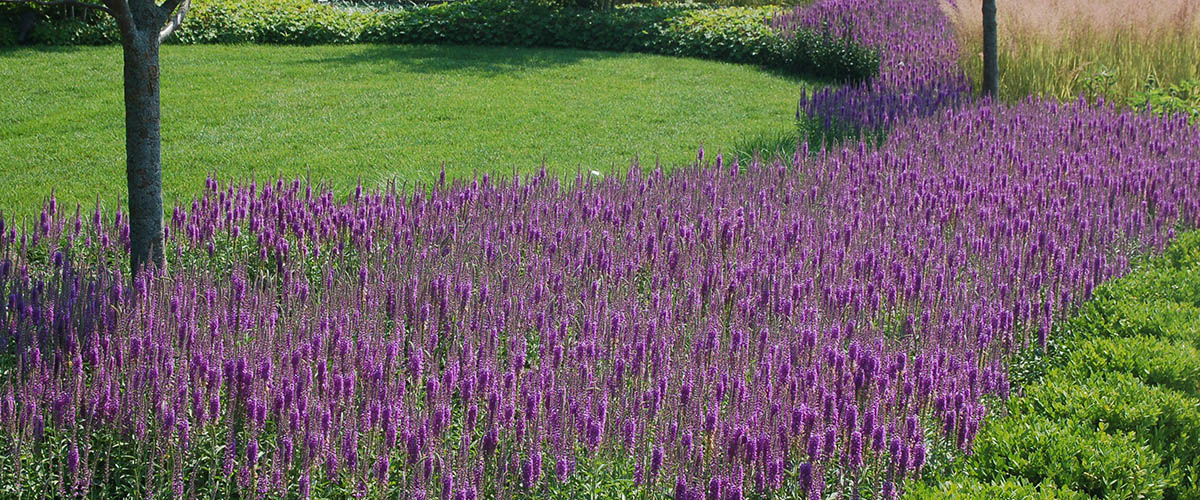
Evaluating Perennials for Chicagoland Gardens
Perennials in Focus is a plant evaluation program that examines new and underused plants for Chicagoland, the third largest metropolitan area in the country. A group of horticultural experts trials and evaluates plants at numerous locations across the region. Results help consumers, public gardens, growers, landscape designers, breeders, and other industry professionals make informed plant choices.
Growing Vernonia in Chicago: A Native That Attracts Pollinators
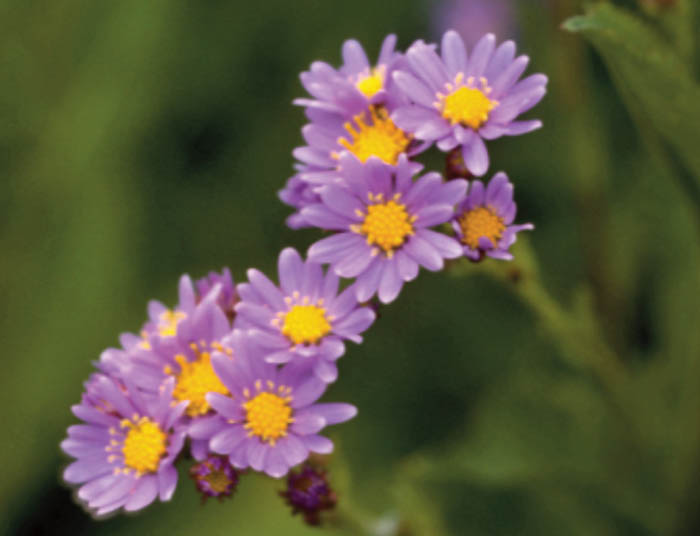
Vernonia, commonly called ironweed, brings a valuable combination of late-season color, wildlife interest, and regional toughness to Chicago-area gardens. Its vivid purple flower clusters appear when many early perennials have finished blooming, giving borders, rain gardens, and naturalistic plantings a fresh display in late summer.
Several ironweed species are native to the Midwest, though they vary considerably in height, moisture tolerance, and overall habit. Choosing the right species for a particular garden is important because some plants remain relatively compact while others become substantial vertical accents.
The Chicagoland climate, with cold winters, humid summers, heavy spring rain, and occasional drought, provides a useful test of perennial performance. Regional trial results can help gardeners distinguish plants that merely survive from those that offer dependable form, flowering, and pollinator value year after year.
Why ironweed fits the Chicago region
Ironweed is well suited to gardens that need strong late-summer structure. Upright stems support flat-topped or rounded clusters of small tubular flowers, usually in shades of magenta, violet, or deep purple. Flowering often begins in July or August and may continue into September, especially when plants receive adequate moisture.
The perennial dies back to the ground in winter and returns from a durable crown in spring. Once established, it generally requires little special protection in the Chicago area. Its sturdy stems can withstand typical summer weather, although very tall plants may lean if grown in excessive shade, rich soil, or a location exposed to strong wind.
The genus also contributes ecological value. Bees visit the nectar-rich flowers, while butterflies use the blooms as a late-season food source. Goldfinches and other seed-eating birds may investigate the mature seed heads after flowering, adding another season of interest if stems remain standing through winter.
Choosing a species and garden scale
The best ironweed for a small residential border may not be the best choice for a large prairie planting. Tall species create an impressive backdrop, but they can shade neighboring plants and may need room to develop a broad clump. Medium-height selections are easier to place near paths, patios, and mixed perennial beds.
| Type | Typical height | Best growing conditions | Garden use |
|---|---|---|---|
| Vernonia gigantea, giant ironweed | 5–8 feet | Full sun, evenly moist soil | Back of a border, meadow, large rain garden |
| Vernonia missurica, Missouri ironweed | 3–6 feet | Full sun, average to moist soil | Native planting, pollinator border, prairie edge |
| Vernonia fasciculata, smooth ironweed | 3–5 feet | Moist soil, sun to light shade | Rain garden, low area, pond edge |
| Compact cultivated forms | About 3–5 feet | Full sun, well-drained soil | Smaller borders and designed perennial beds |
Species names and plant descriptions can vary among nurseries and horticultural references, so check the mature dimensions before planting. Local evaluation work is especially useful when comparing newer introductions with familiar native species. The evaluation team brings professional observation to questions such as flowering duration, plant habit, and performance across multiple garden settings.
Finding the right site
Full sun is the safest choice for abundant flowering and sturdy growth. Aim for at least six hours of direct light, with afternoon sun particularly helpful for tall plants. Ironweed can tolerate light shade, but reduced light often produces fewer flowers and weaker stems.
Moisture preferences depend on the species. Smooth and giant ironweed perform especially well in soils that stay consistently damp, while Missouri ironweed can handle average garden soil once established. A low area that remains wet after storms may suit an ironweed planting better than a sharply drained raised bed.
Before planting, improve compacted soil with compost, but avoid creating an excessively fertile pocket. Overly rich soil can encourage lush, floppy growth. If the site contains dense Chicago clay, loosen the planting area broadly rather than digging a narrow hole filled with amended soil. A two- to three-inch layer of shredded leaf mulch can help retain moisture and moderate soil temperatures.
Planting and seasonal maintenance
Plant ironweed in spring or early fall, spacing plants according to their expected mature width. Give tall varieties approximately three to four feet of room, and allow shorter forms enough space to develop without crowding. Good air circulation helps reduce stress during humid weather.
Water new plants regularly during their first growing season. Deep watering once or twice a week is generally more useful than frequent shallow watering, especially during hot, dry periods. Established plants are more resilient, but they still benefit from supplemental irrigation when the soil remains dry for several weeks.
Cutting stems back in late winter or early spring makes room for new growth and provides shelter and seed for wildlife during the colder months. Gardeners who prefer a tidier appearance can remove spent flower heads in autumn, though leaving some seed heads standing creates useful winter texture. If plants become too tall, the stems may be lightly cut back by about one-third in late spring to encourage a shorter, bushier shape and delay flowering slightly.
Managing height, spread, and reseeding
Ironweed is usually clump-forming, but mature plants can expand gradually through short rhizomes or self-sown seedlings. This is an advantage in a naturalistic planting and a potential nuisance in a tightly controlled border. Remove unwanted seedlings while young, before their roots become established.
Tall plants often need no staking when grown in full sun and moderate soil. If stems flop, examine the growing conditions before reaching for supports. Too much shade, excessive nitrogen, or inconsistent moisture can produce weak growth. Moving the plant or reducing fertility may solve the problem more effectively than tying stems together.
Division is usually unnecessary for the first several years. When a clump becomes crowded or begins to decline in the center, divide it in spring as new shoots emerge. Replant vigorous outer sections at the same depth and water them carefully while they reestablish.
Making the most of its pollinator value
Ironweed works best as part of a succession of bloom rather than as a solitary wildlife plant. Combine it with spring and early-summer natives such as wild geranium, mountain mint, prairie alumroot, or bee balm, then add asters and goldenrods for overlapping autumn color. This creates a longer period of nectar availability for native bees, bumblebees, butterflies, and other beneficial insects.
The purple flowers provide a strong visual contrast with yellow, white, and pale pink perennials. Try pairing ironweed with prairie dropseed, little bluestem, switchgrass, rattlesnake master, or sedges to create layers of height and texture. In a rain garden, place moisture-loving ironweed toward the lower portion while using plants with drier-soil preferences on the outer edge.
Avoid treating every insect on ironweed as a problem. A diverse planting will attract many visitors, and minor feeding rarely harms an established plant. Insecticides can remove the very pollinators the planting is intended to support, so monitor first and intervene only when damage is significant.
Practical choices for a successful planting
- Select a species whose mature height matches the scale of the garden.
- Plant in full sun for stronger stems and heavier flowering.
- Match moisture needs to the site, especially in clay soil or rain gardens.
- Leave some flower heads standing through winter for birds and seasonal structure.
- Combine ironweed with other native perennials that extend bloom from spring through fall.
A Chicago-area ironweed planting can be both ornamental and practical: bold enough for a designed border, resilient enough for a challenging site, and valuable to pollinators during a season when floral resources often begin to decline. Start with one well-chosen plant, observe how it handles the site through a full growing cycle, and expand the combination with companion perennials that share its light and moisture needs.ennial enthusiasts, growers, and landscape professionals can use those observations to make better regional plant choices and create gardens that remain lively well beyond midsummer.
In the Garden
Evaluator gardens are located across the Chicagoland area, representing a range of growing conditions. Visit our retail and wholesale partners to find trialled perennials for your own garden.
Retail & Wholesale: Hinsdale Nurseries (Willowbrook, IL), Mariani Nurseries (Kenosha, WI & Garden Prairie, IL), Northwind Perennials (Burlington, WI), The Growing Place (Aurora, IL).
Wholesale Only: Hinsdale Nurseries (Plano, IL), Intrinsic Perennial Gardens (Hebron, IL).
Our Evaluation Program
The 2017–2020 evaluation cycle included Agastache 'Blue Boa', Allium senescens 'Blue Eddy', Amsonia ciliata var. filifolia 'Georgia Pancake', Astilbe 'Chocolate Shogun', Boltonia astroides 'James Crocket', Brunnera 'Alexander's Great', and Geranium cinereum 'Jolly Jewel Purple'. Completed evaluations include Amsonia 'Blue Ice' (2004–07).
On April 10, 2020, the program published snapshot profiles for Vernonia lettermanii 'Iron Butterfly', Stokesia laevis 'Elf', Stachys officinalis 'Pink Cotton Candy', Lobelia 'Monet Moment', Helleborus 'Winter Thrillers', Geum 'Mai Tai', Geranium soboliferum 'Butterfly Kisses', Gentiana x intermedia 'True Blue', Eurybia divaricata, Asparagus 'Purple Passion', and Agastache 'Bolero'.
Browse the full collection of snapshots organized alphabetically — from A–D, E–H, I–Q, and R–Z — to find detailed performance data on perennials trialled across Chicagoland.