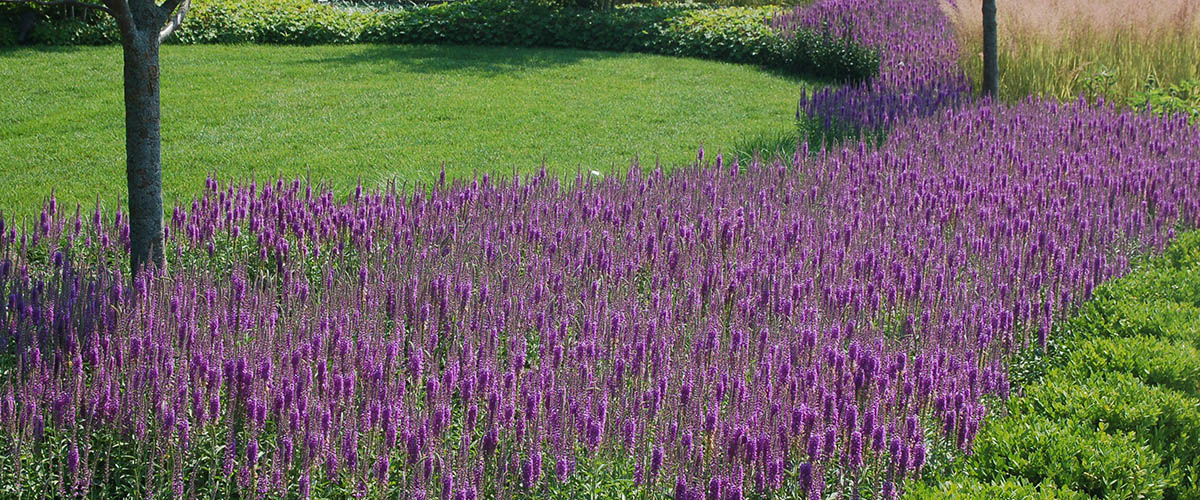
Evaluating Perennials for Chicagoland Gardens
Perennials in Focus is a plant evaluation program that examines new and underused plants for Chicagoland, the third largest metropolitan area in the country. A group of horticultural experts trials and evaluates plants at numerous locations across the region. Results help consumers, public gardens, growers, landscape designers, breeders, and other industry professionals make informed plant choices.
Evaluating the winter survival of Kniphofia uvaria in Chicagoland gardens
Torch lily, or Kniphofia uvaria, brings a strong vertical accent to perennial borders with its grasslike foliage and tall spikes of tubular flowers. The species is often described as hardy in colder climates, yet a plant’s listed hardiness does not guarantee dependable survival in every Chicagoland garden. Soil type, winter moisture, exposure, snow cover, and the timing of cold weather can all influence results.
For regional evaluation, winter survival means more than seeing green foliage in spring. A successful plant should return from the crown, produce healthy leaves, recover at a predictable time, and flower with enough vigor to justify its place in a residential or public planting. Multi-site trials can reveal which conditions support that performance and which create recurring losses.
Why winter survival varies across Chicagoland
Chicagoland includes a range of urban and suburban microclimates. Gardens near Lake Michigan may experience moderating temperatures but also strong winds and rapidly changing conditions. Inland sites can have colder winter lows, while dense neighborhoods may benefit from reflected heat and protection from buildings. These differences can affect a marginally hardy perennial even when two gardens are located within the same broad hardiness zone.
Winter moisture is often as important as minimum temperature. Kniphofia uvaria prefers well-drained soil, and its crown may decline when it remains cold and saturated for long periods. Heavy clay, compacted planting beds, and low spots that collect meltwater can produce more losses than a brief temperature drop. Raised beds, gravelly soil, or a slope may improve survival without adding elaborate winter protection.
The condition of the plant entering dormancy also matters. A specimen weakened by drought, poor nutrition, root competition, or late-season disease may be less able to withstand freezing conditions. Trial records should therefore include summer health and late-autumn vigor rather than treating winter survival as an isolated event.
What to observe before and after winter
A useful evaluation begins in late summer. Record the plant’s height, spread, number of flowering stems, bloom duration, and general foliage quality. Note whether the clump remains upright or flops into wet soil, since flattened foliage can hold moisture around the crown. Photographs from the same angle can make seasonal comparisons more reliable.
After the first hard frost, document how quickly the foliage collapses and whether the plant forms a tight, upright crown or a loose mass of decaying leaves. Avoid removing all foliage before the winter unless that is part of the standard maintenance practice being tested. Different cleanup methods may affect crown protection, so the treatment should be recorded.
In spring, inspect the planting at regular intervals rather than relying on one visit. Note the date of first visible growth, the number of shoots, dead sections within the crown, and any evidence of heaving. A plant that returns several weeks late may still survive, but delayed emergence can shorten its bloom period and reduce its landscape value.
Comparing winter conditions and plant responses
Regional trial data become more useful when observations are tied to specific site conditions. The following framework can help gardeners and professionals interpret survival rather than simply labeling a plant hardy or tender.
| Site factor | More favorable condition | Potential winter risk | Useful observation |
|---|---|---|---|
| Soil drainage | Sandy, amended, or raised planting bed | Saturated clay or standing water | Crown firmness and spring losses |
| Winter exposure | Wind-protected, stable site | Open exposure with drying winds | Leaf desiccation and delayed growth |
| Snow cover | Consistent insulating snow | Repeated freeze-thaw cycles | Heaving and crown injury |
| Planting depth | Crown set at the recommended depth | Deep planting or exposed crown | Rot, weak emergence, or desiccation |
| Autumn health | Full, disease-free foliage | Drought stress or crowded growth | Spring recovery and flowering strength |
| Winter protection | Light, breathable mulch | Heavy, wet mulch over the crown | Rot or improved survival |
A comparison across several gardens should distinguish complete survival, partial survival, and failure. Complete survival means the clump returns evenly and reaches normal flowering potential. Partial survival may involve a reduced number of shoots, a smaller spread, or foliage that recovers but produces few flowers. Failure should be recorded when no viable growth appears by the agreed evaluation date.
Cultivar identity is essential. Kniphofia selections can differ in vigor, mature size, bloom timing, and tolerance of cold or wet conditions. If a trial includes named cultivars, labels should remain with the plants, and observations should avoid combining all torch lilies into one generalized result.
Managing moisture, mulch, and exposure
Good site preparation is usually more dependable than heavy winter covering. Before planting, loosen compacted soil and improve drainage through bed design rather than placing a rich amendment only in the planting hole. A broad, well-drained root zone encourages roots to move outward and reduces the chance of creating a water-holding pocket around the crown.
A thin layer of loose mulch can moderate temperature swings, but thick or poorly aerated material may trap moisture. Shredded leaves, compost-heavy mulch, or dense evergreen debris should not be piled over the center of the plant. In exposed gardens, a light, breathable covering applied after the ground has cooled can provide some protection while allowing air movement.
The surrounding planting design can also affect winter conditions. Tall grasses and other perennials may catch snow, buffer wind, and visually connect the torch lily to nearby structures. Gardeners planning a softer transition beside paving or walls can explore ways to soften hardscape edges while considering whether neighboring plants will shade the crown or retain excessive moisture.
Interpreting spring recovery and flowering
Early spring appearance should not be the only measure of success. Kniphofia uvaria may emerge slowly after a severe winter, especially in cooler soils. Scraping away the crown or dividing the plant too soon can damage living tissue and make a viable clump appear weaker than it is. Wait until the expected emergence window has passed and inspect for firm, healthy shoots.
Flowering provides a second level of evaluation. Record the first flower date, the number of flowering stems, the height of those stems, and whether the flowers open evenly. A clump that survives but produces only a few short stems may be suitable for foliage interest, yet it should be rated differently from a plant that restores its full ornamental display.
Repeated observations over several winters are especially important. One mild winter can make a marginal plant look reliable, while one unusually wet season can exaggerate the risk of crown rot. A meaningful regional assessment should include different weather patterns and, when possible, multiple sites with contrasting soils and exposure.
Practical recommendations for trial and planting
Gardeners can improve both the quality of their observations and the odds of successful overwintering by using consistent practices:
- Plant torch lily in full sun with excellent drainage and enough space for the mature clump.
- Record soil type, winter exposure, snow cover, mulch depth, and nearby irrigation.
- Keep cultivar names and plant locations clearly labeled throughout the trial.
- Compare spring emergence, crown survival, foliage recovery, and flowering rather than using survival alone.
- Repeat evaluations for at least two or three winters before drawing a firm regional recommendation.
For landscape professionals and retailers, this information can support more accurate plant placement. A cultivar that performs well in a raised, sunny bed may need a different recommendation for a flat clay site exposed to winter meltwater. Clear notes about conditions help prevent regional trial results from being treated as universal guarantees.
From trial results to garden decisions
The most valuable outcome of evaluating Kniphofia uvaria in Chicagoland gardens is a more precise understanding of where the plant can thrive. Rather than asking only whether torch lily is hardy, growers can identify the combination of drainage, exposure, protection, and cultivar selection that produces dependable return and bloom.
Use the published observations from regional perennial trials to compare plant performance with the conditions in a specific garden. Select well-drained sites, document seasonal results, and share reliable observations with local horticultural networks so future recommendations reflect real Chicagoland experience.
In the Garden
Evaluator gardens are located across the Chicagoland area, representing a range of growing conditions. Visit our retail and wholesale partners to find trialled perennials for your own garden.
Retail & Wholesale: Hinsdale Nurseries (Willowbrook, IL), Mariani Nurseries (Kenosha, WI & Garden Prairie, IL), Northwind Perennials (Burlington, WI), The Growing Place (Aurora, IL).
Wholesale Only: Hinsdale Nurseries (Plano, IL), Intrinsic Perennial Gardens (Hebron, IL).
Our Evaluation Program
The 2017–2020 evaluation cycle included Agastache 'Blue Boa', Allium senescens 'Blue Eddy', Amsonia ciliata var. filifolia 'Georgia Pancake', Astilbe 'Chocolate Shogun', Boltonia astroides 'James Crocket', Brunnera 'Alexander's Great', and Geranium cinereum 'Jolly Jewel Purple'. Completed evaluations include Amsonia 'Blue Ice' (2004–07).
On April 10, 2020, the program published snapshot profiles for Vernonia lettermanii 'Iron Butterfly', Stokesia laevis 'Elf', Stachys officinalis 'Pink Cotton Candy', Lobelia 'Monet Moment', Helleborus 'Winter Thrillers', Geum 'Mai Tai', Geranium soboliferum 'Butterfly Kisses', Gentiana x intermedia 'True Blue', Eurybia divaricata, Asparagus 'Purple Passion', and Agastache 'Bolero'.
Browse the full collection of snapshots organized alphabetically — from A–D, E–H, I–Q, and R–Z — to find detailed performance data on perennials trialled across Chicagoland.