Evaluating Perennials for Chicagoland Gardens
Perennials in Focus is a plant evaluation program that examines new and underused plants for Chicagoland, the third largest metropolitan area in the country. A group of horticultural experts trials and evaluates plants at numerous locations across the region. Results help consumers, public gardens, growers, landscape designers, breeders, and other industry professionals make informed plant choices.
Flood tolerance of Physostegia virginiana in field trials
Evaluating the tolerance of Physostegia virginiana to periodic flooding is not the same as asking whether it can live in a river. Periodic flooding means soil becomes saturated or briefly inundated, drains, and the plant experiences another cycle. For a perennial, recovery after the water recedes matters as much as survival during the event.
Perennials in Focus offers a useful regional lens. Chicagoland’s heavy rain, slow-draining clay and urban runoff create demanding test conditions. Australian gardeners encounter comparable waterlogging in Brisbane and Sydney, yet their seasons, soils and summer heat differ. Chicago evidence therefore identifies useful plant behaviour rather than a transferable guarantee.
The most defensible reading is conditional: obedient plant is a moisture-loving perennial that can tolerate short, shallow saturation when established, provided the root zone later drains. It should sit at the wet edge of a rain garden, not in permanent water. Establishment, flood depth, duration and soil oxygen determine whether the plant flourishes or declines.
Why flood tolerance needs careful interpretation
Flood tolerance describes several responses: retaining leaves, resprouting after stems collapse, maintaining roots, flowering after recovery and spreading responsibly. A plant may score well in one category and poorly in another. Trial notes should distinguish cosmetic damage from loss of viable roots or failure to return to normal growth.
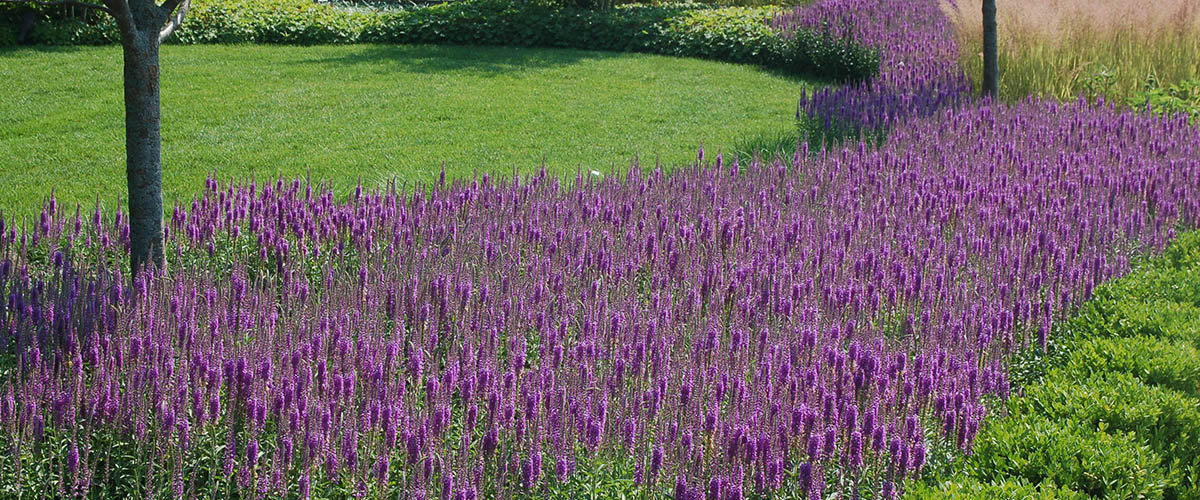
P. virginiana forms upright clumps from rhizomes, usually carrying lavender-pink flower spikes above lance-shaped foliage. Its preference for moisture explains both its vigour in damp ground and its vulnerability when wet soil remains anaerobic. Good performance beside a stream does not imply suitability for a site inundated every week.
Timing is another variable. A cool spring flood may allow roots to resume growth, while a hot, stagnant summer flood increases oxygen demand and the risk of decay. Repeated short events can also differ from one deep event. Gardeners should compare like with like before treating any rating as a universal threshold.
Lessons from Chicagoland trial gardens
The regional trial results are most informative when read as performance across multiple gardens, seasons and plant ages. The program records bloom period, flower colour, height, spread and overall condition, giving context that a simple “survived” or “failed” label cannot provide. Site notes and weather records are essential companions to the scores.
Chicagoland offers a demanding but informative setting. Flat sites may hold water after intense storms, while urban compaction restricts infiltration. Winter cold can weaken crowns, and humid summers favour diseases that exploit stressed foliage. Healthy shoots after winter demonstrate resilience even when an earlier wet episode reduced that year’s display.
Multi-site testing shows whether performance is stable. Plants thriving in naturally moist soil but struggling in compacted ground indicate a drainage problem, not an inherently weak species. Conversely, exceptional growth in a rich, frequently irrigated bed should not be advertised as tolerance of deep floodwater.
Reading the plant’s response to waterlogging
The regional evidence supports a moderate rather than dramatic classification. Established P. virginiana can persist through brief periods of saturated soil and often resume growth and flowering after drainage. Extra moisture and nutrients may produce especially vigorous growth in the season after a wet period. Continued submergence is a different condition.
Evaluation should follow three linked outcomes: survival through the wet event, recovery of crown and root systems, and return to a useful ornamental role. Height, spread and bloom data then show whether the plant merely survived or remained garden-worthy. Records made during establishment need to be separated from those made on mature plants.
| Site condition | Response to monitor | Practical interpretation |
|---|---|---|
| Moist but well-drained soil | Upright stems and steady flowering | Preferred baseline conditions |
| Brief, shallow saturation | Temporary leaning or leaf loss, followed by regrowth once drained | Tolerable for established clumps |
| Repeated saturation without a recovery interval | Weak regrowth, declining crowns and rhizome decay | Marginal performance requiring better drainage |
| Deep or prolonged standing water | Reduced root oxygen, poor recovery and eventual crown decline | Unsuitable growing condition |
| Inundation during establishment | Inconsistent emergence and weakened young clumps | Plant after drainage has improved |
This comparison keeps the label in proportion. Short inundation may be tolerable, while the interval between events must be long enough for soil oxygen to recover. A surviving clump with sparse flowers is a warning about reduced performance, not proof that flooding improves it.
Soil, climate and recovery after flooding
Soil structure controls the outcome more than the nursery tag. Dense clay holds water around roots and slows aeration; organic matter, a slight slope and clear drainage shorten the danger period. Sandy soil drains quickly but needs frequent irrigation in dry weather, so moisture can swing from too wet to too dry within a week.
Temperature, mulch and maintenance modify the same variables. Thick mulch against the crown can retain moisture and favour rot, while bare soil can bake hard and crack. Dividing an overgrown clump at the wrong time adds stress, and fertiliser applied after damage may push soft growth that is more vulnerable to pests and disease.
After flooding, delay replanting until the soil is workable and the crown shows signs of recovery. Remove collapsed, diseased tissue with clean tools, but avoid major disturbance to roots that may still be viable. Record whether new shoots emerged from the crown, from rhizomes or not at all; that pattern helps distinguish temporary lodging from crown death.
Applying the findings in Australian conditions
Australian conditions require translation, not direct copying: Chicago hardiness zones do not map cleanly to local climate zones. Brisbane’s humid summers and intense storms can saturate compacted suburban soil, while Sydney’s flash flooding may leave runoff standing around paths and foundations. Both cities have warm conditions that increase root stress during prolonged inundation. A plant coping with a cool Chicago rain event may respond differently in those settings.
Melbourne offers a contrasting test, with cool, wet winters followed by dry summers, and many gardens shifting rapidly between waterlogging and moisture deficit. Many Australian households use rain gardens, water tanks, drip irrigation and mulch to manage this variability. In the local market, specialist perennial nurseries and online suppliers should provide honest moisture requirements rather than borrowing broad labels from North American references.
Local law can affect both the site and the plant. Councils use floodplain overlays, drainage controls and water-sensitive urban design rules, while state and territory requirements vary. Imported live material must meet biosecurity requirements, including the Biosecurity Act 2015 and BICON checks. Propagation of a protected cultivar may require permission under a Plant Breeders Rights scheme. The government barrier resources can help identify administrative and digital-service obstacles where council, utility and emergency information is fragmented.
Run a small trial before committing a whole bed
A home trial can turn a regional observation into a sound local choice. Use several plants of similar size, plant them in the same soil and exposure, and include an unflooded control. Record initial height, spread, flower colour and bloom start, then note the date, depth and estimated duration of each wetting event. Photograph the crown before and after.
Continue observations through active growth and the following season. Useful measures include percentage emergence, shoot recovery, leaf condition, bloom number and spread. A simple rain gauge and notes from council flood or rainfall alerts can provide context. Record any supplementary irrigation separately and keep it as consistent as plant welfare allows, so the treatment remains interpretable.
Choose a low, poorly drained spot away from floodways, foundations and underground services. Plant three established P. virginiana clumps beside three comparable control plants at the next suitable planting window and begin the record that day. If the clumps regrow cleanly and maintain an acceptable floral display through repeated seasonal cycles, the evidence supports a defined role for the species in a rain-garden edge or moist border.
In the Garden
Evaluator gardens are located across the Chicagoland area, representing a range of growing conditions. Visit our retail and wholesale partners to find trialled perennials for your own garden.
Retail & Wholesale: Hinsdale Nurseries (Willowbrook, IL), Mariani Nurseries (Kenosha, WI & Garden Prairie, IL), Northwind Perennials (Burlington, WI), The Growing Place (Aurora, IL).
Wholesale Only: Hinsdale Nurseries (Plano, IL), Intrinsic Perennial Gardens (Hebron, IL).
Our Evaluation Program
The 2017–2020 evaluation cycle included Agastache 'Blue Boa', Allium senescens 'Blue Eddy', Amsonia ciliata var. filifolia 'Georgia Pancake', Astilbe 'Chocolate Shogun', Boltonia astroides 'James Crocket', Brunnera 'Alexander's Great', and Geranium cinereum 'Jolly Jewel Purple'. Completed evaluations include Amsonia 'Blue Ice' (2004–07).
On April 10, 2020, the program published snapshot profiles for Vernonia lettermanii 'Iron Butterfly', Stokesia laevis 'Elf', Stachys officinalis 'Pink Cotton Candy', Lobelia 'Monet Moment', Helleborus 'Winter Thrillers', Geum 'Mai Tai', Geranium soboliferum 'Butterfly Kisses', Gentiana x intermedia 'True Blue', Eurybia divaricata, Asparagus 'Purple Passion', and Agastache 'Bolero'.
Browse the full collection of snapshots organized alphabetically — from A–D, E–H, I–Q, and R–Z — to find detailed performance data on perennials trialled across Chicagoland.