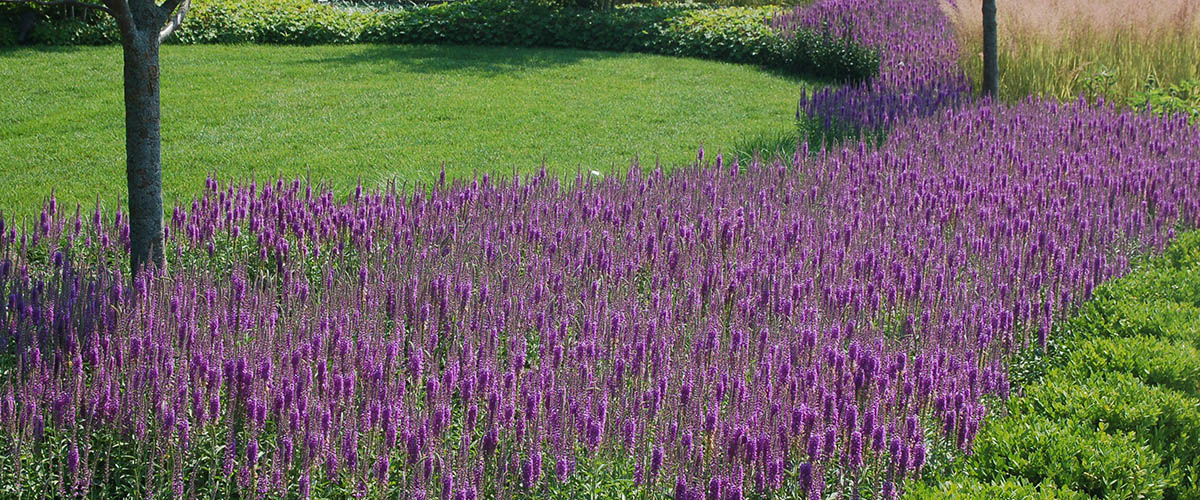
Evaluating Perennials for Chicagoland Gardens
Perennials in Focus is a plant evaluation program that examines new and underused plants for Chicagoland, the third largest metropolitan area in the country. A group of horticultural experts trials and evaluates plants at numerous locations across the region. Results help consumers, public gardens, growers, landscape designers, breeders, and other industry professionals make informed plant choices.
Aquilegia Vulgaris And Cottage Garden Naturalising
Aquilegia vulgaris, commonly called columbine or granny’s bonnet, has a natural talent for appearing in the spaces between deliberately planted perennials. Its nodding flowers, divided foliage and airy stems suit cottage gardens, informal borders and small wildlife-friendly plantings. The question for gardeners is whether this self-seeding habit creates a pleasing succession of plants or a confusing drift of unwanted seedlings.
A useful evaluation looks beyond the first flush of flowers. It records where seedlings appear, how reliably they survive summer, whether colours remain desirable, and how easily surplus plants can be removed. For Australian gardeners, observations from Chicagoland trials provide a helpful framework, but local rainfall, heat, soil and garden practice will strongly influence the result.
What Self-Seeding Looks Like
Columbine produces upright, slender seed pods after flowering. If these are left to mature, they split and release numerous small seeds close to the parent plant. Wind can move some seed into cracks, gravel, lawn edges or the open soil beneath shrubs, although the main spread is usually within a modest radius.
Seedlings commonly form a low rosette before producing flowers in a later season. This delay is important when assessing naturalising: a border may appear tidy immediately after flowering, then reveal a new generation in autumn or spring. Plants can also cross-pollinate, so seedlings may differ from the original cultivar in flower colour, spur shape, height and flowering time.
A useful record should distinguish between a plant that returns from its crown and one that has germinated from seed. Marking flowering plants, photographing their positions and checking the same beds each season can reveal whether a colony is expanding steadily or simply persisting in place.
Measuring Garden Performance
The most useful measurements are practical rather than dramatic. Record the number of seedlings per mature plant, the distance of the furthest seedling, the percentage that survive to flowering, and the amount of hand thinning required. Note whether seedlings land in favourable soil or in difficult places such as paths and paving joints.
Flowering period also matters. In many temperate gardens, Aquilegia vulgaris flowers in spring to early summer, creating a bridge between bulbs and later herbaceous perennials. In Australian gardens, timing may shift with latitude and rainfall: a cool Melbourne garden may offer a different season from a sheltered Sydney courtyard or a dry inland site.
Record flower colour rather than assuming it will remain true to type. Seed-grown plants may produce blue, purple, pink, white or bicoloured flowers, depending on the parent population. This variation can be an advantage in a relaxed cottage border, but it may be unsuitable where a tightly controlled colour scheme is part of the design.
Managing A Naturalised Colony
The ideal self-sown plant appears in a useful gap rather than in the centre of a prized perennial. Early thinning is therefore the simplest management technique. Small seedlings are easy to lift and transplant while their roots are compact; unwanted plants become more difficult to remove once they are established among dense crowns.
Gardeners who want a stable display can remove some seed heads and leave others. Cutting flowering stems before the pods split limits spread, while leaving selected pods allows a controlled number of seedlings to mature. This “harvest and release” approach creates natural movement without allowing every plant to contribute seed.
Mulching influences recruitment. A thick, undisturbed mulch layer may suppress germination, whereas open compost-rich soil encourages it. Regular watering around vegetables, containers or newly planted borders can also create favourable germination pockets. In Brisbane or coastal New South Wales, summer humidity and heavy rainfall may produce different survival patterns from those seen in a dry Adelaide garden, where supplementary irrigation can determine whether seedlings persist.
Suitability For Australian Gardens
Aquilegia vulgaris is generally best treated as an ornamental garden plant whose spread should be observed locally, rather than automatically described as invasive. Australia’s environmental conditions vary greatly, and a plant that gently self-sows in a cool, irrigated suburban bed may behave differently near bushland, waterways or high-rainfall districts.
Before planting large numbers, check state and territory weed information and local nursery guidance. In New South Wales, the Biosecurity Act 2015 places a general duty on people to prevent, eliminate or minimise biosecurity risks, while other states and territories use their own legislation and weed lists. A species not listed as a declared weed may still be inappropriate beside sensitive natural vegetation.
Everyday garden habits affect the outcome. Gardeners who routinely deadhead, compost spent stems and sweep paths will contain seedlings more effectively than those managing a deliberately loose, low-intervention garden. Retail availability also varies: Australian nurseries and specialist seed sellers may offer named cultivars, mixed seed or locally grown selections, so the label should be retained when evaluating whether offspring are coming true.
For a broader approach to plant selection, the Perennials in Focus program offers a model based on repeated observations across gardens and seasons. Its emphasis on habit, flowering, spread and regional performance is especially relevant when comparing a plant’s ornamental value with its maintenance demands.
Interpreting Naturalising Value
A successful cottage-garden naturaliser should increase seasonal interest without displacing slower plants. Aquilegia vulgaris performs well when its airy habit allows neighbouring foliage to remain visible and when seedlings are easy to recognise. It is less successful where a uniform, low-maintenance planting is required or where seedlings would enter adjoining habitat.
Deer pressure may also influence the result, although deer preference can vary with food availability and local populations. Gardeners assessing a mixed border can compare columbine with other trialled perennials using regional observations such as these deer resistance findings. Self-seeding and browsing should be recorded separately: a plant may spread readily but still lose its best flowering stems to animals.
The strongest evaluation combines numbers with judgement. Count seedlings, measure spread and note survival, then rate the colony for visual harmony, weediness, transplantability and effort. A plant that produces six well-placed seedlings and needs five minutes of thinning may be more useful than one that produces two hundred seedlings scattered through paths and lawn.
| Feature | Favourable Naturalising Result | Caution Signal |
|---|---|---|
| Seedling density | A few recognisable plants near the parent | Dense carpets requiring frequent removal |
| Spread | Mostly within the intended border | Repeated appearance in paths, lawns or adjoining habitat |
| Flower variation | Complementary colours and forms | Unwanted colours or weak, uneven plants |
| Maintenance | Easy thinning in autumn or spring | Deep-rooted seedlings difficult to extract |
| Seasonal value | Fills gaps between spring and summer perennials | Crowds later plants or obscures low growers |
| Australian suitability | Performs in the local soil and moisture regime | Persists only with excessive watering or escapes the garden |
Trial a small group first, leave several seed heads on selected plants, and map where the next generation appears. Remove seedlings that cross the intended boundary, retain the best-positioned plants, and record flowering and survival through at least two seasons. This measured approach lets Australian gardeners enjoy Aquilegia vulgaris as a graceful cottage-garden wanderer while keeping its self-seeding habit within a clearly managed space.
In the Garden
Evaluator gardens are located across the Chicagoland area, representing a range of growing conditions. Visit our retail and wholesale partners to find trialled perennials for your own garden.
Retail & Wholesale: Hinsdale Nurseries (Willowbrook, IL), Mariani Nurseries (Kenosha, WI & Garden Prairie, IL), Northwind Perennials (Burlington, WI), The Growing Place (Aurora, IL).
Wholesale Only: Hinsdale Nurseries (Plano, IL), Intrinsic Perennial Gardens (Hebron, IL).
Our Evaluation Program
The 2017–2020 evaluation cycle included Agastache 'Blue Boa', Allium senescens 'Blue Eddy', Amsonia ciliata var. filifolia 'Georgia Pancake', Astilbe 'Chocolate Shogun', Boltonia astroides 'James Crocket', Brunnera 'Alexander's Great', and Geranium cinereum 'Jolly Jewel Purple'. Completed evaluations include Amsonia 'Blue Ice' (2004–07).
On April 10, 2020, the program published snapshot profiles for Vernonia lettermanii 'Iron Butterfly', Stokesia laevis 'Elf', Stachys officinalis 'Pink Cotton Candy', Lobelia 'Monet Moment', Helleborus 'Winter Thrillers', Geum 'Mai Tai', Geranium soboliferum 'Butterfly Kisses', Gentiana x intermedia 'True Blue', Eurybia divaricata, Asparagus 'Purple Passion', and Agastache 'Bolero'.
Browse the full collection of snapshots organized alphabetically — from A–D, E–H, I–Q, and R–Z — to find detailed performance data on perennials trialled across Chicagoland.